
Find your fireplace across Parry Sound Region.
Wood, gas, pellet, and electric fireplace resources for the whole region—from the town of Parry Sound out along the Georgian Bay shoreline to the surrounding townships. Pick a fuel and find a local dealer who actually installs it here.
Every Project Starts From One of These Five Situations
Winters near -16.8°C, dense hardwood stands, and a region built around wood heat.
Parry Sound Region sits along Georgian Bay in climate zone 6A, with a year-round population of roughly 6,321 that multiplies many times over once cottage season starts. Average winter lows near -16.8°C and a heating season that runs from October into April put this region in the same cold-climate bracket as Sudbury, Ontario—long stretches of hard freeze broken up by lake-effect snow off Georgian Bay. What the region has in spades is hardwood: sugar maple, red oak, white ash, and yellow birch grow thick across central and eastern Ontario's Crown and private land, and a lot of local households still season and burn their own wood, often cut under a permit from the Ontario Ministry of Natural Resources.
That density of hardwood shapes how wood heat gets installed and insured here. Municipal building departments across the region apply the CSA B365 installation code to new wood appliances, and most insurers ask for a WETT inspection before they'll write or renew a policy on a home with a wood stove or insert—some municipalities go further and require certified, low-emission appliances in new construction outright. Natural gas service reaches the town of Parry Sound and a handful of the denser corridors, though many cottages and rural properties further out run on propane instead. This hub rolls up hearth retailers, service technicians, and fuel suppliers across the whole region, from the harbourfront in Parry Sound to the smaller communities and township roads that ring the bay. Pick your fuel below for local dealers, install costs, and unit recommendations specific to your property.
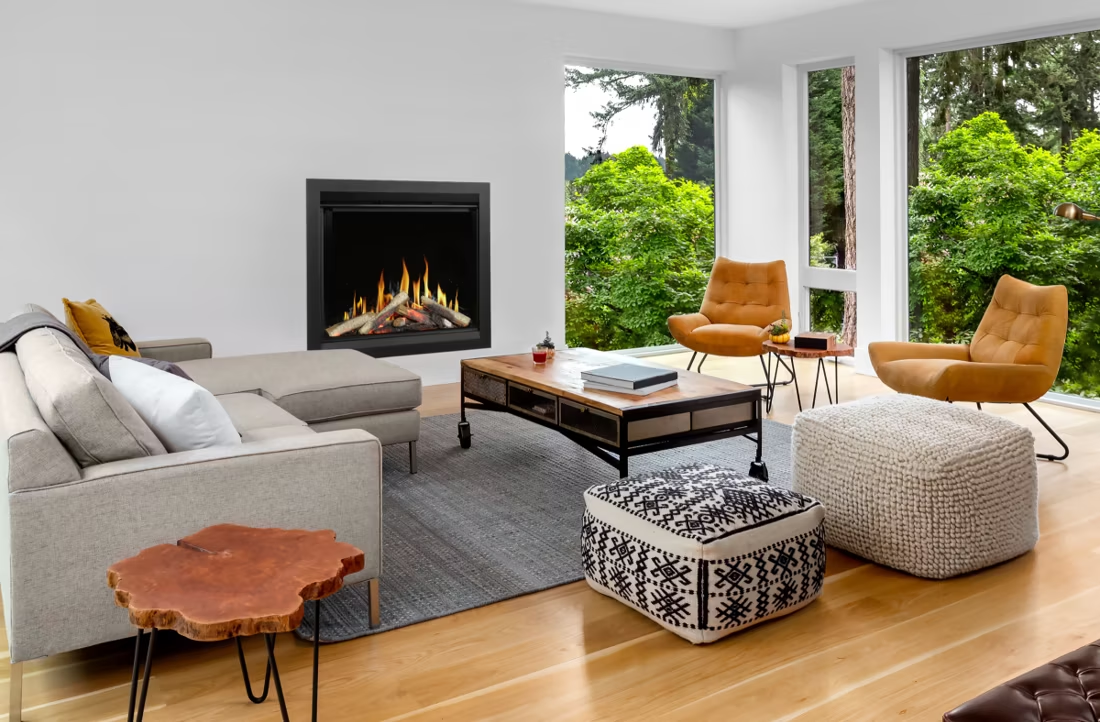
Four fuels. One honest answer for Parry Sound Region.
Wood
69 models available near Parry Sound Region.
Find your wood stove →Gas
111 models available near Parry Sound Region.
Find your gas fireplace →Pellet
See what's available near Parry Sound Region.
Find your pellet stove →Electric
See what's available near Parry Sound Region.
Find your electric fireplace →Three steps. No salesperson until you're ready.
Tell us about your project
Your postal code, your situation, and the fuel you're leaning toward—or let the answers point you to one.
See what's actually available
The brands dealers within 100 miles genuinely carry—real options, never a catalog mirage.
Get your dealer & Project Guide
A trusted local dealer, plus the free Project Guide & Parts List that names every component of the job.
Frequently Asked Questions
Which fireplace fuel makes the most sense in Parry Sound Region?
All four fuels have a real place here, and the right pick usually comes down to how the property is used and what's already running through the wall. Wood is the traditional backbone—sugar maple, red oak, and yellow birch are all abundant, high-BTU species, and a lot of year-round homes still heat primarily with a wood stove or insert through the region's long, cold stretch of -16.8°C nights. Gas is the convenience choice in and around the town of Parry Sound, where municipal gas service reaches; further out toward the cottages and township roads, propane fills that role instead. Pellet stoves have a solid following too—Lacwood and Energex both distribute regionally—and they suit owners who want wood-like heat without splitting and stacking cordwood every fall. Electric fireplaces work well as a supplemental unit in a bedroom, bunkie, or basement, but with a heating season this long, they're rarely a home's only source of heat.
Do I need a permit to install a wood stove or insert here?
Yes, in nearly every municipality across the region. New wood stoves and inserts are installed to the CSA B365 code, and your local municipal building department issues the installation permit—the specific office depends on which township or the town of Parry Sound you're in. Most insurers also require a WETT inspection before they'll cover a home with a wood-burning appliance, and a few municipalities have gone further and require certified, low-emission units in new construction. A dealer who installs regularly in this region will already know which office to file with and can arrange the WETT inspection as part of the project, so it's rarely something you're chasing down on your own.
Is natural gas actually available, or does most of the region run on propane?
Both, and it splits pretty cleanly by geography. Municipal natural gas service reaches the town of Parry Sound and some of the denser residential streets around it, so a gas fireplace or insert there can usually tie into existing service. Once you're out toward the cottages, lakeside roads, and rural township lots that make up most of the region's land area, there's typically no gas main nearby, and propane—either bottled or from a bulk tank—is the standard way to run a gas appliance. Either way, a local dealer can tell you within a few minutes whether your address sits on a served street or needs a propane setup instead.
Can I cut and burn my own firewood here?
Many households do. Sugar maple, red oak, white ash, and yellow birch are all common on Crown land across central and eastern Ontario, and cutting for personal firewood use typically requires a permit from the Ontario Ministry of Natural Resources rather than a municipal permit. It's worth seasoning hardwood a full year before burning it—green maple or oak that hasn't dried creosotes up a flue fast, which is exactly what a WETT inspector will flag when your insurer asks for a report. If you'd rather skip the cutting and splitting, several regional firewood dealers sell pre-seasoned hardwood by the cord.
What does a fireplace installation typically cost in Parry Sound Region?
Costs track pretty closely with what's involved in venting and any gas-line work. Wood stove or insert installs typically run $4,500-$9,000 CAD, with a full masonry chimney for new construction pushing higher; CSA B365 compliance and the WETT inspection are usually built into that price. Gas fireplaces, inserts, and stoves run roughly $4,500-$11,000 depending on whether you're on municipal gas or setting up a propane line and tank. Pellet stove or insert installs generally land at $4,500-$7,500. Electric fireplaces are the outlier—$200-$3,000 for the unit itself, plus $400-$1,200 in labour for anything beyond a simple plug-in placement. The region and fuel pages above break these numbers down further with local retailer pricing.
How does scheduling work given how seasonal this region is?
Cottage season changes the rhythm of hearth work here more than almost anywhere else in Ontario. Spring and early summer bring a wave of cottage owners opening up properties and getting stoves and gas units serviced before the Thanksgiving weekend crowds arrive; then things go quiet through midsummer before booking up hard again in September and October as everyone gets ready for the first cold snap. If you want a wood stove installed, a chimney swept, or a WETT inspection done before winter, the safest window is late summer—call in June or July and you'll beat the fall rush that hits every dealer and technician serving both the year-round and seasonal population here.
How many BTUs do I need in a fireplace?
Wrong question—and the industry's favorite way to confuse you. More BTUs isn't better if the fireplace cooks you out of the room you spent thousands to enjoy. Think in terms you can verify: how many square feet the unit heats, whether it's primary or backup heat, and whether you want it running overnight. Those three answers size a fireplace correctly every time.
Will we actually use a fireplace once we have one?
In my own home, the room with the fireplace has never been the same—it became the social hub. Game nights, holidays, date nights after the kids are down: the fire is where the house gathers. There's a reason people in this industry joke that we're really in the romance and entertainment business. You won't wonder whether you'll use it; you'll wonder how the room worked before.
How much should I budget for a fireplace?
For an average home—covering the fireplace, the vent pipe, and basic installation—a budget between $3,900 and $5,500 gives you a lot of options across wood, gas, and pellet. By the time you add finish work, gas line, and electrical, the average complete installation lands between $5,000 and $12,000 all-in. In a remodel or new build, a good rule is to put about 2.5% of the total project cost toward the fireplace.
Can a fireplace actually lower my heating bill?
Yes—by creating a comfort zone. A furnace heats every square foot of the house just to warm the one room you're in; a gas fireplace on low burns roughly a sixth of the gas a typical furnace does. Set the furnace around 55–60 degrees as a baseline, then heat the rooms your family actually uses. Families who heat this way commonly save $20–$60 a month.
Stove and Fireplace Dealers in Parry Sound Region
Listings include WhyFire partner dealers, dealers we have verified as authorized for the brands we recommend, and established local businesses that carry hearth products. Every listing shows which one it is. The ones marked Preferred run on WhyFire's software, so they can show you real pricing and book your appointment right here. No manufacturer pays for placement. How we verify dealers →
Kidd's Home Hardware Building Centre
Port Loring Home Business Centre
Atr Fireplace & Climate Solutions
G.b. Home Comfort
The Gas Man
Find a local Parry Sound Region dealer.
Pick your fuel below and we'll put together a free Project Guide & Parts List—the right unit, the vent kit it needs, and the local dealer we recommend for your project.
Find Your Fireplace →