
Reliable heat for Georgian Bay winters, on demand.
With average winter lows near -16.8°C and a heating season that runs solidly from October into April, homes and lake cottages across Parry Sound Region need heat that starts the moment you need it. We'll help you find a trusted local dealer who knows whether your property sits on Enbridge Gas or propane, and sends a free planning packet built around your actual house.
Every Project Starts From One of These Five Situations
Heat that starts the moment you flip a switch.
Parry Sound Region stretches from the Georgian Bay shoreline inland through Seguin, McDougall, Whitestone, McKellar, and up into the Almaguin Highlands communities like Magnetawan and Sundridge. It's classic Canadian Shield cottage country: granite outcrops, dense hardwood bush of sugar maple, red oak, white ash, and yellow birch, and a population that swells with seasonal residents every summer and thins out to a quiet, cold winter. In climate zone 6A, with average lows around -16.8°C, the winter here runs long and steady, closer in feel to Sudbury than to southern Ontario. A growing number of seasonal cottages are being converted to four-season retreats, and gas fireplaces and inserts are a natural fit for that shift: no woodpile to manage, no chimney draft to fight, and heat you can dial in from a thermostat on the coldest night of the year.
Availability depends on where in the region you sit. Enbridge Gas mains run to the Town of Parry Sound and a handful of nearby corridors, but most of the shoreline properties, lake roads, and outlying townships run on propane delivered by regional suppliers instead. Functionally, a gas fireplace runs the same either way once it's configured for the right fuel. What matters is getting a TSSA-licensed gas fitter on the job and a permit through your local municipal building department, since gas line work isn't something a general contractor can sign off on. A local dealer who works this region regularly already knows which of your neighbours are on the main and which are on a tank, and sizes the installation accordingly.
Three steps. No salesperson until you're ready.
Tell us about your project
Your postal code, your situation, and the fuel you're leaning toward—or let the answers point you to one.
See what's actually available
The brands dealers within 100 miles genuinely carry—real options, never a catalog mirage.
Get your dealer & Project Guide
A trusted local dealer, plus the free Project Guide & Parts List that names every component of the job.
Frequently Asked Questions
How much does a gas fireplace installation cost in Parry Sound Region?
Installed gas fireplaces across the region typically run $6,000 to $15,000 CAD. An insert dropped into an existing masonry fireplace in a Parry Sound or Seguin home with a gas or propane line already nearby lands toward the lower end. A new direct-vent fireplace for a cottage renovation or new build, including framing, venting, and a fresh propane tank set or gas line run, sits higher. Properties on remote lake roads or islands accessed by boat or long private drives, common around the Archipelago and outer Georgian Bay shoreline, can see a modest travel charge added by the installer for site access.
Can I convert an existing wood fireplace to gas?
Yes, and it's a common project in the older stone and masonry fireplaces found in Parry Sound Region's original lake cottages. A gas insert fits into the existing firebox and vents up through a stainless liner run inside your current chimney, so the fireplace keeps its look while gaining thermostat-controlled heat. Expect $6,000 to $10,000 CAD depending on chimney condition and whether the property is already served by propane or Enbridge Gas. Homes that already have a propane tank on site for a stove or water heater tend to land toward the lower end since the fuel supply work is already done.
Is my property on natural gas or will I need propane?
It depends on your address. Enbridge Gas mains serve the built-up core of the Town of Parry Sound and a few adjoining stretches, but the majority of the region, including most lakefront properties in Seguin, McDougall, Whitestone, McKellar, and the Almaguin Highlands townships, runs on propane from a regional bulk supplier. Either fuel works fine in a modern gas fireplace with the correct orifice and regulator setup. A local dealer can confirm which service reaches your specific road or lake before you commit to a model, which saves a headache if you assumed natural gas but the line doesn't actually reach your lot.
Will a gas fireplace still work during a winter power outage?
Most will, with the right ignition system. Units with intermittent pilot ignition run on a battery backup that kicks in automatically when the power drops, so the fireplace still lights on demand. Some models, including several Valor units carried by dealers in the region, generate their own electricity through the pilot assembly and need no battery at all. That distinction matters here: ice storms and wind off Georgian Bay can knock out power to shoreline and island properties for a day or more each winter, and a fireplace that keeps working through that is often the whole point of installing one at a seasonal cottage.
What's the difference between a gas fireplace, insert, and stove?
A gas fireplace is a built-in unit framed into a wall, the usual choice for new construction or a full cottage rebuild. A gas insert slides into an existing masonry firebox and uses your current chimney as the vent path, which is the common upgrade for the region's older stone lake cottages. A gas stove is a freestanding, cabinet-style unit that sits on the floor like a wood stove but runs on gas, a good fit for a bunkie, a room without any existing chimney, or a seasonal cabin being converted to four-season use. A local dealer can walk the space and tell you which configuration actually fits your floor plan.
Do I need a permit to install a gas fireplace in Parry Sound Region?
Yes. Your local municipal building department, whether that's the Town of Parry Sound or one of the surrounding townships, requires a building permit for a new gas fireplace, and the gas or propane line connection has to be completed by a TSSA-licensed gas fitter. This is one reason to go through a full-service local dealer rather than a general handyman install: a proper dealer coordinates the appliance, the venting, the gas fitter's sign-off, and the building inspection as one job instead of leaving you to juggle separate trades on a cottage that may only be accessible on weekends.
Vented or vent-free—which makes more sense for a lake cottage?
Direct-vent (sealed combustion) fireplaces pull combustion air from outside and exhaust it back outside, keeping the appliance fully sealed from indoor air. Vent-free units burn into the room and are permitted with the right room-sizing and an oxygen depletion sensor, but most local dealers steer homeowners toward direct-vent for cottages, especially the newer, tightly built four-season retreats going up around Seguin and Whitestone, where several municipalities already require certified low-emission appliances in new construction. Direct-vent units heat just as well without adding humidity or combustion byproducts to a well-sealed building envelope.
How often does a gas fireplace need to be serviced?
Plan on an annual service, ideally in late summer before the region's heating season gets going in earnest around October. A technician checks the burner, pilot or ignition system, gas connections, and venting, and cleans the glass, which is a much shorter visit than a wood chimney sweep. For cottages that sit empty for stretches over the winter, it's also worth having the unit checked each spring for any pests or debris that found their way into the venting while the place was closed up. Expect roughly $150 to $250 CAD for a standard annual visit from a local gas technician.
Gas or wood—which fits a Parry Sound Region property better?
Wood has deep roots here: sugar maple, red oak, white ash, and yellow birch are all common on regional woodlots, and the Ontario Ministry of Natural Resources allows free cutting of up to 10 cubic metres per household per year on managed Crown land, so plenty of local households heat with wood cut from their own back forty. Wood also works with no electricity at all, a real advantage during a Georgian Bay ice storm. Gas offers instant, thermostat-controlled heat with no wood to split or haul, which is why it's become the default for main living areas and for seasonal cottages their owners want ready to go the moment they arrive. Many properties in the region run both: gas for daily convenience, a wood stove or fireplace as backup and for the ambiance cottage life is built around.
Can a gas fireplace run on a thermostat?
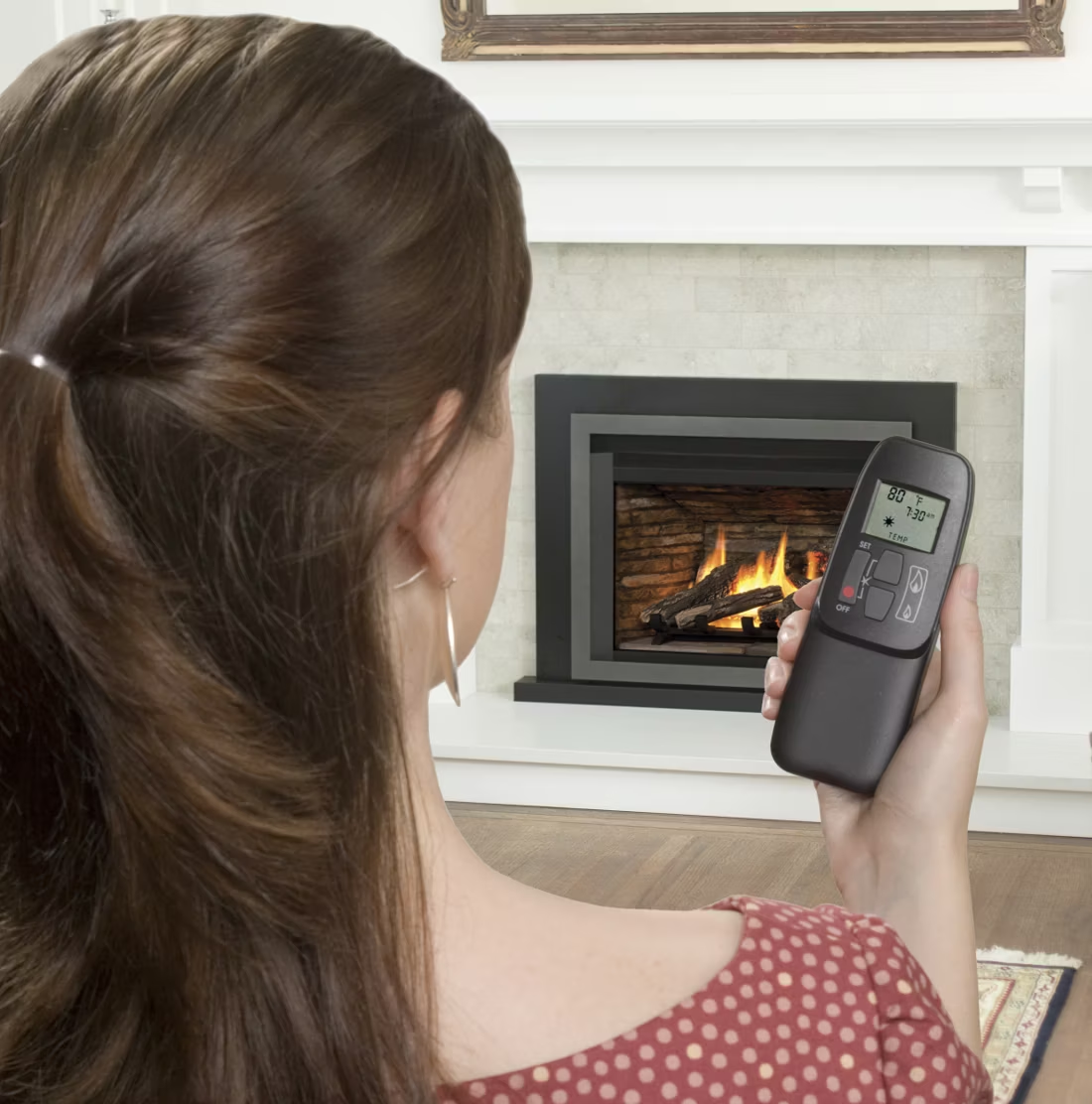
Most modern gas fireplaces can—turn it on and off from the couch with a remote, or set a room temperature and let the fireplace hold the comfort zone for you. If low maintenance matters to your family, this is the feature set that makes gas the convenience pick over wood and pellet.
Why do fireplace quotes vary so much?
Because a fireplace is an iceberg—there's more behind the wall than in front of it. A low quote often covers only the unit; the full scope includes vent pipe, gas line or electrical, framing, and the tile or stone that has to come off and go back on. Make every bidder price the whole job. If a dealer can't speak to the full scope with confidence, that's your signal to keep looking.
Are new gas fireplaces really better than old ones?
Two ways, and they're both big. Looks: modern gas fireplaces are realistic enough that it's hard to believe they aren't burning wood. Cost: old units burn a standing pilot year-round (roughly $200 a year), while new ones use pilot-on-demand ignition and modern burners. Add remote controls and thermostat operation, and the day-to-day experience isn't close.
Does a gas fireplace work when the power is out?
Yes—modern gas fireplaces have a battery backup for the ignition system that lasts for weeks, so no power equals no problem. Your furnace can't say that: no electricity, no blower, no heat. It's one of the most common reasons families add a fireplace, and worth confirming on any model you're considering.
Stove and Fireplace Dealers in Parry Sound Region
Listings include WhyFire partner dealers, dealers we have verified as authorized for the brands we recommend, and established local businesses that carry hearth products. Every listing shows which one it is. The ones marked Preferred run on WhyFire's software, so they can show you real pricing and book your appointment right here. No manufacturer pays for placement. How we verify dealers →
Kidd's Home Hardware Building Centre
Port Loring Home Business Centre
Atr Fireplace & Climate Solutions
G.b. Home Comfort
The Gas Man
Natural Gas Service in Parry Sound Region
Confirm service at your address before planning a gas fireplace—a quick call settles it.
Enbridge Gas
Get your free Project Guide & Parts List for a gas fireplace in Parry Sound Region.
Tell us a bit about your home or cottage, whether you're on Enbridge Gas or propane, and how you plan to use the fireplace, and we'll help you find a trusted local dealer and send a free Project Guide & Parts List—the exact parts, including the vent kit, and the dealer best placed to help with your project.
Find Your Fireplace →