
Keep Your Family Warm and Safe—No Matter What
Niagara Falls sits in climate zone 5A with average winter lows near -7.8°C—milder than most of Ontario, but still five months of cold nights where a well-chosen wood stove earns its keep. We'll help you find a trusted local dealer who knows the region's hardwood, the CSA B365 code, and what actually clears a WETT inspection.
Every Project Starts From One of These Five Situations
Plenty of hardwood, a moderate winter.
At 184 metres elevation with average winter lows around -7.8°C, Niagara Falls runs a noticeably gentler winter than most of the province—nowhere near the sustained deep freeze of Thunder Bay or Sudbury, and closer to a damp, lake-moderated cold off Lake Ontario and Lake Erie. That climate means wood heat here isn't survival infrastructure the way it is farther north; it's steady supplemental warmth, a hedge against the ice-storm power outages that periodically hit the Niagara Peninsula, and, in many of the region's older homes, a working masonry fireplace that's been there since before central heating was standard.
What does drive local demand is the wood itself. The Niagara Peninsula sits in one of Ontario's denser hardwood pockets, and sugar maple, red oak, white ash, and yellow birch are the four species most local burners season and stack—all dense, high-output hardwoods that hold a fire far longer than the softwoods common in other parts of the country. Because Niagara Falls is settled, agricultural land rather than Crown forest, almost nobody here cuts their own firewood; the Ontario Ministry of Natural Resources permit allowing up to 10 cubic metres free per household applies to the Northern Boreal and Managed Forest zones well north of the region, so local buyers typically source seasoned cordwood from area firewood suppliers instead. Any new installation still has to meet the municipal building department's requirements under the CSA B365 code, and most home insurers will ask for a WETT inspection before covering a wood-burning appliance—a routine step, not a red flag, and one a good local dealer walks through as part of the job.
Firewood Cutting Permits Near Niagara Falls
Ontario Ministry Of Natural Resources
Three steps. No salesperson until you're ready.
Tell us about your project
Your postal code, your situation, and the fuel you're leaning toward—or let the answers point you to one.
See what's actually available
The brands dealers within 100 miles genuinely carry—real options, never a catalog mirage.
Get your dealer & Project Guide
A trusted local dealer, plus the free Project Guide & Parts List that names every component of the job.
Frequently Asked Questions
How much does a wood stove or insert installation cost in Niagara Falls?
Most installs in the area run $6,000-$12,000 CAD. An insert dropping into an existing masonry firebox—common in older Niagara Falls neighbourhoods near the Parkway and in Chippawa where homes still have working chimneys—lands toward the lower end. A freestanding stove in a home with no existing chimney needs a full Class A system run through a wall or roof, which pushes the project toward the top of that range. Either way, your municipal building department will want a permit, and most local dealers include that paperwork in their quote.
Do I need a permit to install a wood stove in Niagara Falls?
Yes. New installations go through the municipal building department and must meet the CSA B365 installation code, which governs clearances, venting, and hearth protection for wood-burning appliances in Ontario. On top of the permit, plan on a WETT inspection—most home insurers in the region won't cover a wood stove or insert without one, and it's become a standard closing step for any resale involving a wood appliance. A trusted local dealer handles both the permit and the WETT paperwork routinely, so it rarely holds up the project.
What kind of firewood do people burn in Niagara Falls?
Sugar maple and red oak are the two workhorses locally—dense hardwoods that burn hot and long once properly seasoned, which is exactly what you want given the region's damp winters. White ash is a favourite too since it splits easily and seasons faster than oak, useful if you're buying wood mid-season rather than a year ahead. Yellow birch shows up as well, prized more for its bright, fast-catching bark than for overnight burns. Because the Niagara Peninsula sits among some of Ontario's densest hardwood stands, quality seasoned cordwood is easy to find through local suppliers rather than something you'd need to cut yourself.
Where do I get firewood near Niagara Falls?
Almost nobody in the immediate area cuts their own—Niagara Falls sits in settled, agricultural southern Ontario rather than near Crown forest. The Ontario Ministry of Natural Resources does offer a free cutting allowance of up to 10 cubic metres per household annually, but that program applies to the Northern Boreal and Managed Forest zones well north of the Niagara region, not anywhere practical for a day trip. Local buyers instead source seasoned sugar maple, red oak, white ash, or yellow birch from area firewood dealers, which also means you can buy wood that's already properly dried rather than gambling on green cordwood.
Wood vs. gas—which makes more sense for a Niagara Falls home?
Enbridge Gas serves the area broadly, and with winter lows only averaging around -7.8°C, plenty of Niagara Falls homes run gas as their primary heat source and treat wood as backup or ambiance. Wood's real advantage shows up during outages—ice storms off the lake periodically knock out power across the Niagara Peninsula, and a wood stove keeps working when the furnace and gas fireplace's electronic ignition can't. Given the region's dense hardwood supply, running a wood stove as backup heat is often cheaper over a season than most people expect, even alongside a gas system for daily convenience.
What is a WETT inspection and do I actually need one?
WETT stands for Wood Energy Technology Transfer, and it's the inspection standard Canadian insurers use to confirm a wood stove, insert, or chimney meets code before they'll write or renew a homeowner's policy. In Niagara Falls, where many houses have older masonry chimneys originally built for open fireplaces, a WETT inspection often catches things like undersized clearances or a liner that needs updating before a new insert goes in. It's a normal part of buying, selling, or insuring a home with a wood appliance here, not an unusual hurdle, and most local dealers can arrange one as part of your installation.
Should I get a wood insert or a freestanding stove?
If your home already has a working masonry fireplace and chimney—common in older parts of Niagara Falls and along the Parkway—an insert is usually the simpler, less expensive route since it reuses the existing chimney chase with a new liner. A freestanding stove makes more sense in newer construction without an existing fireplace, or if you want to relocate the heat source to a different room entirely; it needs a full Class A chimney built from scratch, which is part of why freestanding installs tend to land toward the higher end of the $6,000-$12,000 range.
Why do some Niagara-area municipalities require certified stoves in new construction?
Given how much dense hardwood gets burned across central and eastern Ontario, several municipalities in the region have added rules requiring certified low-emission appliances in new builds specifically to keep wood smoke in check as wood heat usage grows. In practice this means any new wood stove or insert installed in Niagara Falls should already be an EPA or CSA-certified unit—which is standard on nearly everything sold through hearth dealers today—so it rarely changes your options, but it does mean an old uncertified stove from a previous house generally can't be reinstalled as-is.
How often should I get my chimney swept in Niagara Falls?
An annual sweep and inspection in late summer or early fall, before the first cold snap, is the standard recommendation, and it matters here in particular because the region's go-to hardwoods—red oak especially—need a full one to two years of seasoning to burn clean. Burning oak or maple before it's properly dried builds creosote faster than well-seasoned wood, so if you're buying cordwood mid-season rather than stocking up a year ahead, it's worth asking your supplier how long that batch has been split and stacked.
Why do fireplace quotes vary so much?
Because a fireplace is an iceberg—there's more behind the wall than in front of it. A low quote often covers only the unit; the full scope includes vent pipe, gas line or electrical, framing, and the tile or stone that has to come off and go back on. Make every bidder price the whole job. If a dealer can't speak to the full scope with confidence, that's your signal to keep looking.
Louvered or clean face—which fireplace front is better?
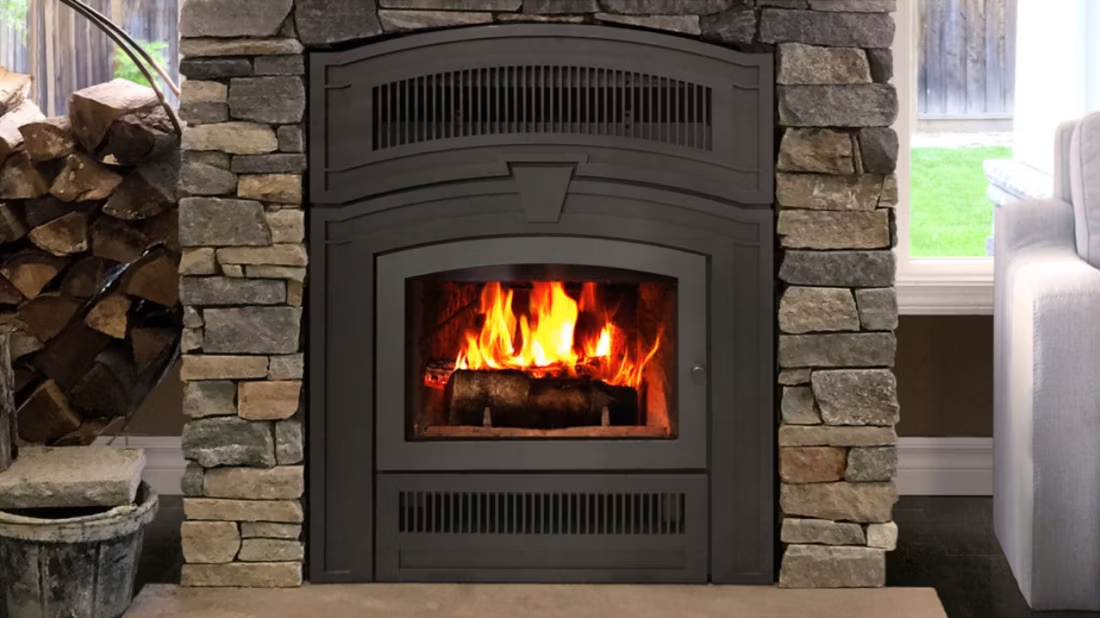
Louvered fronts have grill work above and below the glass for airflow, move heat a little better with a fan, and suit traditional mantels. Clean face designs drop the louvers entirely so finish work runs to the fire's edge—they fit both modern and traditional rooms. When we did our own home we chose clean face: a big viewing area beat a little extra airflow. It depends on your room, not on a rulebook.
Why won't my new wood stove get going like my old one?
New wood stoves are 70%+ efficient, so far less heat goes up the flue—which also means less draft to get a fire established. The rule: build a genuinely hot fire for about 45 minutes before you choke it down. Skip that and you get smoke in the room, creosote in the chimney, and a fire that never takes off. Most performance complaints trace straight back to this.
Is it worth replacing an old fireplace that still sort of works?
Ask three questions: Is it ugly? Is it drafty? Does it actually work? Most old fireplaces fail at least two. Beyond looks, an old unit leaks air around the damper year-round and—if it's gas with a standing pilot—quietly burns a couple hundred dollars a year. A modern replacement seals the wall, heats the room, and changes how the whole space gets used.
Preferred Dealer in Niagara Falls
Marked Preferred because they run on WhyFire's software—so they can show you real pricing and book your appointment right here. No manufacturer pays for placement. How we verify dealers →
Get your free Project Guide & Parts List for a Niagara Falls wood project.
Tell us about your home and whether you're working with an existing masonry chimney or starting fresh, and we'll help you find a trusted local dealer and send a free Project Guide & Parts List—sized for the region's hardwood-fed winters, with the vent kit and parts specified and WETT requirements accounted for.
Find Your Fireplace →