
Keep Your Family Warm and Safe—No Matter What
Hamilton's winter lows average around -9.3°C, mild by Ontario standards but still a real heating season along the Niagara Escarpment and the western end of Lake Ontario. We'll help you find a trusted local dealer who knows the hardwood, the code, and what actually fits your chimney.
Every Project Starts From One of These Five Situations
Wood heat here is about hardwood access, not necessity.
Hamilton sits at about 95 metres elevation where the Niagara Escarpment meets Lake Ontario, in climate zone 5A. An average winter low of -9.3°C and a season that runs a few solid months of below-freezing nights is meaningfully milder than what Sudbury or Ottawa see most winters, but it's still enough cold, dampness, and occasional ice storms off the lake to make a backup heat source worth having. With Enbridge Gas serving most of the city, wood here is rarely a survival fuel the way it can be farther north—it's chosen for resilience during outages, lower running cost against Hydro One, Toronto Hydro, or Alectra Utilities rates, and the simple appeal of a real fire in the century homes that fill neighbourhoods like Westdale and Durand.
Southern Ontario's hardwood belt runs right through this area, and sugar maple, red oak, white ash, and yellow birch are the species most local burners split and stack—all dense woods that hold coals and heat well overnight once properly seasoned. Any new installation falls under the CSA B365 code, and your municipal building department issues the permit; some Ontario municipalities now also require certified low-emission appliances for new construction, so a dealer familiar with Hamilton's process matters. Most insurers here also expect a WETT inspection before they'll cover a wood-burning appliance, which a reputable installer will fold into the project rather than treat as an afterthought.
Firewood Cutting Permits Near Hamilton
Ontario Ministry Of Natural Resources
Three steps. No salesperson until you're ready.
Tell us about your project
Your postal code, your situation, and the fuel you're leaning toward—or let the answers point you to one.
See what's actually available
The brands dealers within 100 miles genuinely carry—real options, never a catalog mirage.
Get your dealer & Project Guide
A trusted local dealer, plus the free Project Guide & Parts List that names every component of the job.
Frequently Asked Questions
How much does a wood stove or insert installation cost in Hamilton?
Most installations in Hamilton run $6,000 to $12,000 CAD. An insert dropping into an existing masonry chimney—common in older character homes around Westdale, Durand, and Dundas—sits toward the lower end since the chimney structure is already in place. A freestanding stove in a newer home in Ancaster, Waterdown, or Stoney Creek that needs a full Class A chimney built from the floor through the roof runs toward the top of that range. Your municipal building department permit and any WETT inspection your insurer requires are typically included in a dealer's quote rather than billed separately.
Do I need a permit to install a wood stove in Hamilton?
Yes. New installations go through your municipal building department and must meet the CSA B365 installation code, which governs clearances, venting, and hearth protection. Some Ontario municipalities have also started requiring certified low-emission appliances in new construction, so it's worth confirming with your dealer that the model you're considering qualifies for your specific address. A local installer who does this regularly in Hamilton will typically handle the permit application as part of the project.
What's a WETT inspection and do I actually need one?
WETT stands for Wood Energy Technology Transfer, and it's the training standard most Canadian insurers rely on when deciding whether to cover a wood-burning appliance. In Hamilton, home insurers commonly ask for a WETT inspection either at installation or when a policy renews on a home with an existing wood stove or insert, especially in older homes around the lower city where the chimney predates current code. A WETT-certified inspector checks clearances, chimney condition, and appliance certification—it's a normal step your dealer can arrange, not a red flag if your setup is done right.
What firewood species work best for a Hamilton wood stove?
Sugar maple and red oak are the two workhorses most local burners rely on for overnight heat—dense, slow-burning, and widely available through southern Ontario firewood suppliers. Yellow birch splits easily and burns hot with an attractive flame, making it a good shoulder-season choice, while white ash is popular because it can burn reasonably well even when only semi-seasoned, which matters if you're catching up on a wood supply mid-winter. Red oak in particular needs a full one to two years of seasoning before it burns clean, so buying ahead matters if oak is your primary fuel.
Can I cut my own firewood near Hamilton, or do I need to buy it?
The Ontario Ministry of Natural Resources issues free cutting permits for up to 10 cubic metres—about 4 cords—per household per year, but that access applies to Crown land in the Northern Boreal and Managed Forest zones, which for Hamilton residents generally means a drive up toward the Muskoka, Haliburton, or Algonquin corridor rather than anything nearby. In practice, most Hamilton households buy seasoned cordwood from local firewood suppliers around Haldimand, Norfolk, or the Niagara area instead of cutting their own, which is simpler given how little public forest sits within a reasonable radius of the city.
With Enbridge Gas available everywhere, why would I install wood instead?
Enbridge Gas does serve most of Hamilton, and plenty of homeowners choose a gas fireplace for pure convenience. Wood still holds appeal here for a few concrete reasons: it keeps working when an ice storm off Lake Ontario knocks out power to Hydro One, Toronto Hydro, or Alectra Utilities customers, it's noticeably cheaper to run if you have a reliable cordwood source, and it delivers a kind of ambiance a lot of buyers of century homes near Durand or Kirkendall are specifically shopping for. It's common for a household to run gas as the daily convenience fuel and keep a certified wood stove or insert as backup and atmosphere.
What size wood stove do I need for a typical Hamilton home?
It depends heavily on the house. Older homes around Westdale or the lower city often have higher ceilings, less insulation, and draftier original windows, so they generally do better with a medium to large stove that can hold a steady overnight burn. Newer, tightly built homes in Ancaster, Waterdown, or Stoney Creek are often over-heated by the same stove, since better insulation traps heat more efficiently—a smaller unit, or one used mainly for supplemental heat, is usually the better fit. A local dealer will size against your actual floor plan and insulation rather than square footage alone.
Should I get a wood insert or a freestanding stove?
If your home already has a working masonry fireplace—common in the older streets around downtown, Dundas, and Durand—a wood insert is usually the simpler retrofit, since it reuses the existing chimney chase with a new liner run through it. A freestanding stove makes more sense in homes without an existing chimney, which describes a lot of the newer construction in Ancaster or Stoney Creek, since it can go in with new Class A pipe wherever clearances allow. Inserts tend to land toward the lower end of the $6,000-$12,000 range because less new chimney structure is needed.
How often should I have my chimney swept in Hamilton?
An annual sweep and inspection before the burning season starts—ideally in September or early October, ahead of the first real cold snap—is the standard recommendation, and it lines up with what most insurers expect if a WETT inspection is part of your policy. Households burning red oak that wasn't given the full one to two years to season should watch more closely for creosote buildup and may want a mid-season check, while well-seasoned maple, ash, or birch generally burns cleaner through a typical Hamilton season.
Why do fireplace quotes vary so much?
Because a fireplace is an iceberg—there's more behind the wall than in front of it. A low quote often covers only the unit; the full scope includes vent pipe, gas line or electrical, framing, and the tile or stone that has to come off and go back on. Make every bidder price the whole job. If a dealer can't speak to the full scope with confidence, that's your signal to keep looking.
Louvered or clean face—which fireplace front is better?
Louvered fronts have grill work above and below the glass for airflow, move heat a little better with a fan, and suit traditional mantels. Clean face designs drop the louvers entirely so finish work runs to the fire's edge—they fit both modern and traditional rooms. When we did our own home we chose clean face: a big viewing area beat a little extra airflow. It depends on your room, not on a rulebook.
Do I need a permit to install a fireplace?
In most jurisdictions, yes—fireplace and stove installations involve venting, clearances, and often gas or electrical work that gets permitted and inspected. That's a feature, not a hassle: the inspection protects your family and your homeowner's insurance. A professional installer pulls the permit, installs to code, and stands behind the inspection. If someone suggests skipping it, keep looking.
What fireplace styles should I know before shopping?
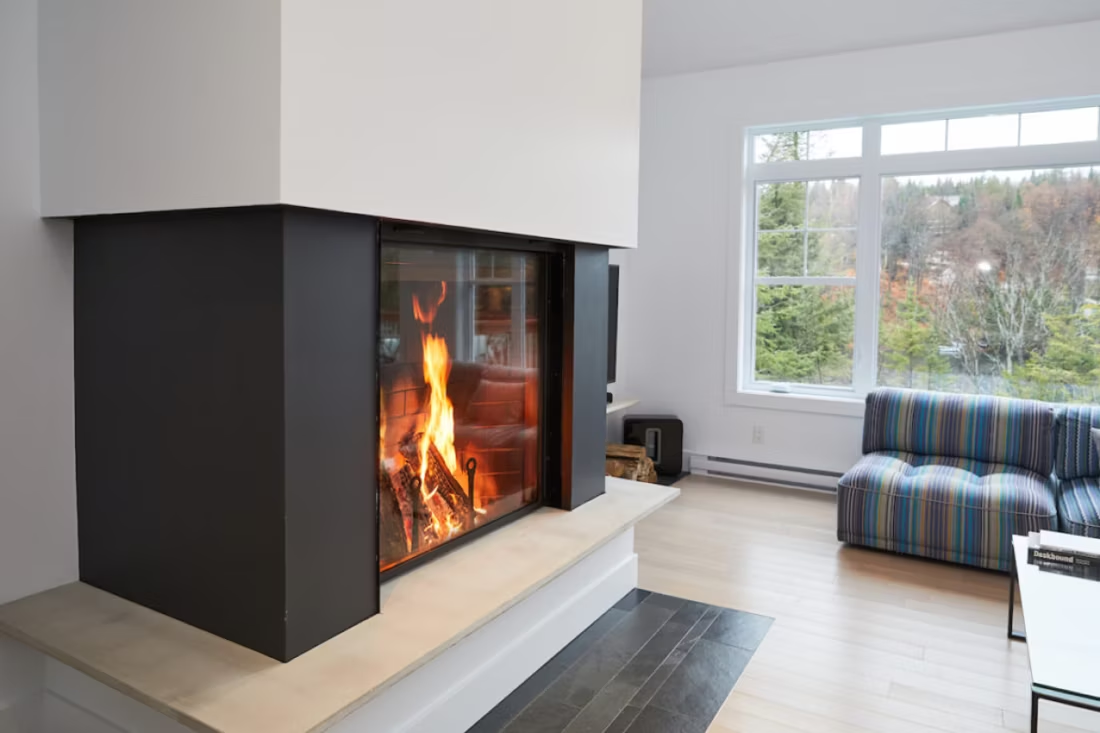
Four cover most of the market: screen-front traditional (mesh front, open feel, fits craftsman homes), traditional door set (the classic look you grew up with), modern linear (wide, low, the statement piece for entertaining), and clean face contemporary (no trim—your tile or stone runs right to the fire's edge). Walk in knowing those four terms and you're ahead of most buyers.
Nearby Dealers
Hearth shops serving Hamilton and the surrounding area. Every listing shows whether it is a WhyFire partner, a dealer we have verified as authorized for the brands we recommend, or a local business carrying hearth products. No manufacturer pays for placement. How we verify dealers →
Peter Martin Appliances
Mt. Hope Heating And Cooling Ltd
Maintemp Heating & Ac
Goemans Fireplaces
Erindale Contracting Ltd
Redwood Distribution
Cobblestone Embers
Get your free Project Guide & Parts List for a Hamilton wood heat project.
Tell us about your home, whether you've got an existing masonry chimney, and what neighbourhood you're in, and we'll help you find a trusted local dealer and send a free Project Guide & Parts List with the exact parts, vent kit, and permit steps your project needs.
Find Your Fireplace →