
On-demand warmth for Greater Napanee's -10°C winters.
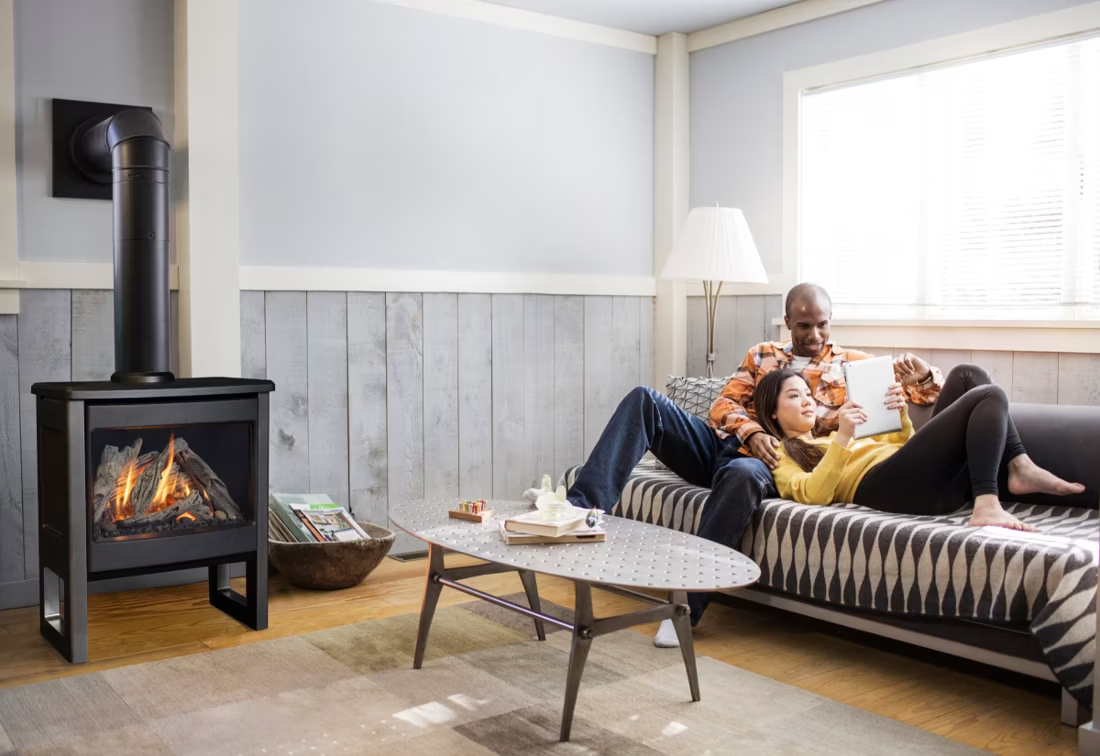
Enbridge Gas mains run through the built-up part of town, and a heating season that stretches from October into April along the Bay of Quinte makes a direct-vent gas fireplace an easy daily choice. We'll help you find a trusted local dealer who can walk you through the gas line work, the venting, and what will actually fit your home.
Every Project Starts From One of These Five Situations
Convenience that fits a working farm-and-town rhythm.
Greater Napanee sits on the 401 corridor between Kingston and Belleville, right where the Bay of Quinte narrows into the Napanee River. Winters here average around -10°C at the low end, with a heating season that stretches from October into April—not as brutal as Ottawa's or Sudbury's, but long enough that a fireplace running daily needs to be more than decorative. The dense sugar maple, red oak, white ash, and yellow birch stands across Lennox and Addington keep plenty of households burning wood as primary or backup heat, but a lot of homeowners in town and along the Dundas Street corridor want the same warmth without stacking and splitting cordwood every fall.
Enbridge Gas serves the built-up part of Greater Napanee, so a direct-vent gas fireplace or insert is a straightforward tie-in for most in-town addresses. Head out toward Newburgh, Selby, or the rural stretches of Stone Mills and Loyalist Township, and mains coverage thins out—propane tanks fill the gap, and most fireplace models a local dealer carries can run on either fuel. Either way, a gas unit lights instantly, doesn't need a chimney full of hardwood, and—with the right ignition system—can keep running through the ice storms and windstorms that periodically take down power across eastern Ontario.
Three steps. No salesperson until you're ready.
Tell us about your project
Your postal code, your situation, and the fuel you're leaning toward—or let the answers point you to one.
See what's actually available
The brands dealers within 100 miles genuinely carry—real options, never a catalog mirage.
Get your dealer & Project Guide
A trusted local dealer, plus the free Project Guide & Parts List that names every component of the job.
Frequently Asked Questions
How much does a gas fireplace installation cost in Greater Napanee?
Most installs run $6,000 to $15,000 CAD. A direct-vent insert dropping into an existing masonry firebox—common in the older stone and brick homes around downtown Napanee—lands toward the lower end. A new built-in unit for an addition or a home without an existing chimney, with fresh gas line runs and through-wall or through-roof venting, pushes toward the top of that range. Homes past the Enbridge Gas footprint that need a propane tank set instead of a mains tie-in should budget a bit extra for the tank and line.
Can I convert my existing wood fireplace to gas?
Yes, and it's a common request in the older farmhouses and stone homes scattered through Lennox and Addington, many of which were built to burn sugar maple or red oak in an open masonry firebox. A gas insert typically slides into that same firebox with a stainless liner run up the existing chimney, generally landing in the lower half of the $6,000-$15,000 range. If insurance has been asking about a WETT inspection on the wood side, converting to gas sidesteps that requirement entirely since it doesn't apply to gas appliances.
Do I need natural gas service, or should I plan for propane?
It depends on your address. Enbridge Gas mains reach the built-up part of Greater Napanee along Dundas Street and the surrounding blocks, but coverage thins quickly once you're out past town limits toward Newburgh, Selby, or the rural parts of Stone Mills and Loyalist Township. If your furnace or water heater is already on Enbridge gas, adding a fireplace is a simple branch line. If not, a propane tank is the standard fallback, and most fireplace models a local dealer stocks can be set up for either fuel.
Will a gas fireplace still work if the power goes out?
Most will, which is worth planning for in a region that's seen its share of ice storms and summer windstorms knock out power for days at a time. Units with intermittent pilot ignition (IPI) run on AA battery backup that kicks in automatically when the power drops. Some models, including several Valor units, skip the battery altogether because the pilot's thermocouple generates its own current. If outage resilience matters to you, ask your dealer which ignition system is on any model you're considering before you decide.
What's the difference between a gas fireplace, insert, and stove?
A gas fireplace is a built-in unit framed into a wall, which suits new construction or a full remodel. A gas insert fits inside an existing masonry firebox, the more common route in Greater Napanee's older stone and brick homes that already have a working chimney. A gas stove is freestanding on a hearth pad, similar in footprint to a wood stove but running off a gas line or propane tank instead of split maple or oak. For most existing homes in town, an insert is the least disruptive option.
Do I need a permit to install a gas fireplace in Greater Napanee?
Yes. You'll need a permit through the municipal building department, and the work has to meet the CSA B365 installation code along with a separate gas line permit tied to licensed gas-fitter work. Most local dealers handle both the permit application and the final inspection as part of the project, which saves you from coordinating the building department and a gas fitter separately.
Vented vs. vent-free gas fireplaces—what should I know here?
Direct-vent units draw combustion air from outside and exhaust it back outside through sealed venting, and they're the standard, code-compliant choice for a home running the fireplace daily through a long heating season. Vent-free units are legal in Ontario but come with strict room-sizing limits and add combustion byproducts to indoor air. Most local dealers steer Greater Napanee homeowners toward direct-vent, especially in tighter, well-sealed newer builds where indoor air quality matters more.
How often does a gas fireplace need to be serviced?
Plan on an annual check, ideally in late summer or early fall before the first cold snap rather than mid-winter when technicians are booked solid. A service visit covers the burner, pilot assembly, gas connections, and venting, and includes cleaning the glass—a lighter job than a wood chimney sweep, but skipping it on a unit that runs daily through the winter is how an ignition problem shows up on the coldest night in January. Expect roughly $150-$250 CAD for a standard visit.
Gas vs. wood—which makes more sense for a Greater Napanee home?
Wood has real advantages here: the Ontario Ministry of Natural Resources allows up to 10 cubic metres, or about 4 cords, of firewood per household per year at no cost from managed forest land, and the sugar maple, red oak, white ash, and yellow birch common across Lennox and Addington all split and burn well. Gas wins on convenience and on insurance—wood-burning appliances commonly need a WETT inspection to satisfy home insurers, while gas units don't carry that requirement. A lot of households in town run gas as their everyday fireplace and keep a wood stove or insert at the family camp or a rural property as backup.
Can a gas fireplace run on a thermostat?
Most modern gas fireplaces can—turn it on and off from the couch with a remote, or set a room temperature and let the fireplace hold the comfort zone for you. If low maintenance matters to your family, this is the feature set that makes gas the convenience pick over wood and pellet.
Why do fireplace quotes vary so much?
Because a fireplace is an iceberg—there's more behind the wall than in front of it. A low quote often covers only the unit; the full scope includes vent pipe, gas line or electrical, framing, and the tile or stone that has to come off and go back on. Make every bidder price the whole job. If a dealer can't speak to the full scope with confidence, that's your signal to keep looking.
What do I measure to size a fireplace insert?
Four numbers tell you what fits: the front width, the front height, the back width, and the overall depth of your existing fireplace opening. Grab a tape measure, jot those down, and snap a photo of the wall—those two things do more to move your project forward than anything else you can do today.
What's the difference between radiant and convective fireplace heat?
Most fireplaces are a thin metal box—they heat fine, but you rely on the fan to move the warmth into the room. Radiant models use a thick cast-ceramic firebox, about an inch and a quarter thick, that soaks up the fire's heat and radiates roughly 25–30% more warmth into the room with no fan running. If you watch TV in the same room or want heat in a power outage, radiant is worth asking about.
Nearby Dealers
Hearth shops serving Greater Napanee and the surrounding area. Every listing shows whether it is a WhyFire partner, a dealer we have verified as authorized for the brands we recommend, or a local business carrying hearth products. No manufacturer pays for placement. How we verify dealers →
We’ve paused dealer listings for this connection today. Enter your zip or postal code above to find dealers near you, or come back tomorrow.
Natural Gas Service in Greater Napanee
Confirm service at your address before planning a gas fireplace—a quick call settles it.
Enbridge Gas
Get your free Project Guide & Parts List for a Greater Napanee gas fireplace.
Tell us about your home and whether you're on Enbridge Gas or propane, and we'll help you find a trusted local dealer and send a free Project Guide & Parts List with the exact vent kit and parts your project needs.
Find Your Fireplace →