
Find your fireplace across Lennox and Addington.
Wood, gas, pellet, and electric fireplace resources for the whole region—from the Bay of Quinte shoreline at Napanee and Deseronto north into the hardwood bush and Shield country around Bon Echo. Pick a fuel and find a local dealer who actually installs it here.
Every Project Starts From One of These Five Situations
Sugar maple country, -10°C winters, and a region split between gas towns and wood-heated backroads.
Lennox and Addington stretches from the Bay of Quinte shoreline through Napanee, Deseronto, and Stone Mills north into Addington Highlands and the Canadian Shield country around Bon Echo Provincial Park and Mazinaw Lake. It sits in climate zone 5A, with average winter lows near -10°C and a heating season that typically runs from October through April—shorter and milder than what a place like Sudbury or Ottawa sees over the same stretch, but still long enough that wood, gas, and pellet heat all stay genuinely useful across the region. Sugar maple, red oak, white ash, and yellow birch dominate the local hardwood bush, and plenty of rural households still cut and split their own firewood off private woodlots or land managed through the Ontario Ministry of Natural Resources.
Where you sit in the region changes what makes sense. Enbridge Gas mains reach Napanee and parts of Deseronto, so gas fireplaces and inserts are a real, convenience-driven option along that corridor; head north toward Addington Highlands or the rural stretches around Erinsville and Tamworth and propane or wood carries more of the load. Some local municipalities now require certified, low-emission appliances in new construction given how much wood heat is already burned here, and any wood stove or insert install runs through the municipal building department under the CSA B365 installation code—insurance carriers commonly ask for a WETT inspection on top of that before they'll write or renew a policy. This hub rolls up hearth retailers, service technicians, and fuel suppliers across the whole region, from Napanee and Deseronto to the smaller townships further north. Pick a fuel below for local dealers, install notes, and pricing specific to your town.
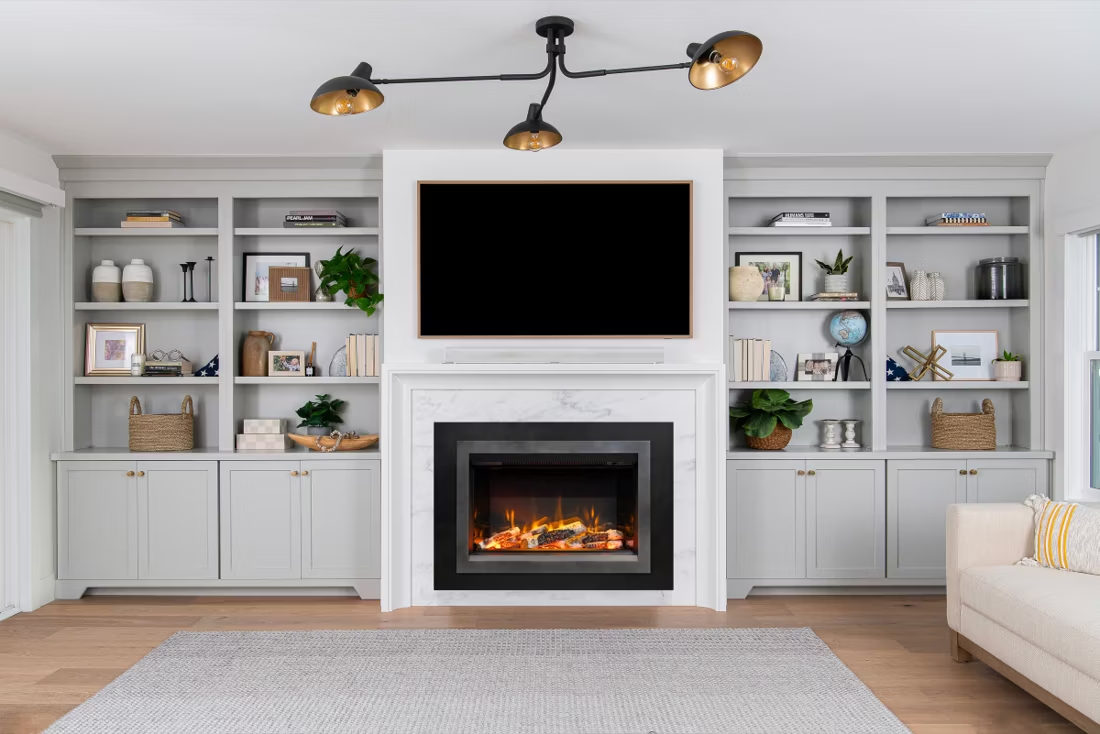
Four fuels. One honest answer for Lennox and Addington.
Wood
81 models available near Lennox and Addington.
Find your wood stove →Gas
365 models available near Lennox and Addington.
Find your gas fireplace →Pellet
See what's available near Lennox and Addington.
Find your pellet stove →Electric
11 models available near Lennox and Addington.
Find your electric fireplace →Three steps. No salesperson until you're ready.
Tell us about your project
Your postal code, your situation, and the fuel you're leaning toward—or let the answers point you to one.
See what's actually available
The brands dealers within 100 miles genuinely carry—real options, never a catalog mirage.
Get your dealer & Project Guide
A trusted local dealer, plus the free Project Guide & Parts List that names every component of the job.
Frequently Asked Questions
Which fireplace fuel makes the most sense in Lennox and Addington?
All four fuels have a real place here, and the right pick usually comes down to where you live in the region. Wood remains the backbone fuel on the rural backroads—sugar maple, red oak, white ash, and yellow birch are all common in the local hardwood bush, and a modern CSA-certified stove or insert will hold a fire well through a -10°C overnight without much trouble. Gas is the practical choice in Napanee and parts of Deseronto, where Enbridge Gas mains actually reach; further out toward Addington Highlands or Erinsville, gas usually means a propane tank rather than a mains hookup. Pellet stoves have a following region-wide, with Lacwood and Energex both distributed locally—they're a good middle ground for households that want wood-style heat without the splitting and stacking. Electric fireplaces are supplemental almost everywhere here; they're not built to carry a home through a full Ontario winter on their own, but they're a clean, no-venting option for a bedroom, basement, or secondary room.
Do I need a permit to install a wood stove or fireplace in Lennox and Addington?
Yes. New wood stove and insert installs go through your local municipal building department, and the work has to meet the CSA B365 installation code—that covers clearances, venting, and hearth protection. Gas fireplace and insert installs need a licensed gas fitter and a separate gas permit, particularly if you're extending a line from an Enbridge Gas main. Pellet stoves are permitted much like wood appliances but without the same insurance scrutiny. Electric fireplaces typically skip the permit process unless you're hardwiring a built-in unit that needs a new circuit. Most local retailers we help homeowners find handle the paperwork directly as part of the install, so it's rarely something you're chasing down yourself.
Why do some municipalities here require certified appliances for new construction?
Lennox and Addington sits in some of the densest hardwood country in central and eastern Ontario, and a lot of homes already burn wood as a primary or secondary heat source. Because of that concentration, a number of local municipalities now require any wood-burning appliance installed in new construction to be a certified, low-emission unit rather than an older, uncertified model. In practice this just means choosing a modern EPA or CSA-rated stove or insert—the kind any established local dealer stocks by default—so it rarely narrows your options, it mostly affects what a building inspector will sign off on.
Does insurance really require a WETT inspection for wood appliances?
Very commonly, yes. Most insurance carriers writing policies in Lennox and Addington ask for a current WETT inspection before they'll insure a home with a wood stove, insert, or fireplace—whether it's a new install or an existing appliance in a home you're buying. The inspection confirms the unit, chimney, and clearances meet code and haven't degraded with age. It's a modest cost against your total install budget, and any WETT-certified technician working in the region can perform one; a lot of retailers coordinate the inspection as part of the sale so you're not left tracking it down separately.
How does installation and service work outside Napanee?
Retailers and technicians are concentrated around Napanee but regularly travel out to Deseronto, Stone Mills, Erinsville, Tamworth, and the more remote stretches of Addington Highlands toward Bon Echo and Cloyne. Expect a modest trip charge for the farthest calls, and expect the fall booking window to fill up fast—getting your annual WETT inspection or gas service done in September or early October, before the first hard frost, keeps you ahead of the rush that hits every year once temperatures start dropping toward that -10°C winter average.
What does a fireplace installation typically cost in Lennox and Addington?
Costs depend on fuel and how much venting or gas-line work is involved. Wood stove or insert installs typically run $4,000-$9,000 CAD, more if a new chimney or full liner is needed. Gas fireplaces, inserts, and stoves usually land between $4,000-$10,000 CAD depending on whether an existing gas line reaches the install site or a new run is needed from an Enbridge main. Pellet stove or insert installs generally fall around $4,000-$7,000 CAD. Electric fireplaces are the outlier—$300-$3,000 CAD for the unit itself, plus a few hundred dollars in labour for anything beyond a simple plug-in placement. The region and fuel pages above break these figures down further with local retailer pricing.
How many BTUs do I need in a fireplace?
Wrong question—and the industry's favorite way to confuse you. More BTUs isn't better if the fireplace cooks you out of the room you spent thousands to enjoy. Think in terms you can verify: how many square feet the unit heats, whether it's primary or backup heat, and whether you want it running overnight. Those three answers size a fireplace correctly every time.
Will we actually use a fireplace once we have one?
In my own home, the room with the fireplace has never been the same—it became the social hub. Game nights, holidays, date nights after the kids are down: the fire is where the house gathers. There's a reason people in this industry joke that we're really in the romance and entertainment business. You won't wonder whether you'll use it; you'll wonder how the room worked before.
Wood, gas, pellet, or electric—how do I choose?
Match the fuel to your life, not the other way around. Wood: lowest fuel cost and total power-outage independence, but you're hauling and stacking. Gas: press a button, set a thermostat, no maintenance to speak of. Pellet: wood economics with automatic feeding, in exchange for weekly cleaning and a need for electricity. Electric: plugs in anywhere with honest supplemental heat. Nobody regrets the fuel that fits how they actually live.
What is an in-home preview and do I need one?
It's a visit where a hearth professional measures your space, confirms the model you picked actually works in your home, and walks the specs—framing, gas line, venting, finish work—before anything is ordered. Some details you just can't know until you see the house. Never make a down payment without one; it's the single most-skipped step that burns buyers.
Stove and Fireplace Dealers in Lennox and Addington
Listings include WhyFire partner dealers, dealers we have verified as authorized for the brands we recommend, and established local businesses that carry hearth products. Every listing shows which one it is. The ones marked Preferred run on WhyFire's software, so they can show you real pricing and book your appointment right here. No manufacturer pays for placement. How we verify dealers →
The Country Fireplace Company
Quinte Home Improvement Centre
Find a local Lennox and Addington dealer.
Pick your fuel below and we'll put together a free Project Guide & Parts List—the right unit, the vent kit it needs, and the local dealer we recommend for your project.
Find Your Fireplace →