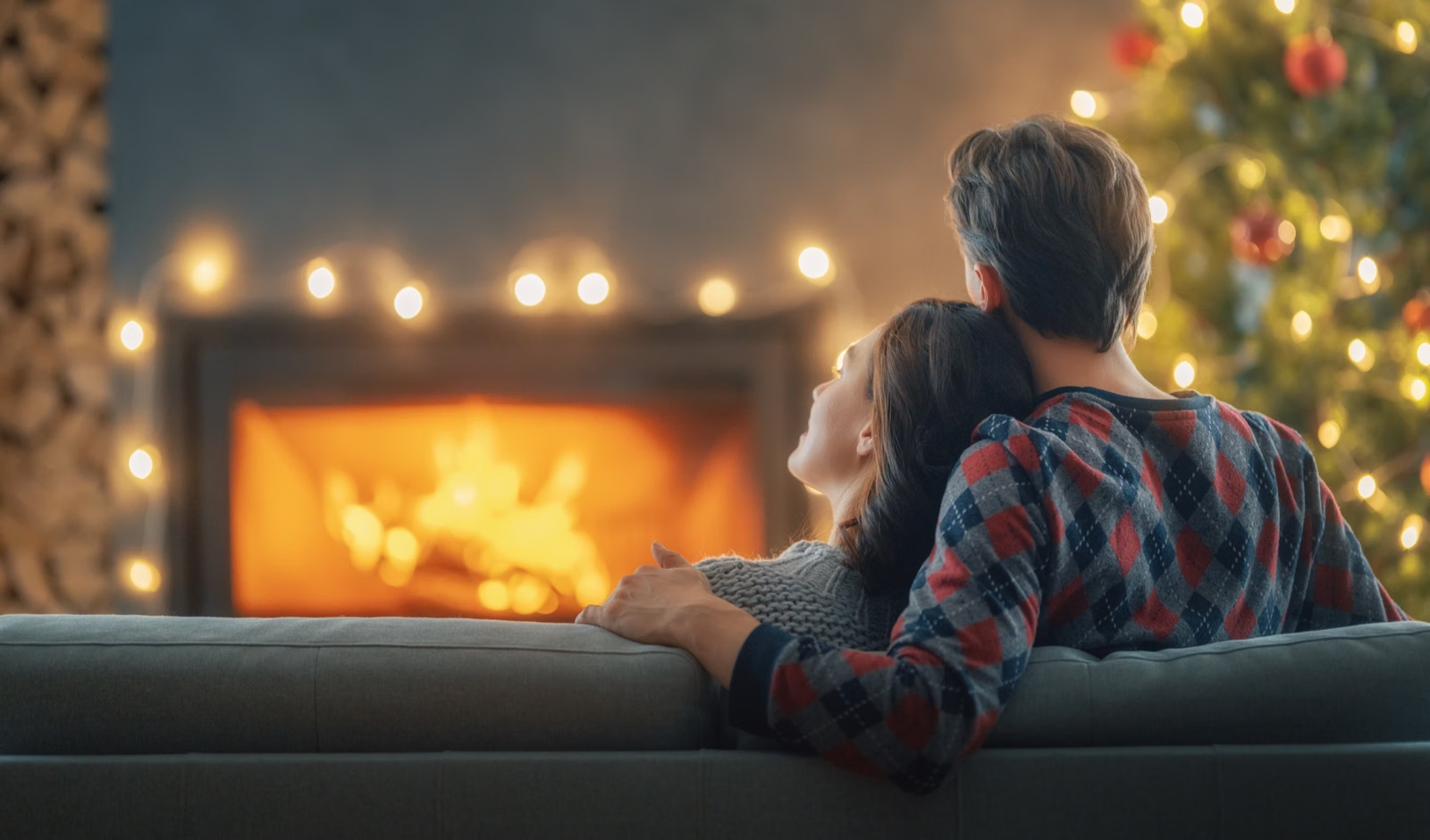
Keep Your Family Warm and Safe—No Matter What
Dryden sits at 387 metres in a climate where winter lows average -21.9°C and the heating season runs long. Find the right wood stove or insert, and we'll help you find a trusted local dealer who knows the CSA B365 code and what a WETT inspection actually requires.
Every Project Starts From One of These Five Situations
Wood heat here is practical, not a throwback.
Dryden's winters are the kind that make a backup heat source non-negotiable: average lows near -21.9°C, a freeze that sets in by November and doesn't let go until spring, and the same continental cold that keeps Thunder Bay and Winnipeg near the top of Canada's coldest-cities lists every year. At 387 metres in the Kenora Region, a home here needs more than a fireplace that looks nice on a Sunday afternoon—it needs a stove that can hold a fire through a long, dark February night.
The wood supply backs that up. Sugar maple, red oak, white ash, and yellow birch—all dense, high-BTU hardwoods—are common species split and stacked around Dryden, and the Ontario Ministry of Natural Resources issues free cutting permits for up to 10 cubic metres (about 4 cords) per household per year, year-round, in the Northern Boreal and Managed Forest zones surrounding the city. Natural gas is available in Dryden through Enbridge Gas, but plenty of households still lean on wood for its resilience during rural power outages and for the simple fact that a well-seasoned cord of local hardwood costs far less than running a furnace all winter. Any new installation needs to meet the CSA B365 installation code, go through the municipal building department, and—since most insurers here ask for it—pass a WETT inspection before you're covered.

Firewood Cutting Permits Near Dryden
Ontario Ministry Of Natural Resources
Three steps. No salesperson until you're ready.
Tell us about your project
Your postal code, your situation, and the fuel you're leaning toward—or let the answers point you to one.
See what's actually available
The brands dealers within 100 miles genuinely carry—real options, never a catalog mirage.
Get your dealer & Project Guide
A trusted local dealer, plus the free Project Guide & Parts List that names every component of the job.
Frequently Asked Questions
How much does a wood stove installation cost in Dryden?
Most wood stove installations in Dryden run $6,000-$12,000 CAD, with the range driven mostly by venting. Dropping an insert into an existing masonry chimney that's already in decent shape sits toward the low end. A full Class A chimney system through the roof—common in newer Dryden homes built without a fireplace already in place—pushes toward the top. Add a hearth pad, a permit through the municipal building department, and a WETT inspection for your insurer, and most of that gets folded into a local dealer's quote.
What size wood stove do I need for a Dryden home?
With average winter lows near -21.9°C and stretches that go colder, undersizing is the mistake to avoid. A stove rated for under 1,000 square feet is fine as a supplemental unit in a small addition, but most Dryden living areas do better with a medium to large stove built to hold an overnight burn, so you're not reloading at 2 a.m. in January. A local dealer will size it against your actual insulation and ceiling height rather than square footage alone, since older Dryden homes and newer builds lose heat very differently.
Do I need a permit to install a wood stove in Dryden?
Yes. New installations go through the municipal building department and must meet the CSA B365 installation code, which governs clearances, venting, and hearth protection. On top of that building permit, most insurers serving Dryden homeowners will ask for a WETT inspection before they'll cover a wood-burning appliance, so plan for that as a separate step even after the building permit is signed off.
What's the difference between a wood stove and a wood insert for my house?
A freestanding wood stove sits on its own hearth pad and vents up through new Class A pipe, which works well in newer Dryden homes that were never built with a masonry fireplace. A wood insert slides into an existing masonry firebox and reuses the chimney that's already there, which is the more common upgrade in older homes around town with an open fireplace nobody uses anymore. Inserts typically land toward the lower end of the $6,000-$12,000 range since the chimney structure doesn't need to be built from scratch.
Where do I get a firewood cutting permit near Dryden?
The Ontario Ministry of Natural Resources issues cutting permits for the Northern Boreal and Managed Forest zones around Dryden, and they're free for up to 10 cubic metres—roughly 4 cords—per household per year, with a season that runs year-round rather than a short summer window. Sugar maple and red oak are worth prioritizing if you find them on a permitted lot; both burn hotter and longer than softer woods, and either one, well-seasoned, will get a stove through a Dryden overnight burn without much trouble.
What's the best wood stove for Dryden winters?
Given how long and cold the Dryden heating season runs, a lot of local dealers point toward catalytic stoves—Blaze King is a common recommendation—because they can hold a fire well past 12 hours, useful when it's -25°C at 3 a.m. and you don't want to be up feeding it. Non-catalytic stoves from Pacific Energy or Regency are a solid, lower-maintenance option too, especially if wood is backup heat rather than your primary source. Either way, look for a CSA-certified unit—it's required under the CSA B365 code and it's also the first thing your WETT inspector and insurer will check.
How often should my chimney be inspected in Dryden, and does insurance require it?
An annual inspection before the season starts—ideally in October, ahead of the first hard freeze—is the standard recommendation, and it matters more here than in milder parts of Ontario given how many months a stove actually runs through a Dryden winter. Most home insurers serving the area require a current WETT inspection on file for a wood-burning appliance to stay covered, so pair the sweep with a WETT check rather than treating them as separate errands. Homes burning oak or maple as a steady primary heat source, easily 4 or more cords a winter, are also good candidates for a mid-season check if the wood wasn't fully seasoned.
Wood vs. gas—which makes more sense for a Dryden home?
Enbridge Gas serves Dryden, so gas is a real option here, and it wins on convenience—no splitting, stacking, or loading a firebox at 6 a.m. Wood wins on two things that matter in a town this size: cost, since a permitted cord of local maple or oak costs far less than heating with gas all winter, and resilience, since a wood stove keeps working through the power outages that come with winter storms even if the gas furnace's blower can't run. A lot of Dryden households end up running gas as the everyday convenience fuel and keeping a certified wood stove as backup that doesn't care whether the power's out.
Are there rules about wood stove emissions or certification in Dryden?
Yes—new wood-burning installations need to be CSA-certified low-emission appliances, which is standard practice now and something any hearth dealer working in the Kenora Region already builds into a quote. Given how dense the hardwood supply is in this part of Ontario and how many households burn through a long season, a number of municipalities have moved toward requiring certified appliances specifically in new construction, and your local dealer can confirm exactly what applies at your address before you buy.
Why do fireplace quotes vary so much?
Because a fireplace is an iceberg—there's more behind the wall than in front of it. A low quote often covers only the unit; the full scope includes vent pipe, gas line or electrical, framing, and the tile or stone that has to come off and go back on. Make every bidder price the whole job. If a dealer can't speak to the full scope with confidence, that's your signal to keep looking.
Louvered or clean face—which fireplace front is better?
Louvered fronts have grill work above and below the glass for airflow, move heat a little better with a fan, and suit traditional mantels. Clean face designs drop the louvers entirely so finish work runs to the fire's edge—they fit both modern and traditional rooms. When we did our own home we chose clean face: a big viewing area beat a little extra airflow. It depends on your room, not on a rulebook.
Do I have to leave the stove door cracked open to start a fire?
On many stoves, yes—a new fire needs extra air, and cracking the door a couple inches is how most stoves get it. But some modern stoves offer an automatic startup air system: engage it when you light, and timed air jets feed the fire for the first 20 minutes with the door fully shut, then close automatically. It's mechanical—like an egg timer, no electricity—and it means you can load it, light it, and walk away.
Why is my open fireplace making my house colder?
Open fireplaces suck—literally. As the fire burns, it consumes air your furnace already paid to heat and pulls it out through the chimney, so the house is actually colder after the fire goes out than before you lit it. An insert fixes this: it seals the chimney, puts fixed glass across the front, and turns that hole in your house into a real heat source.
Nearby Dealers
Hearth shops serving Dryden and the surrounding area. Every listing shows whether it is a WhyFire partner, a dealer we have verified as authorized for the brands we recommend, or a local business carrying hearth products. No manufacturer pays for placement. How we verify dealers →
Northern Energy
Get your free Project Guide & Parts List for a Dryden wood heat project.
Tell us about your home and we'll help you find a trusted local dealer and send a free Project Guide & Parts List—sized for winters that hit -21.9°C, with the vent kit and parts specified so there's no guesswork.
Find Your Fireplace →