
Find your fireplace across the Kenora Region.
Wood, gas, pellet, and electric fireplace resources for the whole region—from the Lake of the Woods shoreline around Kenora out to Dryden, Sioux Lookout, and Red Lake. Pick a fuel and find a local dealer who actually works in your part of the region.
Every Project Starts From One of These Five Situations
Long boreal winters, dense hardwood forests, and a region built for wood heat.
The Kenora Region stretches across a vast swath of Northwestern Ontario, from the Lake of the Woods shoreline near Kenora itself out through Dryden, Sioux Lookout, Ear Falls, and Red Lake. Winters here average around -20.5°C, cold enough to put the region in the same territory as Winnipeg just across the Manitoba border—long stretches of hard freeze, short shoulder seasons, and a heating season that typically runs from October through April. Sugar maple, red oak, white ash, and yellow birch are the hardwoods most local households burn, much of it self-cut under Ontario Ministry of Natural Resources permits on Crown land, which keeps wood heat both affordable and deeply embedded in how people here get through winter.
That same abundance of hardwood cuts both ways: several municipalities in the region now require certified low-emission appliances in new construction, a response to how much wood smoke a region this wood-reliant can generate on still, cold nights. Installs go through the municipal building department under the CSA B365 code, and insurers commonly ask for a WETT inspection on wood appliances before they'll write a policy—both routine steps a good local dealer walks through as part of the job, not a hurdle you handle alone. This hub rolls up hearth retailers, service technicians, and fuel suppliers across the entire region, from Kenora and Dryden to Vermilion Bay, Ignace, and Red Lake. Pick your fuel below for local dealers, install costs, and unit recommendations specific to your town.
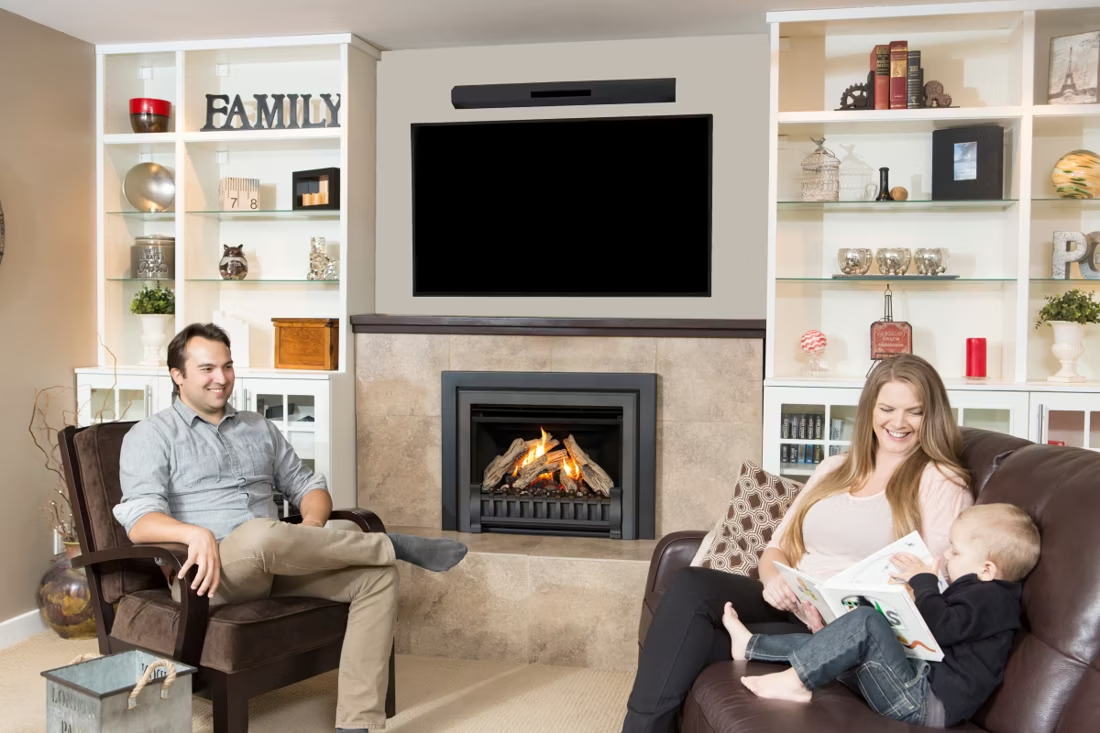
Four fuels. One honest answer for Kenora Region.
Three steps. No salesperson until you're ready.
Tell us about your project
Your postal code, your situation, and the fuel you're leaning toward—or let the answers point you to one.
See what's actually available
The brands dealers within 100 miles genuinely carry—real options, never a catalog mirage.
Get your dealer & Project Guide
A trusted local dealer, plus the free Project Guide & Parts List that names every component of the job.
Frequently Asked Questions
Which fireplace fuel makes the most sense for a home in the Kenora Region?
All four fuels have a real place here, but the right choice depends on where in the region you sit. Wood is the backbone fuel for most rural properties—sugar maple, red oak, white ash, and yellow birch are all locally abundant, and a catalytic wood stove burning dense hardwood will hold a fire well through an overnight low of -20.5°C. Natural gas is the convenience option in and around Kenora and Dryden, where service reaches; further out toward Ear Falls or Red Lake, propane fills the same role. Pellet stoves have a following here too, with Lacwood and Energex both distributed regionally, and they appeal to homeowners who want wood-like heat without cutting and hauling their own supply. Electric fireplaces are supplemental almost everywhere in the region—useful for a bedroom, cabin bunkie, or secondary room, but not sized to carry a home through a full Northwestern Ontario winter on their own.
Do I need a permit to install a wood stove or gas fireplace in the Kenora Region?
Yes, in almost every case. Installations go through your local municipal building department, and CSA B365 governs how solid-fuel appliances are installed and vented. If you're cutting your own firewood on Crown land, you'll also need a permit from the Ontario Ministry of Natural Resources. On the insurance side, most companies ask for a WETT inspection before they'll cover a wood stove or insert, which is a separate step from the building permit but just as important to line up before your first fire. Gas installations need a licensed gas fitter and a permit for any new gas line. Most retailers we help homeowners find handle this paperwork directly as part of the install.
Are there restrictions on wood stoves given how much firewood gets cut and burned in this region?
Some municipalities in the Kenora Region now require certified low-emission appliances in new construction, a direct response to how wood-reliant the area is—dense hardwood forests make firewood cheap and plentiful, but heavy wood use also means winter air quality matters more here than in a region that leans on gas or electricity. A modern CSA-certified wood stove or insert meets these requirements without any real compromise on heat output; the restriction mainly rules out older, uncertified units in new builds. A local dealer familiar with your municipality's rules will know exactly which units qualify and can walk you through the paperwork alongside your building permit.
Is natural gas actually available across the whole Kenora Region, or mostly in town?
Natural gas service exists in the region, but it's concentrated in the built-up cores of Kenora and Dryden rather than spread evenly across the whole area. If you're in Sioux Lookout, Ear Falls, Red Lake, Vermilion Bay, or one of the more rural stretches between towns, propane is the more realistic option for a gas fireplace or insert—functionally similar appliance, just fed from a tank instead of a buried line. Before assuming gas is off the table, it's worth having a local dealer check what's actually running down your street, since service boundaries shift as new subdivisions get built out.
How does installation and service work given how spread out the Kenora Region is?
Retailers and service crews are based mainly in Kenora and Dryden but regularly travel out to Sioux Lookout, Ear Falls, Red Lake, and Ignace—some of those trips run well over 100 kilometres one way. Expect a travel fee built into quotes for the farthest properties, and expect scheduling to tighten up fast once temperatures start dropping toward that -20.5°C average low, since everyone wants their annual sweep or gas inspection done before the first hard freeze. Booking service in late summer or early fall, rather than waiting for the cold snap, is the single best way to avoid a multi-week wait on a rural property.
What does a fireplace installation typically cost in the Kenora Region?
Costs vary by fuel and by how much venting or gas-line work your home needs. Wood stove or insert installs typically run $4,500-$9,500 CAD, with full chimney work on new construction pushing higher; CSA-certified units are standard and already priced into that range. Gas fireplaces, inserts, and stoves generally run $5,000-$11,000 CAD depending on whether a gas line needs to be extended or you're converting an existing masonry hearth. Pellet stove or insert installs tend to land around $4,500-$7,500 CAD. Electric fireplaces are the outlier—$300-$3,000 CAD for the unit itself, plus $500-$1,200 CAD in labour for anything beyond a simple plug-in placement. The region and fuel pages above break these numbers down further with local retailer pricing.
How many BTUs do I need in a fireplace?
Wrong question—and the industry's favorite way to confuse you. More BTUs isn't better if the fireplace cooks you out of the room you spent thousands to enjoy. Think in terms you can verify: how many square feet the unit heats, whether it's primary or backup heat, and whether you want it running overnight. Those three answers size a fireplace correctly every time.
Will we actually use a fireplace once we have one?
In my own home, the room with the fireplace has never been the same—it became the social hub. Game nights, holidays, date nights after the kids are down: the fire is where the house gathers. There's a reason people in this industry joke that we're really in the romance and entertainment business. You won't wonder whether you'll use it; you'll wonder how the room worked before.
What are the biggest mistakes people make buying a fireplace?
Five come up constantly: budgeting for the unit but not the full job (vent, gas line, electrical, finish work); drowning in options instead of starting from style and fuel; buying without an in-home preview; handing installation to a handyman instead of a pro; and giving up out of sheer indecision. Every one is avoidable with a clear plan—step one, step two, step three.
Should the dealer who sells my fireplace also install it?
Ideally, yes. A fireplace project involves vent pipe, gas line, electrical, and often tile or stone. Hire three or four separate trades and you own the liability and the game of telephone between them. One company selling and installing means one accountable party, start to finish—ask about factory training, on-time completion records, and what happens if an inspection fails.
Stove and Fireplace Dealers in Kenora Region
Listings include WhyFire partner dealers, dealers we have verified as authorized for the brands we recommend, and established local businesses that carry hearth products. Every listing shows which one it is. The ones marked Preferred run on WhyFire's software, so they can show you real pricing and book your appointment right here. No manufacturer pays for placement. How we verify dealers →
Northern Energy
Find a local Kenora Region dealer.
Pick your fuel below and we'll put together a free Project Guide & Parts List—the right unit, the vent kit it needs, and the local dealer we recommend for your project.
Find Your Fireplace →