
Steady heat for Carp winters that hit -16.7°C and colder.
Carp sits at 110 metres in the Ottawa Region, where Enbridge Gas already runs to most of the village. We'll help you find a trusted local dealer who knows the gas line work, the venting, and what's actually installable on your street or your rural lot just outside town.
Every Project Starts From One of These Five Situations
Heat that starts before the woodpile does.
Carp's winters run long and genuinely cold—an average low near -16.7°C with a heating season that stretches from October well into April, the kind of stretch that puts it in the same conversation as Ottawa itself rather than the milder pockets of southern Ontario. That's a real climate zone 6A winter, and a lot of homeowners here have decided they don't want a heat source that depends on them being home to reload it.
The village itself sits within Enbridge Gas's distribution network, which makes a direct-vent gas fireplace or insert a straightforward retrofit for most Carp addresses—no propane tank, no delivery schedule. Out on the surrounding concessions and farm properties around the Carp Fairgrounds, though, plenty of homes sit past the gas main and run on propane instead; either fuel path works in the same fireplace or insert, it's just a matter of which line reaches your lot. Wood still has deep roots here too, with sugar maple, red oak, white ash, and yellow birch all common in local woodlots, but a growing number of households are pairing that wood stove with a gas unit for the main living space so the house stays warm on the nights nobody wants to split kindling.
Three steps. No salesperson until you're ready.
Tell us about your project
Your postal code, your situation, and the fuel you're leaning toward—or let the answers point you to one.
See what's actually available
The brands dealers within 100 miles genuinely carry—real options, never a catalog mirage.
Get your dealer & Project Guide
A trusted local dealer, plus the free Project Guide & Parts List that names every component of the job.
Frequently Asked Questions
How much does a gas fireplace installation cost in Carp?
Typical installs in the Carp area run $6,000 to $15,000 CAD. A direct-vent insert going into an existing masonry firebox near an Enbridge Gas line—common in older farmhouses along the concessions—lands toward the lower end. A new built-in unit for a renovation or addition, especially one needing a propane tank set and line run for a property outside the gas main, pushes toward the top of that range. Your dealer's quote should include both the appliance and the venting, not just the fireplace itself.
Can I convert my existing wood fireplace to gas?
Yes, and it's a common project on the older stone and brick fireplaces you'll find on rural properties around Carp. A gas insert typically slides into the existing firebox with a stainless liner run up the current chimney, generally landing between $6,000 and $11,000 depending on whether the property is on Enbridge Gas or propane. If your old wood-burning unit would need a WETT inspection to satisfy your insurer anyway, converting to gas sidesteps that requirement entirely since the CSA B365 wood code and WETT inspections don't apply to gas appliances.
Is natural gas actually available in Carp, or do I need propane?
It depends on exactly where you are. Enbridge Gas serves the village core of Carp, so homes on or near the main streets can typically tie a fireplace into existing service with a simple line extension. Once you're out on the surrounding rural concessions and farm lots in West Carleton, the gas main often doesn't reach, and propane with a tank on the property is the standard fallback. Most fireplace models a local dealer carries can be set up for either fuel, so the appliance choice isn't limited—only the fuel source is.
Will a gas fireplace still work during a power outage?
Most will, which matters in a rural area like Carp where Hydro One lines can take longer to restore after an ice storm or a heavy snow event than they would closer to downtown Ottawa. Units with intermittent pilot ignition run on AA battery backup that kicks in automatically when the power drops. Some models, including several from Valor, skip batteries entirely because the pilot's thermocouple generates its own current. Ask your dealer which ignition system is on any unit you're considering—for a property that sometimes loses power for a day or more, it's worth prioritizing.
What's the difference between a gas fireplace, insert, and stove?
A gas fireplace is a built-in unit framed into a wall, which suits new construction or a full renovation. A gas insert fits inside an existing masonry firebox, the common route in Carp's older stone farmhouses that want to keep the original chimney chase working. A gas stove is freestanding on a hearth pad, similar footprint to a wood stove but running off a gas line or propane tank instead of split maple or oak. For most existing Carp homes, an insert is the least disruptive way to add gas heat.
Do I need a permit to install a gas fireplace in Carp?
Yes. You'll need a building permit through the municipal building department, and the gas connection itself has to be done by a licensed gas fitter registered with the Technical Standards and Safety Authority. Most hearth dealers who work in the Ottawa Region handle both the building permit paperwork and the gas fitter scheduling as part of the job, so you're not coordinating two separate trades on your own.
Should I get a vented or vent-free gas fireplace?
Direct-vent units pull combustion air from outside and exhaust it back outside through sealed venting, which is the standard most dealers install in Ontario homes and the safer choice for daily use through a five-to-six-month heating season. Vent-free appliances face much tighter restrictions here and aren't the default recommendation for a primary heat source. Given how much of the year a Carp household actually runs the fireplace, direct-vent is what most local dealers spec unless there's a specific reason not to.
How often does a gas fireplace need servicing?
Plan on an annual check, ideally in late summer or early fall before the first cold snap rather than mid-winter when technicians are booked solid across the Ottawa Region. A technician checks the burner, pilot assembly, gas connections, and venting, and cleans the glass. It's a lighter job than a wood chimney sweep, but skipping it on a unit that runs daily through a Carp winter is how a pilot or ignition problem shows up on the coldest night of the year.
Gas vs. wood—which makes more sense for a Carp property?
Wood still has a strong case here: sugar maple, red oak, white ash, and yellow birch are all common in local woodlots, the Ontario Ministry of Natural Resources allows free cutting up to 10 cubic metres per household a year on managed forest land, and a wood stove keeps working with no power at all. Gas wins on convenience—no splitting, no stacking, no WETT inspection to satisfy your insurer—and it's the easier choice for a main living space you want warm on demand. Plenty of households around Carp end up with both: a wood stove for backup and cost control, gas for the room they actually live in day to day.
Can a gas fireplace run on a thermostat?
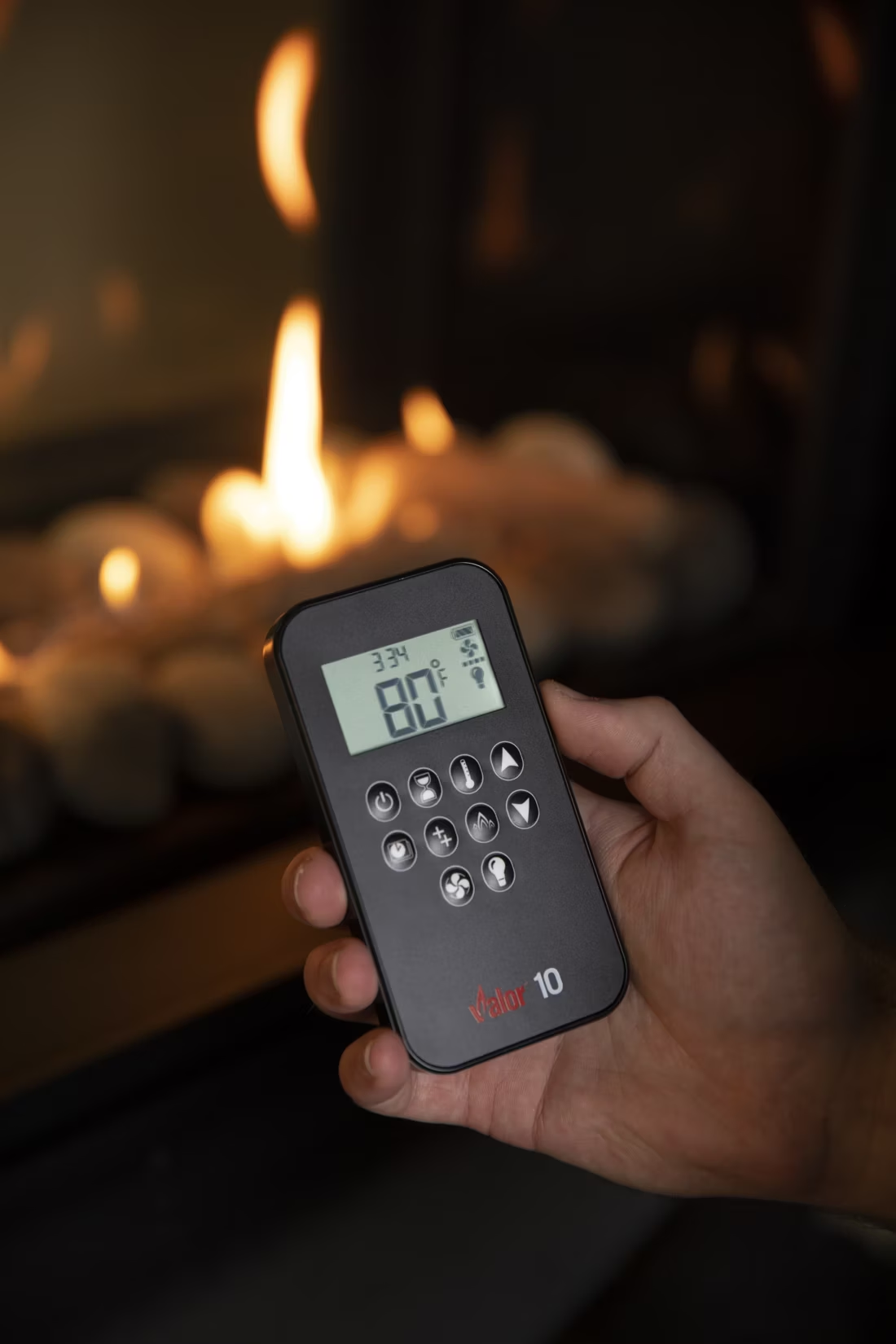
Most modern gas fireplaces can—turn it on and off from the couch with a remote, or set a room temperature and let the fireplace hold the comfort zone for you. If low maintenance matters to your family, this is the feature set that makes gas the convenience pick over wood and pellet.
Why do fireplace quotes vary so much?
Because a fireplace is an iceberg—there's more behind the wall than in front of it. A low quote often covers only the unit; the full scope includes vent pipe, gas line or electrical, framing, and the tile or stone that has to come off and go back on. Make every bidder price the whole job. If a dealer can't speak to the full scope with confidence, that's your signal to keep looking.
What fireplace styles should I know before shopping?
Four cover most of the market: screen-front traditional (mesh front, open feel, fits craftsman homes), traditional door set (the classic look you grew up with), modern linear (wide, low, the statement piece for entertaining), and clean face contemporary (no trim—your tile or stone runs right to the fire's edge). Walk in knowing those four terms and you're ahead of most buyers.
Are new gas fireplaces really better than old ones?
Two ways, and they're both big. Looks: modern gas fireplaces are realistic enough that it's hard to believe they aren't burning wood. Cost: old units burn a standing pilot year-round (roughly $200 a year), while new ones use pilot-on-demand ignition and modern burners. Add remote controls and thermostat operation, and the day-to-day experience isn't close.
Nearby Dealers
Hearth shops serving Carp and the surrounding area. Every listing shows whether it is a WhyFire partner, a dealer we have verified as authorized for the brands we recommend, or a local business carrying hearth products. No manufacturer pays for placement. How we verify dealers →
Fire It Up Fireplaces
Schreiter’s Furniture Store
Advanced Prefabs Hearth Distribution
Northern Comfort Stoves
Entreprise Proulx
Top Hat Home Comfort Services
Nev's Heating And Cooling Inc
Hubert Heating Limited
Hubert's Fireplaces
Natural Gas Service in Carp
Confirm service at your address before planning a gas fireplace—a quick call settles it.
Enbridge Gas
Get your free Project Guide & Parts List for a Carp gas fireplace.
Tell us about your home, whether you're on Enbridge Gas or propane, and we'll help you find a trusted local dealer and send a free Project Guide & Parts List with the exact vent kit and parts your project needs.
Find Your Fireplace →