
Warm Up Warr Acres Without Lifting a Log.
Instant, thermostat-controlled heat for Oklahoma City's mild but unpredictable winters. Find the right gas fireplace or insert and connect with a trusted local dealer.
Every Project Starts From One of These Five Situations
Reliable warmth for a mild but real Oklahoma winter.
Warr Acres sits just west of downtown Oklahoma City at about 1,300 feet elevation, in a climate zone (3A) where winter lows average around 28°F and the heating season runs a fraction as long as it does in places like Fargo or Duluth. With a winter heating need that's just a small fraction of what those colder cities face, most homes here don't need a heating system built for six-month winters—they need something that delivers real warmth fast during the occasional hard freeze or ice storm, then sits idle the rest of the season.
That's where gas fits well. Natural gas service runs throughout most of Warr Acres and the surrounding OKC metro, so many homes already have a line nearby a fireplace could tap into. A lot of the city's housing stock dates to the 1950s and 60s and still has an original masonry wood-burning fireplace that rarely gets used—a gas insert converts that into an on-demand heat source with the flip of a switch. And with OG&E service occasionally interrupted by central Oklahoma's ice storms, a gas fireplace with battery-backup ignition can keep one room warm even when the power's out.
Three steps. No salesperson until you're ready.
Tell us about your project
Your zip code, your situation, and the fuel you're leaning toward—or let the answers point you to one.
See what's actually available
The brands dealers within 100 miles genuinely carry—real options, never a catalog mirage.
Get your dealer & Project Guide
A trusted local dealer, plus the free Project Guide & Parts List that names every component of the job.
Frequently Asked Questions
How much does a gas fireplace installation cost in Warr Acres?
Most gas fireplace installations in Warr Acres fall between $3,500 and $9,000, depending on whether you're inserting a unit into an existing masonry fireplace or building out a new direct-vent fireplace where none existed. Homes in the older sections near NW 63rd and MacArthur, many built in the 1950s and 60s with a wood-burning fireplace already in place, tend to land on the lower end since the chimney chase is already there. New construction or a fireplace added to a room that never had one runs higher once framing, gas line extension, and venting are factored in. A local hearth dealer will give you a firm number after walking your space.
Can I convert my existing wood fireplace to gas?
Yes, and it's a common upgrade in Warr Acres, where a lot of the housing stock dates to the postwar boom and still has an original masonry wood-burning fireplace that rarely gets used. A gas insert slides into that existing firebox and vents through a stainless liner run up the same chimney, so you keep the look of the fireplace but get instant, thermostat-controlled heat instead of hauling in oak or hickory. Because natural gas service is common throughout the Oklahoma City metro, most homes already have a line nearby that just needs to be extended to the fireplace.
Do I need natural gas, or can I run a fireplace on propane?
Either works. Most of Warr Acres and the surrounding OKC metro is served by natural gas, so if your water heater or furnace already runs on it, adding a fireplace on the same line is usually the simplest and cheapest path. If you're on a lot without gas service or want a stand-alone system, propane is a straightforward alternative—you'll need a tank installed by a local propane supplier, and your fireplace will be set up with the correct orifice for propane rather than natural gas. Your installer handles this configuration either way.
Will my gas fireplace still work if the power goes out?
Yes, and this matters more in Warr Acres than you might expect given how mild the winters usually are—the ice storms that periodically move through central Oklahoma have knocked out power to the metro for days at a time. Gas fireplaces with IPI (intermittent pilot ignition) run on a small battery backup that kicks in automatically, so the flame lights and the blower runs even with the grid down. Valor fireplaces skip batteries entirely, generating their own power through the pilot's thermocouple. Either option gives you a functioning heat source in your living room when OG&E service is interrupted.
What's the difference between a gas fireplace, insert, and stove?
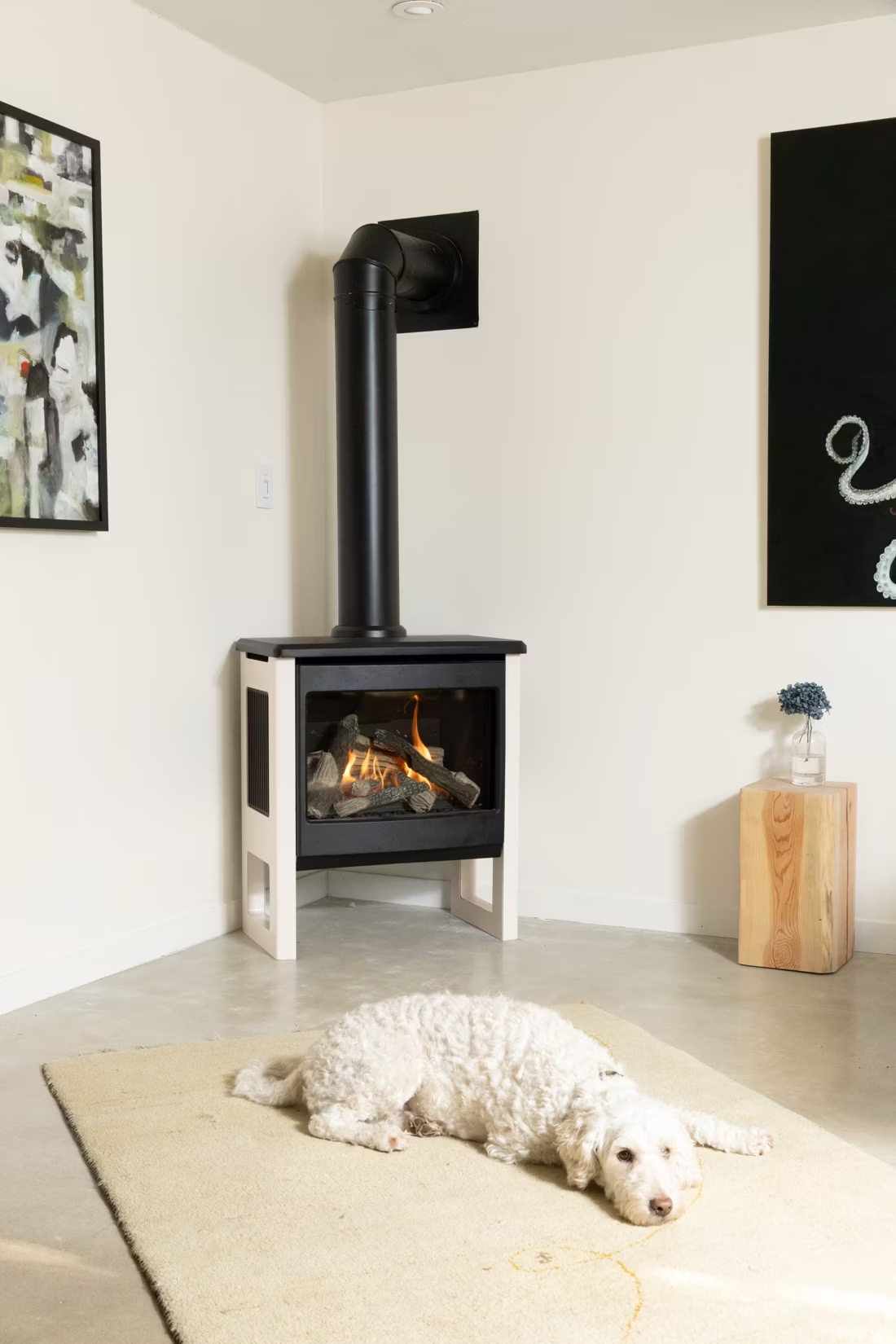
A gas fireplace is a built-in unit framed into a wall, typically used in new construction or a remodel where there's no existing masonry opening. A gas insert is sized to slide into an existing wood-burning fireplace and uses that chimney as its vent path—this is the most common project for older Warr Acres homes with an unused masonry fireplace. A gas stove is a freestanding cabinet unit that sits out in the room like a wood stove would, useful if you want supplemental heat in a space without any existing fireplace opening at all.
Do I need a permit to install a gas fireplace in Warr Acres?
Yes. The City of Warr Acres requires a building permit for a new gas fireplace installation, and the gas line work itself has to be done by a licensed gas-fitter and inspected separately. Most hearth dealers who install in the Warr Acres/Oklahoma County area handle both the building permit and the gas line coordination as part of the job, so you're not stuck managing two separate trades and two separate inspections yourself.
Should I get a vented or vent-free gas fireplace?
Vented (direct-vent) units draw combustion air from outside and exhaust it back outside through a sealed pipe—they're the standard choice and the safest option for full-time use. Vent-free fireplaces burn without any exterior venting at all and are legal in Oklahoma, provided the room size and ventilation meet the manufacturer's specs, but they release some combustion byproducts into the room. For a primary living space in Warr Acres, most dealers steer homeowners toward a direct-vent unit; vent-free is sometimes used for a converted garage, sunroom, or other space where running a vent line is impractical.
How often does a gas fireplace need service?
Plan on an annual inspection, usually scheduled in early fall before the first cold snap. A technician checks the burner, pilot assembly, venting, and gas connections, and cleans the glass and interior. This is quicker and less involved than a wood-stove chimney sweep—most Warr Acres service calls run $125 to $200—but it matters just as much, since a fireplace that sits unused most of the year in this mild climate can develop spider nests or debris in the venting that block the flue.
Should I consider a wood-burning fireplace instead of gas?
Probably not as your main option. Warr Acres sits in climate zone 3A with winter lows averaging around 28°F and a heating need that's just a fraction of what places like Duluth or Fargo face, where a wood stove earns its keep running most of the winter. Local oak, hickory, and mesquite are available for anyone who wants a wood-burning setup for ambiance or occasional use, but the mild, short heating season here means most homeowners choose gas or electric for anything that has to perform night after night. Gas gives you instant, adjustable heat without sourcing and storing firewood for a season that's already short.
Why is a fireplace insert so efficient?
An insert does two things: it seals the chimney completely, so you stop losing air you already paid to heat, and it radiates warmth into the room through the firebox and glass. Most add a heat-exchange fan that pulls cool room air underneath, wraps it around the hot firebox, and pushes it back out warm. Your home is more efficient before you've even lit the first fire.
Are new gas fireplaces really better than old ones?
Two ways, and they're both big. Looks: modern gas fireplaces are realistic enough that it's hard to believe they aren't burning wood. Cost: old units burn a standing pilot year-round (roughly $200 a year), while new ones use pilot-on-demand ignition and modern burners. Add remote controls and thermostat operation, and the day-to-day experience isn't close.
Can a fireplace actually lower my heating bill?
Yes—by creating a comfort zone. A furnace heats every square foot of the house just to warm the one room you're in; a gas fireplace on low burns roughly a sixth of the gas a typical furnace does. Set the furnace around 55–60 degrees as a baseline, then heat the rooms your family actually uses. Families who heat this way commonly save $20–$60 a month.
How much should I budget for a fireplace?
For an average home—covering the fireplace, the vent pipe, and basic installation—a budget between $3,900 and $5,500 gives you a lot of options across wood, gas, and pellet. By the time you add finish work, gas line, and electrical, the average complete installation lands between $5,000 and $12,000 all-in. In a remodel or new build, a good rule is to put about 2.5% of the total project cost toward the fireplace.
Nearby Dealers
Hearth shops serving Warr Acres and the surrounding area. Every listing shows whether it is a WhyFire partner, a dealer we have verified as authorized for the brands we recommend, or a local business carrying hearth products. No manufacturer pays for placement. How we verify dealers →
Bachles Fireplace Furnishings
Rick's House Of Fire
Gas & Electrical Equip
Fireplace Place
Mill Creek Lumber & Supply Okc
Aynes Enterprises
The Hearth Shop
Forrest Fireplaces
Find your gas fireplace in Warr Acres.
Tell us a bit about your home and we'll put together a free Project Guide & Parts List—the exact parts, vent kit included, plus our recommended local dealer for your gas fireplace project in Warr Acres.
Find Your Fireplace →