
Add real warmth to your Wagoner County home—no venting, no mess.
With winter lows averaging 26°F and roughly 3,670 heating degree days a year, Wagoner County doesn't need a wood-burning workhorse—it needs a clean, reliable boost in the rooms that get cold. Find the right electric fireplace or insert, and connect with a trusted local dealer who'll size and install it correctly.
Every Project Starts From One of These Five Situations
A mild climate that rewards convenience over combustion.
Wagoner County sits along the Arkansas and Verdigris Rivers in northeastern Oklahoma, anchored by Fort Gibson Lake and the towns of Wagoner, Coweta, Okay, and Porter, with Broken Arrow and the Tulsa metro pressing in from the northwest. The climate here is Zone 3A—mixed-humid, with winter lows averaging just 26°F and about 3,670 heating degree days a year. That's a fraction of what a colder city like Duluth, MN logs in a typical winter, and it's why so few Wagoner County homes are built around a wood-burning system as their primary heat source. Even with oak, hickory, and mesquite as common local firewood species, most households here treat any solid-fuel option as a backup or an accent rather than a necessity.
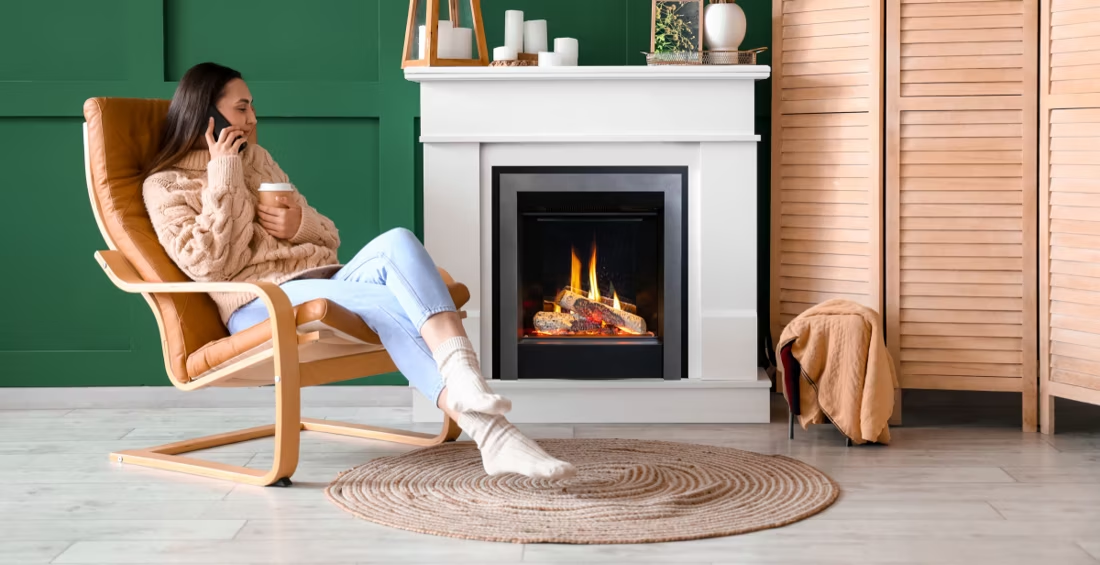
That's exactly the environment where electric fireplaces earn their keep. There's no chimney to build, no gas line to run, and no combustion byproducts to vent—just a unit that plugs in or wires into a dedicated circuit and heats the room you're actually using. Public Service Company of Oklahoma (AEP/PSO) serves most of the incorporated areas, while Verdigris Valley Electric Cooperative covers much of rural Wagoner County—either way, electricity is reliable and rates are stable enough that running an electric insert for a few hours most evenings is genuinely inexpensive. For a county where winter is short and mild rather than long and brutal, electric heat is less about survival and more about turning a plain living room or bedroom into the warmest, most-used room in the house.
Three steps. No salesperson until you're ready.
Tell us about your project
Your zip code, your situation, and the fuel you're leaning toward—or let the answers point you to one.
See what's actually available
The brands dealers within 100 miles genuinely carry—real options, never a catalog mirage.
Get your dealer & Project Guide
A trusted local dealer, plus the free Project Guide & Parts List that names every component of the job.
Frequently Asked Questions
How much does an electric fireplace installation cost in Wagoner County?
Plug-in electric inserts and freestanding units are the least expensive option—most run $300 to $900 installed, since they simply need a standard 120-volt outlet and a mantel or surround. Built-in electric fireplaces or wall units that require a dedicated 20-amp circuit run higher, typically $1,200 to $3,500, once an electrician runs new wiring and a local dealer handles the framing and trim. Because Wagoner County's mild winters (26°F average low, about 3,670 heating degree days) don't demand a whole-home heating system, most homeowners here are shopping for a single accent room or bonus space rather than a house-wide solution, which keeps the typical project on the lower end of that range.
Do I need a permit to install an electric fireplace in Wagoner County?
It depends on the unit. A plug-in electric insert or freestanding electric stove that uses an existing outlet generally doesn't require a permit—it's treated like any other appliance. A built-in electric fireplace that needs a new dedicated circuit does require an electrical permit, since that work has to be pulled by a licensed electrician and inspected. Whether you're inside Wagoner city limits, in Coweta, or in unincorporated county, check with your local building department before work starts; a reputable local dealer will typically coordinate this for you as part of the installation.
What size electric fireplace do I need for my home?
Electric fireplaces are rated in square feet of heating coverage, but in a Zone 3A climate like Wagoner County, most homeowners are sizing for a single room rather than the whole house. A unit rated for 400-1,000 square feet comfortably heats a living room, den, or bedroom on the coldest nights of the year, when temperatures dip toward the mid-20s. Larger open-concept spaces or homes near the lake with more exposed glass may want two smaller units—one per zone—rather than a single oversized unit, since electric heat doesn't distribute through ductwork the way a furnace does.
Plug-in electric insert vs. built-in wall unit—which should I choose?
A plug-in insert or freestanding electric stove is the simplest option: no electrician, no permit, and it can move with you if you relocate. It's a good fit for renters, mantels with an existing fireplace opening, or anyone who wants heat and flame effect without construction. A built-in wall unit, recessed into drywall with a dedicated circuit, gives a cleaner, more permanent look and is usually the better choice for new construction or a remodel in Wagoner, Coweta, or the newer subdivisions filling in around Broken Arrow's edge. Local dealers carry both and can walk you through the tradeoffs based on your wall construction and whether you're renting or own.
Will an electric fireplace actually heat my Wagoner County home?
Most electric fireplaces are built for supplemental, zone heating rather than whole-home heating—and that's actually a good match for this county's climate. With winter lows averaging around 26°F and heating degree days well under half of what a place like Fargo, ND accumulates, a well-sized electric unit can comfortably heat a single room without leaning on the central furnace at all on milder days. It won't replace your HVAC system on the handful of nights each winter that drop into the teens, but for the bulk of the season it can take pressure off your heating bill in the rooms you use most.
Will my electric fireplace work during a power outage?
No—this is the one real tradeoff of going electric. Because the unit runs on household current, it goes dark the moment the power does, unlike a wood stove or a battery-backed gas unit. Wagoner County sees occasional ice storms and severe weather that knock out power for AEP/PSO and Verdigris Valley Electric Cooperative customers alike, so if backup heat during an outage is a priority for your household, it's worth pairing an electric fireplace with a secondary heat source—even a small propane heater or a wood-burning option—rather than relying on electric alone.
How much does it cost to run an electric fireplace?
A typical electric fireplace draws about 1,500 watts on the heat setting, which costs roughly 15-25 cents per hour to run at current AEP/PSO and Verdigris Valley Electric Cooperative rates—a few dollars for an evening of use. Because Wagoner County's heating season is relatively short and mild, most households run their unit selectively, on cold evenings or in a single frequently-used room, rather than continuously, which keeps the operating cost well below what a furnace would use to heat the same square footage.
Electric vs. gas—which fits Wagoner County homes better?
Gas fireplaces produce more heat and a more authentic flame, and work well for homeowners who want a stronger secondary heat source or already have gas service to the home. Electric fireplaces install faster, cost less upfront, require no venting or gas line, and work in any room with power, including interior walls and upper floors where running gas line isn't practical. Given Wagoner County's mild winters, plenty of homeowners choose electric simply because they don't need a heat source that can compete with a furnace—they want ambiance and a modest heat boost in a specific room, which is exactly what electric does well.
Should I consider a wood stove instead, given the local oak and hickory?
Wagoner County's oak, hickory, and mesquite make for excellent firewood, and a wood stove is worth considering if you want a genuine backup heat source that works with the power off—something electric simply can't offer. But wood heat also means chimney work, permits, seasoned firewood storage, and regular cleaning, which is more commitment than most homeowners here want for a climate with only about 3,670 heating degree days a year. If your goal is ambiance and a quick heat boost in a specific room, electric is simpler. If you want a real hedge against winter storm outages and don't mind tending a fire, a wood stove or insert is the better long-term investment—a local dealer can walk you through both.
Can I put a TV above my fireplace?
Yes—with an asterisk. Fireplaces are hot and TVs don't like heat. Either put a mantel between them to deflect rising warmth, or choose a fireplace with heat-management technology that creates a cool zone on the wall above—the wall stays around 125 degrees, barely warm, while the room still gets full heat. If you like clean lines and don't want a mantel, heat management is the answer.
Does an electric fireplace need a vent or chimney?
No—that's its superpower. An electric fireplace needs a wall and an outlet, period. No vent pipe, no gas line, no clearances to design around, which is why it works in bedrooms, offices, apartments, and walls where venting a gas or wood unit would be impractical or impossible. Installation is typically the simplest and least expensive of any fireplace type.
What is an in-home preview and do I need one?
It's a visit where a hearth professional measures your space, confirms the model you picked actually works in your home, and walks the specs—framing, gas line, venting, finish work—before anything is ordered. Some details you just can't know until you see the house. Never make a down payment without one; it's the single most-skipped step that burns buyers.
Can I install a fireplace myself?
If you're putting a fire in your house on purpose, it's best to work with an expert. Unless you're genuinely experienced in framing, gas line, vent pipe, and the national code on clearances to combustibles, have a professional do it—and ideally the same company that sells you the fireplace, so warranty, service, and liability all live under one roof.
Find your electric fireplace in Wagoner County.
Tell us about your home and we'll match you with a trusted local dealer and send over your free Project Guide & Parts List—the exact electric fireplace or insert recommended for your space, along with the parts and installation plan to get it done right.
Find Your Fireplace →