
Warm, Reliable Heat for Tulsa's Ice Storm Winters.
Tulsa's winters are mild by national standards, but the occasional ice storm or cold snap can knock out power for days. Find the right gas fireplace or insert, and connect with a trusted local dealer.
Every Project Starts From One of These Five Situations
Natural gas is practically native to Tulsa.
Tulsa sits at 713 feet in northeastern Oklahoma, in climate zone 3A, with average winter lows near 28°F and a moderate winter heating load—mild compared to a place like Duluth, MN, but not immune to disruptive winter weather. The ice storms of 2007 and 2011, plus the February 2021 cold snap, left tens of thousands of Public Service Co. of Oklahoma customers without power for days at a time. Oklahoma is also one of the top natural-gas-producing states in the country, and that regional abundance shows up in local buying habits: gas fireplaces, inserts, and log sets are the default hearth upgrade across Tulsa neighborhoods, from Brookside and Maple Ridge to the newer subdivisions filling in south Tulsa.
Plenty of older Tulsa homes—many built during the oil-boom decades—came with wood-burning masonry fireplaces, and oak and hickory were the traditional local firewood. But with Tulsa's mild climate, no wintertime air-quality restrictions to work around, and Oklahoma Natural Gas (ONG) service running through most of the metro, the majority of homeowners today convert those old fireboxes to gas rather than keep up a wood-burning routine. A gas insert trades ash, chimney sweeps, and hauled firewood for a fireplace that lights with a switch and can double as backup heat the next time an ice storm takes down the grid.
Three steps. No salesperson until you're ready.
Tell us about your project
Your zip code, your situation, and the fuel you're leaning toward—or let the answers point you to one.
See what's actually available
The brands dealers within 100 miles genuinely carry—real options, never a catalog mirage.
Get your dealer & Project Guide
A trusted local dealer, plus the free Project Guide & Parts List that names every component of the job.
Frequently Asked Questions
How much does a gas fireplace installation cost in Tulsa?
For a direct-vent gas insert installed into an existing masonry fireplace with a chimney liner and a nearby gas line, most Tulsa homeowners land between $3,500 and $6,500. A new built-in gas fireplace for a remodel or new construction—including framing, venting, and a fresh gas line run from the meter—typically runs $6,000 to $12,000. Homes already plumbed for natural gas through ONG tend to land on the lower end; homes needing a longer line run or a new gas meter tap push toward the higher end. A local installer will give you a firm number after seeing the space.
Can I convert my existing wood fireplace to gas?
Yes, and it's one of the most common projects Tulsa hearth dealers handle, especially in older Brookside, Maple Ridge, and Midtown homes built with traditional oak or hickory-burning masonry fireplaces. A gas insert slides into the existing firebox and vents through the same chimney using a stainless liner, so you keep the look of the original fireplace while eliminating ash cleanup and wood storage. Cost typically runs $4,000 to $7,500 depending on the insert and whether a new gas line needs to be run to the hearth.
Do I need natural gas, or should I use propane?
Most of the Tulsa metro is served by natural gas through Oklahoma Natural Gas (ONG), so if your home already has gas service for a water heater, range, or furnace, adding a fireplace is a straightforward tap into the existing line. Propane is really only a consideration for homes on the far rural fringes of Tulsa County or in neighboring counties without ONG lines nearby. Nearly every gas fireplace model on the market can be configured for either fuel—your installer sets the correct orifice and regulator for whichever you have.
Will my gas fireplace work if the power goes out?
Most modern gas fireplaces will, which matters in a region that has seen multi-day outages from ice storms and the February 2021 cold snap that strained Public Service Co. of Oklahoma's grid. Units with IPI (intermittent pilot ignition) run on battery backup—typically AA batteries built into the unit—so the fireplace still lights on demand when the power's out. Valor units go a step further: their pilot assembly generates its own electricity through the thermocouple, so there's no battery to remember at all. If reliable backup heat during outages is a priority, ask your local dealer which ignition system a given model uses.
What's the difference between a gas fireplace, gas insert, and gas stove?
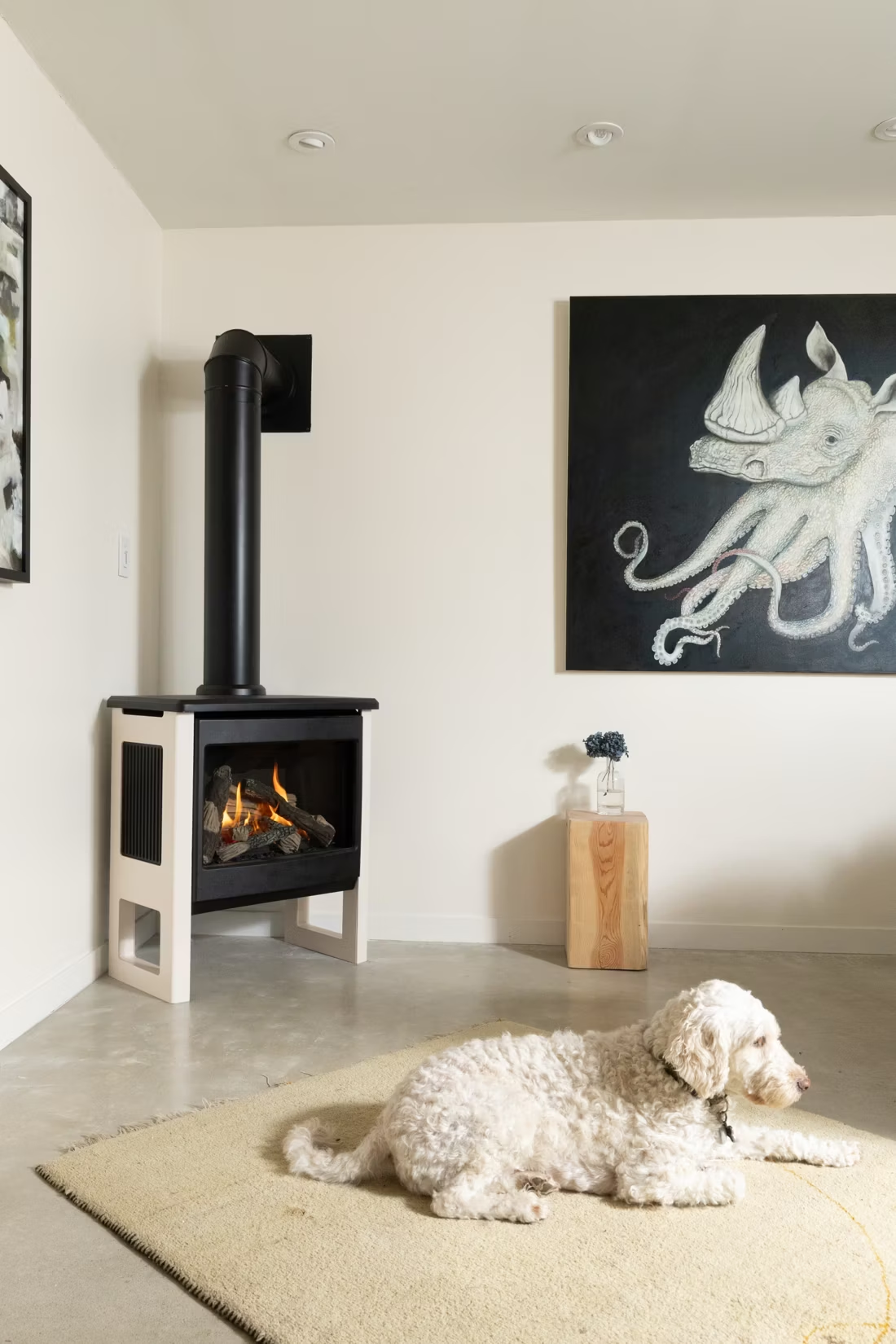
A gas fireplace is a fully built-in unit, framed into a wall—the right call for new construction or a major remodel. A gas insert is built to slide into an existing masonry firebox, using your current chimney as the vent path, which makes it the natural choice for Tulsa's many older homes with existing wood-burning fireplaces. A gas stove is a freestanding cast-iron or steel unit that sits on the floor like a wood stove but burns gas—a good option for a room with no existing fireplace and no interest in framing one in. Local dealers can walk through which fits your floor plan.
Do I need a permit to install a gas fireplace in Tulsa?
Yes. The City of Tulsa's Development Services division requires a building permit for new gas fireplace installations, and the gas line work itself requires a permit pulled by a licensed gas-fitter. Most hearth dealers coordinate both permits as part of the installation, along with scheduling the required inspections, so you're not left managing separate trades. If you live outside city limits in unincorporated Tulsa County, permitting runs through the county instead—your installer will know which jurisdiction applies to your address.
What's the difference between vented and vent-free gas fireplaces?
Vented (direct-vent) gas fireplaces pull combustion air from outside and exhaust it back outside through a sealed pipe—they're the cleanest, safest option and what most Tulsa dealers install by default. Vent-free units burn gas directly into the room without external venting; they're legal in Oklahoma and popular for supplemental warmth in dens or sunrooms, but they come with strict room-sizing requirements and release some combustion byproducts indoors, so they're not a fit for every space. For a primary living area or a room where you'll run the fireplace for hours at a time, a direct-vent unit is the safer, more common choice locally.
How often should a gas fireplace be serviced?
Plan on an annual inspection, ideally before the first cold snap each fall. A certified technician checks the burner, pilot assembly, gas connections, and venting, and cleans the glass and interior—a much quicker visit than a wood chimney sweep, but just as important for safe operation. Tulsa gas appliance service providers typically charge $150 to $250 for this annual visit, and it's often required to keep manufacturer warranties valid.
Gas vs. electric fireplace—which makes more sense in Tulsa?
Gas fireplaces produce real, sustained heat output and can run during a power outage—a genuine advantage given Tulsa's history of ice-storm blackouts through Public Service Co. of Oklahoma and Lake Region Electric Cooperative territory. Electric fireplaces plug into a standard outlet, need no venting or gas line, and cost far less to install, but they're supplemental heaters at best and go dark the moment the power does. At residential electric rates around 12 to 13 cents per kWh locally, running one as a primary heat source also gets expensive fast. For most Tulsa homes, gas serves as real heat with backup capability, while electric units are better suited to a bedroom, apartment, or rental where venting isn't an option.
What's the difference between an insert and a zero-clearance fireplace?
An insert is a fireplace that slides into a pre-existing wood-burning fireplace—if you don't have one, there's nothing to insert it into. A zero-clearance fireplace is built into a framed wall, which makes it the answer for remodels and new construction. Simple test: existing masonry fireplace means insert; blank or framed wall means zero-clearance.
Why is my open fireplace making my house colder?
Open fireplaces suck—literally. As the fire burns, it consumes air your furnace already paid to heat and pulls it out through the chimney, so the house is actually colder after the fire goes out than before you lit it. An insert fixes this: it seals the chimney, puts fixed glass across the front, and turns that hole in your house into a real heat source.
Can a fireplace actually lower my heating bill?
Yes—by creating a comfort zone. A furnace heats every square foot of the house just to warm the one room you're in; a gas fireplace on low burns roughly a sixth of the gas a typical furnace does. Set the furnace around 55–60 degrees as a baseline, then heat the rooms your family actually uses. Families who heat this way commonly save $20–$60 a month.
How much should I budget for a fireplace?
For an average home—covering the fireplace, the vent pipe, and basic installation—a budget between $3,900 and $5,500 gives you a lot of options across wood, gas, and pellet. By the time you add finish work, gas line, and electrical, the average complete installation lands between $5,000 and $12,000 all-in. In a remodel or new build, a good rule is to put about 2.5% of the total project cost toward the fireplace.
Nearby Dealers
Hearth shops serving Tulsa and the surrounding area. Every listing shows whether it is a WhyFire partner, a dealer we have verified as authorized for the brands we recommend, or a local business carrying hearth products. No manufacturer pays for placement. How we verify dealers →
Jack Wills
Buck Stove Energy Center
Beyond The Backdoor
Rick's House Of Fire
Diamond P Lawn & Garden
Copper Ridge, LLC
Turf Land Outdoor Power Equipment LLC
Find your gas fireplace in Tulsa.
Tell us a bit about your home and we'll match you with the right gas fireplace, insert, or stove, plus a free Project Guide & Parts List with the exact parts and vent kit for your project—and connect you with a trusted local Tulsa dealer.
Find Your Fireplace →