
Plug-In Comfort for Tulsa Winters.
No chimney, no gas line, no venting—just real supplemental heat and ambiance for Tulsa's mild but genuinely chilly season. Find the right unit and connect with a trusted local dealer.
Every Project Starts From One of These Five Situations
Mild winters, modern convenience.
Tulsa sits at 713 feet in climate zone 3A, with an average winter low around 28°F and about 3,451 heating degree days a year—a fraction of what a place like Fargo, ND or Duluth, MN sees. That's mild enough that whole-house wood or pellet heating never really took hold here (wood is essentially a non-factor for primary heat, and pellet stoves are rare), but it's still cold enough on January and February nights that a lot of Tulsa homeowners want something warmer-looking and warmer-feeling than a thermostat click.
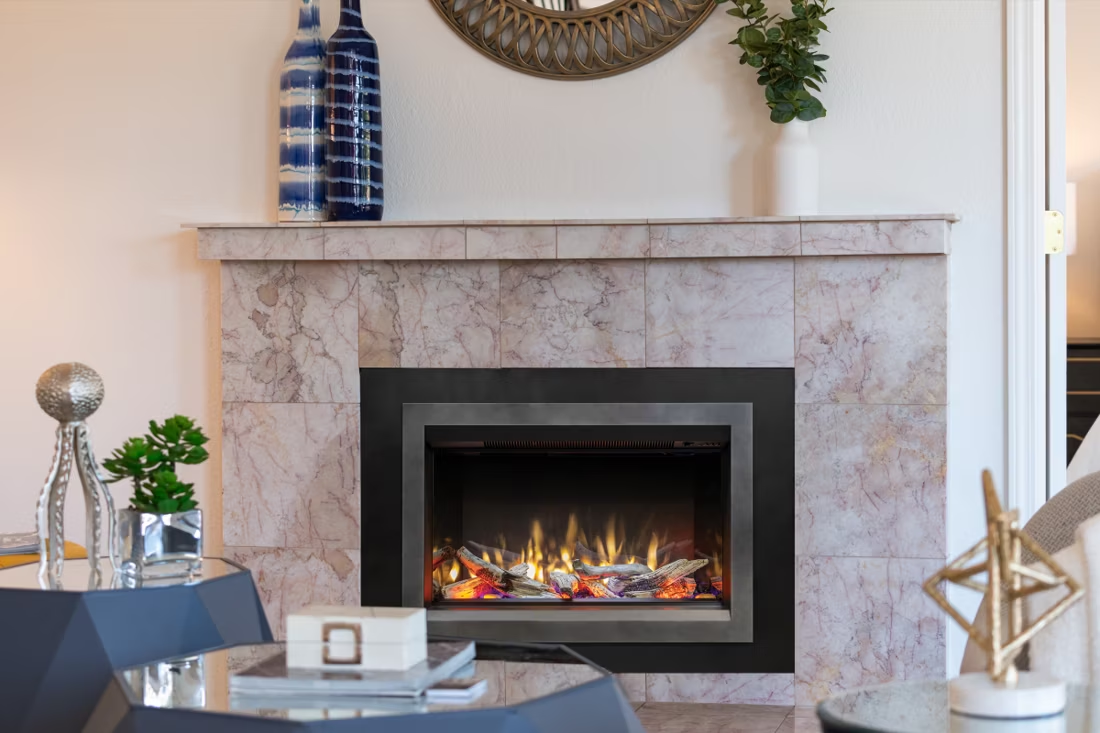
That's the gap electric fireplaces fill. Whether you're on Public Service Company of Oklahoma or Lake Region Electric Cooperative—residential rates in the Tulsa area run roughly 12 to 13 cents per kWh—an electric insert or built-in gives you instant, controllable heat for a bedroom, den, or basement without touching your gas line or chimney. No venting means installation is simpler and faster than gas or wood, and it's often the only realistic fireplace option for condos, apartments, and rentals across Tulsa's zip codes.
Three steps. No salesperson until you're ready.
Tell us about your project
Your zip code, your situation, and the fuel you're leaning toward—or let the answers point you to one.
See what's actually available
The brands dealers within 100 miles genuinely carry—real options, never a catalog mirage.
Get your dealer & Project Guide
A trusted local dealer, plus the free Project Guide & Parts List that names every component of the job.
Frequently Asked Questions
How much does an electric fireplace installation cost in Tulsa?
Plug-in electric inserts and freestanding stoves are the cheapest path—often $300 to $1,200 installed, since most just need a standard 120V outlet already in the wall. Built-in wall-mount or linear electric fireplaces run higher, typically $1,500 to $4,000, especially if you're framing a new wall niche, adding a dedicated 20-amp circuit, or running a mantel and surround package. Because there's no chimney or gas line involved, electric is consistently the least expensive fireplace fuel to install in Tulsa—a local dealer can give you a firm number once they see your wall and panel setup.
What's the difference between an electric insert, a built-in, and a freestanding stove?
An electric insert is designed to slide into an existing masonry or factory-built fireplace opening, converting a cold or unused firebox into working heat and a flame-effect display. A built-in (often called a linear electric fireplace) is installed into a framed wall like a piece of custom millwork—popular in newer Tulsa builds and remodels for a clean, modern look. A freestanding electric stove or mantel package needs no construction at all—you place it against a wall and plug it in, which makes it the fastest option for renters or anyone in Tulsa's apartment and condo stock.
Do I need a permit to install an electric fireplace in Tulsa?
A plug-in unit that uses an existing outlet typically requires no permit at all. If you're having a built-in or wall-mount unit hardwired, or adding a new dedicated circuit for it, that electrical work generally needs a permit through the City of Tulsa's permitting office and must be pulled by a licensed electrician. Most local hearth dealers either employ licensed electricians or coordinate directly with one, so this step is usually handled for you rather than left on your plate.
Will an electric fireplace actually heat my room, or is it just for looks?
Most electric fireplaces sold in Tulsa include a supplemental heater rated around 4,600–5,000 BTU (roughly 1,500 watts), enough to comfortably warm a single room of 400 to 1,000 square feet depending on insulation and ceiling height. Given Tulsa's mild 28°F average winter low, that's plenty for zone heating a den, bedroom, or sunroom without running your central system as hard. Just don't expect an electric unit to heat an open-concept whole floor the way a wood stove or gas insert would—it's built for a room, not a house.
How much does it cost to run an electric fireplace in Tulsa?
At Public Service Company of Oklahoma's residential rate of about 12.7 cents per kWh (Lake Region Electric Cooperative customers pay around 12.0 cents), running a typical 1,500-watt electric fireplace at full heat costs roughly 19 cents per hour, or about $1.50 for an 8-hour evening. Running just the flame effect without the heater draws very little power—typically under 0.10 cents per hour, less than a light bulb. That makes year-round ambiance use genuinely affordable, which is a real advantage in Tulsa where you might want fireplace atmosphere on a cool October evening without wanting heat.
Can I install an electric fireplace inside my existing wood fireplace?
Yes, and it's one of the most common applications local hearth retailers handle in Tulsa. Many homes built in the 1960s through 1990s—across Midtown, south Tulsa, and Broken Arrow—have original wood-burning masonry fireplaces that haven't been used in years. An electric insert slides into that existing opening, requires no chimney work, no gas line, no venting, and no permit. You typically need a working outlet inside or near the firebox (an electrician can add one for $150 to $300 if needed). It's the fastest way to put a dormant fireplace back to use.
Do electric fireplaces work during power outages?
No—electric fireplaces require electricity to operate both the flame effect and the heater, so they won't function during an outage. That's worth noting in Tulsa, where ice storms (the December 2007 storm is still local lore, and the October 2020 ice storm knocked out power to hundreds of thousands of PSO customers for days) and severe spring thunderstorms can cause extended outages. If backup heat during outages is a priority, a vented gas fireplace with a battery-backup ignition system is a better choice. Many Tulsa homes pair electric in secondary rooms with a gas unit in the main living area for exactly this reason.
What brands of electric fireplaces are sold in Tulsa?
The major brands carried by local hearth retailers and home improvement stores in the Tulsa metro include Dimplex (the recognized leader in realistic flame technology, including their Opti-myst water-vapor flame), Napoleon, Amantii, Modern Flames, and Touchstone. Big-box retailers like Lowe's and Home Depot in Tulsa stock entry-level units from Duraflame and Twin Star. For premium built-in units with the most realistic flame effects, the local specialty hearth dealers carry Dimplex's IgniteXL and Modern Flames Orion series—units designed to look indistinguishable from gas at first glance.
Electric vs. gas fireplace—which is right for my Tulsa home?
Gas offers higher heat output (20,000–40,000 BTU vs. 5,000 BTU for electric), operation during power outages with a battery-backup ignition, and a more visually authentic flame from a real combustion process. Installation runs $4,500 to $11,000 and requires a gas line, venting, and a permit. Electric installs for $400 to $1,200, requires nothing more than an outlet, can be moved or replaced easily, and lets you run the flame year-round without heat. For a Tulsa primary living room where you want a centerpiece that delivers real warmth and works through ice-storm outages, gas usually wins. For bedrooms, basements, home offices, or converting an unused masonry fireplace into a functioning focal point, electric is hard to beat on cost and ease.
Can I put a TV above my fireplace?
Yes—with an asterisk. Fireplaces are hot and TVs don't like heat. Either put a mantel between them to deflect rising warmth, or choose a fireplace with heat-management technology that creates a cool zone on the wall above—the wall stays around 125 degrees, barely warm, while the room still gets full heat. If you like clean lines and don't want a mantel, heat management is the answer.
Does an electric fireplace need a vent or chimney?
No—that's its superpower. An electric fireplace needs a wall and an outlet, period. No vent pipe, no gas line, no clearances to design around, which is why it works in bedrooms, offices, apartments, and walls where venting a gas or wood unit would be impractical or impossible. Installation is typically the simplest and least expensive of any fireplace type.
Does a fireplace add value to my home?
On average, a fireplace adds back to the home about the same amount you spent installing it. Add the monthly savings from heating the rooms you actually use instead of the whole house—often hundreds of dollars a year—and the value case is strong before you even count what a fire does for how your family uses the room.
Can a fireplace actually lower my heating bill?
Yes—by creating a comfort zone. A furnace heats every square foot of the house just to warm the one room you're in; a gas fireplace on low burns roughly a sixth of the gas a typical furnace does. Set the furnace around 55–60 degrees as a baseline, then heat the rooms your family actually uses. Families who heat this way commonly save $20–$60 a month.
Nearby Dealers
Hearth shops serving Tulsa and the surrounding area. Every listing shows whether it is a WhyFire partner, a dealer we have verified as authorized for the brands we recommend, or a local business carrying hearth products. No manufacturer pays for placement. How we verify dealers →
Jack Wills
Buck Stove Energy Center
Beyond The Backdoor
Rick's House Of Fire
Diamond P Lawn & Garden
Copper Ridge, LLC
Turf Land Outdoor Power Equipment LLC
Electric Service in Tulsa
An electric fireplace's heater draws about 1,500 watts—pennies per hour at local rates.
Public Service Co Of Oklahoma
Lake Region Electric Coop, Inc - (Ok)
Find your electric fireplace in Tulsa.
Tell us a bit about your space and we'll match you with the right electric fireplace, insert, or wall-mount unit—and connect you with a trusted local Tulsa dealer.
Find Your Fireplace →