
Zone heat that plugs in and works the same day in Sequoyah County.
Mild winters, no gas line, no chimney—electric fireplaces fit a lot of Sequoyah County homes without a major remodel. Find the right unit and connect with a trusted local dealer.
Every Project Starts From One of These Five Situations
A mild-winter county where an outlet does the job.
Sequoyah County sits in climate zone 3A along the Arkansas River in eastern Oklahoma, where the average winter low hovers around 28°F and the county logs roughly 3,549 heating degree days a year—a fraction of what a place like Duluth, MN or Fargo, ND deals with. That's not a climate that demands a whole-home combustion system for survival heat. It's a climate where a lot of Sallisaw, Roland, and Vian homeowners just want reliable, no-fuss warmth in a den, sunroom, or bedroom addition without opening a wall for gas line or running a chimney through the roof.
That's the case for electric here: no venting, no gas permit, and install costs that run a small fraction of a wood or gas project. Plenty of Sequoyah County households still burn oak, hickory, or mesquite in a wood stove for the ambiance and backup-heat security rural power lines sometimes require, but for a straightforward supplemental heat source in a specific room—especially in newer construction or a finished basement—electric is often the practical, lowest-friction answer. A trusted local dealer can size the right insert or built-in for your space and handle the install cleanly, without big-box guesswork on the amperage or clearance.
Three steps. No salesperson until you're ready.
Tell us about your project
Your zip code, your situation, and the fuel you're leaning toward—or let the answers point you to one.
See what's actually available
The brands dealers within 100 miles genuinely carry—real options, never a catalog mirage.
Get your dealer & Project Guide
A trusted local dealer, plus the free Project Guide & Parts List that names every component of the job.
Frequently Asked Questions
How much does an electric fireplace installation cost in Sequoyah County?
Most electric fireplace installations in Sequoyah County run $400 to $1,200 total, which covers the unit itself plus any minor electrical work. A plug-in freestanding or wall-mount unit on a standard 120V circuit is on the low end—often a DIY-friendly install with no permit needed. Built-in electric fireplaces or inserts that require a dedicated 120V or 240V circuit run higher, since that means an electrician pulling new wire, particularly in older Sallisaw or Muldrow homes with older panel capacity. A local dealer can tell you within minutes whether your existing wiring supports the unit you want or whether you'll need an electrician involved.
Do I need a permit to install an electric fireplace in Sequoyah County?
Usually not for a plug-in unit—those don't touch your home's wiring and typically don't require a permit. If you're adding a built-in electric fireplace that requires a new dedicated circuit, that electrical work generally does need a permit through your local jurisdiction (Sequoyah County or the relevant city building office, depending on whether you're inside Sallisaw, Roland, or Vian city limits, or in an unincorporated area). Most licensed electricians handle that paperwork as part of the job, so it's rarely something you have to manage yourself.
Will an electric fireplace actually heat a room, or is it just for looks?
A quality electric fireplace with a built-in heater will genuinely warm a room—most put out around 4,600–5,000 BTU, enough for a 400-square-foot space as supplemental heat. Given Sequoyah County's mild 28°F average winter low, that's often plenty for a bedroom, sunroom, or den without leaning on central heat. Just know the flame effect and the heater run independently—you can run the visual flame year-round with the heat off, which is popular locally for summer ambiance without warming the room.
What's the difference between an electric insert and a built-in electric fireplace?
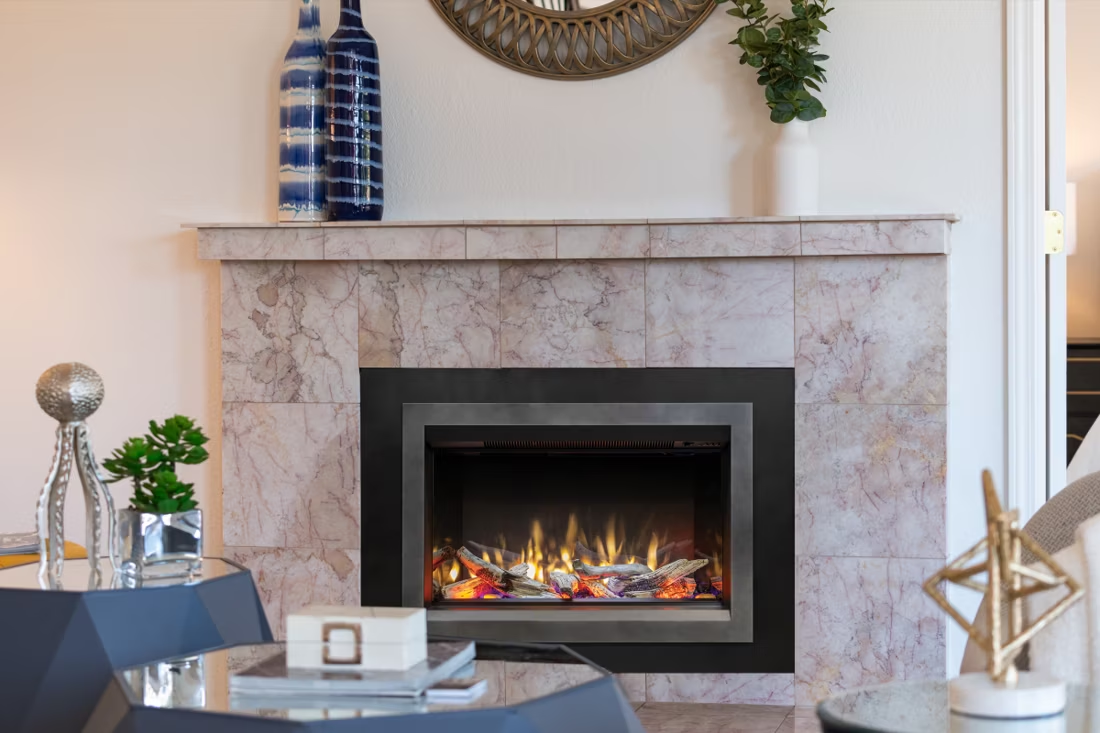
An electric insert is sized to slide into an existing masonry fireplace opening—a common upgrade for older Sallisaw and Muldrow homes with a fireplace that's rarely used for wood anymore. A built-in electric fireplace is a standalone unit framed into a wall during new construction or a remodel, without needing an existing firebox. Inserts are typically the faster, less invasive project since the opening already exists; built-ins give more flexibility on placement but involve some carpentry.
How does an electric fireplace compare to a wood or gas fireplace for heat output?
Wood and gas units both significantly outperform electric on raw heat output—a mid-size wood stove or gas insert can push 20,000-40,000+ BTU, enough to heat a whole living area, while electric units top out around 5,000 BTU and are built for zone heating, not whole-home warmth. In Sequoyah County's mild climate, that ceiling matters less than it would somewhere colder, since most homes aren't relying on the fireplace as primary heat anyway. Where electric wins is upfront cost, zero venting, and the ability to install it almost anywhere there's an outlet—a den, a converted garage, a bedroom that runs cold.
Can an electric fireplace run during a power outage?
No—electric fireplaces require power to run, so they're not a backup heat source during an outage. That's worth factoring in if you're in a rural part of Sequoyah County where outages can run longer after ice storms. Homeowners who want both convenience and outage-proof heat security often pair an electric unit in the main living space with a wood stove burning local oak or hickory as a backup option elsewhere in the house.
Do electric fireplaces need any maintenance?
Very little. There's no chimney to sweep and no gas line to inspect. Occasionally dust the unit and clean the glass front, and replace the heater's air filter if the model has one—usually an annual task. LED units used for the flame effect are rated for tens of thousands of hours, so most homeowners won't deal with a bulb replacement for years. It's the lowest-maintenance fireplace option available in Sequoyah County by a wide margin.
What size electric fireplace do I need for my room?
As a rough guide, a 30-40 inch unit suits a bedroom or small den, while a 50-60+ inch unit fits a larger living room as a focal point. Since most electric units cap out around 5,000 BTU regardless of size, bigger units are mainly about visual scale on the wall rather than more heat—sizing here is really a design decision, not a heating-capacity one like it would be with a wood or gas unit. A local dealer can walk you through mounting height and wall placement based on your actual room.
Electric vs. pellet—which makes more sense for a Sequoyah County home?
Pellet stoves, using regional brands like Lignetics or Indeck Energy Services, burn hotter and can genuinely heat a larger area, but they need a vent, a hopper to refill, and periodic ash cleanout—plus they still depend on electricity to run the auger and blower, so they're no better than electric during an outage. Electric skips the venting and fuel handling entirely but tops out at zone heating. In Sequoyah County's mild climate, electric is usually the right call for a single room or supplemental warmth; pellet makes more sense if you want to offset a larger share of your winter heating bill and don't mind the fuel logistics.
Can I put a TV above my fireplace?
Yes—with an asterisk. Fireplaces are hot and TVs don't like heat. Either put a mantel between them to deflect rising warmth, or choose a fireplace with heat-management technology that creates a cool zone on the wall above—the wall stays around 125 degrees, barely warm, while the room still gets full heat. If you like clean lines and don't want a mantel, heat management is the answer.
Do electric fireplaces actually produce heat?
Yes—most put out around 4,800–5,000 BTUs from a standard outlet, which comfortably warms a bedroom, office, or den as a comfort-zone heater. What they won't do is carry a whole house the way wood, gas, or pellet can. Think of electric as ambiance-first with honest supplemental heat: flames on with no heat in July, flames plus warmth in January.
What is an in-home preview and do I need one?
It's a visit where a hearth professional measures your space, confirms the model you picked actually works in your home, and walks the specs—framing, gas line, venting, finish work—before anything is ordered. Some details you just can't know until you see the house. Never make a down payment without one; it's the single most-skipped step that burns buyers.
How much should I budget for a fireplace?
For an average home—covering the fireplace, the vent pipe, and basic installation—a budget between $3,900 and $5,500 gives you a lot of options across wood, gas, and pellet. By the time you add finish work, gas line, and electrical, the average complete installation lands between $5,000 and $12,000 all-in. In a remodel or new build, a good rule is to put about 2.5% of the total project cost toward the fireplace.
Find your electric fireplace in Sequoyah County.
Tell us a bit about your home and we'll match you with the right electric fireplace or insert, plus a free Project Guide & Parts List with your recommended local dealer in Sequoyah County.
Find Your Fireplace →