
Reliable gas heat for Payne County's short, mild winters.
Clean, instant heat for Payne County's short winters—natural gas through Oklahoma Natural Gas in Stillwater and Perkins, propane out toward Yale and Ripley. Find the right unit and connect with a trusted local dealer.
Every Project Starts From One of These Five Situations
Gas fireplaces built for Payne County's mild climate.
Payne County spans north-central Oklahoma, from Stillwater—home to Oklahoma State University—south through Perkins, Glencoe, Yale, Ripley, and the pipeline town of Cushing on the county's southern edge. The climate here (Zone 3A, roughly 3,711 heating degree days) is mild by any national standard: winter lows average around 26°F, and while an occasional ice storm or cold snap pushes temperatures well below that, Payne County winters look nothing like the sustained sub-zero stretches Bismarck, ND, sees most winters. That means a gas fireplace here is rarely a home's sole heat source—it's a supplement to a central furnace, a way to take the edge off a cold January night, and a design feature homeowners in Stillwater's craftsman bungalows and newer Perkins and Glencoe subdivisions alike ask for.
Oklahoma is one of the country's top natural gas producing states, and that infrastructure runs right through Payne County—Oklahoma Natural Gas (ONG) serves Stillwater and most of the county's incorporated towns, making it straightforward to tie a direct-vent gas fireplace into existing service. Outside city limits—in the more rural stretches around Yale, Ripley, and unincorporated parts of the county—propane is the more common fallback. Either way, a gas fireplace gives Payne County homeowners something a furnace alone can't: instant, visible heat that keeps working during an ice storm outage, which this part of Oklahoma sees more often than most people expect.
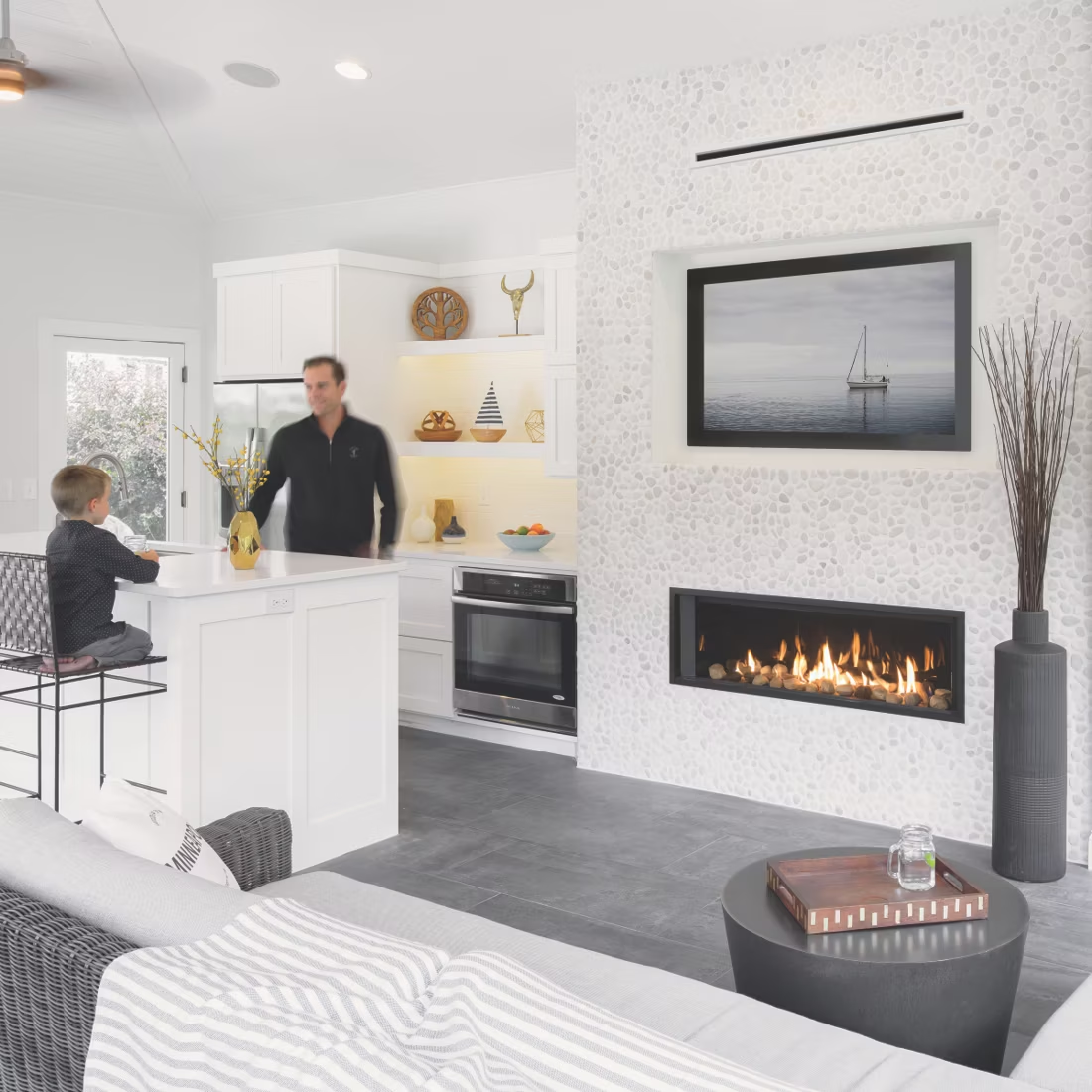
Three steps. No salesperson until you're ready.
Tell us about your project
Your zip code, your situation, and the fuel you're leaning toward—or let the answers point you to one.
See what's actually available
The brands dealers within 100 miles genuinely carry—real options, never a catalog mirage.
Get your dealer & Project Guide
A trusted local dealer, plus the free Project Guide & Parts List that names every component of the job.
Frequently Asked Questions
How much does a gas fireplace installation cost in Payne County?
A gas fireplace installation in Payne County typically runs $3,500 to $9,000, depending on whether you're installing a direct-vent insert into an existing fireplace or a new built-in unit that requires framing and a fresh gas line run. Homes in Stillwater and Perkins that are already on Oklahoma Natural Gas service and have an existing masonry fireplace tend to land on the lower end; new construction or homes converting from propane to a first-time gas line often reach the higher end. A local dealer will give you a firm number after walking your specific venting path.
Can I convert my existing wood fireplace to gas?
Yes—it's one of the more common upgrades in Payne County's older housing stock, especially the craftsman and ranch homes built near OSU in Stillwater decades ago with open masonry fireplaces. A gas insert slides into that existing fireplace opening and uses a stainless liner run through your current chimney, so you keep the look of the original fireplace while gaining real, controllable heat. Expect $4,000 to $8,500 for the conversion in most cases, with the top of that range reserved for homes that need a new gas line run from the meter.
Do I need natural gas, or can I use propane?
Oklahoma Natural Gas (ONG) serves Stillwater and most of the county's town centers—Perkins, Glencoe, and the Payne County side of Cushing—so if your home already has gas appliances, adding a fireplace is usually a simple tie-in. Once you're outside those service areas, in the more rural stretches toward Yale and Ripley, propane is the standard alternative, supplied by tank from a regional propane company. Nearly every gas fireplace on the market can be set up for either fuel—your installer just configures the correct orifice and regulator for whichever you have.
Will my gas fireplace work during a power outage?
Most modern gas fireplaces keep working without utility power, which matters in Payne County given how often winter ice storms take down power lines for days at a time. Units with intermittent pilot ignition (IPI) run on AA battery backup that kicks in the moment power drops, so the fireplace lights on demand just like normal. Valor's gas fireplaces go a step further—the pilot's thermocouple generates its own electricity, so there's no battery to remember to replace. For a county that gets hit by winter ice more than most of Oklahoma, that's worth asking your local dealer about directly.
What's the difference between a gas fireplace, gas insert, and gas stove?
A gas fireplace is a fully built-in unit framed into a wall—the right call for new construction or a remodel without an existing chimney. A gas insert slides into an existing masonry fireplace opening, which fits a lot of Payne County's older Stillwater homes. A gas stove is a freestanding unit that sits on the floor on its own hearth pad, more common in smaller homes or additions where a full fireplace box doesn't make sense. Most homeowners converting an existing wood-burning fireplace go with an insert; new builds typically go with a built-in unit.
Do I need a permit to install a gas fireplace in Payne County?
Yes—within Stillwater city limits, gas fireplace installations require a building permit and gas line permit through the city's development services office; in unincorporated parts of Payne County, permits are handled through the county building department. Either way, the gas line connection has to be done by a licensed gas-fitter, which is part of why most homeowners let their hearth dealer coordinate the whole job—permit, gas line, and inspection together—rather than juggling separate trades.
What's the difference between vented and vent-free gas fireplaces?
Vented (direct-vent) gas fireplaces draw combustion air from outside and exhaust it back outside through sealed venting—they're the safest option and the one most Payne County dealers install by default. Vent-free units burn directly into the room without exterior venting; they're legal in Oklahoma but come with strict room-size and ventilation requirements, and most installers will walk you through whether your space qualifies before recommending one. Given Payne County's mild climate—you're not running the fireplace nonstop through a brutal winter—a vented direct-vent unit is usually the simpler, safer call for most homes.
How often should my gas fireplace be serviced?
An annual inspection is recommended for any gas fireplace or insert, even in a mild-winter county like Payne where the unit might only run a few months a year. A technician checks the burner, pilot assembly, venting, and gas connections, and cleans the glass—usually a $150 to $250 visit. It's a smaller job than sweeping a wood chimney, but skipping it is still the most common reason gas units start running rough or throwing error codes on the coldest night of the year.
Gas vs. wood—which is right for my home?
With oak, hickory, and mesquite readily available for firewood locally and a climate that only sees real cold in short bursts, plenty of Payne County homeowners still keep a wood-burning setup for the ambiance and backup heat during an ice storm. Gas wins on convenience—no wood to split or stack, no ash to clean, heat at the flip of a switch—and it's the more practical choice for a home used daily rather than as a weekend retreat. Given how mild the county's winters run (3,711 heating degree days is modest by national standards), gas covers the actual heating need for most homes here, with wood reserved for backup or atmosphere.
What's the difference between an insert and a zero-clearance fireplace?
An insert is a fireplace that slides into a pre-existing wood-burning fireplace—if you don't have one, there's nothing to insert it into. A zero-clearance fireplace is built into a framed wall, which makes it the answer for remodels and new construction. Simple test: existing masonry fireplace means insert; blank or framed wall means zero-clearance.
Is my gas fireplace wasting gas?
If it was installed more than 15 years ago, probably. Older gas fireplaces keep a standing pilot light burning all the time, and that little flame can cost a couple hundred dollars a year. Newer models use pilot-on-demand ignition—the pilot lights only when you use the fireplace and goes out when you turn it off.
Can a fireplace actually lower my heating bill?
Yes—by creating a comfort zone. A furnace heats every square foot of the house just to warm the one room you're in; a gas fireplace on low burns roughly a sixth of the gas a typical furnace does. Set the furnace around 55–60 degrees as a baseline, then heat the rooms your family actually uses. Families who heat this way commonly save $20–$60 a month.
Does a fireplace add value to my home?
On average, a fireplace adds back to the home about the same amount you spent installing it. Add the monthly savings from heating the rooms you actually use instead of the whole house—often hundreds of dollars a year—and the value case is strong before you even count what a fire does for how your family uses the room.
Stove and Fireplace Dealers in Payne County
Find your gas fireplace in Payne County.
Tell us about your Stillwater, Perkins, or Cushing-area home and we'll put together a free Project Guide & Parts List—the exact fireplace or insert, vent kit, and a trusted local dealer to install it.
Find Your Fireplace →