
Gas Heat That Fits Nichols Hills' Classic Architecture.
Mild Oklahoma winters rarely call for wood heat, but a gas fireplace or insert brings instant, reliable warmth to Nichols Hills' Tudor and French Provincial homes—match with a trusted local dealer.
Every Project Starts From One of These Five Situations
Convenient warmth built for a mild climate.
Nichols Hills sits inside the Oklahoma City metro at just over 1,200 feet, in a climate zone (3A) where winter lows average a mild 28°F and the overall winter heating need is modest—less than half the demand of a harsh northern climate like Fargo, ND. Wood heat is uncommon here as a result: most of the city's grand 1920s-to-1950s Tudor Revival and French Provincial homes were built with masonry fireplaces meant for the occasional oak or hickory fire on a cool evening, not for carrying a house through a Great Plains winter. Today those same hearths are prime candidates for gas conversion.
Natural gas service reaches essentially every home in Nichols Hills, and gas fireplaces have become the default upgrade for homeowners who want the ambiance of a fire without splitting wood or tending a flue. Oklahoma's occasional ice storms and arctic blasts—including the February 2021 cold snap that strained the OG&E grid across the metro—are also a reminder that a gas fireplace with battery-backup ignition can keep a room warm and lit even when the power drops. For homeowners weighing the alternative, electric inserts are common too, helped by OG&E's residential rate of roughly 11.8 cents per kWh, but they don't replace a gas unit's heat output or real flame.
Three steps. No salesperson until you're ready.
Tell us about your project
Your zip code, your situation, and the fuel you're leaning toward—or let the answers point you to one.
See what's actually available
The brands dealers within 100 miles genuinely carry—real options, never a catalog mirage.
Get your dealer & Project Guide
A trusted local dealer, plus the free Project Guide & Parts List that names every component of the job.
Frequently Asked Questions
How much does a gas fireplace installation cost in Nichols Hills?
Most gas fireplace and insert projects in Nichols Hills run in the $4,000 to $10,000 range, with the final number driven by whether you're converting an existing masonry fireplace or building out new venting. Because so many of the city's Tudor and French Provincial homes already have a working chimney, a direct-vent gas insert with a liner run through the existing flue tends to land on the lower half of that range. New construction, additions, or homes without an existing fireplace opening cost more once framing, venting, and a fresh gas line are added. A local dealer will give you a firm number after walking the specific chimney or wall.
Can I convert my home's existing wood-burning fireplace to gas?
Yes, and it's one of the most common requests dealers get in Nichols Hills. Many of the city's older masonry fireplaces were built for occasional oak or hickory fires rather than daily heat, and a gas insert with a stainless liner run up the original flue turns that same opening into a fully functional, thermostatically controlled heat source. The masonry surround, mantel, and firebox opening typically stay exactly as they are—only the guts change. Expect the liner and insert work to add a few thousand dollars beyond a straightforward gas-line hookup, depending on chimney height and condition.
Is Nichols Hills served by natural gas, or would I need propane?
Nichols Hills is fully built out within the Oklahoma City metro, and natural gas lines run to essentially every property in the city—there isn't a rural, off-grid pocket the way there is in outlying Oklahoma County. That means almost every gas fireplace installation here taps into an existing gas meter rather than requiring a propane tank. If your home doesn't already have a gas appliance nearby, your installer will run a new gas line from the meter, which is usually a simpler and cheaper job than setting up a propane tank would be.
Will my gas fireplace still work if the power goes out?
Most will, provided you choose a unit with the right ignition system. Standard IPI (intermittent pilot ignition) fireplaces run on a small set of AA batteries that kick in automatically during an outage, so the fireplace lights and heats the room even with the grid down—worth having given how hard Oklahoma's occasional ice storms and arctic blasts, like the February 2021 event that strained OG&E's system across the metro, can hit this area. Valor's gas fireplaces skip batteries entirely, generating their own current off the pilot's thermocouple, so there's nothing to remember to replace. Ask your dealer which ignition system is in the model you're considering.
What's the difference between a gas fireplace, gas insert, and gas stove?
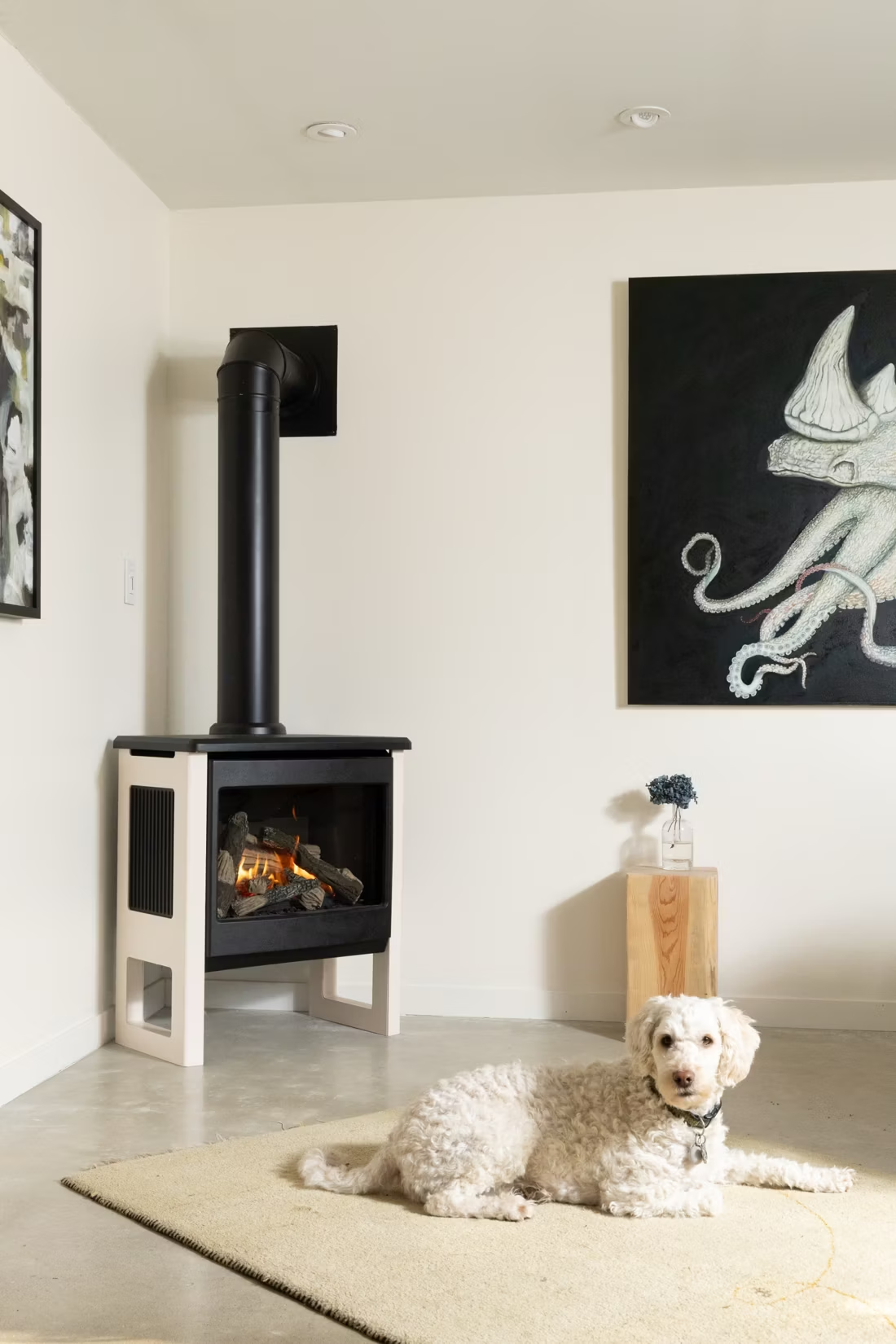
A gas fireplace is a fully built-in unit framed into a wall—the right call for new construction or a remodel without an existing hearth. A gas insert slides into an existing masonry fireplace opening and vents up the existing chimney, which fits the majority of Nichols Hills' older housing stock. A gas stove is a freestanding cast-iron or steel unit that sits out from the wall like a traditional wood stove but burns gas—a good option for a den or sunroom that never had a fireplace. Given how many homes here already have a masonry firebox, inserts are the most common install by a wide margin.
Do I need a permit to install a gas fireplace in Nichols Hills?
Yes—a building permit and a gas line permit are both required for new gas fireplace or insert installations, handled through the City of Nichols Hills Building Department. Because Nichols Hills maintains architectural review standards for exterior changes, any work that alters the visible chimney, cap, or termination point on the outside of the home may also need a quick look from the city's review process, in addition to the standard mechanical permit. Most hearth dealers who work regularly in this city are familiar with both steps and handle the paperwork as part of the installation.
Should I choose a vented or vent-free gas fireplace?
Vented (direct-vent or B-vent) units draw combustion air from outside and exhaust it back outside, which keeps combustion byproducts out of the living space entirely. Vent-free units burn without any outside venting and release some water vapor and trace combustion gases into the room, so they come with strict room-sizing and ventilation rules. Vent-free is legal in Oklahoma, but for the older, well-sealed Tudor and French Provincial homes common in Nichols Hills, a direct-vent unit is usually the better fit—it avoids any question about indoor air quality in a house that wasn't built with a lot of fresh-air infiltration in mind. Local dealers can walk through both if you want to compare.
How often should a gas fireplace be serviced?
Plan on an annual inspection, ideally before the first cold snap of the season. A technician will check the burner, pilot assembly, gas connections, and venting, and clean the glass and interior—a service that typically runs $150 to $250 in the Oklahoma City metro. This matters even in a mild climate like Nichols Hills', since a unit that only runs occasionally during cold spells can still develop pilot or ignition issues between uses.
Gas or electric—which fireplace makes more sense in Nichols Hills?
Wood is genuinely rare as a heat source here—with winters this mild (28°F average lows, a short, light heating season, well under half of what a place like Fargo, ND sees)—so the real choice for most homeowners is between gas and electric. A gas fireplace or insert delivers real flame and meaningful heat output, and it can double as backup warmth during an ice storm outage if you choose battery-backup or self-powered ignition. An electric insert or built-in is simpler to install (often no venting or gas line at all), costs very little to run on OG&E's roughly 11.8-cent residential rate, and works well as supplemental or ambiance-only heat in a room that doesn't need much more than that. For a primary living space in one of Nichols Hills' larger historic homes, gas is usually the better long-term fit.
What's the difference between an insert and a zero-clearance fireplace?
An insert is a fireplace that slides into a pre-existing wood-burning fireplace—if you don't have one, there's nothing to insert it into. A zero-clearance fireplace is built into a framed wall, which makes it the answer for remodels and new construction. Simple test: existing masonry fireplace means insert; blank or framed wall means zero-clearance.
Why is my open fireplace making my house colder?
Open fireplaces suck—literally. As the fire burns, it consumes air your furnace already paid to heat and pulls it out through the chimney, so the house is actually colder after the fire goes out than before you lit it. An insert fixes this: it seals the chimney, puts fixed glass across the front, and turns that hole in your house into a real heat source.
Can I install a fireplace myself?
If you're putting a fire in your house on purpose, it's best to work with an expert. Unless you're genuinely experienced in framing, gas line, vent pipe, and the national code on clearances to combustibles, have a professional do it—and ideally the same company that sells you the fireplace, so warranty, service, and liability all live under one roof.
Can a fireplace actually lower my heating bill?
Yes—by creating a comfort zone. A furnace heats every square foot of the house just to warm the one room you're in; a gas fireplace on low burns roughly a sixth of the gas a typical furnace does. Set the furnace around 55–60 degrees as a baseline, then heat the rooms your family actually uses. Families who heat this way commonly save $20–$60 a month.
Nearby Dealers
Hearth shops serving Nichols Hills and the surrounding area. Every listing shows whether it is a WhyFire partner, a dealer we have verified as authorized for the brands we recommend, or a local business carrying hearth products. No manufacturer pays for placement. How we verify dealers →
Rick's House Of Fire
Bachles Fireplace Furnishings
Gas & Electrical Equip
Fireplace Place
Mill Creek Lumber & Supply Okc
Aynes Enterprises
The Hearth Shop
Forrest Fireplaces
Find your gas fireplace in Nichols Hills.
Tell us about your home and we'll put together a free Project Guide & Parts List—the exact parts, vent kit, and a trusted local dealer recommendation for your Nichols Hills gas fireplace project.
Find Your Fireplace →