
Real warmth for Murray County homes, no venting required.
From Sulphur to Davis to the cabins around Lake of the Arbuckles, Murray County's mild winters make electric fireplaces an easy fit. Find the right unit and get matched with a trusted local dealer.
Every Project Starts From One of These Five Situations
Mild winters, modern convenience.
Murray County sits in Oklahoma's climate zone 3A, with winter lows averaging around 28°F and a mild winter heating load—a fraction of what homes in places like Fargo, ND or Duluth, MN have to handle. Between Sulphur, Davis, and the ranch and lake properties around the Chickasaw National Recreation Area and Lake of the Arbuckles, most homes here already rely on a central heat pump or furnace to carry the bulk of the heating load. That's exactly the kind of climate where electric fireplaces make the most sense—not as a home's sole heat source, but as targeted supplemental warmth and ambiance in the rooms people actually spend evenings in.
Oklahoma's ice storms are a real seasonal risk, and it's worth being honest about the tradeoff: electric fireplaces run on grid power, so during an extended outage they go dark along with everything else in the house—unlike a wood stove or a battery-backed gas unit. What they offer instead is simplicity. No chimney, no venting, no annual sweep, and installation that works in almost any structure—including the manufactured and mobile homes common throughout rural Murray County, where a zero-clearance electric insert can go into a wall or existing mantel without touching the roofline. For weekend places around the lake or Turner Falls, that low-maintenance profile is often the whole appeal.
Three steps. No salesperson until you're ready.
Tell us about your project
Your zip code, your situation, and the fuel you're leaning toward—or let the answers point you to one.
See what's actually available
The brands dealers within 100 miles genuinely carry—real options, never a catalog mirage.
Get your dealer & Project Guide
A trusted local dealer, plus the free Project Guide & Parts List that names every component of the job.
Frequently Asked Questions
How much does an electric fireplace installation cost in Murray County?
Plug-in electric fireplace inserts and stoves that use a standard household outlet typically run $300 to $1,200 installed, since there's no new wiring involved beyond setting the unit in place. Built-in wall units or larger electric fireplaces that need a dedicated 120V or 240V circuit run higher, generally $1,500 to $4,000, depending on how far the new circuit has to travel from the panel and whether a local electrician needs to open up drywall. Homes around Sulphur and Davis with older electrical panels sometimes need a panel evaluation first, which a licensed electrician working with your local dealer can flag before installation day.
Do I need a permit to install an electric fireplace in Murray County?
A plug-in electric fireplace that simply sits on the floor or mantel and uses an existing outlet generally doesn't require a permit. If your installation involves a new dedicated circuit, a hardwired connection, or cutting into a wall for a built-in unit, that electrical work does need to be pulled by a licensed electrician and inspected—whether you're inside Sulphur or Davis city limits or out in unincorporated Murray County. Your local dealer can tell you which category your project falls into before you commit to a specific model.
Will an electric fireplace actually heat my room, or is it just for looks?
Most electric fireplaces top out around 4,600 to 5,200 BTUs (roughly 1,500 watts), which is enough to noticeably warm a single room of 300 to 500 square feet, especially with Murray County's relatively short, mild heating season. They won't replace your heat pump or central furnace on a hard freeze, but for the living room, a converted sunroom, or a lake cabin near the Arbuckles that only gets used part of the year, that supplemental output is often all that's needed. If you're trying to heat a larger open floor plan, ask a local dealer about multiple smaller units versus one larger built-in.
Will my electric fireplace still work if the power goes out?
No—and this is worth planning around in Oklahoma, where winter ice storms can knock out power in Murray County for a day or more at a time. Electric fireplaces, unlike wood stoves or many gas units, have no fuel source other than the grid, so when the power's out, they're out. If backup heat during outages is a priority for your household, it's worth talking to a local dealer about pairing an electric fireplace for everyday ambiance with a wood or propane appliance elsewhere in the home for true emergency heat.
Are electric fireplaces a good option for manufactured or mobile homes in Murray County?
Yes—this is one of the strongest cases for electric heat in rural Murray County, where manufactured and mobile homes are common outside Sulphur and Davis. Electric fireplaces and inserts are zero-clearance, meaning they don't require the same clearance-to-combustibles rules as wood or gas units, and they don't need a chimney chase or roof penetration that can be difficult to add to a manufactured home's structure. A plug-in unit or a low-amperage built-in can usually be added without touching the home's original construction.
What's the difference between an electric fireplace, insert, and stove?
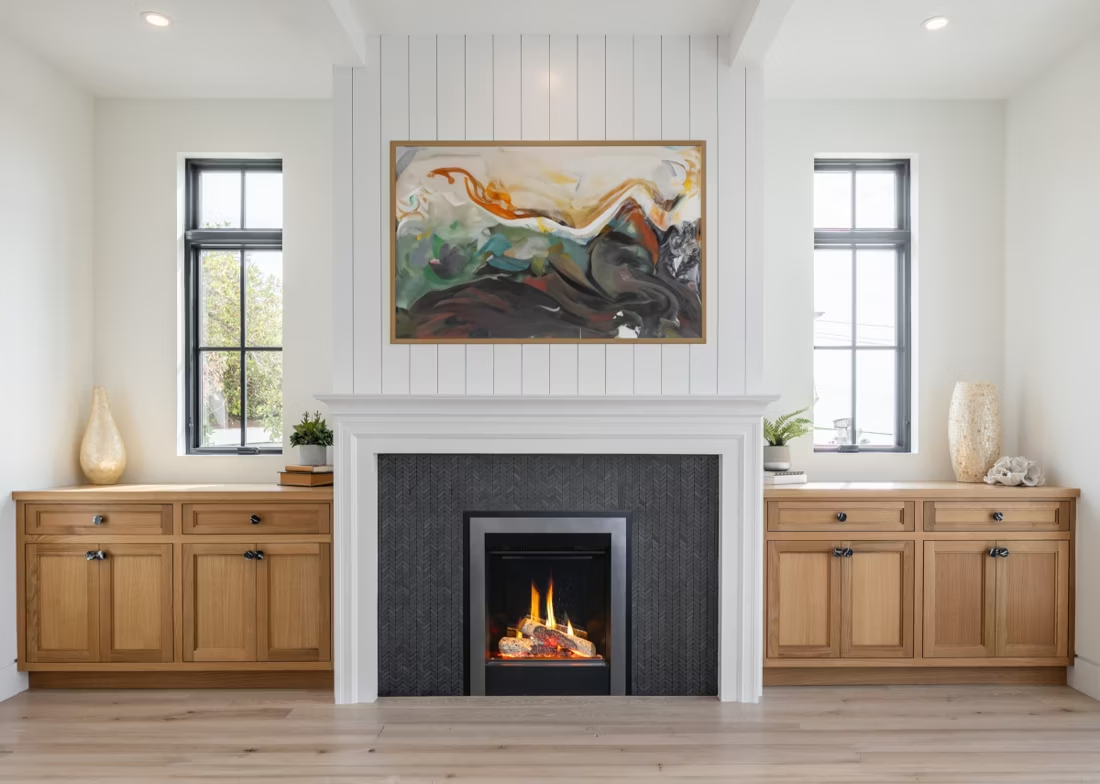
An electric fireplace is typically a built-in unit set into a wall or custom mantel surround, meant to look like a real fireplace with a flame effect and heater. An electric insert is sized to slide into an existing masonry or factory-built fireplace opening, which is a common upgrade for older Murray County homes that have a wood-burning fireplace they no longer want to maintain. An electric stove is a freestanding cabinet-style unit that can go almost anywhere there's an outlet, making it the easiest option for a cabin or rental property near the lake.
How does an electric fireplace compare to wood or gas for Murray County's climate?
With winters this mild—an average low of 28°F and a light overall winter heating load—Murray County doesn't demand the heavy-duty, all-night burn times that oak, hickory, or mesquite wood stoves are built for in colder climates. Wood still has its place for the ambiance and self-sufficiency it offers, and gas gives instant heat without any electrical dependency, but electric wins on simplicity: no venting, no chimney sweep, no fuel to source or store, and no combustion byproducts to worry about. For a secondary living space or a home that already leans on a heat pump for its real heating load, electric is often the lowest-hassle way to get flame and warmth in one room.
How much does it cost to run an electric fireplace day to day?
A typical 1,500-watt electric fireplace running on high costs roughly 15 to 25 cents an hour at Oklahoma's average residential electric rates, whether your home is served by OG&E or a local rural electric cooperative. Most owners run the heater setting only when a room actually needs extra warmth and leave the flame effect on by itself the rest of the time, which draws only a few watts. Compared to running central heat to bring up the whole house, using an electric fireplace to warm just the room you're in can actually reduce your overall heating bill during shoulder-season cold snaps.
How much maintenance does an electric fireplace need?
Very little—this is one of the biggest draws for Murray County homeowners who don't want an annual chimney sweep or gas line inspection. Occasional dusting of the unit, an ember-bed or log-set cleaning a few times a season, and eventually replacing the LED flame bulbs (which typically last several years of regular use) covers most of it. There's no combustion, no creosote, and no venting to inspect, which is part of why electric units are popular for vacation properties around Turner Falls and the Chickasaw National Recreation Area that sit empty for stretches at a time.
Do electric fireplaces actually produce heat?
Yes—most put out around 4,800–5,000 BTUs from a standard outlet, which comfortably warms a bedroom, office, or den as a comfort-zone heater. What they won't do is carry a whole house the way wood, gas, or pellet can. Think of electric as ambiance-first with honest supplemental heat: flames on with no heat in July, flames plus warmth in January.
Can I put a TV above my fireplace?
Yes—with an asterisk. Fireplaces are hot and TVs don't like heat. Either put a mantel between them to deflect rising warmth, or choose a fireplace with heat-management technology that creates a cool zone on the wall above—the wall stays around 125 degrees, barely warm, while the room still gets full heat. If you like clean lines and don't want a mantel, heat management is the answer.
Can I install a fireplace myself?
If you're putting a fire in your house on purpose, it's best to work with an expert. Unless you're genuinely experienced in framing, gas line, vent pipe, and the national code on clearances to combustibles, have a professional do it—and ideally the same company that sells you the fireplace, so warranty, service, and liability all live under one roof.
How much should I budget for a fireplace?
For an average home—covering the fireplace, the vent pipe, and basic installation—a budget between $3,900 and $5,500 gives you a lot of options across wood, gas, and pellet. By the time you add finish work, gas line, and electrical, the average complete installation lands between $5,000 and $12,000 all-in. In a remodel or new build, a good rule is to put about 2.5% of the total project cost toward the fireplace.
Find your electric fireplace in Murray County.
Tell us a bit about your home and we'll match you with the right electric fireplace, insert, or stove—and send you a free Project Guide & Parts List built around your space and a trusted local dealer.
Find Your Fireplace →