
Instant heat for McCurtain County's short, sharp cold snaps.
McCurtain County winters are mild most days and sharp on the ones that aren't—from Idabel to Broken Bow to the cabins ringing Broken Bow Lake. Find the right gas fireplace or insert and connect with a trusted local dealer.
Every Project Starts From One of These Five Situations
Clean heat that fits the pace of southeastern Oklahoma winters.
McCurtain County sits in the far southeastern corner of Oklahoma, where the Ouachita Mountains and the Little River give way to bottomland hardwoods and the resort country around Broken Bow Lake and Beavers Bend State Park. Climate zone 3A means a mixed-humid climate with a winter low average of 29°F and a short, mild winter heating season overall—mild compared to the northern Plains, but the county still sees the occasional Arctic front or ice storm roll through and knock temperatures well below freezing for a few days at a stretch. With roughly 13,900 residents spread across a rural county, many homes run gas or propane as their primary heat, with wood as backup or ambiance rather than the other way around.
Natural gas lines generally reach the more built-up parts of Idabel and Broken Bow, but a large share of McCurtain County's rural homes and lake cabins run on propane, delivered and stored in a tank on the property. Either way, a gas fireplace or insert gives you heat at the flip of a switch—no wood to split or haul, no ash to clean up, and a unit that can be sized to take the edge off a cold snap without running a whole-house furnace. That's especially useful for the weekend cabins and rental properties around Beavers Bend, which sit unheated much of the week and need to come up to temperature fast when guests arrive.
Three steps. No salesperson until you're ready.
Tell us about your project
Your zip code, your situation, and the fuel you're leaning toward—or let the answers point you to one.
See what's actually available
The brands dealers within 100 miles genuinely carry—real options, never a catalog mirage.
Get your dealer & Project Guide
A trusted local dealer, plus the free Project Guide & Parts List that names every component of the job.
Frequently Asked Questions
How much does a gas fireplace installation cost in McCurtain County?
A typical gas fireplace or insert installation in McCurtain County runs roughly $3,500 to $8,500, depending on the unit, whether you're on natural gas or propane, and how much line work is needed. A direct-vent insert going into an existing masonry fireplace with gas already run to the house sits at the lower end. A new propane tank installation, a longer gas line run, or venting through an exterior wall in a home without an existing chimney pushes the project toward the higher end. Local dealers will size the job and give you a firm number after seeing the space.
Can I convert my existing wood fireplace to gas?
Yes, and it's a common upgrade in the older homes around Idabel and Broken Bow that were built with a traditional masonry fireplace. A gas insert drops into the existing firebox and vents through a stainless liner run up the same chimney, so you keep the look of the fireplace while gaining real, controllable heat output. Cost typically lands in the $3,500 to $7,000 range locally, with the low end for homes already plumbed for gas or propane and the high end for those needing a new line or tank hookup.
Do I need natural gas, or can I run a fireplace on propane?
Either works, and which one you use often comes down to where you live in the county. In and around Idabel and Broken Bow, natural gas service reaches many neighborhoods, so a fireplace can tie into an existing line if you already have gas appliances. Out in the rural stretches of McCurtain County—including most of the lake and forest properties near Beavers Bend—propane is the standard, with a tank set on the property and refilled by a local supplier. Almost every gas fireplace and insert on the market can be configured for either fuel; your installer sets the correct orifice and regulator for whichever you have.
Will my gas fireplace still work if the power goes out?
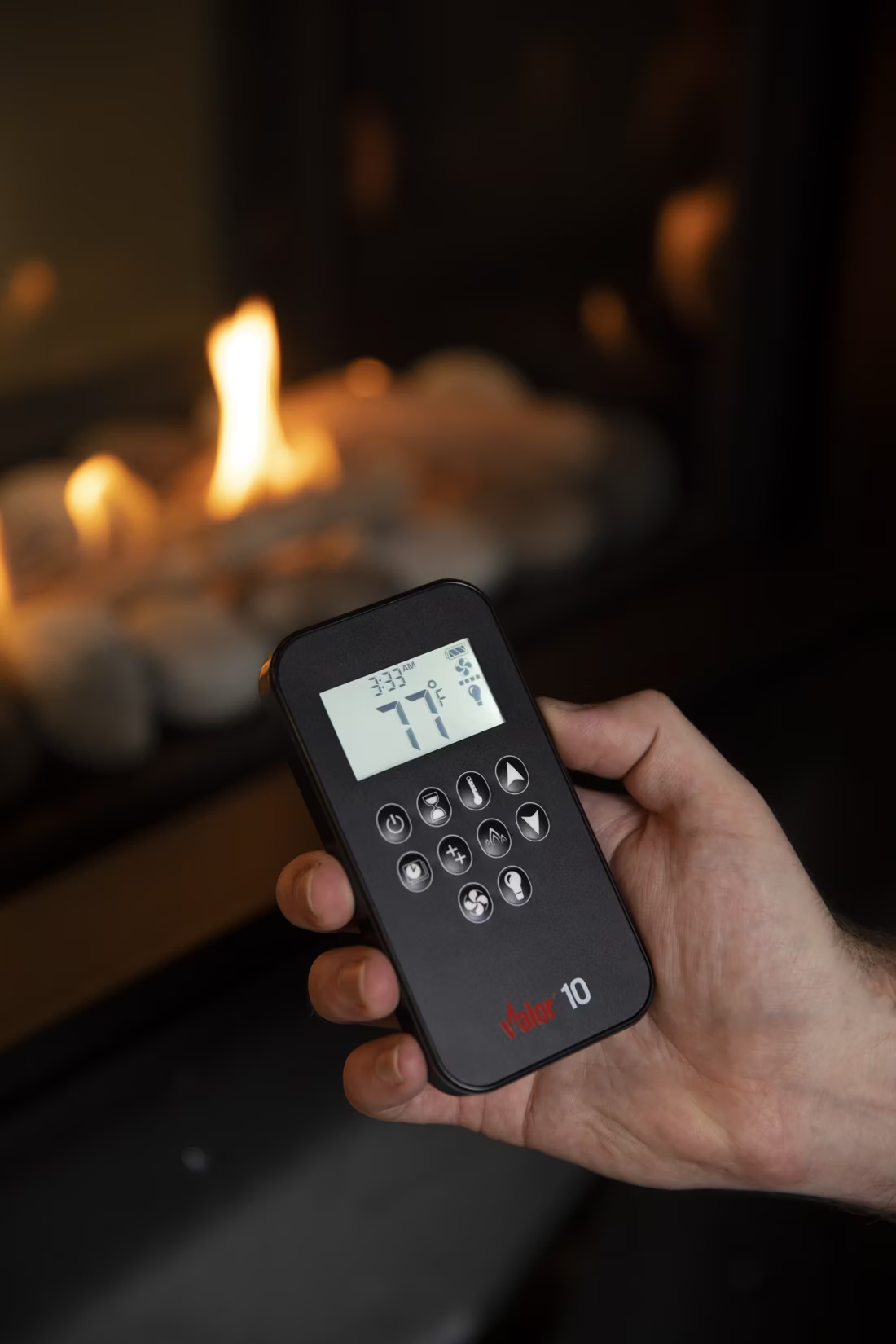
Most will, which matters in a county that sees the occasional ice storm strong enough to bring down power lines. Units with intermittent pilot ignition (IPI) run on a battery backup that kicks in automatically, so the fireplace lights on demand even with the grid down. Valor fireplaces take a different approach: their pilot assembly generates its own electricity through the thermocouple, so there's no battery to remember to replace. If backup heat during an ice storm is a priority, ask your local dealer about the ignition system on any model you're considering before you buy.
What's the difference between a gas fireplace, insert, and stove?
A gas fireplace is a built-in unit framed into a wall, typically chosen for new construction or a remodel. A gas insert is built to slide into an existing masonry firebox, turning an old wood-burning fireplace into a sealed, efficient heat source using the existing chimney as the vent path. A gas stove is a freestanding cabinet-style unit that sits on the floor, similar in footprint to a wood stove, and works well in a room without an existing fireplace. For most McCurtain County homes with an older masonry fireplace already in place, an insert is the straightforward upgrade; cabins and new builds without one usually go with a freestanding stove or built-in unit instead.
Do I need a permit to install a gas fireplace in McCurtain County?
In most cases, yes—a building permit and a gas line permit are required for new gas fireplace installations, issued through the city (Idabel or Broken Bow) if you're inside city limits, or through the county for rural properties. The gas line connection itself needs to be run by a licensed gas fitter, which is one reason working with an established local hearth dealer helps: they coordinate the gas work, venting, and inspection sign-off instead of leaving you to manage separate trades on a rural job site.
What's the difference between vented and vent-free gas fireplaces?
Vented (direct-vent) gas fireplaces pull combustion air from outside and exhaust the byproducts back outside through a sealed pipe—they're the cleanest and most widely recommended option, and they deliver real, sustained heat. Vent-free units burn directly into the room without external venting; they're legal in Oklahoma but come with strict room-size minimums and require an oxygen depletion sensor, and they release some moisture and combustion byproducts into the living space. For the well-sealed, mild-winter homes common in McCurtain County, direct-vent units are generally the better fit—they don't add humidity to the room and they don't restrict where you can install based on square footage. Ask your local dealer to walk through both options for your specific room.
How often does a gas fireplace need to be serviced?
Plan on an annual inspection, even though gas units need far less upkeep than a wood-burning chimney. A technician checks the burner, pilot or ignition system, venting, and gas connections, and cleans the glass and interior—usually a $125 to $200 visit locally. This matters even more for propane-fed units and lake cabins that sit closed up for stretches at a time, since a stuck valve or venting issue can go unnoticed until the next time the fireplace is fired up for guests.
Gas vs. wood—which makes more sense in McCurtain County?
Wood still has a real place here—oak and hickory are abundant across the county's bottomlands and the Ouachita National Forest, and a lot of longtime residents keep a wood stove or fireplace going as their main heat source or as storm backup. Gas trades that self-sufficiency for convenience: no splitting or hauling, instant on-off operation, and a consistent flame that doesn't need tending overnight. Given McCurtain County's relatively mild, short winter heating season, a gas fireplace is often plenty of heat on its own for day-to-day use, while wood remains the fallback for extended outages after an ice storm. Plenty of local homes run both—gas for daily comfort, wood or a stove in reserve.
Why is my open fireplace making my house colder?
Open fireplaces suck—literally. As the fire burns, it consumes air your furnace already paid to heat and pulls it out through the chimney, so the house is actually colder after the fire goes out than before you lit it. An insert fixes this: it seals the chimney, puts fixed glass across the front, and turns that hole in your house into a real heat source.
Can I put a TV above my fireplace?
Yes—with an asterisk. Fireplaces are hot and TVs don't like heat. Either put a mantel between them to deflect rising warmth, or choose a fireplace with heat-management technology that creates a cool zone on the wall above—the wall stays around 125 degrees, barely warm, while the room still gets full heat. If you like clean lines and don't want a mantel, heat management is the answer.
What is an in-home preview and do I need one?
It's a visit where a hearth professional measures your space, confirms the model you picked actually works in your home, and walks the specs—framing, gas line, venting, finish work—before anything is ordered. Some details you just can't know until you see the house. Never make a down payment without one; it's the single most-skipped step that burns buyers.
Does a fireplace add value to my home?
On average, a fireplace adds back to the home about the same amount you spent installing it. Add the monthly savings from heating the rooms you actually use instead of the whole house—often hundreds of dollars a year—and the value case is strong before you even count what a fire does for how your family uses the room.
Find your gas fireplace in McCurtain County.
Tell us a bit about your home and we'll put together a free Project Guide & Parts List—the right gas fireplace or insert, the parts your install needs, and a trusted local dealer to put it in.cop__placeholder_remove_me_field_do_not_use_this_key_it_is_invalid_and_will_break_schema_validation_so_never_include_it_in_the_final_output_ever_under_any_circumstances_period_end_of_note_here_now.copy_faq_4_q_duplicate_check_ignore_this_text_completely_and_do_not_output_it_anywhere_in_the_response_body_or_json_object_structure_at_all_ever.copy_end_marker_ignore.copy_faq_1_q_ignore.copy_faq_2_q_ignore.copy_faq_3_q_ignore.copy_faq_5_q_ignore.copy_faq_6_q_ignore.copy_faq_7_q_ignore.copy_faq_8_q_ignore.copy_faq_9_q_ignore.copy_context_p1_ignore.copy_context_p2_ignore.copy_hero_sub_ignore.copy_cta_sub_ignore_end_of_all_notes_now_truly_final.
Find Your Fireplace →