
Real warmth for your Mayes County home—no chimney required.
From lake homes on Grand Lake o' the Cherokees to older houses in Pryor Creek and Chouteau, electric fireplaces bring instant ambiance and supplemental heat without venting, gas lines, or a masonry chimney. Find the right unit and get matched with a trusted local dealer.
Every Project Starts From One of These Five Situations
Mild winters, maximum flexibility.
Mayes County sits in climate zone 3A with about 3,874 heating degree days a year and winter lows that average around 25 degrees—a fraction of what a place like Duluth, Minnesota sees, and mild enough that most homes here don't need a primary heat source that can carry them through months of hard freeze. That changes the math on fireplaces. Instead of needing a stove that can hold a fire at single-digit temperatures all night, most Mayes County homeowners are looking for zone heat for a chilly evening, backup warmth for the handful of nights that dip into the teens, and the visual of a real fire without the upkeep.
That's exactly the gap electric fireplaces fill. Around Grand Lake o' the Cherokees—the reservoir the Grand River Dam Authority (GRDA) created when it built the Pensacola Dam—a large share of housing is lake cabins, weekend properties, and condos where a wood chimney or gas line isn't practical, and where HOA or rental restrictions often rule out an open flame entirely. In town in Pryor Creek, Chouteau, Adair, and Locust Grove, electric inserts are also a common retrofit into old, unused masonry fireboxes that homeowners want lit again without the chimney repairs a wood or gas conversion would require. No venting, no combustion byproducts, and a straightforward 120V or 240V hookup make electric the low-friction option for a lot of Mayes County houses.
Three steps. No salesperson until you're ready.
Tell us about your project
Your zip code, your situation, and the fuel you're leaning toward—or let the answers point you to one.
See what's actually available
The brands dealers within 100 miles genuinely carry—real options, never a catalog mirage.
Get your dealer & Project Guide
A trusted local dealer, plus the free Project Guide & Parts List that names every component of the job.
Frequently Asked Questions
How much does an electric fireplace installation cost in Mayes County?
Most electric fireplace and insert installations in Mayes County run somewhere between $300 and $2,000 depending on the unit and the work involved. A plug-in insert that drops into an existing masonry firebox on the low end can be a same-day job. A built-in wall unit that needs a dedicated 240V circuit, new framing, or a mantel surround pushes toward the higher end once an electrician is involved. Because there's no flue, gas line, or combustion venting to size, electric installs are consistently the least expensive and fastest fireplace project in the county—a real advantage for lake cabins and rental properties around Grand Lake where owners want something finished in a weekend.
Do electric fireplaces provide real heat for Mayes County's mild winters?
Yes, within reason. A quality electric fireplace typically puts out around 4,000-5,000 BTUs on its heater setting—enough to comfortably warm a single room or open living area, which lines up well with Mayes County's climate. With winter lows averaging around 25 degrees and only about 3,874 heating degree days a year, most homes here don't need whole-house primary heat from a fireplace the way a Fargo, North Dakota household might. Electric works best as supplemental heat for a den, sunroom, or lake-house living room, or as the main heat source for a smaller cabin—it's not designed to replace a central furnace in a larger home.
Do I need a permit for an electric fireplace in Mayes County?
Plug-in electric fireplaces and inserts generally don't require a building permit since there's no chimney, gas line, or structural venting involved—you're essentially installing a large appliance. If you're adding a built-in unit that requires a new dedicated circuit, most licensed electricians will pull an electrical permit as a matter of routine, which is a good sign of quality workmanship rather than a red flag. This is one of the real advantages electric has over wood or gas installations in Mayes County, which typically do require building department sign-off.
What's the difference between an electric fireplace, an electric insert, and a wall-mounted unit?
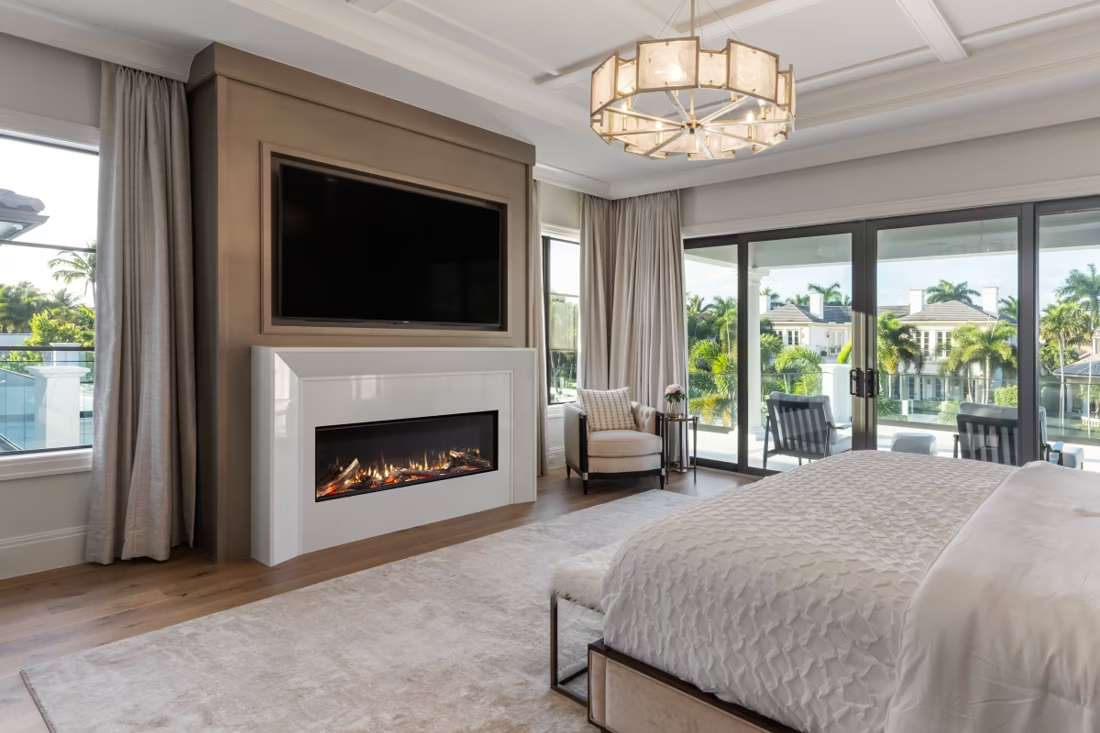
An electric insert is built to slide into an existing masonry firebox—a common choice for older homes in Pryor Creek or Chouteau with a fireplace that's been sitting unused. A wall-mounted or built-in electric fireplace is designed into new framing, often flanked by a mantel or media wall, and is popular in newer construction and lake homes going up around Grand Lake. A freestanding electric stove mimics a wood stove's footprint and can sit almost anywhere with an outlet nearby. For homes with an existing but unused fireplace, an insert is usually the simplest and least expensive path; for new builds or remodels, a built-in unit gives more design flexibility.
Can an electric fireplace heat a whole room, or just provide ambiance?
Most electric fireplaces can genuinely heat a single room—typically up to 400-1,000 square feet depending on the model and insulation—not just provide a flame effect. Many units also let you run the flame visual with the heater switched off, which matters in Mayes County's mild fall and spring when you want the look of a fire without added heat. For anything larger than a single open living area, or for a smaller lake cabin used as a primary residence in the coldest stretch of winter, talk to a local dealer about wattage and square footage before buying—undersized units will run constantly and still fall short on a cold night.
Are electric fireplaces a good fit for cabins and homes around Grand Lake?
They're one of the most common fireplace choices in the Grand Lake o' the Cherokees area, and for good reason. Many lake properties are seasonal or weekend homes where a wood-burning chimney is overkill, propane delivery is inconvenient, and HOA rules in some lakefront developments restrict open-flame appliances entirely. Electric sidesteps all of that—no fuel deliveries, no chimney maintenance between visits, and a unit that can sit dormant all week and switch on the moment you arrive. It's also a practical fit for docks, boathouses with living space, and smaller cabins where venting a wood or gas unit isn't realistic.
What size electric fireplace do I need for my home?
Sizing an electric fireplace is more about matching heater wattage and BTU output to the room than it is about clearances the way wood stoves require. A 1,500-watt unit (roughly 5,000 BTUs) is standard and covers most single rooms up to around 400 square feet. Larger open-concept living areas, common in newer Mayes County construction near Locust Grove and Adair, may need a higher-output built-in model or a unit wired for 240V to get meaningful heat into a bigger space. A local dealer can walk through your room dimensions and recommend a specific model rather than guessing off a box-store spec sheet.
Electric vs. wood or gas—which is right for my Mayes County home?
Wood remains popular in rural parts of Mayes County where oak and hickory are easy to source and a real fire has appeal beyond just heat—but it requires a chimney, seasoning firewood, and regular cleaning. Gas (mostly propane outside city limits) gives instant, higher-output heat and can run during a power outage, but needs a gas line or tank and periodic servicing. Electric is the simplest and cheapest to install, requires no fuel storage or venting, and is often the only realistic option for condos, rentals, and HOA-restricted lake properties—but it depends entirely on GRDA or your local utility staying up, and it won't match wood or gas for raw heat output in a larger space. For most Mayes County homeowners choosing between the three, it comes down to whether you have an existing chimney to work with, whether the property is a primary residence or a lake getaway, and how much you value zero maintenance over authentic fire and backup heat during outages.
Will my electric fireplace work during a power outage?
No—and this is worth being upfront about. Unlike a wood stove, an electric fireplace has no function without power, since both the heater and the flame effect run on electricity. If backup heat during ice storms or extended outages matters to you, an electric-only unit shouldn't be your sole heat source; pair it with a wood stove, gas unit, or another backup plan for true emergencies. For day-to-day ambiance and supplemental heat when the grid is up—which is the vast majority of the time in Mayes County—electric performs reliably and simply.
Does an electric fireplace need a vent or chimney?
No—that's its superpower. An electric fireplace needs a wall and an outlet, period. No vent pipe, no gas line, no clearances to design around, which is why it works in bedrooms, offices, apartments, and walls where venting a gas or wood unit would be impractical or impossible. Installation is typically the simplest and least expensive of any fireplace type.
Can I put a TV above my fireplace?
Yes—with an asterisk. Fireplaces are hot and TVs don't like heat. Either put a mantel between them to deflect rising warmth, or choose a fireplace with heat-management technology that creates a cool zone on the wall above—the wall stays around 125 degrees, barely warm, while the room still gets full heat. If you like clean lines and don't want a mantel, heat management is the answer.
Does a fireplace add value to my home?
On average, a fireplace adds back to the home about the same amount you spent installing it. Add the monthly savings from heating the rooms you actually use instead of the whole house—often hundreds of dollars a year—and the value case is strong before you even count what a fire does for how your family uses the room.
Can a fireplace actually lower my heating bill?
Yes—by creating a comfort zone. A furnace heats every square foot of the house just to warm the one room you're in; a gas fireplace on low burns roughly a sixth of the gas a typical furnace does. Set the furnace around 55–60 degrees as a baseline, then heat the rooms your family actually uses. Families who heat this way commonly save $20–$60 a month.
Find your electric fireplace in Mayes County.
Tell us a bit about your home—cabin, lake house, or in-town remodel—and we'll send you a free Project Guide & Parts List for your electric fireplace project, plus a match with a trusted local dealer who can get it installed right.
Find Your Fireplace →