
Zone heat and ambiance for Logan County homes—no chimney required.
From Guthrie's Victorian downtown to the newer subdivisions spreading out toward Crescent, Coyle, and Mulhall, electric fireplaces give Logan County homeowners real supplemental heat and a fire's glow without venting, gas lines, or chimney work. Find the right unit and connect with a trusted local dealer.
Every Project Starts From One of These Five Situations
Mild winters make electric the easy fit here.
Logan County sits in climate zone 3A, with an average winter low around 27 degrees and a winter heating season that's less than half as demanding as a place like Bismarck ND or Duluth MN. Winters here are short and generally mild, which means most of the county's 16,000-plus residents, from Guthrie's historic core to the growing edges around Crescent, Coyle, Marshall, and Mulhall, don't need a wood-fired furnace to survive January. What they do want is targeted, comfortable heat in the room they're actually sitting in, and a fire's ambiance without adding a masonry chimney to a house that never had one.
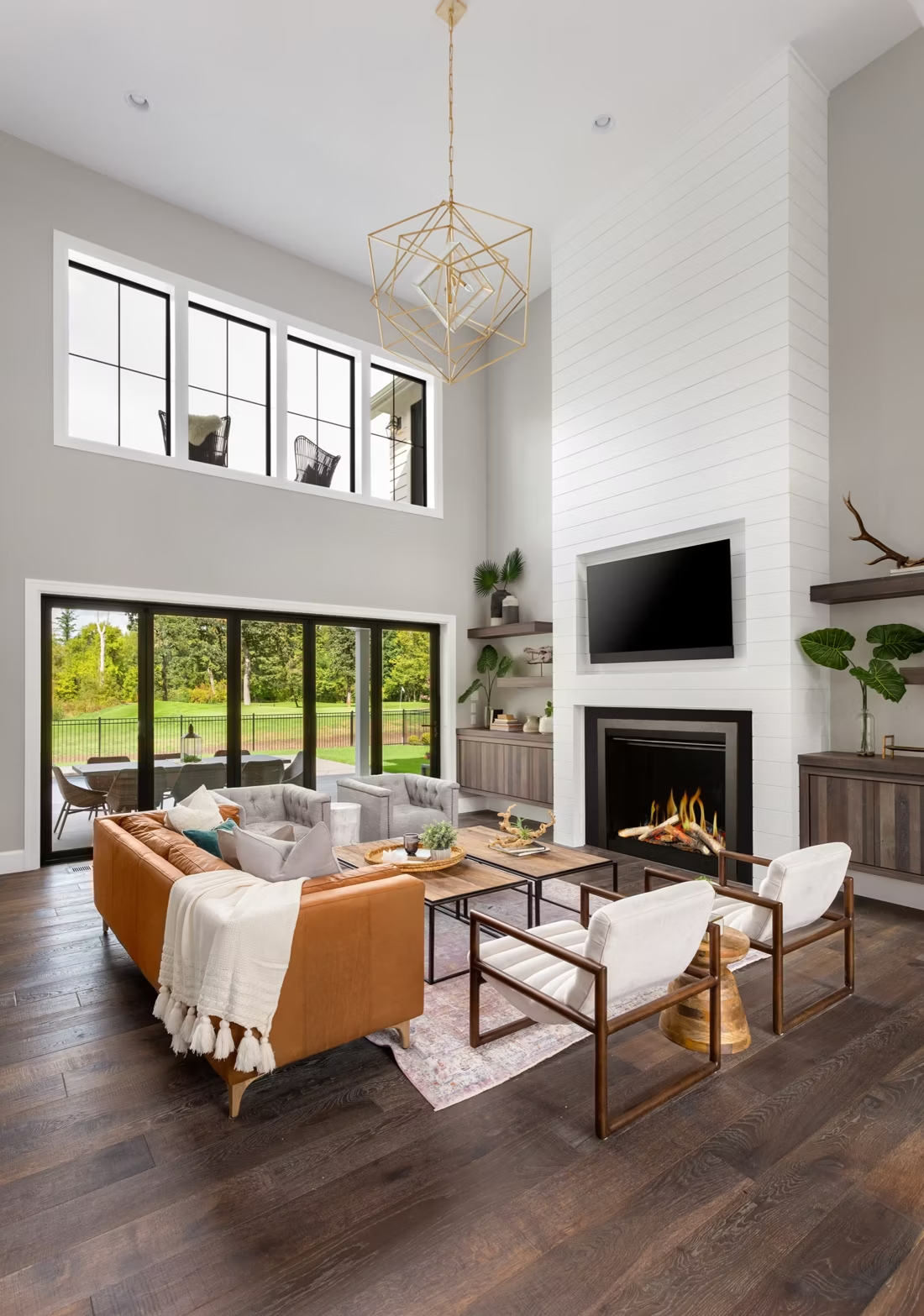
That's exactly the gap electric fireplaces fill. There's no flue, no combustion, no gas line to run—plug-in units drop into an existing mantel opening or mount to a wall, while larger built-in models wire into a dedicated circuit and disappear into new construction cabinetry. In Guthrie's older Victorian homes downtown, where adding real venting would mean cutting into century-old brick and plaster, an electric insert restores a dead fireplace opening to daily use in an afternoon. In the newer builds spreading through Crescent and Mulhall, builders increasingly wire electric fireplace circuits right into the great room during framing. Either way, OG&E and Central Rural Electric Cooperative—the utilities serving most of the county—keep the power flowing to run it.
Three steps. No salesperson until you're ready.
Tell us about your project
Your zip code, your situation, and the fuel you're leaning toward—or let the answers point you to one.
See what's actually available
The brands dealers within 100 miles genuinely carry—real options, never a catalog mirage.
Get your dealer & Project Guide
A trusted local dealer, plus the free Project Guide & Parts List that names every component of the job.
Frequently Asked Questions
How much does an electric fireplace installation cost in Logan County?
A plug-in electric insert or wall-mount unit typically runs $300 to $1,200 installed, since most simply plug into an existing 120-volt outlet with no electrician required. Larger built-in electric fireplaces or full mantel packages that need a dedicated 240-volt circuit run higher—usually $1,500 to $3,500 once you factor in a licensed electrician running new wire, especially in older Guthrie homes with older panels that may need a subpanel upgrade first. New construction in Crescent or Mulhall tends to land on the lower end of that range since the wiring goes in during framing rather than being retrofitted.
Do I need a permit to install an electric fireplace in Logan County?
Usually not for a plug-in unit—since there's no venting, gas line, or structural change, most jurisdictions don't require a permit for a fireplace that simply plugs into an existing outlet. If you're adding a dedicated 240-volt circuit for a larger built-in unit, that electrical work typically does need a permit—through the City of Guthrie's building department for in-town projects, or Logan County's building authority for unincorporated areas like Coyle or Marshall. A licensed electrician normally pulls that permit as part of the job, so it's rarely something the homeowner has to manage directly.
What's the best electric fireplace for Logan County's climate?
Because Logan County's winters are relatively mild—that 27-degree average low and a winter heating season less demanding than a colder-climate house has to handle—most homeowners here are choosing electric fireplaces for zone heat and ambiance in a specific room rather than as a primary heat source. Infrared or resistance-heat inserts with a real flame effect work well for a living room or den that runs cooler than the rest of a centrally heated house. For a historic Guthrie home with a shallow existing firebox, a slim insert sized to the opening is usually the right call; for new construction, a wider linear built-in gives more design flexibility. A local dealer can size the unit to your room and your existing electrical service.
Electric vs. gas fireplace—which makes more sense in Logan County?
Gas delivers more heat output and, with the right ignition system, keeps working through a power outage—a real consideration during Oklahoma's occasional ice storms. Electric skips the gas line and venting entirely, costs less to install, and gives you a flame-effect fireplace almost anywhere in the house, including rooms where running gas or a chimney isn't practical, like a converted bedroom or a Guthrie storefront apartment above Main Street. Given Logan County's mild heating demand, a lot of homeowners here choose electric specifically because they're after ambiance and modest supplemental warmth, not a unit that has to carry the house through a hard winter. Homes that already have natural gas service and want serious backup heat often lean gas instead.
Can I put an electric fireplace insert into my existing fireplace opening in an older Guthrie home?
Yes, and it's one of the most common projects for Guthrie's Victorian-era housing stock. An electric insert sized to your existing masonry opening slides in and plugs into a nearby outlet (or a new one added just behind the unit), giving you flame effect and supplemental heat without touching the original chimney or brick. Because you're not venting anything, there's no concern about the century-old flue's condition—many of these fireplaces haven't been safe to burn wood in for years, and an electric insert brings them back into daily use without a masonry restoration project.
How much does it cost to run an electric fireplace in Logan County?
Most electric fireplaces draw around 1,500 watts on the heat setting, which works out to roughly 12 to 20 cents an hour to run at typical OG&E and Central Rural Electric Cooperative residential rates—a few dollars for an evening of use. Running the flame effect alone, with the heater off, costs only a fraction of that since the light and motor draw very little power. That makes electric fireplaces cheap to run for the ambiance-only use that's common in Logan County's mild winters, and still reasonable when you do want the heat.
Will my electric fireplace work during a power outage?
No—unlike a gas unit with battery-backup ignition, an electric fireplace is entirely dependent on grid power, so it goes dark the moment the power does. That's a real consideration during the ice storms that occasionally roll through Logan County and knock out lines for OG&E or Central Rural Electric Cooperative customers. If backup heat during an outage matters to you, a wood stove or gas unit with a battery-backed ignition system is the better complement—plenty of Logan County homes pair an electric fireplace for everyday ambiance in the main living room with a wood-burning option elsewhere for genuine emergency heat.
Electric fireplace vs. wood stove—which is right for my Logan County home?
Wood heat has deep roots in this part of Oklahoma—oak, hickory, and mesquite are all common locally, and plenty of households already burn mesquite or hickory for backyard smokers and pits. A wood stove works without power, which matters during ice storm outages, but it also means chimney maintenance, ash cleanup, and sourcing or splitting cordwood. An electric fireplace skips all of that: no venting, no fuel to manage, just a switch. Given Logan County's mild winter load, electric is usually the better fit for a primary living space where you want low-maintenance ambiance and modest heat, while a wood stove still makes sense for a den, workshop, or as genuine backup heat.
Is an electric fireplace a good option for a rental property in Logan County?
Yes—electric is often the easiest fuel choice for rental housing in and around Guthrie, since a plug-in unit requires no permanent venting, no gas line, and can be removed or relocated without leaving a mark on the property. Landlords adding a fireplace amenity to an older Guthrie duplex or a newer rental in Crescent or Mulhall frequently choose electric inserts or wall-mounted units for exactly this reason—low installation cost, minimal liability, and a feature tenants notice without the maintenance burden of a wood-burning system.
Can I put a TV above my fireplace?
Yes—with an asterisk. Fireplaces are hot and TVs don't like heat. Either put a mantel between them to deflect rising warmth, or choose a fireplace with heat-management technology that creates a cool zone on the wall above—the wall stays around 125 degrees, barely warm, while the room still gets full heat. If you like clean lines and don't want a mantel, heat management is the answer.
Does an electric fireplace need a vent or chimney?
No—that's its superpower. An electric fireplace needs a wall and an outlet, period. No vent pipe, no gas line, no clearances to design around, which is why it works in bedrooms, offices, apartments, and walls where venting a gas or wood unit would be impractical or impossible. Installation is typically the simplest and least expensive of any fireplace type.
Does a fireplace add value to my home?
On average, a fireplace adds back to the home about the same amount you spent installing it. Add the monthly savings from heating the rooms you actually use instead of the whole house—often hundreds of dollars a year—and the value case is strong before you even count what a fire does for how your family uses the room.
Can a fireplace actually lower my heating bill?
Yes—by creating a comfort zone. A furnace heats every square foot of the house just to warm the one room you're in; a gas fireplace on low burns roughly a sixth of the gas a typical furnace does. Set the furnace around 55–60 degrees as a baseline, then heat the rooms your family actually uses. Families who heat this way commonly save $20–$60 a month.
Find your electric fireplace in Logan County.
Tell us a bit about your home and we'll match you with the right electric fireplace, insert, or mantel package—and connect you with a trusted local dealer who'll put together your free Project Guide & Parts List for the project.
Find Your Fireplace →