
Steady gas heat for Le Flore County's mild but real winters.
From Poteau to Heavener, Spiro, Talihina, and the ridges of the Ouachita Mountains in between—find the right gas fireplace, insert, or stove and get matched with a trusted local dealer who can install it correctly.
Every Project Starts From One of These Five Situations
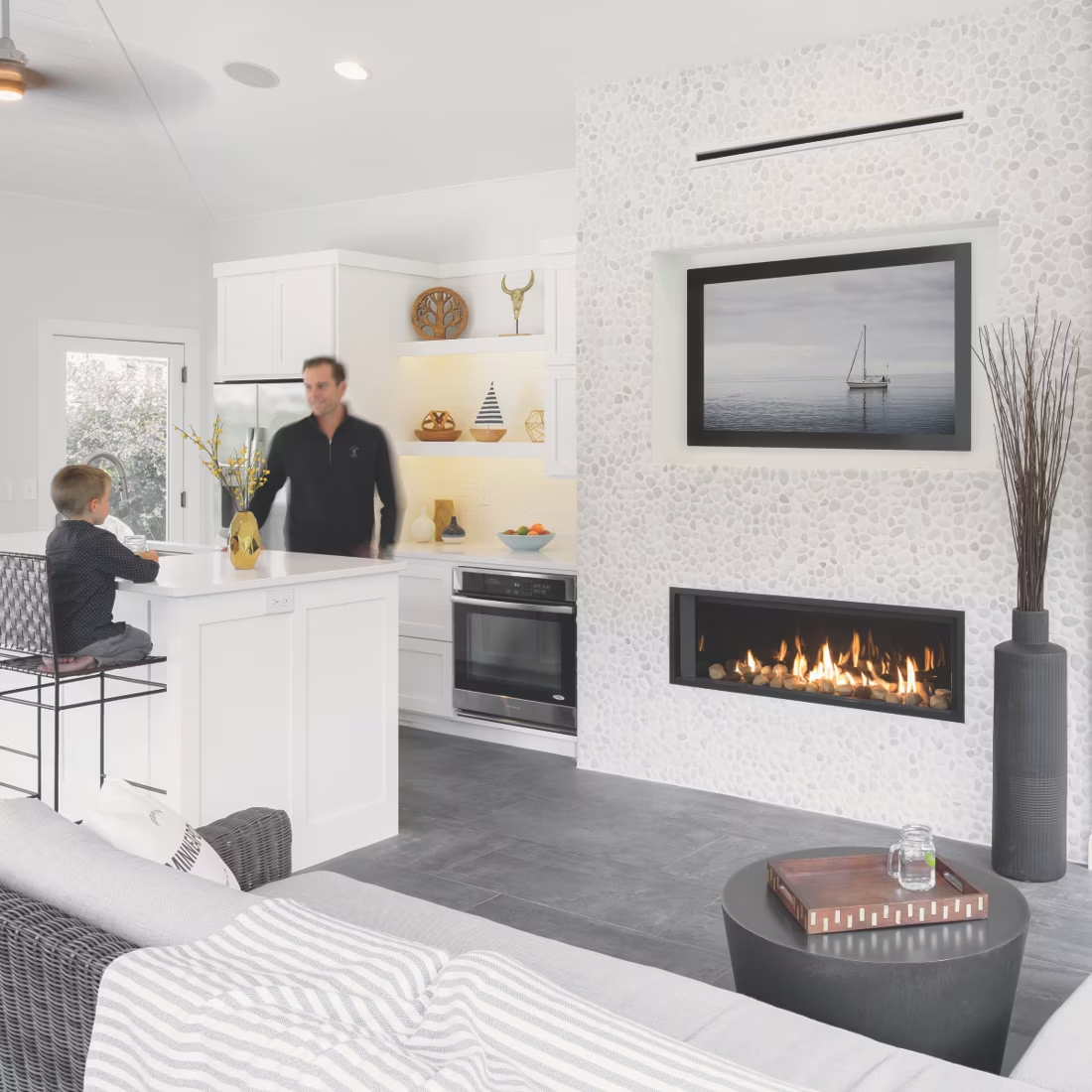
Consistent warmth without tending a fire.
Le Flore County sits in the Ouachita Mountains along Oklahoma's eastern border, with terrain rising from river bottoms near the Poteau River to ridgelines above 2,600 feet near Rich Mountain. Winters here are moderate by national standards—Climate Zone 3A, an average winter low around 27°F, and a comparatively short, mild heating season, a fraction of the winter heating load places like Fargo, ND or Duluth, MN see. That milder profile means gas fireplaces here are often chosen less out of necessity and more for comfort, consistent heat, and the ability to warm a room instantly without splitting or hauling wood.
Natural gas service reaches many of the county's incorporated towns, including Poteau, Spiro, and Wister, typically through Oklahoma Natural Gas; homes farther out in Talihina, Heavener, or the unincorporated stretches of the Ouachitas more often run on propane delivered by regional suppliers. Either fuel works well with a modern direct-vent fireplace or insert, and because Le Flore County has no winter air-quality restrictions or non-attainment designations, there's no burning-season curtailment to plan around the way there is in some Western states—gas or wood, you can run your unit on the coldest night of the year without a second thought.
Three steps. No salesperson until you're ready.
Tell us about your project
Your zip code, your situation, and the fuel you're leaning toward—or let the answers point you to one.
See what's actually available
The brands dealers within 100 miles genuinely carry—real options, never a catalog mirage.
Get your dealer & Project Guide
A trusted local dealer, plus the free Project Guide & Parts List that names every component of the job.
Frequently Asked Questions
How much does a gas fireplace installation cost in Le Flore County?
Costs vary by project, but most gas fireplace and insert installations in Le Flore County run somewhere between $3,500 and $9,000. A direct-vent insert going into an existing masonry fireplace with gas already run to the room sits at the lower end. A new built-in gas fireplace in a remodel or new-construction home—with framing, venting, and a fresh gas line—lands in the middle to upper end, especially if you're on propane and need a tank set. Local dealers serving Poteau, Heavener, and the surrounding towns will give you a firm number after seeing your home, since gas line distance and venting path make the biggest difference.
Can I convert my existing wood fireplace to gas?
Yes, and it's one of the more common upgrades for older homes around Poteau and the surrounding Ouachita foothills. A gas insert slides into your existing masonry firebox and uses the same chimney, run with a stainless liner, so you keep the look of your fireplace but get push-button heat instead of a wood fire that needs tending. Homes already on natural gas in town are the easiest and least expensive conversions; homes relying on propane typically need a tank sized and set before the insert goes in. Either way, a local dealer will confirm your chimney is sound enough to line before quoting the job.
Do I need natural gas, or can I run a fireplace on propane?
Both work fine, and which one you use mostly comes down to where you live in the county. Natural gas lines run through Poteau, Spiro, and a handful of the other incorporated towns; most rural addresses in Le Flore County—around Talihina, Heavener, Wister, and the unincorporated county roads—rely on propane, either from an existing tank or a new one set by a local supplier. Nearly every gas fireplace, insert, or stove on the market can be configured for either fuel with the correct orifice and regulator, so your choice of unit isn't limited by which fuel reaches your house.
Will my gas fireplace still work if the power goes out?
Most will, with the right ignition system. Units with intermittent pilot ignition (IPI) run on a set of AA batteries tucked inside the unit, so the fireplace lights and runs normally even with the grid down—useful during the ice storms that occasionally knock out power across eastern Oklahoma. Valor fireplaces go a step further: their pilot assembly generates its own electricity through the thermocouple, so there are no batteries to remember at all. If backup heat during an outage matters to you, ask your local dealer about the ignition system on any model you're considering before you buy.
What's the difference between a gas fireplace, gas insert, and gas stove?
A gas fireplace is a built-in unit framed into a wall—the right choice for new construction or a remodel where there's no existing fireplace. A gas insert fits inside an existing masonry firebox, turning a drafty open hearth into a sealed, efficient heat source using the chimney you already have. A gas stove is a freestanding cabinet-style unit that sits on the floor like a wood stove but burns gas, and it's a good option for homes without a fireplace at all. For most of the older farmhouses and brick ranches scattered through the county, an insert is the simplest path if there's already a masonry fireplace in place.
Do I need a permit to install a gas fireplace in Le Flore County?
In most cases, yes—a building permit and gas line permit are standard for a new gas fireplace or insert installation, whether you're inside Poteau city limits or in unincorporated parts of the county, where permitting runs through the county building department. The gas line connection itself needs to be done by a licensed gas-fitter, which is one of the main reasons to hire a hearth dealer rather than a general handyman—they coordinate the gas work, venting, and inspection sign-off as one job instead of leaving you to manage separate trades.
What's the difference between vented and vent-free gas fireplaces?
Vented (direct-vent) fireplaces pull combustion air from outside and exhaust the byproducts back outside through a sealed pipe—they're the cleanest and most universally approved option. Vent-free units burn gas directly into the room with no outside venting; they're legal in Oklahoma and can be a practical option for an interior wall with no chimney access, but they release some water vapor and combustion byproducts indoors and require careful room-size and ventilation calculations. For most homes in Le Flore County, a direct-vent unit is the more common and more flexible choice, but vent-free is worth asking about if you're retrofitting a room with no way to run venting.
How often should my gas fireplace be serviced?
Plan on an annual check-up, ideally before the first cold snap of the season. A technician will inspect the burner, pilot assembly, venting, and gas connections, and clean the glass and interior—a much quicker job than a wood chimney sweep, but just as important for safety, since a cracked heat exchanger or a blocked vent isn't something you'll necessarily notice on your own. Local hearth dealers who install gas units in the county typically offer this service directly, often in the $125–$200 range.
Gas vs. wood—which makes more sense for a Le Flore County home?
Wood has deep roots here—the Ouachita Mountains are thick with oak and hickory, and mesquite shows up in the drier western edges of the county, so firewood is generally cheap or free if you're willing to cut and split it yourself. A wood stove or fireplace also keeps working with the power out, which matters during ice storms. Gas trades that self-sufficiency for convenience: instant heat at the flip of a switch, no ash or creosote, and a consistent burn that doesn't need tending. Given the county's moderate winters—an average low near 27°F and a comparatively short, mild heating season—many homeowners here choose gas for daily comfort in the main living space and keep a wood stove or fireplace elsewhere as backup. A local dealer can walk through both options based on your home's layout and how you actually plan to use it.
Why is my open fireplace making my house colder?
Open fireplaces suck—literally. As the fire burns, it consumes air your furnace already paid to heat and pulls it out through the chimney, so the house is actually colder after the fire goes out than before you lit it. An insert fixes this: it seals the chimney, puts fixed glass across the front, and turns that hole in your house into a real heat source.
Is my gas fireplace wasting gas?
If it was installed more than 15 years ago, probably. Older gas fireplaces keep a standing pilot light burning all the time, and that little flame can cost a couple hundred dollars a year. Newer models use pilot-on-demand ignition—the pilot lights only when you use the fireplace and goes out when you turn it off.
Does a fireplace add value to my home?
On average, a fireplace adds back to the home about the same amount you spent installing it. Add the monthly savings from heating the rooms you actually use instead of the whole house—often hundreds of dollars a year—and the value case is strong before you even count what a fire does for how your family uses the room.
How much should I budget for a fireplace?
For an average home—covering the fireplace, the vent pipe, and basic installation—a budget between $3,900 and $5,500 gives you a lot of options across wood, gas, and pellet. By the time you add finish work, gas line, and electrical, the average complete installation lands between $5,000 and $12,000 all-in. In a remodel or new build, a good rule is to put about 2.5% of the total project cost toward the fireplace.
Get matched with a gas fireplace dealer in Le Flore County.
Tell us about your home and we'll put together a free Project Guide & Parts List—the exact parts, including the vent kit, and a trusted local dealer who can install your gas fireplace, insert, or stove correctly.
Find Your Fireplace →