
No chimney. No gas line. Just plug-in heat for Latimer County.
Zone heat and real-flame ambiance for homes across Latimer County, from Wilburton to the cabins near Robbers Cave State Park—no venting, no combustion, no gas hookup required. Find the right unit and connect with a trusted local dealer.
Every Project Starts From One of These Five Situations
Electric heat that fits Kiamichi Country's mild winters.
Latimer County sits in the Ouachita foothills of southeastern Oklahoma—Kiamichi Country, with a population under 4,000 spread between Wilburton and the surrounding hills and hollows near Robbers Cave State Park. Climate zone 3A and a comparatively short, mild heating season mean a mixed-humid, comparatively mild winter—average lows sit around 30°F, nothing close to the sub-zero stretches that drive families in Duluth or Fargo toward wood as primary heat. Oak, hickory, and mesquite grow thick through the county and have long fueled wood stoves in older farmhouses, but for a lot of homes, a full wood-burning setup is more heating capacity than the climate calls for.
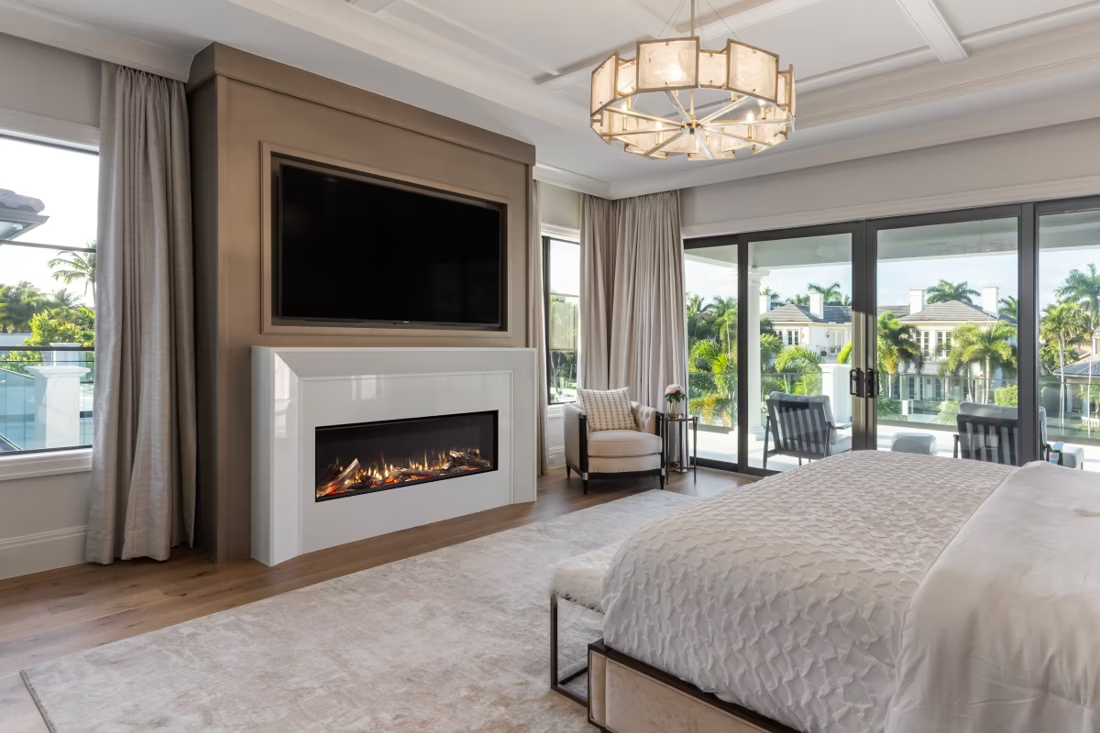
That's where electric fireplaces earn their keep. Many homes in rural Latimer County—including the manufactured and modular houses common outside Wilburton—run on power from a rural electric cooperative rather than piped natural gas, and adding a gas line or masonry chimney to a home that doesn't already have one is a bigger project than most homeowners want. An electric insert, stove-style unit, or built-in wall unit plugs into a standard outlet or a dedicated circuit, adds real supplemental warmth to a bedroom, den, or cabin at Robbers Cave, and delivers the look of a fire without smoke, ash, or an inspection for combustion venting.
Three steps. No salesperson until you're ready.
Tell us about your project
Your zip code, your situation, and the fuel you're leaning toward—or let the answers point you to one.
See what's actually available
The brands dealers within 100 miles genuinely carry—real options, never a catalog mirage.
Get your dealer & Project Guide
A trusted local dealer, plus the free Project Guide & Parts List that names every component of the job.
Frequently Asked Questions
How much does an electric fireplace installation cost in Latimer County?
A plug-in electric insert or stove-style unit typically runs $300 to $1,500 installed in Latimer County, since there's no chimney, gas line, or venting to add—most of that cost is the unit itself plus any minor electrical work. Built-in wall units or custom mantel packages that need a dedicated 20-amp circuit run higher, often $1,500 to $3,000, particularly if an electrician needs to run new wiring in an older Wilburton-area home. Because there's no combustion appliance involved, labor costs stay well below what you'd see for a wood or propane install in the same county.
Will an electric fireplace actually heat my home, or is it just for looks?
Most electric fireplaces are built for zone heating rather than whole-house heat, and that's a good match for Latimer County's mild winters—with average lows around 30°F and a fairly light overall heating load each year, most homes don't need a high-output primary heat source the way a house in International Falls or Bismarck would. A quality electric insert can comfortably take the edge off a bedroom, den, or a cabin near Robbers Cave on a cold night, and the fan-forced heat models put out real, noticeable warmth in a single room. For whole-home heat, pair it with your existing furnace, heat pump, or propane system rather than expecting the fireplace to carry the load.
Do I need a permit to install an electric fireplace in Latimer County?
In most cases, no. Because a plug-in or hardwired electric fireplace involves no chimney, gas line, or combustion venting, it typically falls outside the building permit requirements that apply to wood or gas installations. If you're adding a new dedicated electrical circuit, that wiring work should still be done by a licensed electrician and may require an electrical permit depending on the scope—check with your local building official if you're unsure. Either way, it's a far simpler permitting path than a wood stove or gas insert in the same county.
Electric vs. wood—which makes more sense for a Latimer County home?
Wood has deep roots here—oak, hickory, and mesquite are all locally abundant, and older farmhouses in the county were often built around a wood stove or fireplace as the main heat source. But Latimer County's mild winters (average lows near 30°F, a fairly light overall heating load) don't demand that much heating capacity for most homes, and electric skips the cutting, stacking, ash cleanup, and chimney maintenance entirely. The one thing to weigh: electric fireplaces stop working the moment the power does, and ice storms do knock out rural electric cooperative service in this part of southeastern Oklahoma from time to time. If backup heat during outages matters to you, a wood stove or propane unit still has an edge; if convenience and easy installation matter more, electric is the simpler choice.
What's the difference between an electric insert, stove, and built-in wall unit?
An electric insert is sized to slide into an existing masonry fireplace opening, which makes it a popular upgrade for older Wilburton-area homes with an unused wood-burning fireplace. An electric stove is a freestanding unit that looks like a traditional wood stove but simply plugs into a wall outlet—a good fit for a room without any existing fireplace. A built-in wall unit is framed into new construction or a remodel for a more custom, flush-mounted look, often with a larger flame display and higher heat output, and usually needs its own dedicated circuit. For most Latimer County homes retrofitting an old fireplace, the insert is the easiest and least invasive option.
Will my electric fireplace work if the power goes out?
No—electric fireplaces are entirely dependent on power, and that's worth being honest about in a county served by a rural electric cooperative where ice storms occasionally take lines down for a day or more. If you want ambiance and supplemental heat during normal weather but need a true backup source for outages, consider pairing your electric fireplace with a wood stove or propane appliance that can run independent of the grid. For many Latimer County homeowners, that combination—electric for everyday convenience, wood or propane for true winter-storm backup—covers both needs without over-building either system.
Are electric fireplaces a good fit for manufactured and modular homes?
Yes, and this matters in Latimer County, where manufactured and modular housing makes up a meaningful share of the housing stock outside Wilburton. Electric fireplaces avoid the structural and clearance requirements that come with wood stoves—no floor protection for radiant heat, no roof penetration for a chimney, no combustion air intake to plan around. A plug-in insert or stove-style unit can usually be added to a manufactured home with minimal modification, which is a big part of why electric has become a common choice for supplemental heat and ambiance in this type of housing across the county.
How much does an electric fireplace add to my power bill?
Most electric fireplaces draw around 1,500 watts on the heat setting, which works out to roughly $0.15–$0.25 per hour of run time depending on your rural electric cooperative's rate—a few dollars for an evening of use. Run on flame-only mode with the heater off, the draw drops to just a few watts, essentially the cost of a light bulb. Compared to running a whole-house furnace or heat pump longer to heat one room, using an electric fireplace for zone heating in a den or bedroom during Latimer County's cooler stretches is a relatively low-cost way to stay comfortable without adjusting the thermostat for the whole house.
Electric vs. gas—which is the better fit for my Latimer County home?
Gas fireplaces put out more consistent, higher heat output and can run during a power outage if equipped with a battery-backup ignition system, but most homes in Latimer County outside town rely on propane rather than piped natural gas, which means a tank installation and gas line work before a gas fireplace can go in. Electric skips all of that—no fuel storage, no gas-fitter, no venting—and installs in an afternoon. For homeowners who want fire-like ambiance and modest supplemental warmth without adding a propane tank or gas line, electric is usually the more practical and lower-cost path. For those who want a wood- or propane-independent home heating backup, gas is worth the extra install complexity.
Does an electric fireplace need a vent or chimney?
No—that's its superpower. An electric fireplace needs a wall and an outlet, period. No vent pipe, no gas line, no clearances to design around, which is why it works in bedrooms, offices, apartments, and walls where venting a gas or wood unit would be impractical or impossible. Installation is typically the simplest and least expensive of any fireplace type.
Do electric fireplaces actually produce heat?
Yes—most put out around 4,800–5,000 BTUs from a standard outlet, which comfortably warms a bedroom, office, or den as a comfort-zone heater. What they won't do is carry a whole house the way wood, gas, or pellet can. Think of electric as ambiance-first with honest supplemental heat: flames on with no heat in July, flames plus warmth in January.
Can a fireplace actually lower my heating bill?
Yes—by creating a comfort zone. A furnace heats every square foot of the house just to warm the one room you're in; a gas fireplace on low burns roughly a sixth of the gas a typical furnace does. Set the furnace around 55–60 degrees as a baseline, then heat the rooms your family actually uses. Families who heat this way commonly save $20–$60 a month.
Should the dealer who sells my fireplace also install it?
Ideally, yes. A fireplace project involves vent pipe, gas line, electrical, and often tile or stone. Hire three or four separate trades and you own the liability and the game of telephone between them. One company selling and installing means one accountable party, start to finish—ask about factory training, on-time completion records, and what happens if an inspection fails.
Find your electric fireplace in Latimer County.
Tell us a bit about your home near Wilburton or out toward Robbers Cave, and we'll match you with the right electric fireplace, insert, or stove—plus a free Project Guide & Parts List and a trusted local dealer to install it.=
Find Your Fireplace →