
Add clean, instant heat to any room in Greer County.
No chimney, no gas line, no venting through the prairie wind—just plug-in or hardwired warmth for homes and additions from Mangum to Granite to Willow. Find the right unit and connect with a trusted local dealer.
Every Project Starts From One of These Five Situations
Simple heat, no venting required.
Greer County sits in the far southwest corner of Oklahoma along the North Fork of the Red River, with Mangum as the county seat and Granite and Willow as its other small communities. At around 4,400 residents spread across mostly open farm and ranch country, this is a place where a lot of the housing stock is older farmhouses, additions built without ductwork, and manufactured or mobile homes—all situations where running new gas line or masonry chimney work doesn't make financial sense, but a dedicated 120V or 240V electric circuit does.
Climate zone 3A puts Greer County in mixed-hot territory—winter lows average around 25°F and the county logs a mild, short heating season each year, a fraction of what a place like Fargo, ND or Duluth, MN sees each winter. There's no real air quality restriction on burning here, so wood and gas are both viable options too, but for a sunroom, a garage conversion, a bedroom addition, or a rental property where you just need reliable supplemental warmth without touching the home's structure, electric is usually the fastest and least invasive route. It's also the option of choice for renters and landlords in Mangum and the surrounding area who want the look of a fireplace without a capital project.
Three steps. No salesperson until you're ready.
Tell us about your project
Your zip code, your situation, and the fuel you're leaning toward—or let the answers point you to one.
See what's actually available
The brands dealers within 100 miles genuinely carry—real options, never a catalog mirage.
Get your dealer & Project Guide
A trusted local dealer, plus the free Project Guide & Parts List that names every component of the job.
Frequently Asked Questions
How much does an electric fireplace installation cost in Greer County?
Electric fireplaces are the most affordable hearth option in Greer County precisely because there's no chimney, gas line, or exterior venting to install. A plug-in freestanding unit or a simple insert that uses an existing outlet can run under $1,000 installed. Built-in wall units or larger inserts that need a dedicated 240V circuit run by a licensed electrician typically land in the $1,000-$2,500 range once the electrical work is included. Homes in rural parts of the county—out past Granite or Willow—may see a modest trip charge added by electricians and installers coming from Mangum or Altus.
Will an electric fireplace actually heat a room, or is it just for looks?
Both—most electric inserts and stoves put out a genuine 4,000-5,000 BTU of heat, enough to comfortably warm a single room or small addition in Greer County's mild climate zone 3A winters. With an average winter low around 25°F and a mild, short heating season each year, the heating load here is far lighter than colder parts of the country, which is exactly why electric units are so practical as the primary heat source for a converted garage, sunroom, or guest room rather than just supplemental ambiance.
Should I get an electric insert, a built-in wall unit, or a freestanding electric stove?
If you have an existing wood-burning fireplace you no longer use, an electric insert slides into that opening and gives you instant heat and flame effect without any masonry work—a popular choice in older Mangum farmhouses with a fireplace that's been sitting cold for years. Built-in wall units are the choice for new construction or a remodel where you're framing a feature wall from scratch. Freestanding electric stoves are the simplest option and work well in additions, mobile homes, or rentals where you just need a unit you can move if you relocate.
Do I need a permit to install an electric fireplace in Greer County?
In most cases, no—because there's no venting, gas line, or chimney work involved, electric fireplace installs generally fall outside the building permit process that applies to wood and gas units in Greer County. The one exception is if your installer needs to run a new dedicated circuit and breaker for a larger built-in unit; that electrical work should be done by a licensed electrician, and any associated permitting is handled through the standard residential electrical permit process rather than a hearth-specific one.
Will an electric fireplace raise my electric bill much?
A typical electric fireplace running on its heat setting draws about 1,500 watts, similar to a space heater, so running it a few hours an evening adds a modest amount to your bill from your rural electric provider—most Greer County homes are served by a cooperative rather than an investor-owned utility. Used as supplemental zone heat in one room rather than as whole-home heating, the cost is usually far lower than running central heat harder, which is the appeal for homeowners heating an addition or a room that's otherwise hard to keep warm.
Are electric fireplaces a good fit for manufactured and mobile homes in Greer County?
Yes, and it's one of the more common installs in this part of the county. Manufactured and mobile homes are common throughout rural Greer County, and their construction generally doesn't support masonry fireplaces or easily-run gas lines. A freestanding electric stove or a slim built-in unit adds heat and ambiance without any structural modification, and most models are UL-listed for use in manufactured housing—just confirm that detail with your dealer before buying, since not every electric unit carries that certification.
Electric vs. wood vs. gas—which makes sense for a Greer County home?
Wood remains a strong option here—oak, hickory, and mesquite are all common locally and there are no air quality restrictions limiting burning. Gas requires either a natural gas hookup or a propane tank, which is common on Greer County ranch properties. Electric skips both of those infrastructure questions entirely, which is why it tends to win for additions, rentals, and secondary rooms rather than a home's primary heat source. Given the relatively mild heating load in climate zone 3A, plenty of homeowners here use electric as their only supplemental heat and rely on central HVAC for everything else.
Will my electric fireplace work if the power goes out?
No—this is the one real tradeoff compared to wood heat. Rural electric cooperative lines across southwest Oklahoma can go down during ice storms and severe spring weather, and an electric fireplace is useless without power, unlike a wood stove that keeps working through an outage. If year-round emergency backup heat is a priority for your Greer County property, it's worth pairing an electric unit (for everyday convenience) with a wood stove or a generator for the occasions when the grid goes down.
Where can I buy an electric fireplace in Greer County?
Greer County itself is small enough that most residents shop through dealers in Mangum or make the drive to Altus or Lawton for a wider selection of electric fireplace brands and models. Rather than guessing which big-box unit will actually fit your space and wiring situation, Find My Fireplace matches you with a trusted local dealer who knows what's realistic to install in a Greer County home—whether that's a manufactured home, a farmhouse fireplace conversion, or new construction—and hands you a free Project Guide & Parts List so you walk in knowing exactly what you need.
Can I put a TV above my fireplace?
Yes—with an asterisk. Fireplaces are hot and TVs don't like heat. Either put a mantel between them to deflect rising warmth, or choose a fireplace with heat-management technology that creates a cool zone on the wall above—the wall stays around 125 degrees, barely warm, while the room still gets full heat. If you like clean lines and don't want a mantel, heat management is the answer.
Does an electric fireplace need a vent or chimney?
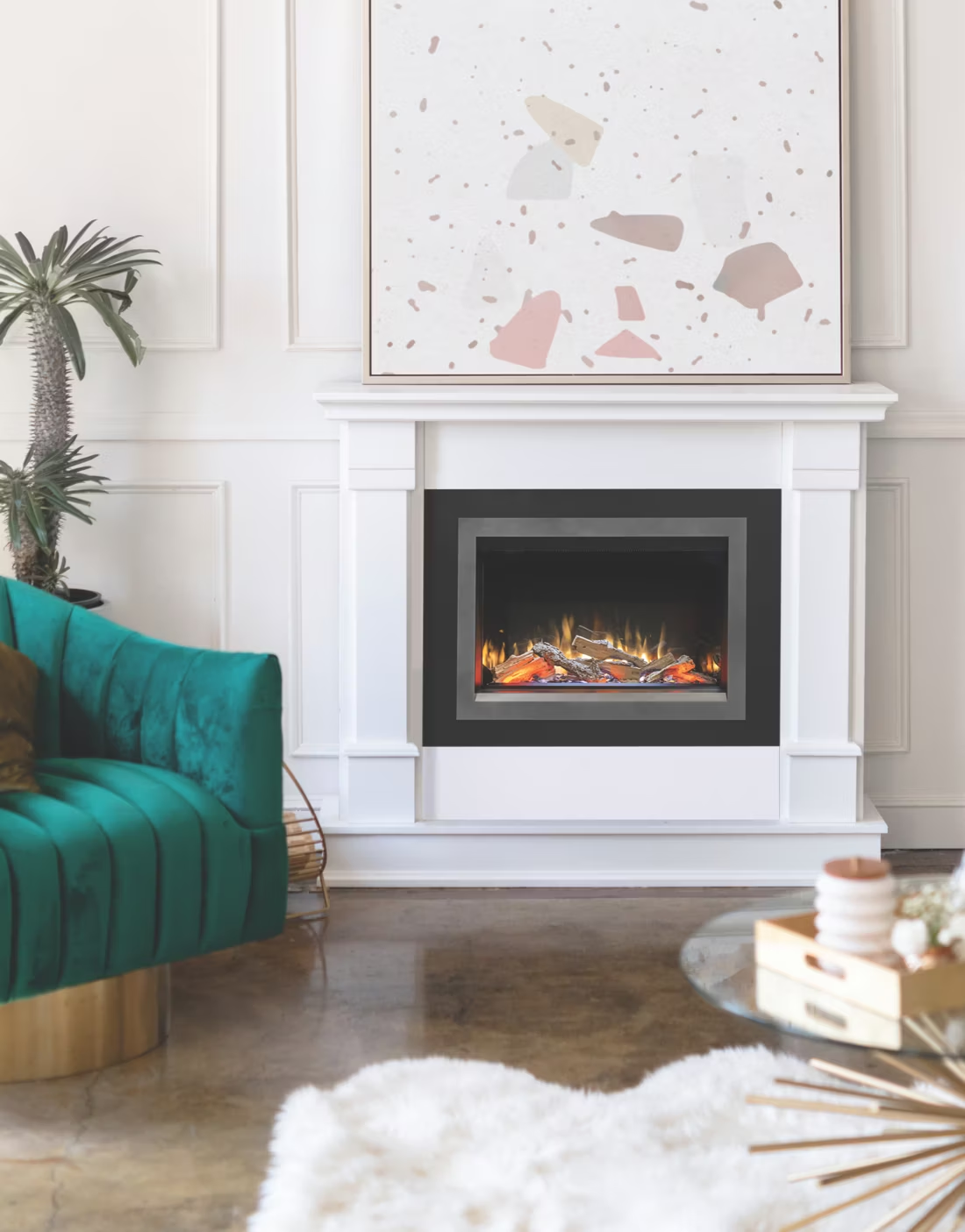
No—that's its superpower. An electric fireplace needs a wall and an outlet, period. No vent pipe, no gas line, no clearances to design around, which is why it works in bedrooms, offices, apartments, and walls where venting a gas or wood unit would be impractical or impossible. Installation is typically the simplest and least expensive of any fireplace type.
What is an in-home preview and do I need one?
It's a visit where a hearth professional measures your space, confirms the model you picked actually works in your home, and walks the specs—framing, gas line, venting, finish work—before anything is ordered. Some details you just can't know until you see the house. Never make a down payment without one; it's the single most-skipped step that burns buyers.
Can a fireplace actually lower my heating bill?
Yes—by creating a comfort zone. A furnace heats every square foot of the house just to warm the one room you're in; a gas fireplace on low burns roughly a sixth of the gas a typical furnace does. Set the furnace around 55–60 degrees as a baseline, then heat the rooms your family actually uses. Families who heat this way commonly save $20–$60 a month.
Find your electric fireplace in Greer County.
Tell us a bit about your home and we'll match you with the right electric fireplace, insert, or stove—plus a free Project Guide & Parts List and a trusted local dealer to install it.
Find Your Fireplace →