
Find gas heat that's ready before the next blue norther hits.
Custer County's winters run mild most of the season, then a cold front can drop temperatures 40 degrees in an afternoon. Find the right gas fireplace, insert, or stove for your Weatherford, Clinton, or Arapaho home, and connect with a trusted local dealer.
Every Project Starts From One of These Five Situations
Reliable warmth for a climate of sudden swings.
Custer County sits on the western Oklahoma plains along the old Route 66 corridor, anchored by Weatherford, Clinton, and the county seat of Arapaho. With winter heating needs comparable to a mild, short heating season and an average winter low near 26 degrees, this is a mixed-humid Zone 3A climate—heating season is real but comparatively short. The catch is the blue norther: an Arctic front that can push in fast and drop temperatures dramatically within hours, sometimes accompanied by ice. Homes here need heat that comes on instantly when a front rolls through, not a system that takes an evening to catch up.
Oklahoma's oil-and-gas heritage means natural gas infrastructure runs deep in this part of the state, with Oklahoma Natural Gas serving Weatherford, Clinton, and surrounding towns. Outside city gas lines—on the ranches and farmsteads that make up much of Custer County—propane fills the gap. Either way, a gas fireplace or insert gives you heat at the flip of a switch or the press of a remote, which matters when a front is bearing down and you don't want to wait on a wood fire to build. Many local homeowners also value a gas unit with battery-backup or self-powered ignition, since ice accumulation on lines can cause brief outages during the county's harder freezes.
Three steps. No salesperson until you're ready.
Tell us about your project
Your zip code, your situation, and the fuel you're leaning toward—or let the answers point you to one.
See what's actually available
The brands dealers within 100 miles genuinely carry—real options, never a catalog mirage.
Get your dealer & Project Guide
A trusted local dealer, plus the free Project Guide & Parts List that names every component of the job.
Frequently Asked Questions
How much does a gas fireplace installation cost in Custer County?
A typical gas fireplace installation in Custer County runs roughly $3,800 to $9,500 depending on the unit, the venting path, and whether new gas line work is required. A direct-vent insert going into an existing masonry fireplace with a gas line already nearby sits toward the lower end. A new built-in gas fireplace for a remodel or new-construction home—with framing, venting, and a fresh gas line run from the meter—lands in the middle to upper range. Propane setups in rural parts of the county, where a tank installation may be needed, can push costs slightly higher. A local retailer will confirm exact pricing after an in-home look at your setup.
Can I convert my existing wood fireplace to gas?
Yes, and it's a common project in Custer County's older Weatherford and Clinton homes, many of which were built with a masonry fireplace originally meant for oak or hickory cordwood. A gas insert typically drops into that existing firebox, using a stainless liner run through your current chimney for venting. Expect $4,000 to $8,500 depending on the insert and whether you're on natural gas or propane. Homes already served by Oklahoma Natural Gas usually see lower costs than homes needing a new propane tank and line.
Do I need natural gas, or can I use propane?
Either works fine. Oklahoma Natural Gas provides service throughout Weatherford, Clinton, and Arapaho, so homes in and near those towns can typically tie a new fireplace or insert directly into existing gas service. Outside those service areas—on the farms and rural stretches that make up most of Custer County's land—propane is the standard fallback, supplied by regional propane companies with either a leased or owned tank. Most gas fireplace models sold locally can be configured for either fuel; your installer sets the correct orifice and regulator for whichever you have.
Will my gas fireplace work if the power goes out?
Most modern gas fireplaces will. Units with intermittent pilot ignition (IPI) include a battery backup that kicks in automatically and lets the fireplace light on demand even with no power to the house—useful during the ice events that occasionally accompany a hard Custer County cold front. Valor fireplaces take it a step further: their pilot generates its own electricity through a thermocouple, so there are no batteries to maintain at all. Ask your local dealer which ignition system a given unit uses if backup heat during a winter outage matters to you.
What's the difference between a gas fireplace, gas insert, and gas stove?
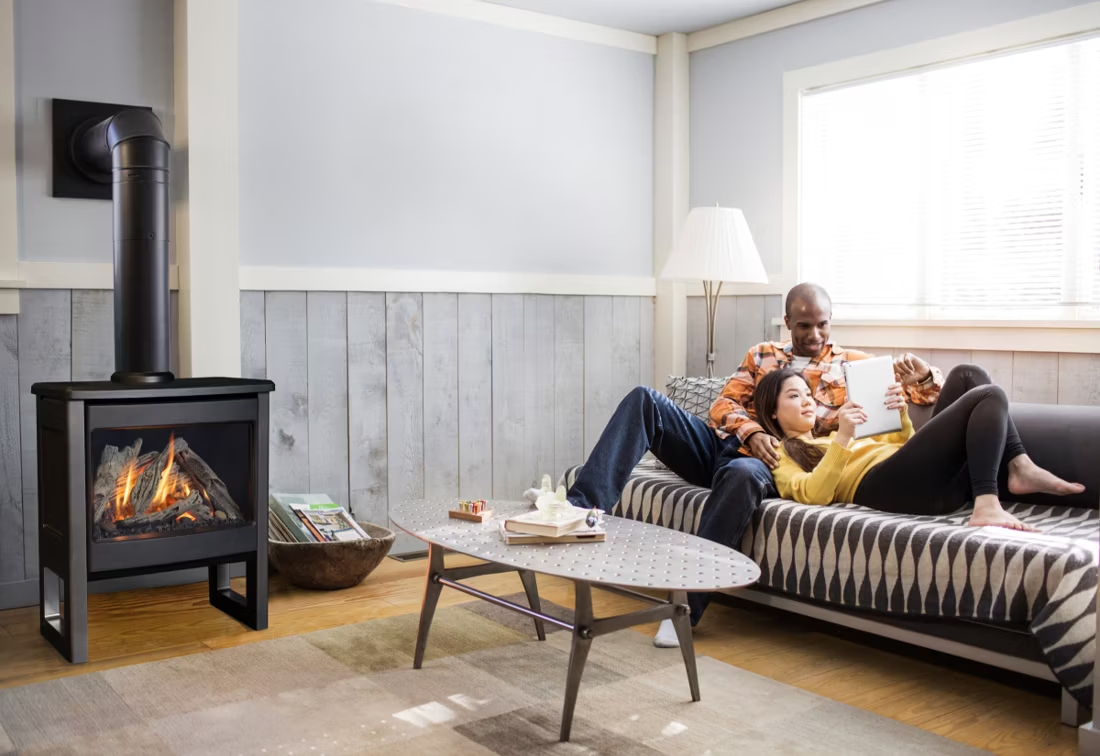
A gas fireplace is a fully built-in unit framed into a wall, typically chosen for new construction or a full remodel. A gas insert is built to slide into an existing masonry firebox, converting an old wood-burning fireplace into a sealed, high-efficiency gas unit that vents through the existing chimney. A gas stove is a freestanding cabinet-style unit that sits on the floor, similar in footprint to a wood stove but running on gas. For most Custer County homes with an existing fireplace from the wood-burning era, an insert is the straightforward upgrade; new builds or additions without a fireplace already in place are better suited to a built-in unit or freestanding stove.
Do I need a permit to install a gas fireplace in Custer County?
Yes—a building permit and a gas line permit are generally required for a new gas fireplace or insert installation. Within Weatherford or Clinton city limits, permits are issued by the city; outside city limits, the Custer County building office handles it. Because the gas line portion has to be done by a licensed gas-fitter, most homeowners let their hearth retailer coordinate permitting, venting, and the gas connection together rather than juggling separate trades themselves.
What's the difference between vented and vent-free gas fireplaces?
Vented gas fireplaces—direct-vent or B-vent—pull combustion air from outside and exhaust the byproducts back outside through a sealed vent. Vent-free (or "ventless") units burn directly into the room with no outside venting, which makes them easier to install in an interior wall but means small amounts of water vapor and combustion byproducts stay in the living space. Vent-free units are legal in Oklahoma, provided the room is sized correctly and the unit includes an oxygen depletion sensor. For most Custer County homes, direct-vent units are the more common recommendation since they don't require any tradeoff on indoor air quality—but a local retailer can walk through both options for your specific room.
How often should my gas fireplace be serviced?
Plan on an annual inspection, ideally before the first cold front of the season hits. A technician checks the burner, pilot assembly, venting, and gas connections, and cleans the glass and interior. It's a shorter visit than a wood-stove chimney sweep, but it matters just as much for safe operation—especially for units that sit unused most of a mild Custer County fall and then get called on suddenly when temperatures drop. Local gas appliance service providers typically charge in the $125 to $225 range for this visit.
Gas vs. wood—which is right for my Custer County home?
Wood offers real fire, no utility dependence, and pairs naturally with the oak, hickory, and mesquite that are common firewood species in this part of Oklahoma. Gas offers instant on-and-off heat, no ash or smoke, and a fireplace that's ready the moment a blue norther pushes through—without waiting for a fire to build. With Custer County's relatively short, mild heating season and its access to Oklahoma Natural Gas service in town, gas tends to be the more practical everyday choice for primary living spaces, while wood remains popular for rural properties and homeowners who want a backup heat source that doesn't depend on gas lines or electricity at all.
Why is a fireplace insert so efficient?
An insert does two things: it seals the chimney completely, so you stop losing air you already paid to heat, and it radiates warmth into the room through the firebox and glass. Most add a heat-exchange fan that pulls cool room air underneath, wraps it around the hot firebox, and pushes it back out warm. Your home is more efficient before you've even lit the first fire.
What's the difference between an insert and a zero-clearance fireplace?
An insert is a fireplace that slides into a pre-existing wood-burning fireplace—if you don't have one, there's nothing to insert it into. A zero-clearance fireplace is built into a framed wall, which makes it the answer for remodels and new construction. Simple test: existing masonry fireplace means insert; blank or framed wall means zero-clearance.
Can I install a fireplace myself?
If you're putting a fire in your house on purpose, it's best to work with an expert. Unless you're genuinely experienced in framing, gas line, vent pipe, and the national code on clearances to combustibles, have a professional do it—and ideally the same company that sells you the fireplace, so warranty, service, and liability all live under one roof.
Can a fireplace actually lower my heating bill?
Yes—by creating a comfort zone. A furnace heats every square foot of the house just to warm the one room you're in; a gas fireplace on low burns roughly a sixth of the gas a typical furnace does. Set the furnace around 55–60 degrees as a baseline, then heat the rooms your family actually uses. Families who heat this way commonly save $20–$60 a month.
Stove and Fireplace Dealers in Custer County
Find your gas fireplace in Custer County.
Tell us a bit about your home and we'll match you with the right gas fireplace, insert, or stove, plus a free Project Guide & Parts List—the exact parts, vent kit, and a recommended local Custer County dealer for your project.9
Find Your Fireplace →