
The easiest fireplace upgrade in Caddo County.
No chimney, no gas line, no venting—just plug in and go. For homes across Caddo County, from Anadarko to Cyril to Fort Cobb, electric is the fastest way to add real ambiance and zone heat. Find the right unit and connect with a trusted local dealer.
Every Project Starts From One of These Five Situations
Mild winters, maximum flexibility.
Caddo County sits in southwest Oklahoma's Climate Zone 3A, where winter lows average around 25°F and the county logs roughly 3,723 heating degree days a year—less than half of what a place like Fargo, ND racks up in a typical winter. That's a mild heating load by national standards, and it's a big part of why electric fireplaces make sense for so many homes here, whether in Anadarko, Carnegie, Cyril, Hinton, or the more rural stretches of the county. There's no need for a whole-home combustion appliance when a room addition, a bedroom, or a living room just needs supplemental warmth and a good-looking flame.
This is oak, hickory, and mesquite country, and plenty of Caddo County households still burn wood out of habit, cost, or tradition—especially given how cheap and available cordwood is in this part of Oklahoma. But electric has real advantages that wood and gas don't: no chimney to maintain, no gas line to run, and no combustion byproducts to vent, which matters given Caddo County has no significant air quality restrictions to navigate either way. Plug-in units run off a standard 120-volt outlet; larger built-ins may call for a dedicated 240-volt circuit from a licensed electrician. Either way, installation is measured in hours, not days—a real advantage for rural homeowners who don't want to coordinate multiple trades for a single project.
Three steps. No salesperson until you're ready.
Tell us about your project
Your zip code, your situation, and the fuel you're leaning toward—or let the answers point you to one.
See what's actually available
The brands dealers within 100 miles genuinely carry—real options, never a catalog mirage.
Get your dealer & Project Guide
A trusted local dealer, plus the free Project Guide & Parts List that names every component of the job.
Frequently Asked Questions
How much does an electric fireplace installation cost in Caddo County?
Plug-in electric fireplace inserts and wall-mounted units typically run $300 to $800 for the unit itself, with installation often limited to hanging the unit and plugging it into an existing outlet—sometimes as little as an hour of labor. Built-in electric fireplaces that require a dedicated 240-volt circuit, cabinetry work, or a recessed wall opening run higher, generally $1,500 to $3,500 once electrician labor and any carpentry are factored in. Because there's no venting, gas line, or chimney work involved, electric is consistently the lowest-cost fireplace option available to Caddo County homeowners.
Do I need a permit to install an electric fireplace in Caddo County?
In most cases, no. A plug-in electric fireplace that uses an existing standard outlet doesn't typically require a permit anywhere in Caddo County, incorporated or not. If your project involves adding a new dedicated circuit—common for larger built-in units—that electrical work generally does need to be pulled and inspected, whether you're inside Anadarko or Carnegie city limits or out in unincorporated parts of the county. A local electrician or hearth dealer familiar with the area can tell you quickly which category your project falls into.
What size electric fireplace do I need for my home?
Because Caddo County's heating load is relatively light—3,723 heating degree days is a mild number compared to much of the country—most electric fireplaces here are sized for the room they're in rather than the whole house. A compact wall-mounted or insert unit (1,000 to 1,500 watts) comfortably supplements heat in a bedroom or den; larger living rooms or open-concept spaces may call for a unit with a higher BTU rating or a freestanding stove-style model. Unlike wood or gas, electric units won't overheat a space the way an oversized combustion appliance can, so sizing mistakes are lower-stakes here than with other fuels.
Electric vs. wood—which makes more sense in Caddo County?
Wood has deep roots in this part of Oklahoma, where oak, hickory, and mesquite are abundant and firewood is inexpensive to source. Wood stoves also keep working when the power doesn't—a real consideration during the ice storms that periodically hit southwest Oklahoma and knock out electric service for days. Electric fireplaces can't provide backup heat during an outage, but they win on convenience: no ash, no chimney maintenance, no hauling cordwood, and instant on-off operation at the flip of a switch. Many Caddo County homeowners land on a split approach—electric for everyday ambiance in the main living space, wood as a backup heat source elsewhere on the property.
Electric vs. gas—which is the better fit?
Gas fireplaces need either a natural gas line or a propane tank, plus proper venting, which adds cost and complexity compared to electric. In exchange, gas delivers real, sustained heat output that can handle a larger space and keeps working during a power outage if the unit has a battery-backup ignition system. Electric fireplaces skip all of the gas line and venting work entirely, which keeps installation simple and inexpensive, but they're built for supplemental heat and ambiance rather than heating a whole room on the coldest nights. Given Caddo County's relatively mild winters, electric is often plenty for rooms that don't need to carry the full heating load.
Electric vs. pellet stove—how do they compare?
Pellet stoves, fed by hopper-loaded pellets from regional suppliers like Lignetics or Indeck Energy Services, put out considerably more heat than an electric fireplace and can serve as a primary heat source for a room or small home. Both electric and pellet appliances rely on electricity to run—pellet stoves need power for the auger and blower—so neither one functions as backup heat during an outage the way a wood stove does. Where electric wins is simplicity: no hopper to load, no ash to empty, no annual service visit. Where pellet wins is heat output and the look of a live flame with actual combustion. For a Caddo County homeowner who wants a genuine secondary heat source, pellet is worth a look; for ambiance and a quick, low-maintenance upgrade, electric is hard to beat.
Will an electric fireplace heat my whole house?
No—electric fireplaces are designed as zone heaters for the room they're installed in, not a whole-home heating solution. That said, Caddo County's mild heating load (an average winter low around 25°F and 3,723 heating degree days) means a well-placed electric unit can genuinely take the edge off a smaller home or a single main living area during most of the heating season, reducing reliance on a central furnace. For larger or drafty homes, pair the electric fireplace with your existing HVAC system rather than expecting it to replace it.
How much maintenance does an electric fireplace need?
Very little, which is part of the appeal. There's no chimney to sweep, no venting to inspect, and no ash to clean out. Basic upkeep is limited to occasionally dusting or vacuuming the vents and glass front, and eventually replacing an LED module or heating element after several years of regular use—most manufacturers rate components for well over a decade of typical operation. This low-maintenance profile is one reason electric units are popular in rental properties and manufactured homes throughout rural Caddo County.
What's the best type of electric fireplace for a Caddo County home?
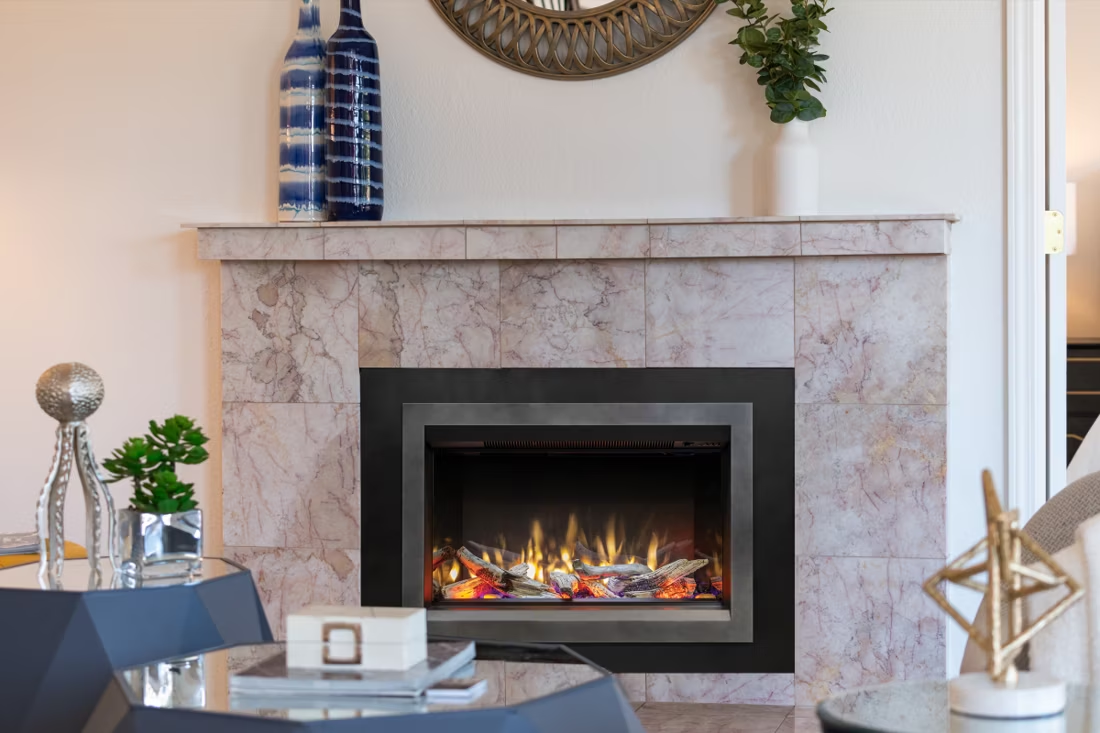
For most homes here, a recessed wall-mounted insert or a freestanding electric stove covers the bulk of use cases—both are straightforward to install and work well in the smaller additions, bedrooms, and manufactured homes common throughout the county. Homeowners looking to replace an old, rarely-used masonry fireplace often choose an electric insert sized to the existing firebox opening, which keeps the mantel and surround intact while eliminating the draft and maintenance of an open hearth. A local dealer can walk through your specific room and electrical setup to recommend the right model.
Can I put a TV above my fireplace?
Yes—with an asterisk. Fireplaces are hot and TVs don't like heat. Either put a mantel between them to deflect rising warmth, or choose a fireplace with heat-management technology that creates a cool zone on the wall above—the wall stays around 125 degrees, barely warm, while the room still gets full heat. If you like clean lines and don't want a mantel, heat management is the answer.
Does an electric fireplace need a vent or chimney?
No—that's its superpower. An electric fireplace needs a wall and an outlet, period. No vent pipe, no gas line, no clearances to design around, which is why it works in bedrooms, offices, apartments, and walls where venting a gas or wood unit would be impractical or impossible. Installation is typically the simplest and least expensive of any fireplace type.
Can I install a fireplace myself?
If you're putting a fire in your house on purpose, it's best to work with an expert. Unless you're genuinely experienced in framing, gas line, vent pipe, and the national code on clearances to combustibles, have a professional do it—and ideally the same company that sells you the fireplace, so warranty, service, and liability all live under one roof.
Can a fireplace actually lower my heating bill?
Yes—by creating a comfort zone. A furnace heats every square foot of the house just to warm the one room you're in; a gas fireplace on low burns roughly a sixth of the gas a typical furnace does. Set the furnace around 55–60 degrees as a baseline, then heat the rooms your family actually uses. Families who heat this way commonly save $20–$60 a month.
Find your electric fireplace in Caddo County.
Tell us a bit about your home and we'll put together a free Project Guide & Parts List for your Caddo County electric fireplace project—the right unit, the exact parts, and a trusted local dealer to handle the install.
Find Your Fireplace →