
Reliable Heat for Broken Arrow, Even When the Power Isn't.
Broken Arrow winters are mild, but ice storms happen. A gas fireplace gives you instant, on-demand heat and a focal point for the living room, storm or no storm.
Every Project Starts From One of These Five Situations
Comfort heat for a mild climate with occasional extremes.
Broken Arrow sits at just 719 feet in Tulsa County, in climate zone 3A—mixed-humid, with an average winter low around 26°F and a moderate winter heating load a year. That's a fraction of what a place like Duluth, MN or Bismarck, ND racks up each winter, and it's why most Broken Arrow homes lean on central gas or electric heat pumps for day-to-day comfort rather than a wood stove in the corner. Wood and pellet appliances see little demand here—the data behind this page marks both as not applicable to this market—but gas is a different story.
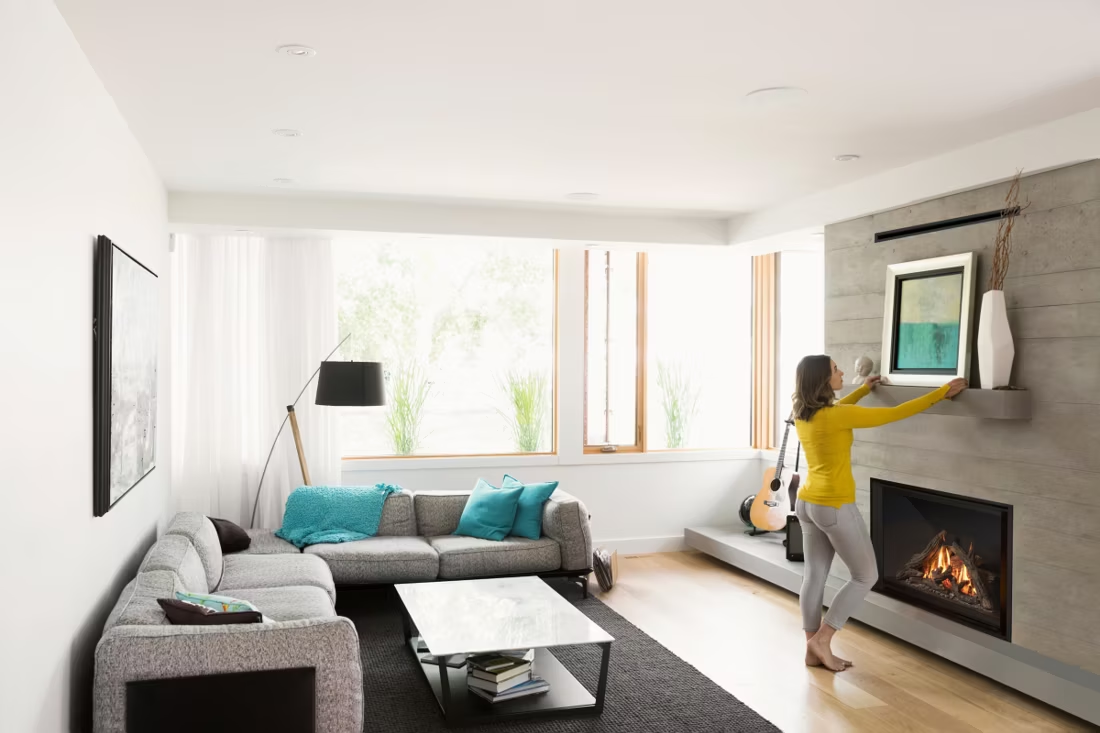
Gas fireplaces are standard in Broken Arrow for two real reasons: they're a design centerpiece in the kind of open-concept living rooms common in the area's newer subdivisions, and they're genuine backup heat when Tulsa County ice storms take down power lines, as they periodically do across northeastern Oklahoma. A direct-vent gas fireplace or insert with an on-demand pilot doesn't care whether the grid is up. Natural gas service reaches most in-city Broken Arrow neighborhoods; homes further out in unincorporated Tulsa County more often run on propane.
Three steps. No salesperson until you're ready.
Tell us about your project
Your zip code, your situation, and the fuel you're leaning toward—or let the answers point you to one.
See what's actually available
The brands dealers within 100 miles genuinely carry—real options, never a catalog mirage.
Get your dealer & Project Guide
A trusted local dealer, plus the free Project Guide & Parts List that names every component of the job.
Frequently Asked Questions
How much does a gas fireplace installation cost in Broken Arrow?
Most Broken Arrow gas fireplace projects run somewhere between $3,000 and $9,000. A direct-vent gas insert dropped into an existing masonry fireplace, using a home that's already plumbed for natural gas, sits toward the lower end. A new built-in gas fireplace for a remodel or a room addition—with fresh gas line runs, framing, and venting through an exterior wall—lands in the middle to upper end. Homes on propane, or projects needing a longer gas line run from the meter, can push higher. A local dealer will give you a firm number after seeing your specific layout.
Can I convert my existing wood fireplace to gas?
Yes, and it's one of the more common projects among the older masonry-fireplace homes in Broken Arrow's established neighborhoods. A gas insert typically installs into the existing firebox with a liner run up the chimney, so you keep the look of the original fireplace while gaining real, adjustable heat output. Expect somewhere in the $3,500 to $7,500 range depending on whether the home already has a gas line nearby or needs one extended from the meter. It's a straightforward swap for homes already on natural gas service; propane homes need a tank in place first.
Do I need natural gas, or can I use propane?
Either works, and the right one usually comes down to where you live. Inside Broken Arrow's core, most homes already have natural gas service for the water heater, range, or furnace, which makes adding a fireplace simple—the installer just taps into the existing line. Out in the less dense parts of Tulsa County, propane is more common, supplied by a tank on the property. Nearly every gas fireplace model can be set up for either fuel; the installer configures the correct orifice and regulator for whichever you have.
Will my gas fireplace work if the power goes out?
Most will, which matters here—Tulsa County has seen its share of damaging ice storms that leave neighborhoods without power for days. Units with IPI (intermittent pilot ignition) run on a small battery backup that kicks in the moment power drops, so the fireplace lights on demand just like normal. Valor fireplaces go a step further: their pilot assembly generates its own electricity through the thermocouple, so there's no battery to remember or replace at all. If backup heat during outages is a priority for your household, mention that up front to your local dealer—it changes which models make sense.
What's the difference between a gas fireplace, gas insert, and gas stove?
A gas fireplace is a fully built-in unit, framed into a wall—the right call for new construction or a remodel without an existing chimney. A gas insert is sized to slide into an existing masonry firebox, which fits a lot of Broken Arrow's 1980s and 1990s-built homes that came with a standard wood-burning fireplace. A gas stove is freestanding, sitting on the floor on its own hearth pad, and works well in a room with no fireplace opening at all. For most Broken Arrow homeowners upgrading a builder-grade fireplace, an insert is the simplest and most common path.
Do I need a permit to install a gas fireplace in Broken Arrow?
Generally yes—a building permit is required for new gas appliance installations, handled through the City of Broken Arrow's building permit office for in-city addresses, or Tulsa County for homes outside city limits. The gas line connection itself has to be run or modified by a licensed gas fitter, which is a big part of why it's worth using a certified hearth dealer rather than a handyman: they coordinate the gas work, venting, and inspection sign-off as one job instead of leaving you to manage separate trades.
What's the difference between vented and vent-free gas fireplaces?
Vented (direct-vent) gas fireplaces pull combustion air from outside and exhaust the byproducts back outside through sealed venting—they're the cleanest and most universally recommended option. Vent-free units burn directly into the room with no external venting; they're legal in Oklahoma but come with strict room-size requirements and an oxygen depletion sensor that shuts the unit off if oxygen runs low. Broken Arrow doesn't carry the air quality restrictions some western cities do, so both are on the table here, but most local dealers still steer homeowners toward direct-vent for the better heat output and zero compromise on indoor air. Ask about both when you talk to a retailer.
How often should my gas fireplace be serviced?
Once a year is the standard recommendation, ideally before the first cold snap in late fall. A technician checks the burner, pilot assembly, gas connections, and venting, and cleans the glass and interior. It's a quick visit compared to wood-stove chimney sweeping, but skipping it is how pilot and ignition problems go unnoticed until the coldest night of the year. Expect to pay roughly $125 to $200 for a standard annual inspection from a local gas appliance service provider.
Gas vs. electric fireplace—which makes more sense in Broken Arrow?
Electric fireplaces are cheaper to install—typically $400 to $1,200 since there's no gas line or venting to run—and they're simple to operate at Broken Arrow's residential electric rates, which run around 12 to 13 cents per kWh under PSO or Lake Region Electric Cooperative depending on your address. But electric units mostly produce ambiance with modest supplemental heat and, like anything on the grid, they go dark in an outage. A gas fireplace costs more upfront but puts out real, adjustable heat and, with an IPI or Valor pilot system, keeps working through the ice-storm outages that hit this part of Oklahoma every few winters. If backup heat matters to you, gas is the stronger choice; if you just want a clean look and low install cost, electric is worth a look.
What's the difference between an insert and a zero-clearance fireplace?
An insert is a fireplace that slides into a pre-existing wood-burning fireplace—if you don't have one, there's nothing to insert it into. A zero-clearance fireplace is built into a framed wall, which makes it the answer for remodels and new construction. Simple test: existing masonry fireplace means insert; blank or framed wall means zero-clearance.
What does it take to replace an existing fireplace?
Fireplaces are like icebergs—bigger behind the wall than in front of it. Replacement means removing the surrounding tile or stone (the finish material laps onto the fireplace face), pulling the old unit, setting the new one in the same enclosure, and re-finishing the wall. A hearth professional can determine what's behind your wall without demolition during an in-home preview.
Can I install a fireplace myself?
If you're putting a fire in your house on purpose, it's best to work with an expert. Unless you're genuinely experienced in framing, gas line, vent pipe, and the national code on clearances to combustibles, have a professional do it—and ideally the same company that sells you the fireplace, so warranty, service, and liability all live under one roof.
Can a fireplace actually lower my heating bill?
Yes—by creating a comfort zone. A furnace heats every square foot of the house just to warm the one room you're in; a gas fireplace on low burns roughly a sixth of the gas a typical furnace does. Set the furnace around 55–60 degrees as a baseline, then heat the rooms your family actually uses. Families who heat this way commonly save $20–$60 a month.
Nearby Dealers
Hearth shops serving Broken Arrow and the surrounding area. Every listing shows whether it is a WhyFire partner, a dealer we have verified as authorized for the brands we recommend, or a local business carrying hearth products. No manufacturer pays for placement. How we verify dealers →
Buck Stove Energy Center
Jack Wills
Beyond The Backdoor
Diamond P Lawn & Garden
Rick's House Of Fire
Copper Ridge, LLC
Turf Land Outdoor Power Equipment LLC
Find your gas fireplace in Broken Arrow.
Tell us about your home and we'll match you with a trusted local dealer and send over your free Project Guide & Parts List—the exact parts, vent kit, and recommended installer for your Broken Arrow gas fireplace project.
Find Your Fireplace →