
Comfortable Heat, On Your Schedule.
Clean, instant gas heat built for Bethany's mild Oklahoma winters and the occasional ice storm outage. Find the right unit and connect with a trusted local dealer.
Every Project Starts From One of These Five Situations
Comfortable heat without the hassle of wood.
Bethany sits inside the Oklahoma City metro at just over 1,300 feet, in climate zone 3A. Winters here are mild by national standards—average lows around 28°F and a winter heating season that's just a fraction of what a place like Fargo, ND or Duluth, MN sees each winter. That milder profile is exactly why wood stoves and pellet stoves never really took hold as primary heat here; oak, hickory, and mesquite are available regionally, but few Bethany homes are built around a wood-burning chimney. Gas is the fuel that actually fits how people heat their homes in this part of the metro.
Natural gas service reaches nearly every neighborhood in Bethany, with Oklahoma Natural Gas as the utility most homeowners already have running to their furnace or water heater—adding a gas fireplace or insert is usually a straightforward tie-in rather than a new-service project. Electric service comes from Oklahoma Gas & Electric (OG&E), and it's worth noting: central Oklahoma's periodic winter ice storms are notorious for knocking out power for days at a time. A gas fireplace with standing pilot or battery-backed ignition keeps at least one room warm and lit when the grid goes down, which is a real consideration here even though the winters themselves are mild.
Three steps. No salesperson until you're ready.
Tell us about your project
Your zip code, your situation, and the fuel you're leaning toward—or let the answers point you to one.
See what's actually available
The brands dealers within 100 miles genuinely carry—real options, never a catalog mirage.
Get your dealer & Project Guide
A trusted local dealer, plus the free Project Guide & Parts List that names every component of the job.
Frequently Asked Questions
How much does a gas fireplace installation cost in Bethany?
Most gas fireplace installations in Bethany run $3,500 to $8,500, with the spread driven mainly by venting and gas line work rather than the climate—Bethany's mild winters don't require the oversized units or elaborate venting that colder markets do. A direct-vent gas insert dropped into an existing masonry fireplace with a gas line already nearby sits at the lower end. A new built-in gas fireplace for a remodel, with fresh gas line runs and framing, lands in the middle to upper end. Your local dealer will size the unit and confirm the number after walking your home.
Can I convert my existing wood-burning fireplace to gas?
Yes, and it's a common upgrade in Bethany's older neighborhoods, many of which were built with a traditional masonry fireplace that's rarely used for actual wood fires. A gas insert slides into that existing firebox and uses the same chimney chase, run with a stainless liner, so the exterior look of your home doesn't change. Because wood and pellet fuel never had strong footing in this mild climate, most homeowners converting an old masonry fireplace are doing it for convenience and better heat output, not swapping away from an active wood-burning habit.
Do I need natural gas service, or is propane an option in Bethany?
Nearly every home inside Bethany city limits already has natural gas service through Oklahoma Natural Gas, so most installations simply tap into existing supply. Propane is really only a consideration for a handful of properties on the edges of the metro that never connected to the gas main. Either fuel works in the same fireplace models—your installer sets the orifice and regulator for whichever you have—but if you're already paying an ONG bill, natural gas is almost always the simpler and cheaper path.
Will my gas fireplace still work if the power goes out?
It depends on the ignition system, and this matters more in central Oklahoma than the mild winters might suggest—the region's ice storms have knocked out OG&E power for days at a stretch in past winters. Fireplaces with intermittent pilot ignition (IPI) run on a battery backup that kicks in automatically when the power drops, so the unit still lights on demand. Valor fireplaces go a step further: the pilot's thermocouple generates its own electricity, so there's no battery to remember at all. If backup heat during an ice storm is part of why you're buying, ask your local dealer specifically about the ignition system before you settle on a model.
What's the difference between a gas fireplace, insert, and stove?
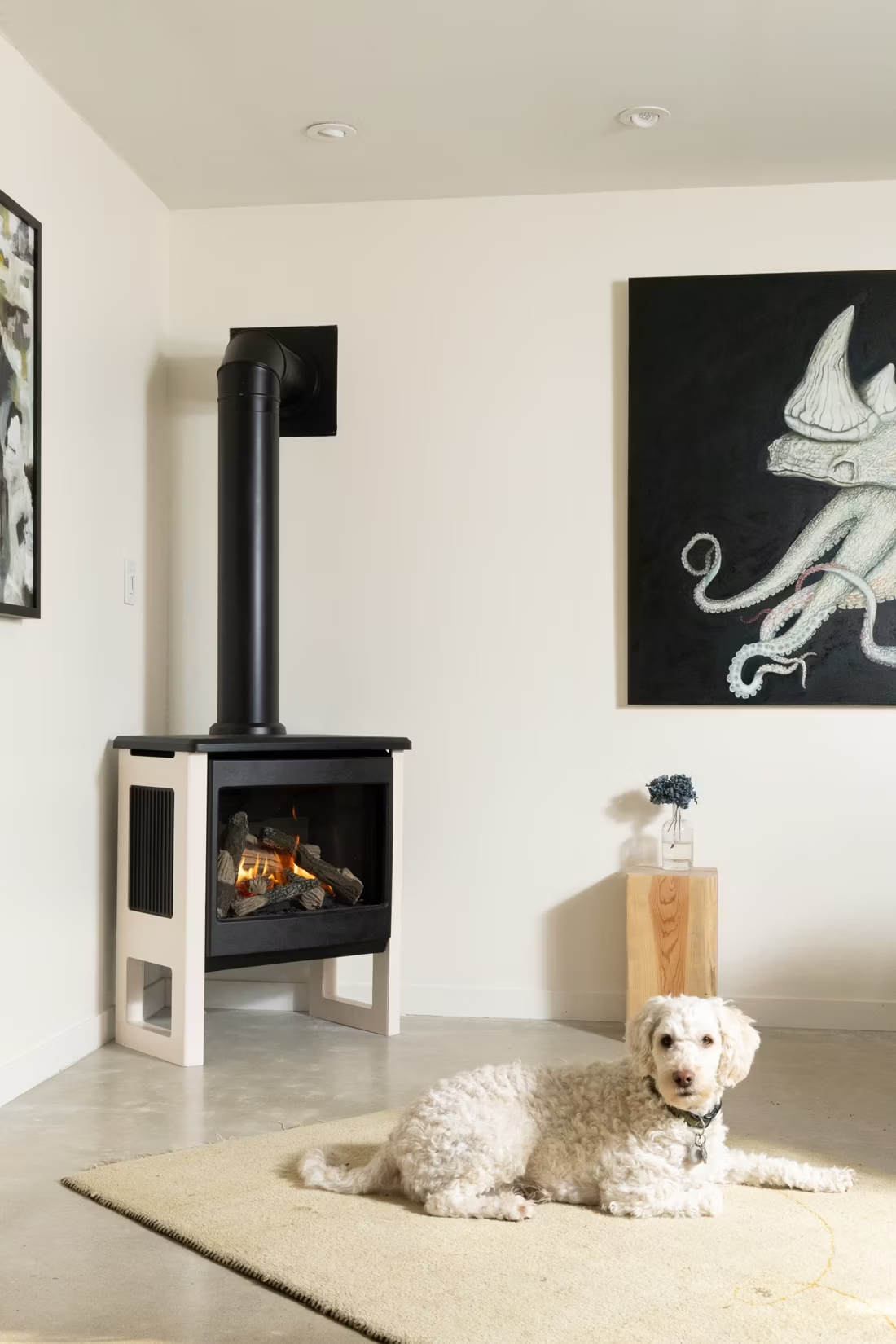
A gas fireplace is a fully built-in unit framed into a wall—the right call for new construction or a remodel. A gas insert is built to slide into an existing masonry firebox, which is common in Bethany's older housing stock, using the existing chimney as the vent path. A gas stove is a freestanding cabinet-style unit that sits on the floor, similar in footprint to a wood stove but running on gas. Since so few Bethany homes have an active wood-burning setup to begin with, most gas insert installs here are going into fireplaces that were built as wood-burning but rarely used that way.
Do I need a permit to install a gas fireplace in Bethany?
Yes. The City of Bethany Building Department requires a permit for new gas fireplace installations, along with sign-off on the gas line work, which has to be run by a licensed gas-fitter. Most hearth dealers who work in the metro handle this paperwork as part of the installation, coordinating the gas line, venting, and inspection so you're not managing separate trades yourself.
Should I choose a vented or vent-free gas fireplace?
Vented (direct-vent) units draw combustion air from outside and exhaust it back outside through sealed piping—they're the cleanest option and universally code-approved. Vent-free units burn directly into the room and are legal in Oklahoma, subject to room-size minimums and an oxygen depletion sensor, which makes them a workable option for a room without an existing chimney or exterior wall access. In Bethany's mild climate, both types perform well since neither needs to run for hours at a stretch the way a fireplace in a colder market might. Most local dealers steer first-time buyers toward direct-vent for the cleaner air and broader model selection, but vent-free is a legitimate option worth asking about if venting access is the obstacle.
How often does a gas fireplace need to be serviced?
Plan on an annual inspection, typically $125 to $200 for a service call in the OKC metro. A technician checks the burner, pilot assembly, gas connections, and any battery backup or electronic ignition components, and cleans the glass. It's a much smaller job than chimney sweeping for a wood stove, but skipping it is how pilot and ignition problems go unnoticed until the first cold snap of the season.
Should I even consider wood or pellet instead of gas here?
For most Bethany homes, no—and that's not a knock on wood heat, just a climate reality. With average winter lows around 28°F and a winter heating season that's just a fraction of colder regions, Bethany doesn't have the sustained cold that makes a wood or pellet stove worth the fuel handling and venting work; that's why local dealers rarely stock them and why wood and pellet fuel are classified as not applicable for this market. Oak, hickory, and mesquite are all available regionally if someone wants the experience for a cabin or hunting property, but for a primary Bethany residence, gas is the fuel that matches how mild the winters actually are.
Why is my open fireplace making my house colder?
Open fireplaces suck—literally. As the fire burns, it consumes air your furnace already paid to heat and pulls it out through the chimney, so the house is actually colder after the fire goes out than before you lit it. An insert fixes this: it seals the chimney, puts fixed glass across the front, and turns that hole in your house into a real heat source.
What's the difference between an insert and a zero-clearance fireplace?
An insert is a fireplace that slides into a pre-existing wood-burning fireplace—if you don't have one, there's nothing to insert it into. A zero-clearance fireplace is built into a framed wall, which makes it the answer for remodels and new construction. Simple test: existing masonry fireplace means insert; blank or framed wall means zero-clearance.
How much should I budget for a fireplace?
For an average home—covering the fireplace, the vent pipe, and basic installation—a budget between $3,900 and $5,500 gives you a lot of options across wood, gas, and pellet. By the time you add finish work, gas line, and electrical, the average complete installation lands between $5,000 and $12,000 all-in. In a remodel or new build, a good rule is to put about 2.5% of the total project cost toward the fireplace.
Can a fireplace actually lower my heating bill?
Yes—by creating a comfort zone. A furnace heats every square foot of the house just to warm the one room you're in; a gas fireplace on low burns roughly a sixth of the gas a typical furnace does. Set the furnace around 55–60 degrees as a baseline, then heat the rooms your family actually uses. Families who heat this way commonly save $20–$60 a month.
Nearby Dealers
Hearth shops serving Bethany and the surrounding area. Every listing shows whether it is a WhyFire partner, a dealer we have verified as authorized for the brands we recommend, or a local business carrying hearth products. No manufacturer pays for placement. How we verify dealers →
Bachles Fireplace Furnishings
Gas & Electrical Equip
Fireplace Place
Rick's House Of Fire
Mill Creek Lumber & Supply Okc
Aynes Enterprises
The Hearth Shop
Forrest Fireplaces
Find your gas fireplace in Bethany.
Tell us about your home and we'll match you with the right gas fireplace, insert, or stove, plus a free Project Guide & Parts List and an introduction to a trusted local Bethany dealer.
Find Your Fireplace →