
Steady heat for Wooster's six-month heating season.
Instant, even heat for Wayne County winters—no wood stacking, no ash to haul. Find the right gas fireplace and connect with a trusted local dealer.
Every Project Starts From One of These Five Situations
Reliable heat that keeps up with Wayne County winters.
At 1,126 feet in the rolling farmland of Wayne County, Wooster racks up a heating season nearly as long and demanding as what homeowners deal with in Buffalo, NY, with winter lows averaging 18°F. Between the College of Wooster, the surrounding Amish country farmsteads, and the older homes throughout downtown, this is a community where the furnace and the fireplace both run hard from November into April.
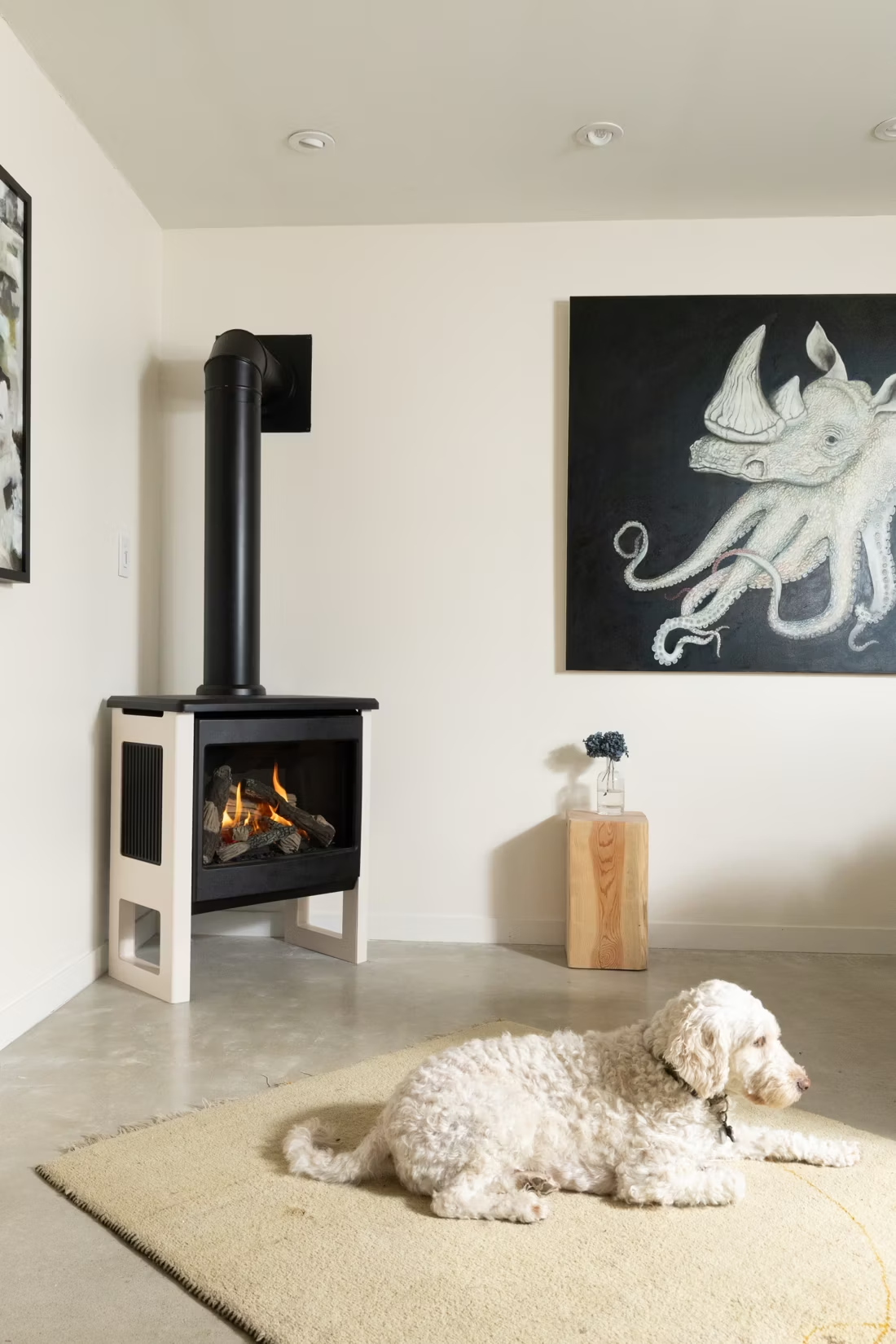
Most homes in and around Wooster already have a natural gas line serving the furnace and water heater, which makes adding a gas fireplace or insert straightforward—no propane tank, no separate fuel delivery. Homes further out in rural Wayne County, where natural gas mains don't reach, typically run on propane instead, and gas fireplaces are just as common there with a tank swap. Either way, a gas unit gives you heat at the flip of a switch during a February cold snap, without needing to split, stack, or haul wood.
Three steps. No salesperson until you're ready.
Tell us about your project
Your zip code, your situation, and the fuel you're leaning toward—or let the answers point you to one.
See what's actually available
The brands dealers within 100 miles genuinely carry—real options, never a catalog mirage.
Get your dealer & Project Guide
A trusted local dealer, plus the free Project Guide & Parts List that names every component of the job.
Frequently Asked Questions
How much does a gas fireplace installation cost in Wooster?
Most gas fireplace and insert installations in Wayne County run somewhere between $3,500 and $9,000, with the spread coming down to the unit itself, the venting path, and whether new gas line work is needed. A direct-vent insert going into an existing masonry fireplace that already has gas nearby sits toward the lower end. A new built-in fireplace for a remodel or an addition—with fresh framing, venting through an exterior wall, and a new gas line run from the meter—lands closer to the top. A local dealer will walk your home and give you a firm number rather than a phone-quote guess.
Can I convert my existing wood fireplace to gas?
Yes, and it's one of the more common projects for older Wooster homes with a masonry fireplace that's rarely used because of the wood-hauling hassle. A gas insert drops into the existing firebox, venting up through a stainless liner run inside your current chimney, and typically costs $4,000 to $8,500 depending on the insert and whether the gas line needs to be extended to the hearth. It keeps the look of your original fireplace surround while giving you real, on-demand heat instead of an occasional decorative fire.
Do I need natural gas, or can I run a fireplace on propane?
Either works fine. If your home in Wooster or one of the surrounding villages already has natural gas for the furnace or range, adding a fireplace on the same line is the simplest path. If you're out on a rural Wayne County property without gas mains, propane is the standard alternative—either an existing tank or a new one set by a local propane supplier. Nearly every gas fireplace model on the market can be configured for either fuel; your installer sets the correct orifice and regulator for whichever you have.
Will my gas fireplace still work if the power goes out?
Most will, with the right ignition system. Units with intermittent pilot ignition (IPI) run on battery backup—usually a few AA batteries tucked inside the unit—so the fireplace still lights on demand when AEP Ohio power is out during an ice storm. Valor fireplaces go a step further: their pilot assembly generates its own electricity through the thermocouple, so there's no battery to remember at all. Given how often winter storms in this part of Ohio knock out power for a few hours at a time, it's worth asking your dealer which ignition system a given model uses before you buy.
What's the difference between a gas fireplace, gas insert, and gas stove?
A gas fireplace is a fully built-in unit framed into a wall—the right choice for new construction or a remodel where there's no existing masonry opening. A gas insert is built to slide into an existing wood fireplace, sealing it up and venting through the chimney with a liner. A gas stove is a freestanding cast-iron or steel unit that sits on the floor, closer to how a wood stove looks and heats. Wooster's older homes near downtown and the historic districts tend to have existing fireboxes, which makes an insert the natural fit; newer construction out toward the edges of town is usually better suited to a built-in fireplace.
Do I need a permit to install a gas fireplace in Wooster?
Generally yes—a building permit and a separate gas line permit, pulled through the City of Wooster or Wayne County building department depending on where the property sits, plus a licensed gas fitter to make the actual connection. Most established hearth dealers handle this paperwork as part of the install rather than leaving it to the homeowner, which is part of why it's worth going through a dealer instead of a big-box purchase and a handyman hookup.
What's the difference between vented and vent-free gas fireplaces?
Vented (direct-vent) gas fireplaces pull combustion air from outside and exhaust the byproducts back outside through a sealed pipe—they're the standard choice and produce real heat output. Vent-free units burn without any outside venting at all, releasing some water vapor and combustion byproducts directly into the room, which means they're restricted by room-size and ventilation rules. Ohio allows vent-free units, but for a well-sealed, well-insulated Wooster home, most local dealers steer homeowners toward direct-vent models—better indoor air quality and no compromise on how much heat the fireplace actually puts out.
How often does a gas fireplace need to be serviced?
Plan on an annual inspection, ideally in early fall before the heating season starts. A technician checks the burner, pilot or ignition system, venting, and gas connections, and cleans the glass and interior. It's a quicker visit than a wood-stove chimney sweep, but skipping it is how small issues—a dirty burner, a failing thermocouple—turn into a fireplace that won't light on the coldest night of the year. Most service calls in the Wooster area run $150 to $250.
Gas vs. wood—which makes more sense for a Wayne County home?
Wood is genuinely cheap to run here—Wayne County has plenty of oak, hickory, maple, and cherry woodlots, and a lot of local sawmills and Amish-run operations sell seasoned firewood by the cord. Wood also keeps working when the power's out. Gas trades that self-sufficiency for convenience: no splitting, stacking, or ash cleanup, consistent heat output at the push of a button, and a cleaner-looking install with no soot. For a primary living space where you want heat without the chore, gas tends to win in Wooster; for a workshop, cabin, or backup-heat setup, wood still has a real case.
Is my gas fireplace wasting gas?
If it was installed more than 15 years ago, probably. Older gas fireplaces keep a standing pilot light burning all the time, and that little flame can cost a couple hundred dollars a year. Newer models use pilot-on-demand ignition—the pilot lights only when you use the fireplace and goes out when you turn it off.
Why is my open fireplace making my house colder?
Open fireplaces suck—literally. As the fire burns, it consumes air your furnace already paid to heat and pulls it out through the chimney, so the house is actually colder after the fire goes out than before you lit it. An insert fixes this: it seals the chimney, puts fixed glass across the front, and turns that hole in your house into a real heat source.
What is an in-home preview and do I need one?
It's a visit where a hearth professional measures your space, confirms the model you picked actually works in your home, and walks the specs—framing, gas line, venting, finish work—before anything is ordered. Some details you just can't know until you see the house. Never make a down payment without one; it's the single most-skipped step that burns buyers.
How much should I budget for a fireplace?
For an average home—covering the fireplace, the vent pipe, and basic installation—a budget between $3,900 and $5,500 gives you a lot of options across wood, gas, and pellet. By the time you add finish work, gas line, and electrical, the average complete installation lands between $5,000 and $12,000 all-in. In a remodel or new build, a good rule is to put about 2.5% of the total project cost toward the fireplace.
Nearby Dealers
Hearth shops serving Wooster and the surrounding area.
Find your gas fireplace in Wooster.
Tell us about your home and we'll match you with a trusted local dealer and send over a free Project Guide & Parts List—the exact parts, vent kit, and dealer recommendation for your Wooster gas fireplace project.
Find Your Fireplace →