
Instant heat without the wood pile, right here in Warren.
Warren sees a long, cold heating season each year—gas gives you real warmth at the flip of a switch. Find the right fireplace or insert and get matched with a trusted local dealer.
Every Project Starts From One of These Five Situations
Steady, low-maintenance heat for Trumbull County's cold season.
Warren sits in Ohio's climate zone 5A at just under 900 feet, with winter lows averaging 17°F and a long, cold heating season—on par with Buffalo, NY, just up the shore of Lake Erie. Trumbull County has plenty of oak, hickory, maple, and cherry in its woodlots, but wood-burning heat never took hold here the way it has in more rural parts of the state. Warren grew up as a natural gas and industrial town, and most homes in the city and surrounding townships were built on gas mains, not chimneys built for daily wood use.
That history shows up in what actually gets installed today: gas fireplaces and inserts are the standard supplemental heat source across Warren, while wood stoves and pellet appliances stay niche or absent outside a handful of rural properties. A direct-vent gas fireplace or insert gives you instant, thermostat-controlled heat for the living room or family room without touching your furnace, and—with the right ignition system—it can keep running even when an ice storm knocks out power from Ohio Edison.
Three steps. No salesperson until you're ready.
Tell us about your project
Your zip code, your situation, and the fuel you're leaning toward—or let the answers point you to one.
See what's actually available
The brands dealers within 100 miles genuinely carry—real options, never a catalog mirage.
Get your dealer & Project Guide
A trusted local dealer, plus the free Project Guide & Parts List that names every component of the job.
Frequently Asked Questions
How much does a gas fireplace installation cost in Warren?
Most gas fireplace or insert installations in the Warren area run in the $3,500 to $9,000 range. A direct-vent insert dropped into an existing masonry fireplace with a nearby gas line already run tends to land on the lower end. A new built-in gas fireplace for a remodel or addition—with framing, venting through an exterior wall, and a longer gas line extension—pushes toward the higher end. A local dealer will give you a firm number after seeing your chimney or wall layout in person.
Can I convert my existing fireplace to gas?
Yes, and it's one of the more common projects for older Warren homes with a masonry fireplace that was built for wood but rarely gets used that way anymore. A gas insert fits into the existing firebox and vents through the chimney using a stainless liner, so you keep the look of your fireplace while gaining real, controllable heat. Since wood-burning isn't a big part of daily life in Warren the way it is in more rural parts of Trumbull County, this conversion is usually about upgrading an underused fireplace rather than replacing an active wood-heating setup.
Do I need natural gas, or can I use propane?
Most of the city of Warren is built on natural gas mains, and if your home already has gas heat, a gas water heater, or a gas range, adding a fireplace is a straightforward tap into existing service. Propane is the fallback for homes on the rural edges of Trumbull County that aren't on a gas main. Nearly every gas fireplace model can be set up for either fuel—your installer swaps the orifice and regulator to match—so the fuel source rarely limits which unit you can choose.
Will my gas fireplace still work if the power goes out?
Most direct-vent gas fireplaces with IPI (intermittent pilot ignition) run on a small battery backup that kicks in automatically when Ohio Edison service drops—which happens periodically during the ice storms and lake-effect snow events that come through the Warren area in a typical winter. Valor fireplaces go a step further: the pilot's thermocouple generates its own electricity, so there's no battery to remember at all. Ask your local dealer which ignition system is on any unit you're considering if outage backup matters to you.
What's the difference between a gas fireplace, gas insert, and gas stove?
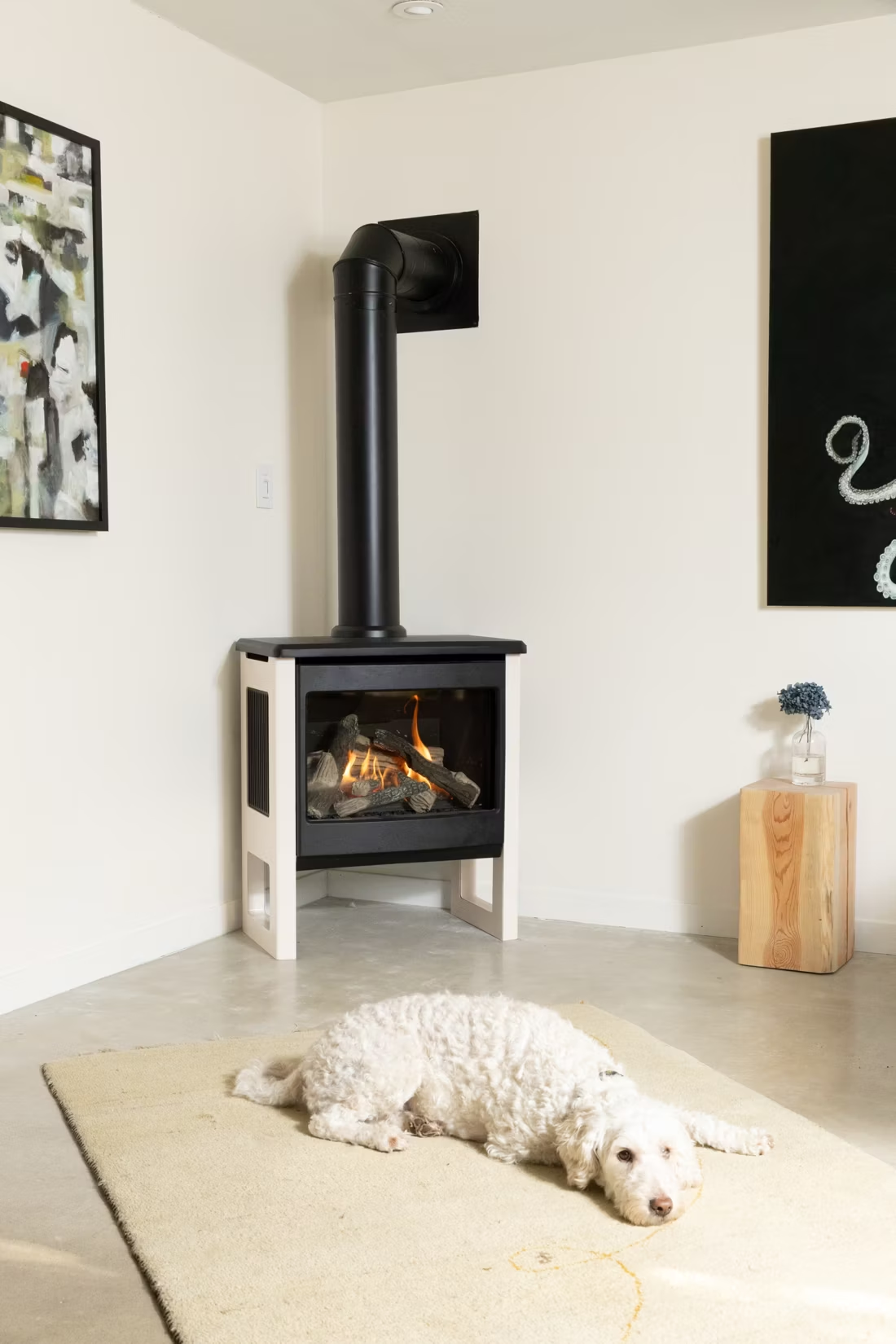
A gas fireplace is a fully built-in unit framed into a wall—the right choice for new construction or a remodel without an existing chimney. A gas insert slides into an existing masonry firebox and uses the chimney as its vent path, which fits a lot of the older housing stock around downtown Warren and the surrounding neighborhoods. A gas stove is a freestanding cabinet-style unit that sits on the floor, useful when you want supplemental heat in a room with no fireplace or chimney at all. A local dealer can tell you which fits your specific layout.
Do I need a permit to install a gas fireplace in Warren?
Generally yes—new gas fireplace installations typically require a building permit through the City of Warren Building Department, or the Trumbull County Building Department for homes outside city limits, along with a gas line permit pulled by a licensed gas-fitter. Most established hearth dealers handle this paperwork as part of the installation, coordinating the gas line, venting, and inspection so you're not managing multiple trades yourself.
What's the difference between vented and vent-free gas fireplaces?
Vented (direct-vent) gas fireplaces pull combustion air from outside and exhaust it back outside through a sealed pipe—they're the cleanest and most broadly recommended option. Vent-free units burn fuel directly into the room with no outside venting; Ohio permits them, but they come with strict room-size and ventilation requirements and release some water vapor and combustion byproducts indoors. For Warren's tightly sealed, well-insulated housing stock built for a long heating season, direct-vent units are the more common and generally the safer recommendation—ask your dealer to walk through both if you're weighing the tradeoff.
How often should a gas fireplace be serviced?
Plan on an annual inspection, ideally before the heating season starts. A technician checks the burner, pilot or ignition system, venting, and gas connections, and cleans the glass. It's a quicker visit than a wood-stove chimney sweep—usually $125 to $225 in the Warren area—but skipping it is how sooty glass, weak flames, and ignition problems creep in over a few winters.
Gas vs. wood vs. electric—what actually makes sense in Warren?
Wood heat is uncommon in Warren itself—even with plenty of oak, hickory, and maple in the county, most homes here were built around gas service rather than chimneys for daily wood use, so wood stoves stay limited to a small number of rural or hobbyist setups. Electric fireplaces are worth a look for a single room: Ohio Edison's residential rate runs under 10 cents per kWh, among the cheaper electricity rates in the region, and installation can be as low as a few hundred dollars with no venting at all—but the heat output is modest compared to gas. For whole-room, cold-weather heat that can run for hours without attention, gas remains the practical default across Warren and the rest of Trumbull County.
Why is my open fireplace making my house colder?
Open fireplaces suck—literally. As the fire burns, it consumes air your furnace already paid to heat and pulls it out through the chimney, so the house is actually colder after the fire goes out than before you lit it. An insert fixes this: it seals the chimney, puts fixed glass across the front, and turns that hole in your house into a real heat source.
Are new gas fireplaces really better than old ones?
Two ways, and they're both big. Looks: modern gas fireplaces are realistic enough that it's hard to believe they aren't burning wood. Cost: old units burn a standing pilot year-round (roughly $200 a year), while new ones use pilot-on-demand ignition and modern burners. Add remote controls and thermostat operation, and the day-to-day experience isn't close.
Can a fireplace actually lower my heating bill?
Yes—by creating a comfort zone. A furnace heats every square foot of the house just to warm the one room you're in; a gas fireplace on low burns roughly a sixth of the gas a typical furnace does. Set the furnace around 55–60 degrees as a baseline, then heat the rooms your family actually uses. Families who heat this way commonly save $20–$60 a month.
Can I install a fireplace myself?
If you're putting a fire in your house on purpose, it's best to work with an expert. Unless you're genuinely experienced in framing, gas line, vent pipe, and the national code on clearances to combustibles, have a professional do it—and ideally the same company that sells you the fireplace, so warranty, service, and liability all live under one roof.
Nearby Dealers
Hearth shops serving Warren and the surrounding area.
Get your Warren gas fireplace Project Guide.
Tell us about your home and we'll match you with a trusted local dealer and send a free Project Guide & Parts List—the exact parts, vent kit, and recommended installer for your gas fireplace project in Warren.
Find Your Fireplace →