
Instant heat for Warren County homes, no wood pile required.
From Lebanon to Mason to Springboro, most Warren County homes sit on Duke Energy Ohio's natural gas lines, with propane filling in across the county's rural stretches. I'll match you with a trusted local dealer who knows which venting path and gas line setup actually work for your house.
Every Project Starts From One of These Five Situations
Heat on demand for one of Ohio's fastest-growing counties.
Warren County has more than doubled its housing stock over the past few decades as Cincinnati and Dayton have grown toward each other, and the county now counts nearly 125,000 residents spread across Lebanon, Mason, Springboro, Franklin, and Carlisle. With 5,111 heating degree days and average winter lows around 22°F, the climate here is a real Midwest heating season—moderate compared to harsher winters in Fargo, ND or Duluth, MN, but still four to five months a year where a home needs consistent, reliable heat. In new construction throughout Mason and Springboro especially, builders default to gas fireplaces and inserts because they deliver thermostatically controlled heat without the ash, splitting, and stacking that a wood setup requires.
Duke Energy Ohio runs natural gas service through most of the county's population centers, so homes in Lebanon, Mason, Springboro, and Franklin typically have a gas line already run to the house. Head out toward Morrow, Harveysburg, or the more rural edges near Waynesville, and propane from a regional bulk supplier is more often the standard fuel. Warren County also carries no listed air quality restrictions on wood or gas burning, which gives homeowners real flexibility—plenty of older homes here still burn oak, hickory, maple, or cherry cut locally, but for daily convenience in a primary living space, a direct-vent gas fireplace or insert remains the more common upgrade.
Three steps. No salesperson until you're ready.
Tell us about your project
Your zip code, your situation, and the fuel you're leaning toward—or let the answers point you to one.
See what's actually available
The brands dealers within 100 miles genuinely carry—real options, never a catalog mirage.
Get your dealer & Project Guide
A trusted local dealer, plus the free Project Guide & Parts List that names every component of the job.
Frequently Asked Questions
How much does a gas fireplace installation cost in Warren County?
Most gas fireplace installations across Warren County run roughly $3,800 to $10,500. A direct-vent insert going into an existing masonry fireplace in an older Lebanon or Franklin home, with a gas line already nearby, lands toward the lower end. A new direct-vent fireplace built into a wall for a Mason or Springboro remodel or new build—with framing, venting, and a fresh gas line run—sits in the middle to upper range. Homes on propane in the county's rural pockets near Morrow or Waynesville may see a slightly higher cost if a new tank set is required. A local dealer will give you a firm number after seeing the space.
Can I convert my existing wood fireplace to gas?
Yes, and it's one of the more common upgrades local hearth dealers see in Warren County, particularly in older homes around downtown Lebanon and Franklin with original masonry fireboxes. A gas insert drops into the existing firebox and vents through a stainless liner run up the current chimney, so you keep the fireplace's look while gaining real, controllable heat output. Expect somewhere in the $4,000 to $9,000 range depending on whether the home is on natural gas or propane and whether new gas line work is needed. Homes already piped for gas—common in Duke Energy Ohio's core service areas—tend to land on the lower end.
Do I need natural gas to install a gas fireplace, or can I use propane?
Either works. Most gas fireplace models can be configured for natural gas or propane with the right orifice and regulator setup. Duke Energy Ohio serves natural gas through most of Lebanon, Mason, Springboro, and Franklin, so if your home already has a gas furnace or water heater, adding a fireplace on that line is usually straightforward. Out toward Morrow, Harveysburg, or the rural edges near Waynesville, propane from a regional bulk delivery company is the standard fuel, running off an existing tank or a new one your propane supplier sets and fills.
Will my gas fireplace work during a power outage?
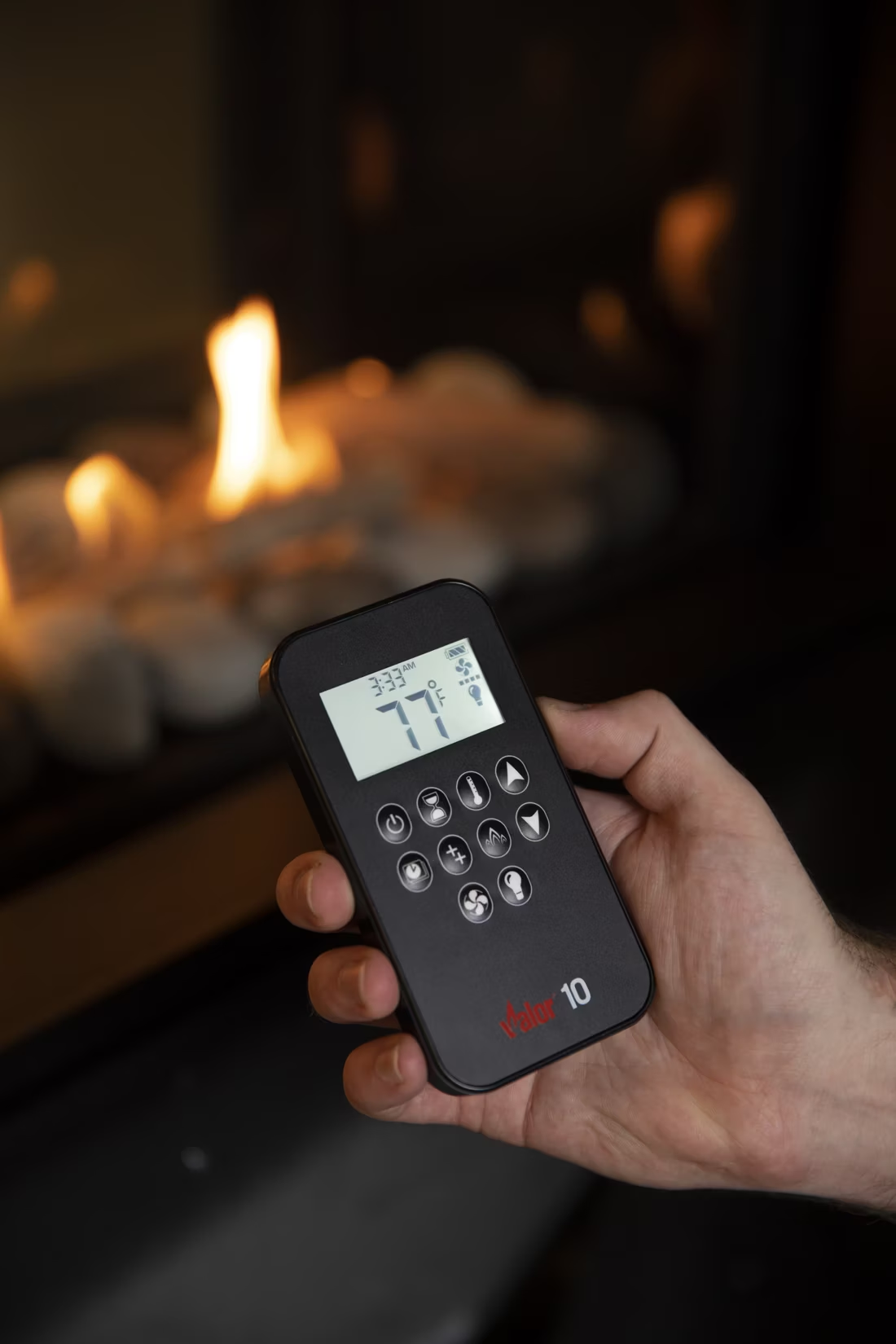
Most modern gas fireplaces are designed to run through an outage. Units with intermittent pilot ignition (IPI) carry a battery backup—typically AA batteries inside the unit—that kicks in automatically when power drops, so the fireplace still lights and runs on demand. Valor fireplaces take it a step further: the pilot assembly generates its own electricity through the thermocouple, so there's no battery to remember at all. That matters in a Warren County winter storm, when ice or high wind can knock out power along the rural stretches between Lebanon and Waynesville for a day or more. Ask your local dealer about the ignition system on any model you're considering.
What's the difference between a gas fireplace, gas insert, and gas stove?
A gas fireplace is a fully built-in unit framed into a wall—the right call for new construction or a major remodel, which is common in growing neighborhoods around Mason and Springboro. A gas insert slides into an existing masonry firebox and uses the current chimney as its vent path—the right call for many older Lebanon and Franklin homes with an existing wood fireplace they want to upgrade. A gas stove is a freestanding, cabinet-style unit that works in rooms without an existing chimney, including additions or finished basements. A local dealer can walk your space and tell you which configuration actually fits.
Do I need a permit to install a gas fireplace in Warren County?
Yes. Whether your home falls under Lebanon, Mason, Springboro, Franklin, or the Warren County building department depending on where you're located, new gas fireplace installations require both a building permit and a gas line permit, and the gas line work has to be done by a licensed gas-fitter. That's one reason to go through a full-service hearth dealer rather than a handyman install—they coordinate the gas work, the venting, and the inspection sign-off as one job instead of leaving you to schedule separate trades and jurisdictions.
What's the difference between vented and vent-free gas fireplaces?
Vented (direct-vent) gas fireplaces pull combustion air from outside and exhaust it back outside through a sealed pipe, keeping combustion byproducts entirely out of the living space. Vent-free units burn directly into the room and are legal in Ohio, subject to room-sizing rules and an oxygen depletion sensor. Warren County carries no listed air quality restrictions, so both options are on the table here, but most local dealers still steer homeowners toward direct-vent units for bedrooms or smaller additions, since they add zero moisture or combustion byproduct to the room while still delivering strong heat output.
How often should my gas fireplace be serviced?
Plan on an annual inspection, ideally before the heating season ramps up in late fall. A technician checks the burner, pilot assembly, gas connections, and venting, and cleans the glass and interior—a much quicker visit than a wood chimney sweep, but still worth doing given a 5,111-HDD heating season where the unit may run daily for months. A standard annual service call from a local gas appliance technician typically runs $150 to $250.
Gas vs. wood—which makes more sense for a Warren County home?
Wood is a real option here—Warren County has no listed air quality restrictions, and local hardwoods like oak, hickory, maple, and cherry are widely available and well suited to a long, clean burn. But gas has become the default for primary living spaces and new construction across Mason, Springboro, and the county's growth corridors because it delivers instant, thermostat-controlled heat with no ash, no stacking, and no chimney sweep required. Some households split the difference: gas in the main living area for daily convenience, a wood or pellet stove (regional pellet brands like Indeck Energy Services, Lignetics, and Somerset Pellet Fuel are available locally) in a den or finished basement for backup heat or ambiance. If low-maintenance daily heat is the priority, gas is usually the better starting point.
What's the difference between an insert and a zero-clearance fireplace?
An insert is a fireplace that slides into a pre-existing wood-burning fireplace—if you don't have one, there's nothing to insert it into. A zero-clearance fireplace is built into a framed wall, which makes it the answer for remodels and new construction. Simple test: existing masonry fireplace means insert; blank or framed wall means zero-clearance.
Why is my open fireplace making my house colder?
Open fireplaces suck—literally. As the fire burns, it consumes air your furnace already paid to heat and pulls it out through the chimney, so the house is actually colder after the fire goes out than before you lit it. An insert fixes this: it seals the chimney, puts fixed glass across the front, and turns that hole in your house into a real heat source.
Does a fireplace add value to my home?
On average, a fireplace adds back to the home about the same amount you spent installing it. Add the monthly savings from heating the rooms you actually use instead of the whole house—often hundreds of dollars a year—and the value case is strong before you even count what a fire does for how your family uses the room.
What is an in-home preview and do I need one?
It's a visit where a hearth professional measures your space, confirms the model you picked actually works in your home, and walks the specs—framing, gas line, venting, finish work—before anything is ordered. Some details you just can't know until you see the house. Never make a down payment without one; it's the single most-skipped step that burns buyers.
Stove and Fireplace Dealers in Warren County
Get your free Project Guide & Parts List for a gas fireplace in Warren County.
Tell me a bit about your home and I'll match you with a trusted local Warren County dealer and send over a free Project Guide & Parts List—the exact equipment, vent kit, and recommended installer for your gas project, no big-box guesswork.
Find Your Fireplace →