
Add electric warmth without the venting headaches.
No chimney, no gas line, no masonry work—just real installed warmth for homes across Seneca County, from Tiffin to Fostoria to the rural stretches along the Sandusky River. We'll match you with a local dealer who can size and install the right unit.
Every Project Starts From One of These Five Situations
Real warmth without the installation hurdles.
Seneca County sits in north-central Ohio's climate zone 5A, with winter lows averaging 19°F and roughly 5,992 heating degree days a year—a heating load in the same range as Buffalo, NY. Most homes here, whether in Tiffin, Fostoria, Republic, or the farm country around New Riegel and Bloomville, rely on a forced-air furnace, propane, or wood as their primary heat source. That's the honest starting point for electric fireplaces here: they're rarely the whole-home solution in a climate this cold, but they're an increasingly popular supplemental and ambiance option.
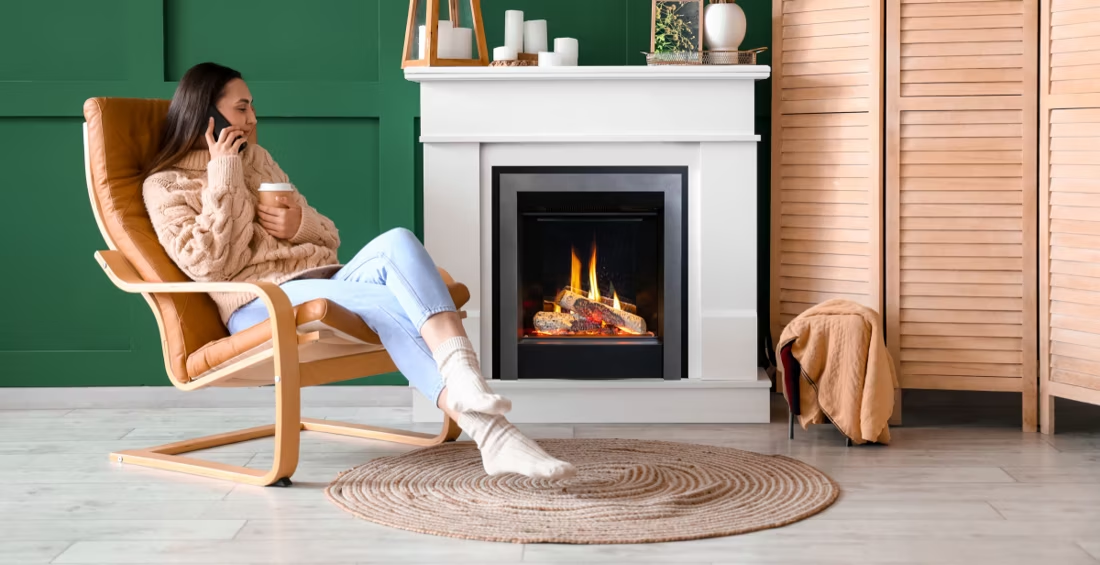
Electric fireplaces solve a different problem than wood or gas units. They plug into a standard outlet or a dedicated 240V circuit, need no chimney or vent pipe, and can go into a finished basement, a converted garage, a bonus room, or a rental unit where venting simply isn't an option. Most homes in Seneca County get service through AEP Ohio or Tiffin's municipal electric utility, and running an electric insert for a few hours of evening zone heat costs far less than running whole-home electric resistance heat through a winter with nearly 6,000 heating degree days. For homeowners who want real flame-like ambiance and supplemental warmth in a specific room—without the wood handling, gas line, or masonry work—electric is the simplest path, and a local dealer can tell you honestly whether it's a fit for the room you have in mind.
Three steps. No salesperson until you're ready.
Tell us about your project
Your zip code, your situation, and the fuel you're leaning toward—or let the answers point you to one.
See what's actually available
The brands dealers within 100 miles genuinely carry—real options, never a catalog mirage.
Get your dealer & Project Guide
A trusted local dealer, plus the free Project Guide & Parts List that names every component of the job.
Frequently Asked Questions
How much does an electric fireplace installation cost in Seneca County?
A plug-in electric insert or wall-mounted unit typically runs $500 to $1,800 installed, since most units only need an existing outlet and a mounting bracket or a simple frame-in. A built-in electric fireplace that requires a dedicated 240V circuit—common for larger units meant to be a room's focal point—runs closer to $1,500 to $3,500 once an electrician runs new wiring and a local installer builds out the surround. Homes in Tiffin or Fostoria with easy panel access tend to land on the lower end; rural properties around Bettsville or Republic with older electrical panels sometimes need a panel upgrade first, which adds cost.
Can an electric fireplace heat my whole living room, or even my house?
Most electric fireplaces are rated for supplemental zone heating—typically enough to comfortably warm a 300 to 400 square foot room, not a whole home. Given Seneca County's roughly 5,992 heating degree days and average winter lows near 19°F, relying on electric resistance heat as a primary whole-house source would be expensive compared to a furnace or wood stove. Most local homeowners install electric units to take the chill off a bonus room, finished basement, or sunroom, or to add ambiance to a main living area that's already heated by a furnace or wood insert elsewhere in the house.
What's the difference between an electric insert, a wall-mount unit, and a built-in electric fireplace?
An electric insert is built to slide into an existing masonry fireplace opening, giving an old wood-burning fireplace a plug-in makeover without any chimney work. A wall-mount unit hangs directly on a wall like a flat-screen TV and needs only a nearby outlet. A built-in electric fireplace is designed to be framed into new construction or a remodel—often wired to a dedicated circuit for a larger heater and a more finished, seamless look. For Seneca County homes with an existing but unused masonry fireplace, an insert is usually the fastest and least invasive upgrade.
Do I need an electrician or a permit to install an electric fireplace in Seneca County?
A small plug-in unit that uses a standard 120V outlet generally doesn't require a permit. A built-in unit wired to a dedicated 240V circuit does require a licensed electrician and typically a permit through the Seneca County Building Department, or through the City of Tiffin or Fostoria if the property is within city limits. Most local hearth dealers either employ a licensed electrician or coordinate directly with one, so the wiring and any inspection are handled as part of the installation rather than left to the homeowner.
Will my electric fireplace still work during a power outage?
No—unlike a wood stove, an electric fireplace has no function without power, since both the heating element and the flame effect run on electricity. In Seneca County, where winter storms occasionally knock out power for hours at a time in the more rural parts of the county, an electric fireplace shouldn't be your only backup heat plan. Homeowners who want both convenience and outage-proof heat often pair an electric unit for daily ambiance with a wood stove or propane heater as a cold-weather backup.
What are the best electric fireplace options for a Seneca County home?
For realistic flame and heat performance, look at established brands like Dimplex, Napoleon, or Touchstone, all of which are commonly stocked by hearth dealers serving the Tiffin and Fostoria area. Many of these units feature log sets styled after the oak, hickory, maple, and cherry that grow throughout Seneca County's hardwood stands—a detail that matters if you're replacing a wood-burning look with an electric one. Ask a local dealer about heater wattage (most top out around 1,500W) and flame technology, since picture quality varies significantly between entry-level and premium models.
Electric vs. wood or gas—which fits my Seneca County home better?
Wood and gas remain the more practical primary heat sources here given the county's cold winters and nearly 6,000 annual heating degree days—wood works well off-grid and during outages, and gas or propane delivers strong, thermostatically controlled heat. Electric fireplaces are the better fit when you want zero venting, minimal installation disruption, and flexibility to place a fireplace almost anywhere in the house, including rentals, apartments, and finished basements where a chimney isn't practical. Many Seneca County homeowners end up with both: a furnace or wood stove for real heating load, and an electric unit for ambiance and supplemental warmth in a secondary room.
Are there any rebates or utility incentives for electric fireplaces in Seneca County?
Generally, no—because electric fireplaces are supplemental heat rather than a home's primary heating or cooling system, they typically don't qualify for AEP Ohio efficiency rebates or Energy Star tax credits, which are usually reserved for heat pumps, furnace upgrades, and insulation work. If you're upgrading your electrical panel to support a built-in unit, it's worth asking your electrician whether that work overlaps with any panel-upgrade incentives tied to other planned electrical improvements, but the fireplace itself won't be the qualifying factor.
What size electric fireplace do I need for my room?
Sizing is based on square footage and how much of the heating job you expect the unit to do. A 30 to 40 inch wall-mount or insert with around 1,500W of heat output comfortably supplements a room up to 400 square feet—typical for a den, bonus room, or finished basement space common in Seneca County homes. For a larger great room or an open floor plan, size up to a 50-inch-plus unit or plan on the electric fireplace being purely for ambiance rather than meaningful heat output, with your furnace or wood stove carrying the real load. A local dealer can measure your specific room and recommend wattage accordingly.
Can I put a TV above my fireplace?
Yes—with an asterisk. Fireplaces are hot and TVs don't like heat. Either put a mantel between them to deflect rising warmth, or choose a fireplace with heat-management technology that creates a cool zone on the wall above—the wall stays around 125 degrees, barely warm, while the room still gets full heat. If you like clean lines and don't want a mantel, heat management is the answer.
How much does an electric fireplace cost to run?
With the heater on, a typical unit draws about 1,500 watts—at average electric rates that's roughly 20 cents an hour. Run the flame effect alone and it costs pennies; the flames are LED-driven and use about as much power as a light bulb. There's no pilot light, no fuel delivery, and essentially no maintenance.
How much should I budget for a fireplace?
For an average home—covering the fireplace, the vent pipe, and basic installation—a budget between $3,900 and $5,500 gives you a lot of options across wood, gas, and pellet. By the time you add finish work, gas line, and electrical, the average complete installation lands between $5,000 and $12,000 all-in. In a remodel or new build, a good rule is to put about 2.5% of the total project cost toward the fireplace.
Can I install a fireplace myself?
If you're putting a fire in your house on purpose, it's best to work with an expert. Unless you're genuinely experienced in framing, gas line, vent pipe, and the national code on clearances to combustibles, have a professional do it—and ideally the same company that sells you the fireplace, so warranty, service, and liability all live under one roof.
Find your electric fireplace in Seneca County.
Tell us about your room and your home's wiring, and we'll match you with a trusted local Seneca County dealer and send over a free Project Guide & Parts List for your installation.
Find Your Fireplace →