
The easiest fireplace upgrade for Richland County's older homes.
No chimney, no gas line, no permitted venting to worry about—just plug-in or hardwired warmth and ambiance for homes in Mansfield, Ontario, Shelby, Lexington, Bellville, and everywhere in between. Find the right unit and connect with a trusted local dealer.
Every Project Starts From One of These Five Situations
No chimney, no gas line, no problem.
Richland County sits in north-central Ohio's climate zone 5A, with a long, demanding heating season and winter lows that average around 19°F—a heating season that runs from October well into April, not far off from what a family in Madison, Wisconsin deals with. Wood has real roots here, too: the oak, hickory, maple, and cherry stands around the Mohican area have kept generations of Richland County families in firewood. But not every home is set up for a wood stove or a gas line, and that's where electric fireplaces earn their place.
A lot of Richland County's housing stock—especially the Victorian and craftsman homes in Mansfield's older neighborhoods—wasn't built with a second chimney flue or an easy gas line run in mind, and retrofitting one gets expensive fast. Electric inserts drop into an existing masonry firebox with no venting at all, and wall-mounted units go into additions, finished basements, and new-construction rooms in Ontario, Lexington, and Bellville without touching the furnace ductwork or running gas. It's not a whole-home heat source in a climate like this one—but as supplemental zone heat, or straight ambiance in a room you actually live in, it does the job on a standard 15- or 20-amp circuit most Ohio Edison-served homes already have.
Three steps. No salesperson until you're ready.
Tell us about your project
Your zip code, your situation, and the fuel you're leaning toward—or let the answers point you to one.
See what's actually available
The brands dealers within 100 miles genuinely carry—real options, never a catalog mirage.
Get your dealer & Project Guide
A trusted local dealer, plus the free Project Guide & Parts List that names every component of the job.
Frequently Asked Questions
How much does an electric fireplace installation cost in Richland County?
A plug-in freestanding electric fireplace or a basic insert typically runs $300 to $1,500 installed, since it uses an existing outlet and doesn't require venting, a chimney, or gas line work. A built-in wall unit with custom framing, trim, and a dedicated electrical circuit runs higher—usually $1,500 to $4,000 depending on the size of the unit and how much carpentry and wiring is involved. If a new 240V circuit is needed for a larger unit, a licensed electrician will need to pull an electrical permit through your local building department (Mansfield, Ontario, Shelby, or Richland County directly for unincorporated areas), which most local dealers coordinate as part of the install.
What size electric fireplace do I need for my Richland County home?
Most electric fireplaces put out around 4,000 to 5,000 BTU on a standard 1,500-watt heater element—enough to noticeably warm a single room (roughly 400 to 1,000 square feet depending on insulation and ceiling height) but not enough to replace a furnace during a Richland County January when overnight lows sit in the teens or single digits. Think of sizing in terms of the specific room: a family room addition, a finished basement, or a bedroom is a realistic target. For an older, drafty home in Mansfield's historic districts, an electric unit works best as a supplement that lets you turn the thermostat down a couple degrees in the room you're actually using, rather than as the sole heat source for the house.
Who should install my electric fireplace—do I need a certified installer?
Plug-in units don't require a licensed installer, but anything wired directly into a circuit—especially a larger built-in unit on a dedicated 240V line—should go through a licensed Ohio electrician. Local hearth retailers serving Richland County typically handle both the carpentry and the electrical coordination together, which matters if you're building out a mantel or surround and want the finished look to match the rough-in. Avoid DIY wiring on anything beyond a standard outlet plug—undersized circuits and improperly wired units are the most common source of nuisance breaker trips and, in rare cases, overheating.
What's the difference between an electric fireplace, insert, and wall-mounted unit?
An electric insert is built to slide into an existing masonry firebox—a natural fit if you already have an old wood-burning fireplace in a Mansfield or Ontario home that you want to convert without touching the chimney. A wall-mounted or built-in electric fireplace is designed for new construction or a remodel, recessed into a framed wall with custom trim around it. A freestanding electric stove or mantel unit is the simplest option—it plugs in, sits against a wall, and needs no construction at all, making it the easiest retrofit for renters or homes where permanent modification isn't an option.
Do I need a permit to install an electric fireplace in Richland County?
A simple plug-in electric fireplace doesn't need a permit—it's no different than plugging in a space heater. If your installation involves running new electrical wiring for a dedicated circuit or modifying a wall for a built-in unit, you'll need an electrical permit through your local jurisdiction's building department, whether that's the City of Mansfield, Ontario, Shelby, or Richland County for unincorporated areas. Most local dealers who handle built-in installations pull this permit as part of the job, so you're not left coordinating it yourself.
What's the best electric fireplace for Richland County's climate?
Look for a unit with a real 1,500-watt heater rated for the actual square footage of the room you're heating—not just the marketing claim on the box. For a drafty older room in a Mansfield historic-district home, a higher-output insert with a built-in thermostat will do more work than a basic decorative unit. For a well-insulated addition or finished basement in Ontario or Lexington, a mid-size wall unit is usually plenty. If you're trying to meaningfully offset furnace use during Richland County's coldest stretches, ask a local dealer about pairing an electric insert with your existing hearth versus a standalone wall unit—the insert typically throws heat more directly into the room.
How much maintenance does an electric fireplace need?
Very little—this is one of the biggest advantages of electric heat in Richland County. There's no chimney to sweep, no creosote to manage, and no annual gas line inspection required. Maintenance is mostly dusting the unit, occasionally cleaning the glass front, and replacing the LED ember-bed bulbs every several years if they dim. Compare that to the annual chimney inspection wood stoves need or the yearly service gas units require, and electric is by far the lowest-maintenance option available to Richland County homeowners.
Will my electric fireplace work during a power outage?
No—electric fireplaces run entirely on grid power through Ohio Edison, so if the power goes out, so does your fireplace, unlike a wood stove that keeps working through an ice storm. Richland County does see winter outages from ice and heavy snow, so if backup heat during an outage matters to your household, an electric fireplace shouldn't be your only heat source. Many homeowners here pair an electric unit for everyday convenience and ambiance with a wood stove or fireplace insert elsewhere in the house for actual emergency heat.
Electric vs. wood or gas—which is right for my Richland County home?
Wood offers real emergency heat during outages and taps into Richland County's abundant local hardwood—oak, hickory, maple, and cherry are all common firewood species here—but it means chimney maintenance and hauling wood. Gas offers instant, higher-output heat but requires a gas line and venting work. Electric offers the lowest cost of entry, the simplest installation, and zero maintenance, but it depends on grid power and won't meaningfully heat a whole room on the coldest nights of a long, demanding winter. For a lot of homeowners here, the answer isn't either/or—it's an electric insert or wall unit for daily ambiance and light supplemental heat in a specific room, with wood or gas as the household's real cold-weather backbone.
Can I put a TV above my fireplace?
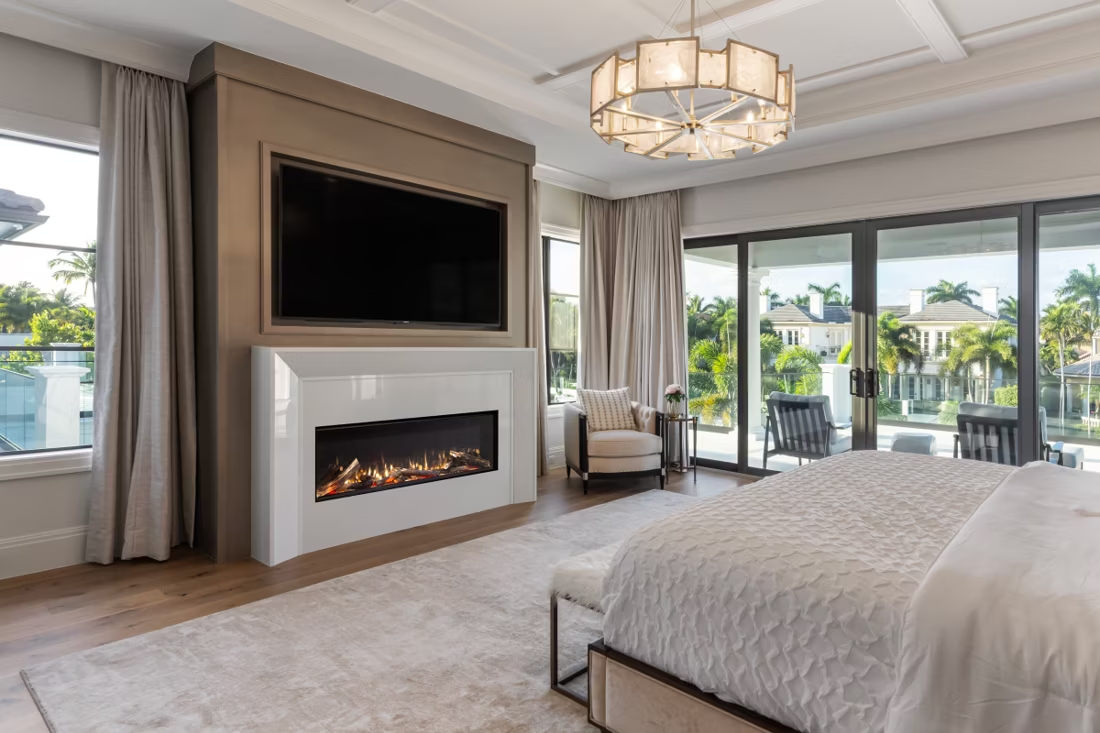
Yes—with an asterisk. Fireplaces are hot and TVs don't like heat. Either put a mantel between them to deflect rising warmth, or choose a fireplace with heat-management technology that creates a cool zone on the wall above—the wall stays around 125 degrees, barely warm, while the room still gets full heat. If you like clean lines and don't want a mantel, heat management is the answer.
Do electric fireplaces actually produce heat?
Yes—most put out around 4,800–5,000 BTUs from a standard outlet, which comfortably warms a bedroom, office, or den as a comfort-zone heater. What they won't do is carry a whole house the way wood, gas, or pellet can. Think of electric as ambiance-first with honest supplemental heat: flames on with no heat in July, flames plus warmth in January.
Can a fireplace actually lower my heating bill?
Yes—by creating a comfort zone. A furnace heats every square foot of the house just to warm the one room you're in; a gas fireplace on low burns roughly a sixth of the gas a typical furnace does. Set the furnace around 55–60 degrees as a baseline, then heat the rooms your family actually uses. Families who heat this way commonly save $20–$60 a month.
Can I install a fireplace myself?
If you're putting a fire in your house on purpose, it's best to work with an expert. Unless you're genuinely experienced in framing, gas line, vent pipe, and the national code on clearances to combustibles, have a professional do it—and ideally the same company that sells you the fireplace, so warranty, service, and liability all live under one roof.
Stove and Fireplace Dealers in Richland County
Find your electric fireplace in Richland County.
Tell us a bit about your home and we'll put together a free Project Guide & Parts List for your electric fireplace project—the right unit, the parts you'll need, and a trusted local Richland County dealer to install it.
Find Your Fireplace →