
The Fireplace Upgrade That Needs No Chimney At All.
Plug-in warmth and real flame ambiance for Perry County living rooms, additions, and manufactured homes—from New Lexington to Somerset to Thornville—without a masonry chimney or gas line. Find the right unit and connect with a trusted local dealer.
Every Project Starts From One of These Five Situations
Reliable ambiance and zone heat—but not your primary heat source.
Perry County sits in the Appalachian foothills of southeastern Ohio, anchored by the county seat of New Lexington and stretching out to Somerset, Crooksville, Junction City, and Thornville near Buckeye Lake, plus the old coal towns of Shawnee, Corning, and New Straitsville. Climate zone 5A puts the county at 5,864 heating degree days and winter lows averaging 18°F—a cold-season heating load in the same range as Buffalo, NY. With a population just over 16,000 spread across small towns and rural townships, most homes here still lean on wood, propane, or fuel oil to get through a full winter.
That's the honest starting point for electric fireplaces in Perry County: running electric resistance heat as a primary source through a winter with nearly 5,900 heating degree days gets expensive fast, so electric units here work best as zone heat and ambiance rather than whole-home heat. That's exactly where they shine—family rooms, finished basements, additions, and the manufactured and mobile homes common throughout the county's rural townships, where running a chimney or a gas line isn't practical or affordable. AEP Ohio serves incorporated areas like New Lexington, while South Central Power Company, the local electric cooperative, covers most of the rural county outside town limits. Either way, most electric fireplace units run off a standard 120V household outlet, with larger built-ins occasionally calling for a dedicated 240V circuit.
Three steps. No salesperson until you're ready.
Tell us about your project
Your zip code, your situation, and the fuel you're leaning toward—or let the answers point you to one.
See what's actually available
The brands dealers within 100 miles genuinely carry—real options, never a catalog mirage.
Get your dealer & Project Guide
A trusted local dealer, plus the free Project Guide & Parts List that names every component of the job.
Frequently Asked Questions
How much does an electric fireplace installation cost in Perry County?
Most electric fireplace projects in Perry County run $400 to $1,200. A plug-in insert that drops into an existing masonry firebox or a freestanding mantel package sits at the lower end since there's no wiring beyond an existing outlet. A built-in wall unit with a custom surround, especially one that calls for a new dedicated 240V circuit, runs toward the higher end once a licensed electrician is brought in—figure another $200 to $400 for that electrical work. There's no venting, chimney work, or gas line to budget for, which is a big part of why electric stays the cheapest fireplace fuel to install in the county.
Do I need a permit to install an electric fireplace in Perry County?
Usually not. Like many rural Ohio counties, Perry County does not operate a residential building department for one- and two-family dwellings, so a straightforward plug-in electric fireplace or insert typically requires no county permit at all. If the unit calls for new dedicated wiring—a 240V circuit for a larger built-in, for example—that electrical work still needs to be done by a licensed electrician and meet National Electrical Code standards, even without a county permit process. If you're inside New Lexington's village limits, it's worth a quick check with the village office, since some incorporated areas layer their own rules on top.
Electric vs. wood—which makes more sense for my Perry County home?
Perry County's wooded hills produce plenty of oak, hickory, maple, and cherry, and a lot of local households still burn wood as primary or backup heat for exactly that reason—it works even when the power doesn't. That matters here: rural members of South Central Power Company can see longer outage restoration times after ice storms than in-town AEP Ohio customers, and an electric fireplace goes dark the moment the power does. A wood stove keeps producing real heat through an outage; an electric unit is dependent on the grid. Where electric wins is convenience—no ash, no chimney sweep, no wood stacking—for rooms where you want flame and warmth on demand without the upkeep.
Where do electric fireplaces make the most sense in Perry County homes?
Three situations come up constantly here. First, manufactured and mobile homes, which are common throughout the county's rural townships and often can't support a masonry chimney or gas line. Second, additions and finished basements built without any existing venting infrastructure. Third, older homes in towns like New Lexington, Somerset, and Crooksville with an existing but inefficient open masonry fireplace—an electric insert drops into that firebox and delivers usable zone heat and a real flame effect without touching the chimney at all.
Built-in, insert, or freestanding—what's the difference?
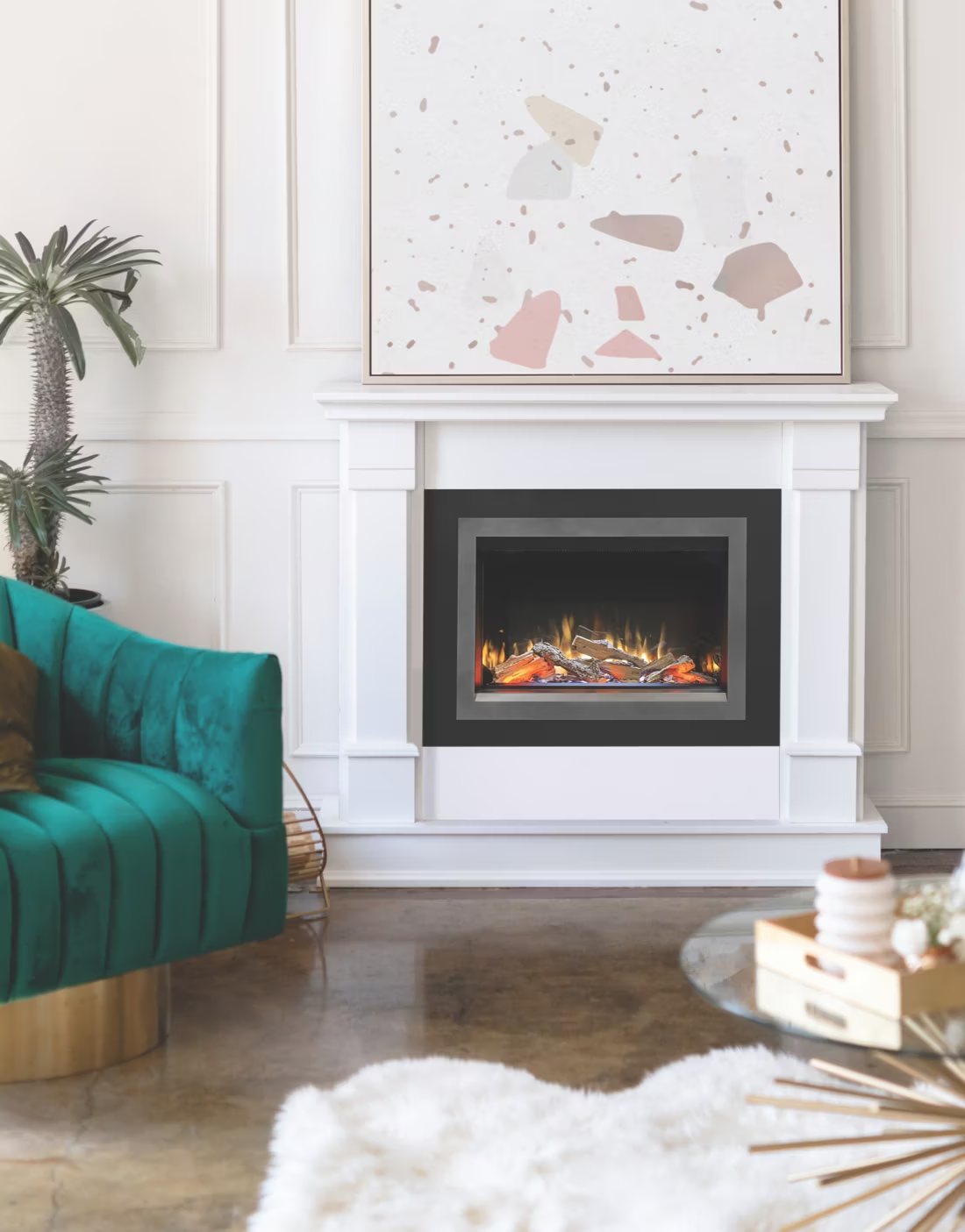
An electric insert is sized to slide into an existing masonry firebox, instantly converting a decorative or drafty wood fireplace into a heated, glass-front unit. A built-in electric fireplace is framed into a wall like a television, typically finished with a custom mantel or surround—the choice for additions or new construction with no existing fireplace. A freestanding or mantel-package unit needs no installation beyond placement and a plug, making it the fastest option for a rental, a mobile home, or anyone who wants to test the fit before committing to a wall-mounted unit.
How much space will an electric fireplace actually heat?
Most electric fireplace inserts and built-ins are 1,500-watt units rated around 5,000 BTU, which comfortably warms a single room in the 400 to 1,000 square foot range—a living room, a finished basement, or a bedroom addition. They are not sized or intended to carry whole-home heating load in a county with 5,864 heating degree days; think of them as the equivalent of a very attractive space heater with a real flame display, not a furnace replacement.
What does it cost to run an electric fireplace day to day?
At typical AEP Ohio and South Central Power Company residential rates, a 1,500-watt electric fireplace running on full heat costs roughly 20 cents an hour to operate—a few dollars for an evening of use. Most units also let you run the flame effect alone, with the heater switched off, for pennies an hour, which is popular in shoulder-season months when you want the look without added heat. That operating cost is lower than running a propane furnace for the same room, though propane and wood still beat electric on total heat output per dollar for whole-home heating.
What are the best electric fireplace brands available through local dealers?
Dimplex and Napoleon are the most established names carried by hearth dealers serving Perry County, known for realistic flame technology and reliable heaters. Touchstone and SimpliFire are common choices for wall-mounted built-ins in additions and remodels. A local dealer will walk you through which models fit your firebox dimensions if you're doing an insert conversion versus a fresh built-in installation, and can confirm which units need a dedicated circuit before you buy.
Electric vs. pellet stove—which is the better supplemental heat source?
Pellet stoves burn compressed wood pellets—regional brands like Somerset Pellet Fuel, made right here in Perry County, along with Lignetics and Indeck Energy Services, are available throughout the area—and they produce real, meaningful heat output, not just ambiance. The catch is that pellet stoves also need electricity to run the auger and blower, so like electric fireplaces, they stop working in a power outage. If genuine supplemental heat at a lower operating cost per BTU is the goal, pellet wins. If simplicity, zero fuel storage, and instant flame-on-demand ambiance matter more, electric is the easier fit—and it's a fair amount cheaper to install.
Can I put a TV above my fireplace?
Yes—with an asterisk. Fireplaces are hot and TVs don't like heat. Either put a mantel between them to deflect rising warmth, or choose a fireplace with heat-management technology that creates a cool zone on the wall above—the wall stays around 125 degrees, barely warm, while the room still gets full heat. If you like clean lines and don't want a mantel, heat management is the answer.
Does an electric fireplace need a vent or chimney?
No—that's its superpower. An electric fireplace needs a wall and an outlet, period. No vent pipe, no gas line, no clearances to design around, which is why it works in bedrooms, offices, apartments, and walls where venting a gas or wood unit would be impractical or impossible. Installation is typically the simplest and least expensive of any fireplace type.
How much should I budget for a fireplace?
For an average home—covering the fireplace, the vent pipe, and basic installation—a budget between $3,900 and $5,500 gives you a lot of options across wood, gas, and pellet. By the time you add finish work, gas line, and electrical, the average complete installation lands between $5,000 and $12,000 all-in. In a remodel or new build, a good rule is to put about 2.5% of the total project cost toward the fireplace.
Can a fireplace actually lower my heating bill?
Yes—by creating a comfort zone. A furnace heats every square foot of the house just to warm the one room you're in; a gas fireplace on low burns roughly a sixth of the gas a typical furnace does. Set the furnace around 55–60 degrees as a baseline, then heat the rooms your family actually uses. Families who heat this way commonly save $20–$60 a month.
Find your electric fireplace in Perry County.
Tell us a bit about your home and we'll match you with the right electric fireplace or insert, plus a free Project Guide & Parts List—the exact parts and your recommended local Perry County dealer.
Find Your Fireplace →