
Real heat, zero venting—built for Ottawa County's lake cottages and condos.
From Port Clinton to Catawba Island to Put-in-Bay, electric fireplaces plug into existing circuits and skip the chimney, gas line, and permit hassle—ideal for condos, seasonal cottages, and HOA-restricted properties along the Lake Erie shoreline. Find the right unit and get matched with a trusted local dealer.
Every Project Starts From One of These Five Situations
The easiest heat upgrade for lake living.
Ottawa County sits on the Lake Erie shoreline in northern Ohio—the Marblehead peninsula, the Bass Islands (Put-in-Bay and South Bass Island), Catawba Island, and mainland communities like Port Clinton, Oak Harbor, Genoa, and Elmore. With just over 16,000 year-round residents, the county's population swells every summer with lake tourism, then settles into a Zone 5A winter that averages 22°F lows and racks up roughly 5,653 heating degree days—lake-effect snow squalls off Erie that echo what Buffalo, NY sees across the water. A lot of the housing stock here is seasonal: condos on Catawba Island, cottages on the islands, rentals near the harbor—places where running a chimney, gas line, or new venting isn't practical, or isn't allowed at all.
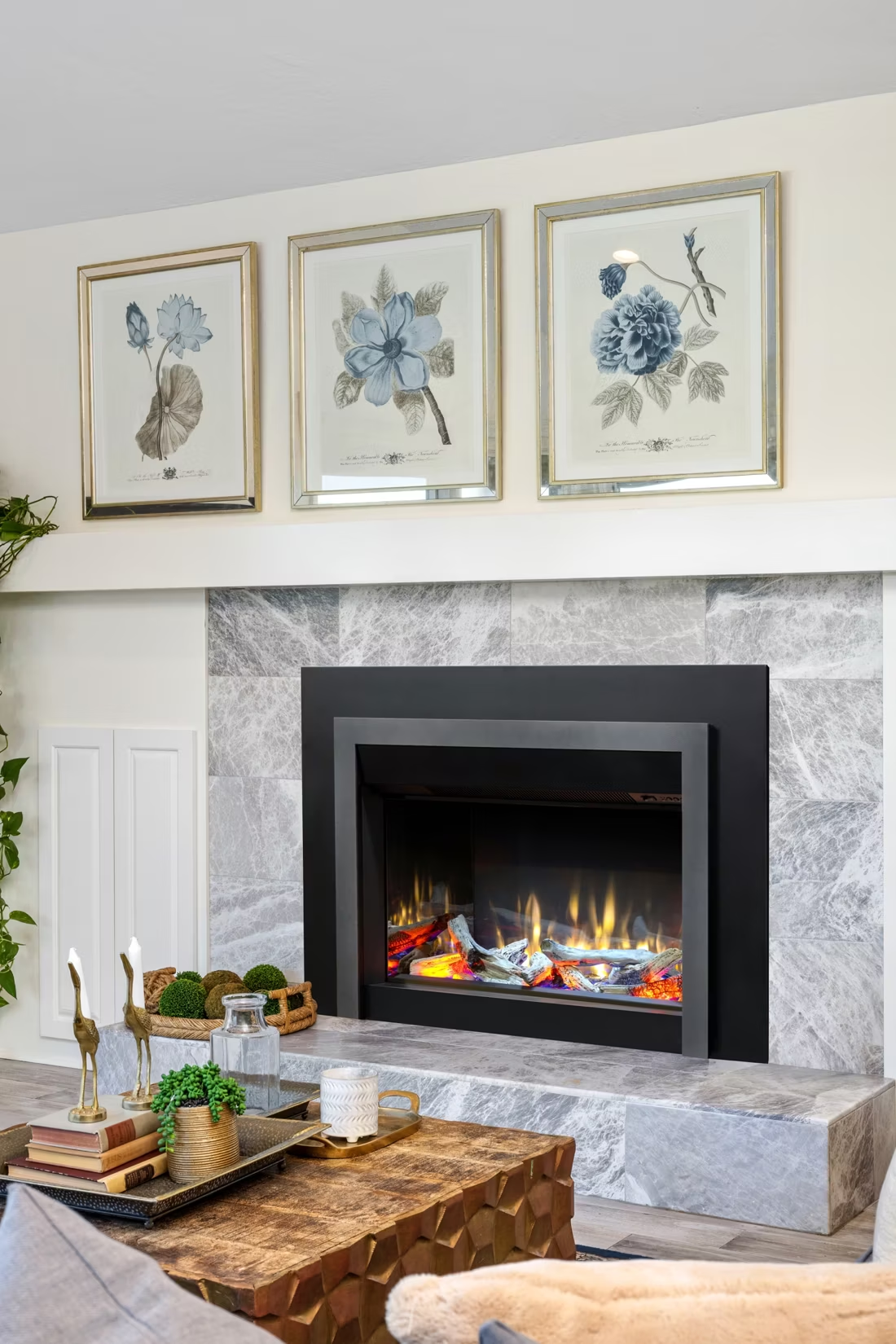
That's exactly where electric fireplaces earn their keep. A plug-in or hardwired electric insert needs no chimney, no combustion air, and no gas line—just a standard or dedicated circuit—which makes it the only realistic fireplace option in a lot of condo associations and vacation rentals around Put-in-Bay and Catawba Island. On the mainland, electric units are a common add-on in finished basements and bonus rooms in Port Clinton and Oak Harbor, where homeowners want zone heat and fireplace ambiance without opening a wall for venting. Toledo Edison (FirstEnergy) is the primary electric utility across most of the county, and running an electric fireplace on the heat setting typically costs a few cents to a couple dollars a day depending on unit size and hours run.
Three steps. No salesperson until you're ready.
Tell us about your project
Your zip code, your situation, and the fuel you're leaning toward—or let the answers point you to one.
See what's actually available
The brands dealers within 100 miles genuinely carry—real options, never a catalog mirage.
Get your dealer & Project Guide
A trusted local dealer, plus the free Project Guide & Parts List that names every component of the job.
Frequently Asked Questions
How much does an electric fireplace or insert cost to install in Ottawa County?
Most electric fireplace and insert installations in Ottawa County run in the $400 to $1,500 range, and that's mostly driven by the unit and the wall work, not labor-intensive venting the way wood or gas installs require. A basic plug-in insert into an existing fireplace opening or a media console-style unit sits at the low end. Built-in electric fireplaces that require a dedicated 20-amp circuit, wall recessing, or trim carpentry—common in finished basements in Oak Harbor and Port Clinton, or lake condos on Catawba Island—land toward the higher end. Since there's no chimney or gas line to size, a local dealer can usually give you a firm number after seeing the space and the electrical panel.
Can I install an electric fireplace in a condo or rental on Catawba Island or Put-in-Bay?
Yes—this is one of the most common reasons homeowners in Ottawa County's lake communities choose electric. Because electric units don't require venting, a chimney, or gas service, they're typically the only fireplace option allowed under condo association rules on Catawba Island or in vacation rentals on Put-in-Bay and South Bass Island, where exterior modifications and combustion appliances are often restricted. Most installs are a simple wall-mount or recessed unit tied into an existing circuit, which keeps the project fast and non-invasive—a real advantage for owners who only have a short season to get work done before renters arrive.
Do I need a permit to install an electric fireplace in Ottawa County?
In most cases, no separate fireplace permit is required—electric fireplaces aren't combustion appliances, so they fall outside the wood and gas rules enforced by the Ottawa County Building Department. That said, if your installation requires a new dedicated circuit or panel work, that electrical work should be pulled and inspected under the National Electrical Code and done by a licensed electrician. Plug-in units that use an existing outlet typically need no permit at all. Ask your installer whether your specific unit and wall setup requires new wiring before assuming it's permit-free.
What's the difference between an electric fireplace, insert, and stove?
An electric fireplace is usually a built-in unit set into a wall or media cabinet, an electric insert is sized to slide into an existing masonry or wood-burning fireplace opening to convert it without touching the chimney, and an electric stove is a freestanding cabinet-style unit that mimics a wood stove's footprint. For Ottawa County homes with an old, unused masonry fireplace—common in older houses around Port Clinton and Genoa—an insert is often the simplest upgrade since it drops into the existing opening. Newer construction or condo units usually go with a built-in or freestanding model instead.
Will an electric fireplace actually heat my Ottawa County home?
Electric fireplaces are best treated as zone heaters, not whole-home heat sources—most units are rated around 5,000 BTU and can comfortably warm a single room, but they won't keep pace with Ottawa County's Zone 5A winters and roughly 5,653 heating degree days on their own. They're a strong supplement to central heat in a specific room—a finished basement in Oak Harbor, a sunroom in Elmore, a condo living room on Catawba Island—where you want fireplace ambiance and extra warmth without running the furnace harder. If you need a fireplace that can genuinely carry primary heat during a cold snap, wood or gas is usually the better fit.
What's the best electric fireplace for a seasonal lake cottage or condo?
Look for a unit with independent flame and heat controls, since a lot of Put-in-Bay and Catawba Island properties want the fireplace running for ambiance during warm-weather visits without the heater kicking on. A thermostat and remote are worth prioritizing too, especially for rental units where a property manager or renter needs simple, foolproof controls. Recessed wall units and mantel-style built-ins both work well in the compact footprints typical of island cottages and condos; freestanding stove-style units suit mainland homes in Port Clinton or Genoa with more open floor space.
Electric vs. gas or wood—which fireplace makes sense in Ottawa County?
Wood and gas both deliver more real heat output, and wood works without electricity during a power outage—a genuine consideration given the lake-effect storms that roll through the county each winter. Electric wins on installation simplicity and flexibility: no venting, no gas line, no chimney, which matters a lot on the islands and in condo developments where those aren't options anyway. It's also the practical choice for renters and seasonal owners who want fireplace ambiance without a capital project. Many mainland homeowners in Ottawa County end up with gas or wood in a primary living space and electric in a secondary room like a basement or bedroom.
How much does it cost to run an electric fireplace in Ottawa County?
Running costs depend on your unit's wattage and Toledo Edison's (FirstEnergy) residential electric rate, but a typical 1,500-watt electric fireplace on the heat setting costs somewhere around 15 to 25 cents per hour of use—a few dollars for an evening's worth of ambiance and warmth. Running the unit on flame-only mode without heat, which is popular for summer evenings at Put-in-Bay or Catawba Island cottages, draws only a fraction of that. It's a fraction of the cost of running a furnace harder to compensate for a cold room.
Will my electric fireplace still work if the power goes out?
No—electric fireplaces need power to run the heater, blower, and flame effect, so they go dark along with everything else during an outage. That's worth considering in Ottawa County, where lake-effect snow squalls and winter storms off Erie can knock out power for hours at a time, particularly on the islands and more exposed mainland stretches. If backup heat during outages matters to you, pair an electric unit with a wood stove or a battery-backed gas fireplace elsewhere in the home rather than relying on electric alone.
Can I put a TV above my fireplace?
Yes—with an asterisk. Fireplaces are hot and TVs don't like heat. Either put a mantel between them to deflect rising warmth, or choose a fireplace with heat-management technology that creates a cool zone on the wall above—the wall stays around 125 degrees, barely warm, while the room still gets full heat. If you like clean lines and don't want a mantel, heat management is the answer.
How much does an electric fireplace cost to run?
With the heater on, a typical unit draws about 1,500 watts—at average electric rates that's roughly 20 cents an hour. Run the flame effect alone and it costs pennies; the flames are LED-driven and use about as much power as a light bulb. There's no pilot light, no fuel delivery, and essentially no maintenance.
Can a fireplace actually lower my heating bill?
Yes—by creating a comfort zone. A furnace heats every square foot of the house just to warm the one room you're in; a gas fireplace on low burns roughly a sixth of the gas a typical furnace does. Set the furnace around 55–60 degrees as a baseline, then heat the rooms your family actually uses. Families who heat this way commonly save $20–$60 a month.
What is an in-home preview and do I need one?
It's a visit where a hearth professional measures your space, confirms the model you picked actually works in your home, and walks the specs—framing, gas line, venting, finish work—before anything is ordered. Some details you just can't know until you see the house. Never make a down payment without one; it's the single most-skipped step that burns buyers.
Find your electric fireplace in Ottawa County.
Tell us about your home—mainland, island, condo, or cottage—and we'll match you with the right electric fireplace or insert, plus a free Project Guide & Parts List with your recommended local dealer.
Find Your Fireplace →