
Real heat for your Monroe County living room, no chimney required.
From Woodsfield to the river towns of Clarington, Sardis, and Hannibal, electric fireplaces bring instant, zone-by-zone warmth to Monroe County homes without gas lines or masonry work. Find the right unit and get matched with a trusted local dealer.
Every Project Starts From One of These Five Situations
Zone heat and ambiance, with none of the venting.
Monroe County sits in the Appalachian foothills along the Ohio River, with Woodsfield as the county seat and small river communities like Clarington, Hannibal, Sardis, and Beallsville strung along Route 7. Winters here average lows around 20°F with roughly 5,507 heating degree days—a real season, though milder than places like Buffalo, NY or Burlington, VT. The surrounding hills and the nearby Wayne National Forest are thick with oak, hickory, maple, and cherry, and wood heat has deep roots here for exactly that reason. Outside the handful of natural gas mains near town, most rural stretches of the county run on propane or wood as primary heat, which is where electric fireplaces have carved out a real niche.
In a lot of Monroe County's older farmhouses and river-town homes, there's no existing masonry chimney and no gas line to tap into—running either for a single fireplace project doesn't make financial sense. An electric fireplace sidesteps that problem entirely: a plug-in unit needs nothing more than a standard outlet, and a built-in or wall-mount model typically needs just a dedicated 120V or 240V circuit run by a local electrician. No venting, no combustion air, no clearance-to-combustibles calculations for a chimney that doesn't exist. For homes on AEP Ohio's grid, that means a living room, bonus room, or the one bedroom that never quite warms up can get supplemental heat in an afternoon, not a multi-day chimney project.
Three steps. No salesperson until you're ready.
Tell us about your project
Your zip code, your situation, and the fuel you're leaning toward—or let the answers point you to one.
See what's actually available
The brands dealers within 100 miles genuinely carry—real options, never a catalog mirage.
Get your dealer & Project Guide
A trusted local dealer, plus the free Project Guide & Parts List that names every component of the job.
Frequently Asked Questions
How much does an electric fireplace installation cost in Monroe County?
Most electric fireplace installations in Monroe County run $400 to $1,200, depending on whether you're installing a plug-in freestanding unit (the cheapest option, no electrician needed), a wall-mount unit on an existing 120V outlet, or a built-in/insert model that needs a dedicated 240V circuit run by a licensed electrician. Homes in Woodsfield or the river towns with older electrical panels sometimes need a panel upgrade or subpanel added first, which adds to the cost. A local dealer can tell you within a few minutes of seeing your panel and wall setup which tier you're looking at.
What size electric fireplace do I need for my Monroe County home?
Electric fireplaces are rated in BTUs like any other heater, and most residential units top out around 5,000–5,200 BTUs—enough to meaningfully warm a single room of 400 to 500 square feet, not a whole house. For a farmhouse living room or a river-town bungalow in Sardis or Clarington, a mid-size 40- to 50-inch insert or wall unit is usually the right call. If you're trying to take the chill off a larger open floor plan, you're better off with two smaller units in different zones than one oversized unit—electric heat output doesn't scale the way a wood stove's does. Think of it as zone heat for the room you're actually sitting in, not a furnace replacement.
Built-in, insert, or freestanding—which electric fireplace fits my home?
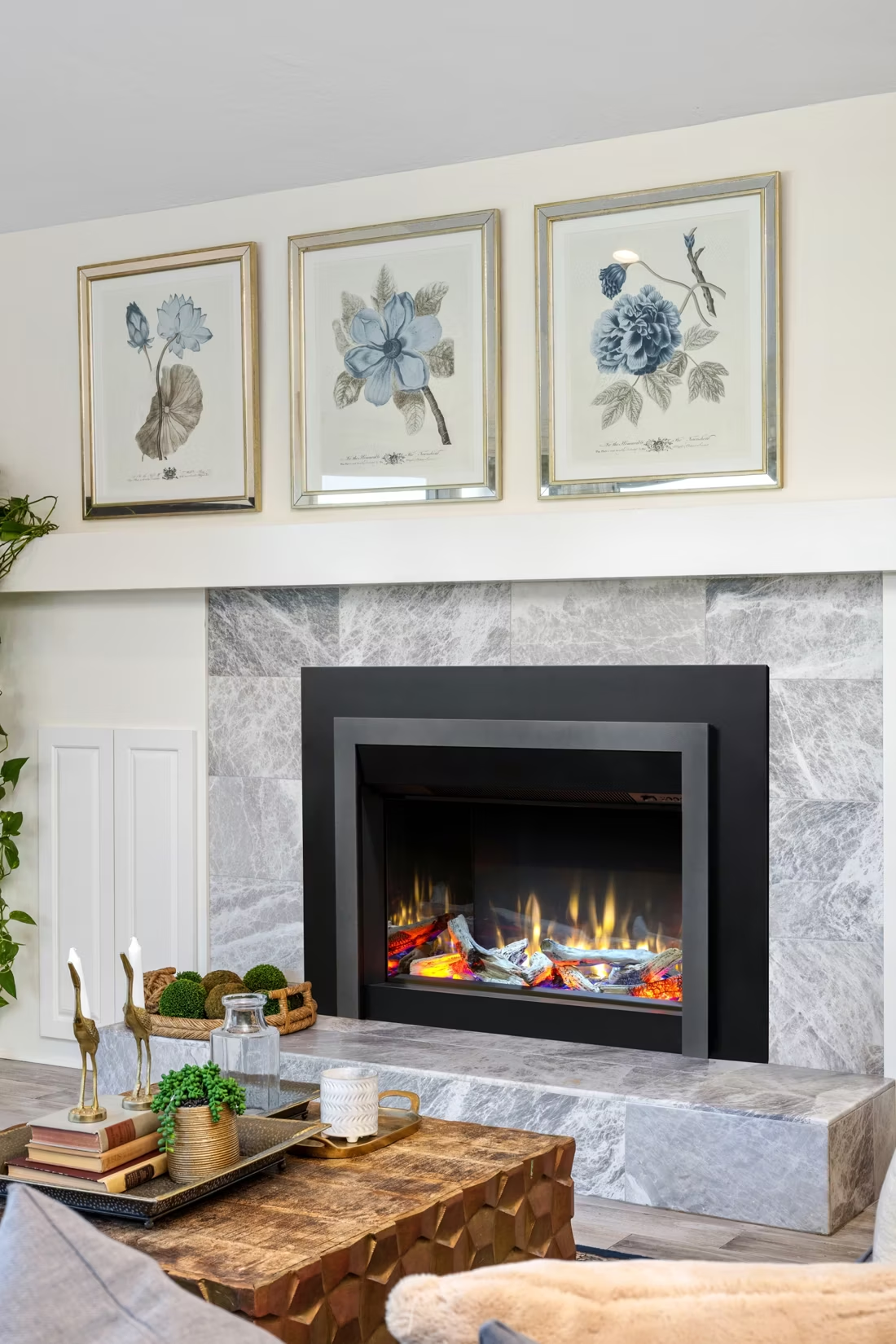
A freestanding or mantel-package electric fireplace is the simplest option—it plugs into a standard outlet and can be repositioned or taken with you if you move, which makes it a good fit for renters or anyone not ready to commit to a wall. A wall-mount unit hangs like a flat-screen TV and needs only a nearby outlet for smaller models. A built-in or insert unit recesses into a wall cavity or an existing masonry firebox and gives the cleanest, most fireplace-like look, but usually calls for a dedicated circuit. For Monroe County homes with an old, unused wood fireplace opening, an electric insert is often the easiest upgrade—it drops into the existing firebox and needs no chimney work at all.
Do I need a permit to install an electric fireplace in Monroe County?
A simple plug-in freestanding unit doesn't require a permit—it's no different than plugging in a space heater. If your installer is adding a new dedicated circuit for a built-in or larger insert, that electrical work does require a permit through the Monroe County Building Department in Woodsfield, and it should be pulled by a licensed electrician. Most local dealers either handle the permitting themselves or coordinate directly with the electrician doing the circuit work, so it's rarely something homeowners have to manage on their own.
Will an electric fireplace keep working during a power outage?
No—and this is the one real trade-off worth understanding before you buy. Electric fireplaces need power to run, so during an ice storm or downed line on AEP Ohio's rural feeders, they'll go dark right along with everything else. That's a meaningful consideration in a county where wood heat has been the backup plan for generations precisely because oak and hickory don't care if the grid is up. If backup heat during outages matters to your household, an electric fireplace should be a supplement to—not a replacement for—a wood stove, fireplace, or propane heater that can run without utility power.
Electric vs. propane fireplace—which makes more sense in Monroe County?
Propane is the more common heating fuel in the rural stretches of Monroe County that sit outside natural gas mains, and a propane fireplace can put out real, whole-room BTUs and keep running during a power outage if it has a standing pilot. An electric fireplace can't compete on raw heat output or outage resilience, but it wins on install simplicity and running cost for occasional use—no tank, no delivery, no gas line, and no combustion byproducts to vent. For a family that wants ambiance and light supplemental warmth in a living room a few evenings a week, electric is usually the lower-hassle, lower-cost choice. For a household that wants a real secondary heat source it can lean on, propane is worth the extra installation complexity.
What does an electric fireplace cost to run in Monroe County?
Most electric fireplaces draw around 1,500 watts on the heat setting—comparable to a space heater. At typical AEP Ohio residential rates, running one for a full evening (4–5 hours) costs somewhere in the neighborhood of a dollar or two. Left on the flame-only setting with the heater off, the draw drops to a few hundred watts, closer to the electricity used by a couple of light bulbs. It's a fraction of what a whole-house furnace or a wood stove burning a load of oak costs to operate, which is part of why electric fireplaces make sense as supplemental, room-by-room heat rather than a way to cut a whole-home heating bill.
Does my electrical panel need to be upgraded for an electric fireplace?
Usually not for a plug-in or wall-mount unit on an existing outlet. For a built-in or larger insert that needs a dedicated 240V circuit, it depends on how much capacity is left in your panel—a lot of the older farmhouses and river-town homes around Clarington and Hannibal still have smaller, dated panels that are already close to full with a well pump, water heater, and other loads. A local electrician can check your panel's remaining capacity in a few minutes; if it's tight, a subpanel or panel upgrade gets added to the project, which a local dealer will factor into your estimate up front rather than as a surprise mid-install.
Can an electric fireplace heat my whole Monroe County home?
Not on its own. With about 5,507 heating degree days a year and winter lows that regularly sit around 20°F, Monroe County homes need a real furnace, wood stove, or propane system carrying the primary heat load. Electric fireplaces are built for zone heating—warming the specific room you're in—not whole-house output. They're a good fit for taking the edge off a chilly living room, adding ambiance without smoke or gas lines, or heating an addition or finished basement that your main system doesn't reach well. Think of it as a supplement to whatever is already heating your home, not a substitute.
Do electric fireplaces actually produce heat?
Yes—most put out around 4,800–5,000 BTUs from a standard outlet, which comfortably warms a bedroom, office, or den as a comfort-zone heater. What they won't do is carry a whole house the way wood, gas, or pellet can. Think of electric as ambiance-first with honest supplemental heat: flames on with no heat in July, flames plus warmth in January.
Can I put a TV above my fireplace?
Yes—with an asterisk. Fireplaces are hot and TVs don't like heat. Either put a mantel between them to deflect rising warmth, or choose a fireplace with heat-management technology that creates a cool zone on the wall above—the wall stays around 125 degrees, barely warm, while the room still gets full heat. If you like clean lines and don't want a mantel, heat management is the answer.
How much should I budget for a fireplace?
For an average home—covering the fireplace, the vent pipe, and basic installation—a budget between $3,900 and $5,500 gives you a lot of options across wood, gas, and pellet. By the time you add finish work, gas line, and electrical, the average complete installation lands between $5,000 and $12,000 all-in. In a remodel or new build, a good rule is to put about 2.5% of the total project cost toward the fireplace.
Can I install a fireplace myself?
If you're putting a fire in your house on purpose, it's best to work with an expert. Unless you're genuinely experienced in framing, gas line, vent pipe, and the national code on clearances to combustibles, have a professional do it—and ideally the same company that sells you the fireplace, so warranty, service, and liability all live under one roof.
Find your electric fireplace in Monroe County.
Tell us a bit about your home and we'll match you with the right electric fireplace, insert, or wall unit—plus a free Project Guide & Parts List with the exact parts and a trusted local dealer recommendation for your Monroe County project.
Find Your Fireplace →