
Steady Heat for Lake County's Snowbelt Winters.
Mentor sits in Lake Erie's lake-effect snowbelt, where gas fireplaces deliver instant, reliable heat without hauling wood. Find the right unit and connect with a trusted local dealer.
Every Project Starts From One of These Five Situations
Reliable warmth through the lake-effect season.
Mentor sits along the Lake Erie snowbelt in Lake County, where lake-effect bands can drop a foot of snow overnight and the heating season runs long—winter lows average in the mid-20s across a winter heating load similar to what homes in Buffalo, NY face on the opposite shore of the same lake. Most Mentor homes already run natural gas for the furnace and water heater, which makes adding a gas fireplace or insert a natural extension of the home's existing mechanical systems rather than a new fuel source to manage.
For a city this size, natural gas service is the default rather than the exception in Mentor and across Lake County, so a direct-vent gas fireplace or gas insert typically taps into gas lines that are already run to the house. That means zone heat for the family room on a fifteen-degree February morning, a fireplace that can double as backup heat when a lake-effect storm knocks out power (with the right ignition system), and none of the wood-hauling or ash cleanup that comes with a traditional hearth.
Three steps. No salesperson until you're ready.
Tell us about your project
Your zip code, your situation, and the fuel you're leaning toward—or let the answers point you to one.
See what's actually available
The brands dealers within 100 miles genuinely carry—real options, never a catalog mirage.
Get your dealer & Project Guide
A trusted local dealer, plus the free Project Guide & Parts List that names every component of the job.
Frequently Asked Questions
How much does a gas fireplace installation cost in Mentor?
Most gas fireplace installations in Mentor fall between roughly $4,000 and $10,000, with the spread driven mainly by venting and whether new gas line work is needed. A direct-vent gas insert dropped into an existing masonry fireplace, using a home's existing gas service, tends to land on the lower end. A new built-in gas fireplace for a remodel or an addition—with framing, direct-vent piping, and a fresh gas line run from the meter—sits higher. Homes without existing gas service that need a line extended from the street will see the largest jump. A local dealer will give you a firm number after walking the space.
Can I convert my existing wood-burning fireplace to gas in Mentor?
Yes, and it's a common upgrade in Mentor's older neighborhoods around Mentor-on-the-Lake and the Route 20 corridor, where many homes still have the original masonry fireplace. A gas insert slides into the existing firebox and uses the current chimney as a venting path with a stainless liner, so you keep the look of the fireplace while gaining real, thermostat-controlled heat output. Because most homes here already have gas service for the furnace, the main added cost is usually the gas line run to the fireplace location rather than a new utility connection.
Do I need natural gas, or can I run a fireplace on propane?
Either works, but natural gas is the default in Mentor—the vast majority of homes in Lake County are already on the gas grid for heating and hot water, so tying a fireplace into that existing service is usually the simplest path. Propane is mainly a fallback for the handful of rural properties near the edges of the county that aren't on a gas main. Most gas fireplace models can be set up for either fuel; your installer swaps the orifice and regulator to match whichever you have.
Will a gas fireplace still work if a lake-effect storm knocks out the power?
It depends on the ignition system. Standing pilot and IPI (intermittent pilot ignition) units run on a small battery backup—typically AA batteries in the control compartment—that kick in the moment power drops, so the fireplace lights and runs normally off the batteries. Valor fireplaces go a step further: their pilot assembly generates its own electricity through the thermocouple, so there's no battery to check or replace, ever. For a Mentor winter where a heavy lake-effect band can knock out power for a day or more, that kind of self-powered backup is worth asking about specifically.
What's the difference between a gas fireplace, a gas insert, and a gas stove?
A gas fireplace is a fully built-in unit framed into a wall—the right choice for new construction or a full remodel. A gas insert is sized to slide into an existing masonry firebox, sealing it off and venting through the existing chimney with a liner, which is the common route for Mentor's older homes with a working fireplace already in place. A gas stove is a freestanding, cast-iron-look unit that sits on its own hearth pad, useful in a room without an existing fireplace or chimney at all. Most homeowners here upgrading an existing fireplace end up with an insert; new spaces usually call for a built-in unit.
Do I need a permit to install a gas fireplace in Mentor?
Yes—the City of Mentor's Building Department requires a permit for gas fireplace installation, and any new or modified gas line needs to be run or inspected by a licensed gas-fitter. Most hearth dealers handle the permit application and inspection scheduling as part of the installation, so you're not coordinating separate trades yourself. This is one of the practical advantages of working with an established local dealer rather than piecing the project together with a handyman.
Should I get a vented or vent-free gas fireplace?
Vented (direct-vent) gas fireplaces pull combustion air from outside and exhaust it back outside through a sealed pipe—they're the standard recommendation almost everywhere, including Mentor, because they don't put any combustion byproducts into the living space. Vent-free units burn without external venting and are legal in Ohio within room-size and ventilation limits, but they release some moisture and combustion gases indoors, which matters in a tightly sealed, well-insulated Mentor home built for a cold climate. For most living rooms and family rooms in this area, a direct-vent unit is the better long-term choice; ask a local dealer to walk through both if you're deciding.
How often does a gas fireplace need to be serviced?
Plan on an annual inspection, ideally in early fall before the burning season ramps up. A technician checks the burner, pilot or ignition system, venting, and gas connections, and cleans the glass and interior—a much lighter job than chimney sweeping for a wood stove, but just as important for safe operation. Local hearth and HVAC service providers in the Mentor and Willoughby area typically charge somewhere in the $150–$250 range for this visit.
Gas vs. wood—which makes more sense for a Mentor home?
Wood offers real ambiance, operation with no electricity or gas needed, and access to plentiful local hardwood—oak, hickory, maple, and cherry are all common firewood species around Lake County. But it means hauling and stacking wood, cleaning ash, and sweeping a chimney every year. Gas offers instant on-off heat at the flip of a switch or remote, consistent output on the coldest lake-effect mornings, and none of the mess—a real advantage in a fast-paced household that wants heat without the ritual. For most Mentor homeowners upgrading a primary living space, gas wins on convenience; wood still has a following among homeowners who value the tradition and the backup-heat independence it provides during long power outages.
Can I put a TV above my fireplace?
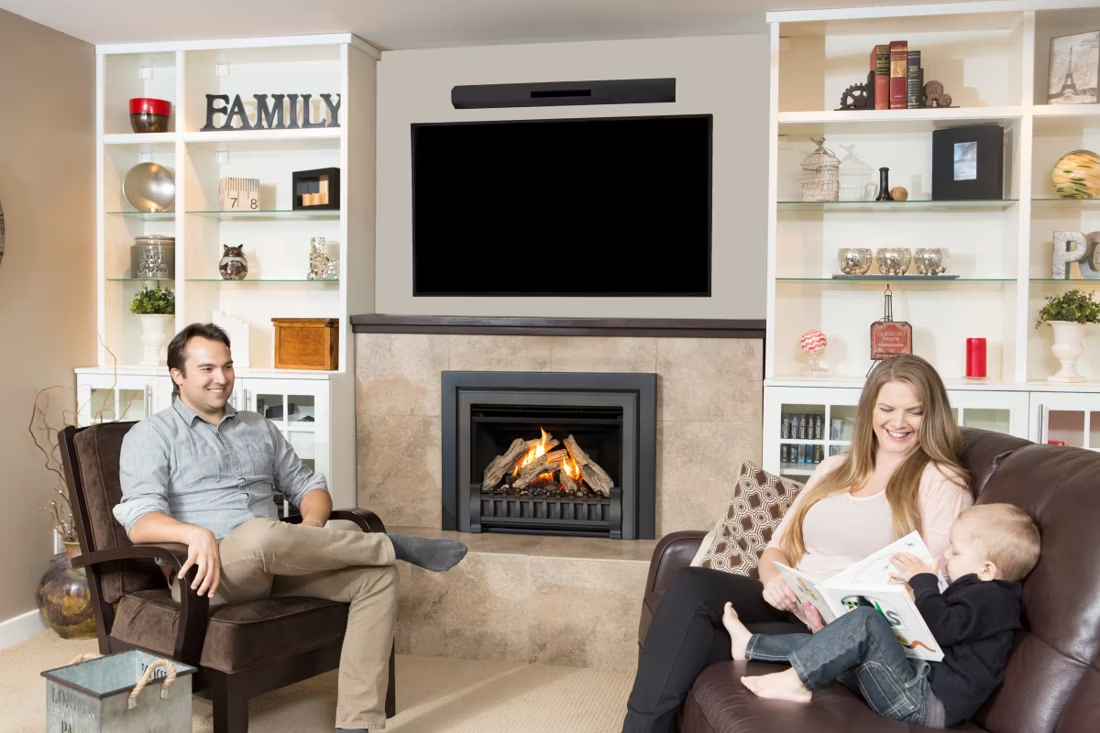
Yes—with an asterisk. Fireplaces are hot and TVs don't like heat. Either put a mantel between them to deflect rising warmth, or choose a fireplace with heat-management technology that creates a cool zone on the wall above—the wall stays around 125 degrees, barely warm, while the room still gets full heat. If you like clean lines and don't want a mantel, heat management is the answer.
What's the difference between an insert and a zero-clearance fireplace?
An insert is a fireplace that slides into a pre-existing wood-burning fireplace—if you don't have one, there's nothing to insert it into. A zero-clearance fireplace is built into a framed wall, which makes it the answer for remodels and new construction. Simple test: existing masonry fireplace means insert; blank or framed wall means zero-clearance.
Can I install a fireplace myself?
If you're putting a fire in your house on purpose, it's best to work with an expert. Unless you're genuinely experienced in framing, gas line, vent pipe, and the national code on clearances to combustibles, have a professional do it—and ideally the same company that sells you the fireplace, so warranty, service, and liability all live under one roof.
Can a fireplace actually lower my heating bill?
Yes—by creating a comfort zone. A furnace heats every square foot of the house just to warm the one room you're in; a gas fireplace on low burns roughly a sixth of the gas a typical furnace does. Set the furnace around 55–60 degrees as a baseline, then heat the rooms your family actually uses. Families who heat this way commonly save $20–$60 a month.
Preferred Dealer in Mentor
Find your gas fireplace in Mentor.
Tell us a bit about your home and we'll match you with the right gas fireplace, insert, or stove—plus a free Project Guide & Parts List and a trusted local Mentor-area dealer to install it.
Find Your Fireplace →