
Find the right electric fireplace for your Meigs County home.
Zero-clearance, no-vent heat for river-valley homes from Pomeroy to Rutland—plug-in ambiance or supplemental warmth without a chimney or gas line. Find the right unit and connect with a trusted local dealer.
Every Project Starts From One of These Five Situations
Simple heat for a county where wood still does the heavy lifting.
Meigs County sits along the Ohio River in the state's southeastern hill country, with roughly 4,800 heating degree days and winter lows that average in the low 20s—meaningfully milder than the Lake Erie snowbelt counties but still cold enough for a real heating season running October into April. With abundant oak, hickory, maple, and cherry in the surrounding woodlots, wood heat has deep roots here, and it remains the default primary or supplemental fuel in a lot of rural Meigs County homes. Electric fireplaces fill a different, narrower role: they show up in bedrooms, finished basements, apartments in Pomeroy and Middleport, and as a no-fuss upgrade in homes where running a flue or gas line isn't practical.
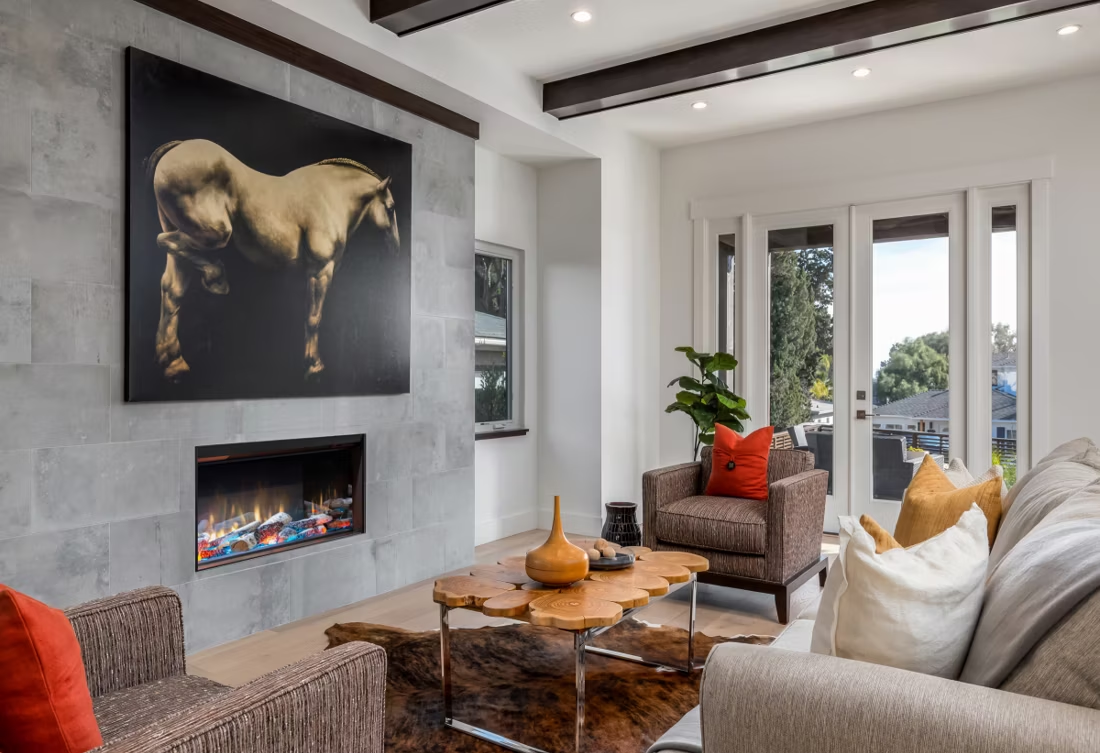
Because an electric unit needs no chimney, no venting, and no combustion air, it's often the fastest and least invasive project we help match—a homeowner plugs it in, sets the thermostat, and gets instant ambiance plus a few thousand BTUs of zone heat. That makes electric a strong fit for rental properties, additions, and older farmhouses around Rutland or Racine where opening up a wall for venting isn't worth the cost. It's not going to replace a woodstove as the primary heat source in a drafty rural home, but as supplemental warmth in a well-used room, it earns its keep.
Three steps. No salesperson until you're ready.
Tell us about your project
Your zip code, your situation, and the fuel you're leaning toward—or let the answers point you to one.
See what's actually available
The brands dealers within 100 miles genuinely carry—real options, never a catalog mirage.
Get your dealer & Project Guide
A trusted local dealer, plus the free Project Guide & Parts List that names every component of the job.
Frequently Asked Questions
How much does an electric fireplace installation cost in Meigs County?
Most electric fireplace and insert installations in Meigs County run $400 to $1,200, and that range covers the vast majority of projects—a wall-mount unit or a built-in insert that drops into an existing mantel surround. There's no chimney, no venting, and no gas line, so labor is limited to a dedicated 120V or 240V circuit (sometimes an electrician needs to add one) and any surround or trim carpentry. Units that require a new dedicated circuit from the panel run toward the higher end of that range, especially in older homes around Pomeroy or Middleport where panel capacity can be limited.
Do I need a permit to install an electric fireplace in Meigs County?
For a plug-in unit that uses an existing outlet, generally no permit is needed since there's no new wiring or gas work involved. If you're having an electrician run a new dedicated circuit for a hardwired unit, that electrical work typically does require a permit, and local installers or electricians usually pull it as part of the job. Unlike wood or gas installs, there's no venting inspection required since electric units produce no combustion byproducts—one of the reasons they're often the quickest project to get approved in the county.
Is an electric fireplace enough heat for a Meigs County winter?
On its own, no—most electric fireplaces top out around 5,000 BTU, which is enough to noticeably warm a single room but not enough to be the primary heat source through a Meigs County winter with lows averaging in the low 20s and stretches well below that. Where electric works well is as zone heat: warming the room you're actually sitting in so you can turn the thermostat down elsewhere, or as backup warmth in a space like a finished basement or converted garage that isn't on the main HVAC loop. For whole-home heating in this county, wood stoves and inserts using local oak and hickory remain the more common primary or supplemental choice in rural areas.
What's the difference between an electric fireplace, insert, and mantel package?
An electric insert is built to slide into an existing fireplace opening—including an old wood-burning masonry fireplace that's no longer used—and it's a popular way to get a modernized fireplace look in older Meigs County homes without the maintenance of wood or gas. A standalone electric fireplace is a self-contained unit, often wall-mounted or recessed into a stud wall, used where there's no existing fireplace opening. A mantel package pairs an electric insert or built-in unit with a surrounding cabinet or mantel shelf, giving you a complete look without any masonry work. For an old farmhouse fireplace that's been bricked up or isn't safe to burn in anymore, an insert is usually the simplest fix.
Can an electric fireplace run during a power outage?
No—electric fireplaces require utility power to run the heater and any flame-effect lighting, so they go dark during an outage. That's a real consideration in rural stretches of Meigs County, where storms and ice can knock out power for extended periods along the river valley and back roads. Homeowners who want heat that keeps working when the grid doesn't typically pair an electric unit for everyday convenience with a wood stove or propane heater as backup—a common setup in this county given how many households already keep a woodpile on hand.
Electric vs. wood—which is right for my Meigs County home?
Wood remains the more common primary and supplemental heat source across rural Meigs County, thanks to local oak, hickory, maple, and cherry, and it keeps working when the power doesn't. Electric offers instant on-off convenience, zero maintenance, no ash or creosote, and installation in almost any room without venting concerns—but it costs more per BTU to run and provides no heat during an outage. For a lot of homes here, the two aren't competing so much as complementary: wood or a propane furnace for the cold months, electric for a bedroom, den, or rental unit where simplicity matters more than raw heat output.
What size electric fireplace do I need for my room?
Sizing an electric fireplace is mostly about width and visual fit rather than BTU calculations, since most units produce a similar, modest heat output regardless of size—typically up to 5,000 BTU. A 26–33 inch unit suits a smaller bedroom or den common in Meigs County's older homes, while a 40–50 inch unit fills a larger living room wall or a mantel package in a newer build. If real supplemental heat output matters as much as looks, look for a unit with a stated BTU rating near the top of the range and confirm it on the product spec sheet rather than assuming—heat output varies more between models than size alone suggests.
Do electric fireplaces need any maintenance?
Very little. There's no ash, no creosote, and no chimney to sweep—a periodic dusting of the heater vents and an occasional check of the flame-effect bulb or LED array is usually all that's needed. Compare that to the annual chimney inspections recommended for wood-burning setups common elsewhere in the county, and electric is by far the lowest-maintenance option available. The main wear item over time is the blower fan, which on most models is a straightforward, inexpensive replacement part rather than a service call.
Are electric fireplaces cost-effective to run in Meigs County?
It depends on how you use it. Run purely for ambiance with the heater off, an electric fireplace costs pennies a day. Run as zone heat for a few hours in the evening, a typical 1,500-watt unit costs roughly 15-25 cents per hour at typical Ohio electric rates—cheaper than heating a whole house but more expensive per BTU than wood if you're already cutting or buying local firewood. For homes in Meigs County with an existing wood stove or propane furnace as primary heat, adding electric to a single frequently-used room is usually a smart, low-cost upgrade rather than a full heating-cost replacement.
Can I put a TV above my fireplace?
Yes—with an asterisk. Fireplaces are hot and TVs don't like heat. Either put a mantel between them to deflect rising warmth, or choose a fireplace with heat-management technology that creates a cool zone on the wall above—the wall stays around 125 degrees, barely warm, while the room still gets full heat. If you like clean lines and don't want a mantel, heat management is the answer.
Does an electric fireplace need a vent or chimney?
No—that's its superpower. An electric fireplace needs a wall and an outlet, period. No vent pipe, no gas line, no clearances to design around, which is why it works in bedrooms, offices, apartments, and walls where venting a gas or wood unit would be impractical or impossible. Installation is typically the simplest and least expensive of any fireplace type.
How much should I budget for a fireplace?
For an average home—covering the fireplace, the vent pipe, and basic installation—a budget between $3,900 and $5,500 gives you a lot of options across wood, gas, and pellet. By the time you add finish work, gas line, and electrical, the average complete installation lands between $5,000 and $12,000 all-in. In a remodel or new build, a good rule is to put about 2.5% of the total project cost toward the fireplace.
Can a fireplace actually lower my heating bill?
Yes—by creating a comfort zone. A furnace heats every square foot of the house just to warm the one room you're in; a gas fireplace on low burns roughly a sixth of the gas a typical furnace does. Set the furnace around 55–60 degrees as a baseline, then heat the rooms your family actually uses. Families who heat this way commonly save $20–$60 a month.
Stove and Fireplace Dealers in Meigs County
Find your electric fireplace in Meigs County.
Tell us a bit about your home and we'll match you with the right electric fireplace or insert, plus a free Project Guide & Parts List with your recommended local dealer.
Find Your Fireplace →