
Instant heat, zero smoke, no chimney required.
For Union County homes built without a flue, electric is the fastest path to a real hearth. Tell us about your space and we'll connect you with a trusted local dealer.
Every Project Starts From One of These Five Situations
The easiest hearth upgrade in Union County.
Marysville sits in climate zone 5A with winters comparable to a moderately cold Midwest city and an average winter low near 21°F—cold enough that a supplemental heat source in the living room or primary bedroom genuinely gets used from November through March, but not so extreme that homeowners need a primary wood-burning system. Much of the city's housing stock dates from the growth years tied to Honda of America Manufacturing's expansion, and those subdivisions were framed without masonry chimneys. That's a big part of why wood-burning fireplaces are essentially absent from local permit records even though oak, hickory, maple, and cherry are common regional species—there's simply no chimney to put a stove in.
Electric service in Marysville splits between Dayton Power & Light (DP&L) inside city limits and Union Rural Electric Cooperative for many outlying Union County addresses, with residential rates running from roughly 8.5 cents/kWh (DP&L) up toward 15.7 cents/kWh (Union Rural Electric Coop) depending on where you sit. Because electric units need no venting, no gas line, and usually no masonry work, they're the lowest-friction way to add real radiant or infrared warmth and fire-look ambiance to a room—whether that's a builder-grade great room or a finished basement rec space.
Three steps. No salesperson until you're ready.
Tell us about your project
Your zip code, your situation, and the fuel you're leaning toward—or let the answers point you to one.
See what's actually available
The brands dealers within 100 miles genuinely carry—real options, never a catalog mirage.
Get your dealer & Project Guide
A trusted local dealer, plus the free Project Guide & Parts List that names every component of the job.
Frequently Asked Questions
How much does an electric fireplace installation cost in Marysville?
Cost depends heavily on the type. A plug-in freestanding or insert unit that drops into an existing opening is closer to $200–$600 installed, since there's no venting, gas line, or permit involved. A built-in wall unit or mantel package with a dedicated 120V or 240V circuit run by an electrician typically lands in the $800–$2,500 range once framing, trim, and electrical work are included. Because Marysville's newer construction rarely has an existing masonry fireplace to convert, most local jobs are new installs into a framed wall or existing mantel surround rather than insert retrofits.
What type of electric fireplace fits a typical Marysville home?
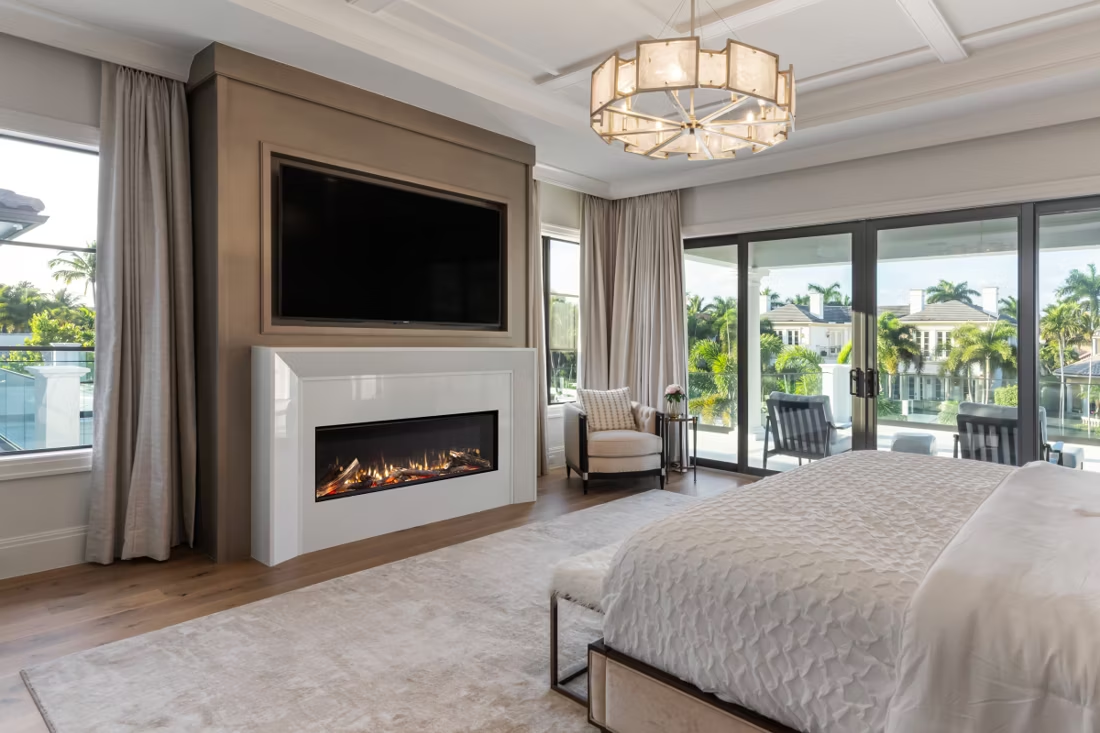
For the ranch and two-story homes common in Marysville's newer subdivisions, a wall-mount or built-in linear unit set into a framed niche is the most popular option—it reads like a real fireplace without needing a chimney chase. For homes with an existing mantel or a finished basement, a freestanding or insert-style electric unit that slides into a mantel surround is simpler and often DIY-installable if you're using an existing outlet. Local dealers can walk through both options based on your wall framing and available circuits.
How much will an electric fireplace add to my power bill?
Most electric fireplaces draw around 1,500 watts on the heater setting (roughly the same as a space heater) and much less—often under 100 watts—when running flame-only with the heat off. At DP&L's residential rate of about 8.5 cents/kWh, running the heater for 4 hours a night costs roughly 50 cents. At Union Rural Electric Coop's rate of about 15.7 cents/kWh, that same use is closer to 95 cents a night. Most owners use the heater only during the coldest stretches and run flame-only ambiance the rest of the season, which keeps the added cost modest either way.
Do I need a permit to install an electric fireplace in Marysville?
A plug-in unit that uses an existing outlet generally doesn't require a permit. If your installer needs to add a new dedicated circuit—common for larger built-in units pulling 1,500 watts or more—that electrical work typically requires a permit through the City of Marysville or Union County, pulled by a licensed electrician. Most hearth dealers who install built-ins coordinate this as part of the job, so it's rarely something you have to manage yourself.
Can an electric fireplace actually heat a room in Marysville's winters?
Yes, for the room it's in. A 1,500-watt electric fireplace can meaningfully warm a 300–400 square foot space, which covers most living rooms or bedrooms. It won't replace your furnace on a January night when temperatures drop toward the average winter low of 21°F, but it works well as zone heat—letting you lower the thermostat elsewhere in the house while keeping the room you're actually using comfortable. Think supplemental, not primary, heat.
What's the difference between infrared and standard electric fireplace heaters?
Standard electric fireplace heaters use a fan to blow heated air into the room—they warm quickly but the heat can feel less even. Infrared models use quartz elements that heat objects and people directly, similar to how sunlight feels, and many owners find that heat more comfortable over long evenings. Infrared units also tend to hold up better in larger, open-concept rooms common in Marysville's newer floor plans. Either type works fine as a flame-only ambiance feature if you turn the heater function off.
Do all electric fireplaces produce heat, or are some just for looks?
Some models are flame-effect only, designed purely for ambiance in rooms that already have adequate heat—a common choice for finished basements or bedrooms with good HVAC coverage. Most mid-range and higher units sold locally include a heater you can switch on or off independently of the flame display, so you get the visual year-round and the warmth only when you want it. Worth confirming with your dealer before buying if heat output matters to you.
Electric vs. gas fireplace—which makes more sense in Marysville?
Gas fireplace relevance is standard in this area, and many Marysville homes already have natural gas service for the furnace and water heater, which makes a gas fireplace a real option if you want higher heat output and a more traditional flame. But running a new gas line to a fireplace location adds cost and requires a licensed gas-fitter and permit. Electric skips all of that—if the wall you want a fireplace on doesn't already have gas nearby, electric is almost always the faster, cheaper install, just with lower maximum heat output than a gas unit.
Why don't more Marysville homes have wood-burning fireplaces?
Wood-burning units are genuinely rare in Marysville's housing stock—most of the city's growth happened after chimney-based construction fell out of favor with builders, so there's simply no flue to install into. Local oak, hickory, maple, and cherry are still burned in fire pits and the occasional standalone wood stove, but retrofitting a masonry chimney into a home built without one is expensive and uncommon here. Electric fireplaces give you the visual warmth of a fire without needing to solve that structural problem.
Can I put a TV above my fireplace?
Yes—with an asterisk. Fireplaces are hot and TVs don't like heat. Either put a mantel between them to deflect rising warmth, or choose a fireplace with heat-management technology that creates a cool zone on the wall above—the wall stays around 125 degrees, barely warm, while the room still gets full heat. If you like clean lines and don't want a mantel, heat management is the answer.
Does an electric fireplace need a vent or chimney?
No—that's its superpower. An electric fireplace needs a wall and an outlet, period. No vent pipe, no gas line, no clearances to design around, which is why it works in bedrooms, offices, apartments, and walls where venting a gas or wood unit would be impractical or impossible. Installation is typically the simplest and least expensive of any fireplace type.
What is an in-home preview and do I need one?
It's a visit where a hearth professional measures your space, confirms the model you picked actually works in your home, and walks the specs—framing, gas line, venting, finish work—before anything is ordered. Some details you just can't know until you see the house. Never make a down payment without one; it's the single most-skipped step that burns buyers.
Can a fireplace actually lower my heating bill?
Yes—by creating a comfort zone. A furnace heats every square foot of the house just to warm the one room you're in; a gas fireplace on low burns roughly a sixth of the gas a typical furnace does. Set the furnace around 55–60 degrees as a baseline, then heat the rooms your family actually uses. Families who heat this way commonly save $20–$60 a month.
Electric Service in Marysville
An electric fireplace's heater draws about 1,500 watts—pennies per hour at local rates.
Dayton Power & Light Co
Union Rural Electric Coop, Inc
Find your electric fireplace in Marysville.
Tell us about your room and wiring situation, and we'll send you a free Project Guide & Parts List—the right unit, the electrical requirements, and a trusted local dealer to install it.
Find Your Fireplace →