
Real warmth without a flue, chimney, or gas line.
With a heating season comparable to Buffalo, NY and winter lows near 19°F, Madison County homes need real supplemental heat, not just ambiance. I'll match you with a vetted local dealer who knows which electric unit actually fits your wall, your wiring, and your farmhouse or new build.
Every Project Starts From One of These Five Situations
Supplemental heat that fits any wall, in any home.
Madison County sits in the farmland stretch between Columbus and Springfield, with the county seat in London and villages like West Jefferson, Mount Sterling, and Plain City spread across mostly rural, agricultural townships. The county has long run on wood heat cut from oak, hickory, maple, and cherry taken off local farm woodlots, and that tradition hasn't disappeared. But with climate zone 5A and a long, demanding heating season stretching from fall into spring, more homeowners here are adding electric fireplaces as zero-clearance supplemental heat—in finished basements, sunroom additions, and older farmhouses where running a new chimney or gas line isn't worth the cost for a secondary heat source.
Electric service in the county splits between AEP Ohio, which covers London and the more built-up corridor along Route 42, and South Central Power Company, the electric cooperative serving many of the county's rural townships. Because Madison County has no listed air quality concerns, an electric fireplace adds zero combustion byproducts to a tightly sealed modern home or a manufactured house—a real consideration in a county where mobile and manufactured homes are common outside the villages. The tradeoff is that electric resistance heat costs more per BTU than gas or wood, and it depends entirely on grid power, which matters here given the ice storms and downed lines that occasionally hit rural Madison County feeders each winter.
Three steps. No salesperson until you're ready.
Tell us about your project
Your zip code, your situation, and the fuel you're leaning toward—or let the answers point you to one.
See what's actually available
The brands dealers within 100 miles genuinely carry—real options, never a catalog mirage.
Get your dealer & Project Guide
A trusted local dealer, plus the free Project Guide & Parts List that names every component of the job.
Frequently Asked Questions
How much does an electric fireplace installation cost in Madison County?
A plug-in electric insert or freestanding unit typically runs $300 to $1,200 installed, since most need nothing more than an existing outlet. A hardwired built-in or a linear wall unit that requires a dedicated circuit—common in new construction around Plain City or a remodel in London—runs closer to $1,500 to $3,500 once an electrician runs a new line and a carpenter builds out the surround. Dropping an electric insert into an existing masonry firebox in an older West Jefferson or Mount Sterling farmhouse usually lands in the middle of that range.
Do I need a permit to install an electric fireplace in Madison County?
Most plug-in electric fireplaces don't require any permit since they just draw from a standard household outlet. If your installer is adding a new dedicated 20-amp circuit for a built-in unit—which many linear and larger models call for—that electrical work needs a permit through the Madison County Building Department. It's a quick inspection compared to a wood chimney or gas line permit, and most local dealers handle the paperwork as part of the install.
Can an electric fireplace actually heat a room in Madison County's winters?
It can supplement, but I wouldn't count on it as a primary heat source here. With winter lows averaging 19°F and a long, demanding heating season stretching from fall into spring, most electric fireplaces top out around 5,000 BTU—enough to take the edge off a finished basement, a sunroom addition, or a bedroom on a cold night, but not enough to carry a whole farmhouse through a January cold snap. Most Madison County homeowners run one alongside their furnace or heat pump rather than instead of it.
Which utility serves my home, and does that affect my electric fireplace choice?
AEP Ohio covers London and the more developed parts of the county along Route 42, while South Central Power Company, an electric cooperative, serves much of the surrounding rural townships. Either way, an electric fireplace adds load to your existing service, so a larger built-in unit is worth checking against your panel capacity, especially in older farmhouses that haven't been re-wired. Running costs will also vary depending on your rate plan with either provider, which is worth factoring in if you plan to run the unit daily through the winter rather than for occasional ambiance.
What's the best electric fireplace for an older farmhouse versus new construction?
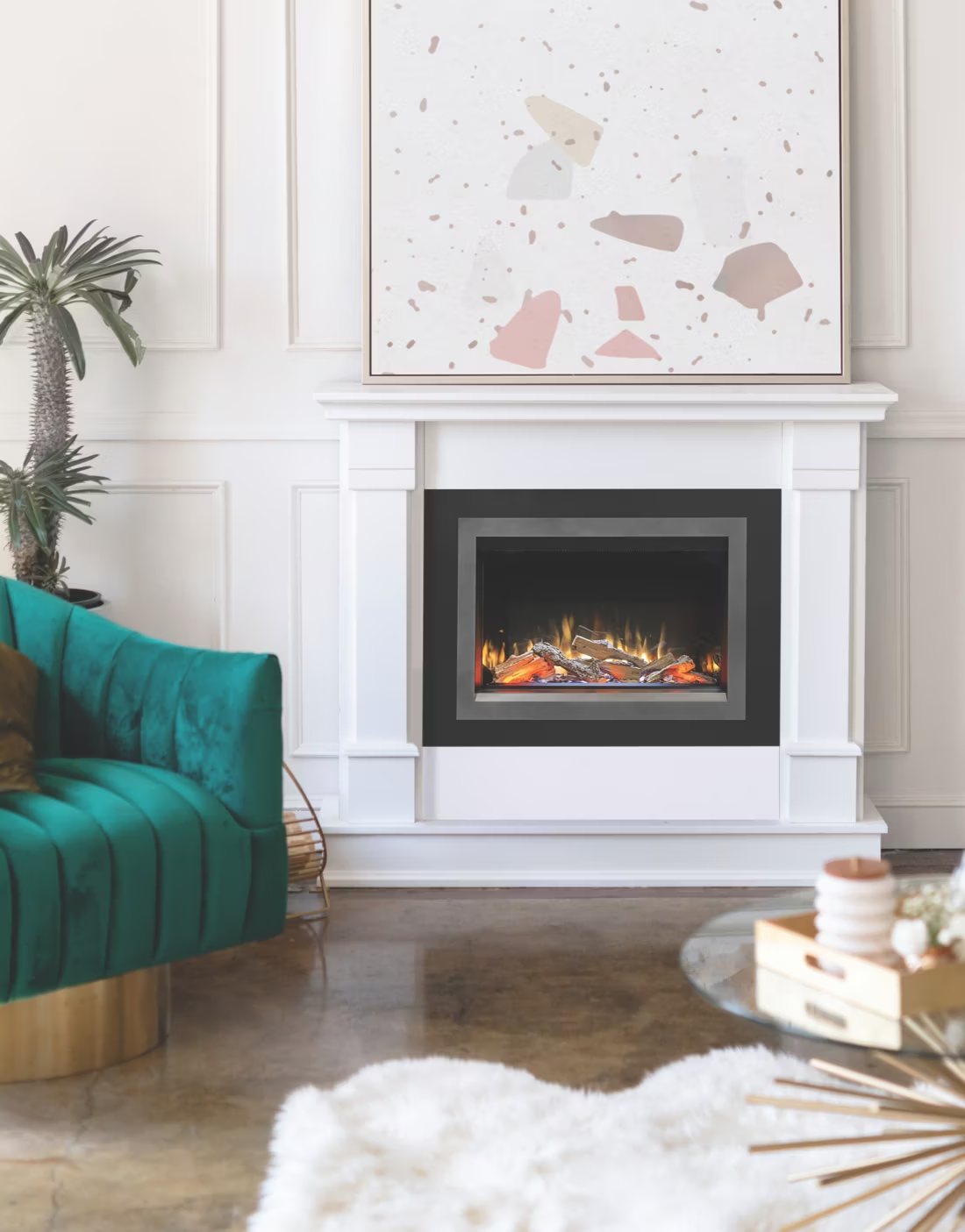
For an older farmhouse in Mount Sterling or West Jefferson with an existing wood fireplace opening, an electric insert that slides into the firebox is usually the cleanest option—no chimney work, no venting, and it keeps the mantel and surround you already have. For new construction or a remodel near Plain City or London, a linear built-in electric fireplace framed into a wall gives a more modern, flush look and can be sized to the room during the build. A local dealer will walk the space and tell you which configuration actually works with your existing opening or framing plan.
Will my electric fireplace still work during a power outage?
No—electric fireplaces need grid power to run, and that's worth planning around in a rural county where ice storms and downed lines occasionally take out power for a day or more, particularly on South Central Power's more spread-out rural lines. If reliable heat during an outage matters to you, many Madison County households pair an electric fireplace for daily convenience with a wood stove or insert burning local oak or hickory as backup heat that doesn't depend on the grid at all.
What's the difference between an electric insert, a built-in, and a mantel package?
An electric insert is a self-contained unit sized to slide into an existing fireplace opening—the right call for a Madison County farmhouse with an old wood-burning firebox you want to convert without touching the chimney. A built-in is framed directly into a wall during construction or a remodel, giving a flush, modern look with no visible unit. A mantel package pairs a freestanding electric firebox with a manufactured surround and shelf, which works well in a rental property or a room without any existing fireplace footprint at all—common in some of the county's newer subdivisions near Plain City.
How much maintenance does an electric fireplace need?
Very little compared to wood or gas. There's no chimney to sweep and no burner to service—just an occasional wipe-down of the glass front and a check that the fan and heating element are free of dust, maybe once a year. That low-maintenance profile is part of why electric units are popular in rental properties and manufactured homes across the county, where nobody wants to schedule an annual chimney sweep for a secondary heat source.
Electric vs. wood or gas—which makes sense for my Madison County home?
Wood, burned as oak, hickory, maple, or cherry off a local woodlot, and gas both deliver more heat output and keep working without grid power, which matters through a Madison County winter with a long, demanding heating season stretching from fall into spring. Electric costs less to install, needs no venting or chimney, and produces zero combustion byproducts—a real plus given the county has no listed air quality concerns to work around either way. For a primary heat source in a drafty older farmhouse, wood or gas usually wins; for a clean, low-maintenance supplemental unit in a basement, addition, or rental, electric is hard to beat.
Can I put a TV above my fireplace?
Yes—with an asterisk. Fireplaces are hot and TVs don't like heat. Either put a mantel between them to deflect rising warmth, or choose a fireplace with heat-management technology that creates a cool zone on the wall above—the wall stays around 125 degrees, barely warm, while the room still gets full heat. If you like clean lines and don't want a mantel, heat management is the answer.
Do electric fireplaces actually produce heat?
Yes—most put out around 4,800–5,000 BTUs from a standard outlet, which comfortably warms a bedroom, office, or den as a comfort-zone heater. What they won't do is carry a whole house the way wood, gas, or pellet can. Think of electric as ambiance-first with honest supplemental heat: flames on with no heat in July, flames plus warmth in January.
How much should I budget for a fireplace?
For an average home—covering the fireplace, the vent pipe, and basic installation—a budget between $3,900 and $5,500 gives you a lot of options across wood, gas, and pellet. By the time you add finish work, gas line, and electrical, the average complete installation lands between $5,000 and $12,000 all-in. In a remodel or new build, a good rule is to put about 2.5% of the total project cost toward the fireplace.
Can a fireplace actually lower my heating bill?
Yes—by creating a comfort zone. A furnace heats every square foot of the house just to warm the one room you're in; a gas fireplace on low burns roughly a sixth of the gas a typical furnace does. Set the furnace around 55–60 degrees as a baseline, then heat the rooms your family actually uses. Families who heat this way commonly save $20–$60 a month.
Get your free Project Guide & Parts List for an electric fireplace in Madison County.
Tell me about your home, your wiring, and where you want the heat, and I'll match you with a trusted local Madison County dealer and send over a free Project Guide & Parts List—the exact unit, mounting hardware, and recommended installer for your electric fireplace project, no big-box guesswork.
Find Your Fireplace →