
A clean, no-fuss heat source for Hardin County's older housing stock.
From Kenton to Ada to the rural townships along the Scioto and Blanchard rivers, electric fireplaces add zone heat and ambiance without a flue, a gas line, or a woodpile. Find the right unit and connect with a trusted local dealer.
Every Project Starts From One of These Five Situations
Simple heat for a county built on farmhouses and Main Street storefronts.
Hardin County sits in climate zone 5A with roughly 6,028 heating degree days and average winter lows around 18°F—a real Ohio winter, though nowhere near the wood-heat culture of northern Minnesota river towns. Much of the county's housing is older farmhouses and Kenton-area homes built before central air was standard, and a lot of that stock has rooms that run cold no matter how hard the furnace works. That's the gap an electric fireplace or insert fills well: it plugs into a standard outlet, needs no chimney or venting, and gives you real supplemental warmth in a bedroom, sunroom, or finished basement in Kenton, Ada, Mount Victory, Dola, or anywhere else in the county.
Electric units aren't trying to replace the furnace here—they're solving the problem of the one room that never warms up, or adding a fireplace look to a remodel where running gas line or a masonry chimney isn't practical. Because there's no combustion, no permit is typically required for the unit itself, and installation is usually a matter of a licensed electrician confirming the circuit if you're wiring a built-in rather than plugging in a freestanding model. For a county without the wood-cutting permit infrastructure of forested regions, electric is often the fastest path to a working fireplace this season.
Three steps. No salesperson until you're ready.
Tell us about your project
Your zip code, your situation, and the fuel you're leaning toward—or let the answers point you to one.
See what's actually available
The brands dealers within 100 miles genuinely carry—real options, never a catalog mirage.
Get your dealer & Project Guide
A trusted local dealer, plus the free Project Guide & Parts List that names every component of the job.
Frequently Asked Questions
How much does an electric fireplace installation cost in Hardin County?
Typical electric fireplace and insert installations in Hardin County run $400 to $1,200. A plug-in freestanding unit or an insert that drops into an existing masonry opening sits at the low end—often just the cost of the unit plus a few hours of labor if a mantel surround needs adjusting. Built-in wall units or projects requiring a dedicated 20-amp circuit run higher, especially in older Kenton and rural farmhouses where the existing electrical panel may need a new breaker added. A local dealer can tell you within a few minutes of seeing your panel and wall framing which end of that range you'll land on.
Do I need a permit to install an electric fireplace in Hardin County?
In most cases, no—a plug-in electric fireplace that uses an existing outlet doesn't require a permit since there's no venting, gas line, or structural chimney work involved. If you're having a built-in unit hardwired to a new dedicated circuit, that electrical work should be pulled through a licensed electrician and may require a permit through the applicable local building jurisdiction, depending on the scope. Ask your installer to confirm before work starts—it's a quick check, not a hurdle.
Will an electric fireplace actually heat a room in an Ohio winter?
Most electric fireplace inserts put out around 5,000 BTU, which is enough to noticeably warm a single room of 200 to 400 square feet—a bedroom, den, or sunroom addition—especially in the kind of older, less-insulated Hardin County farmhouse where one room always runs cold. What it won't do is replace your furnace on an 18°F night across the whole house. Think of it as zone heat: you run the furnace lower overall and let the electric unit carry the room you're actually sitting in, which is where most of the energy savings comes from.
What's the difference between an electric fireplace and an electric insert?
A freestanding electric fireplace is a self-contained cabinet unit you plug in and place against a wall—no installation beyond finding an outlet. An electric insert is designed to slide into an existing masonry fireplace opening or a factory-built mantel surround, giving you the look of a real firebox with the flame effect and heat of an electric unit. For Hardin County homes with an existing but unused wood fireplace, an insert is often the simplest upgrade—you keep the mantel and surround and swap out what's inside the opening.
How does an electric fireplace compare to a gas or wood option in Hardin County?
Wood works well here—oak, hickory, maple, and cherry are all common locally and burn well in a stove or insert—but it means chimney maintenance and fuel handling. Gas requires either a natural gas line or a propane tank plus venting work, and runs $4,500 to $11,000 installed depending on the setup. Electric skips both of those trade-offs: no venting, no fuel storage, and a fraction of the installed cost, but it also produces far less heat and won't function during a power outage the way a wood stove will. For a supplemental heat source in a specific room, or for a rental property or finished basement where running gas or a chimney isn't worth the cost, electric is usually the practical answer in Hardin County.
Can an electric fireplace be installed in an apartment or rental in Kenton?
Yes—this is one of the more common uses for electric units in Hardin County. Because a freestanding electric fireplace requires nothing more than a standard outlet, renters and landlords in Kenton and Ada can add one without any structural modification to the unit, which matters in older multi-family buildings downtown where altering venting or wiring isn't an option. Wall-mounted models need a bit more planning since they typically require anchoring into studs, but they still avoid any gas or masonry work.
Does an electric fireplace work during a power outage?
No—electric fireplaces require power to run the heating element and flame effect, so they go out when the electricity does. That's a real consideration in rural Hardin County, where winter storms can knock out power to outlying farms for hours at a time. If backup heat during outages matters to you, a wood stove is the more reliable choice; electric is best thought of as everyday zone heat and ambiance rather than emergency heat.
How much does it cost to run an electric fireplace in Hardin County?
Most electric fireplace inserts draw around 1,500 watts on the heat setting, which works out to roughly 10 to 15 cents per hour of use at typical Ohio residential electric rates—noticeably cheaper per hour than running a whole-house furnace to heat one room. Running it for a few hours each evening in a bedroom or den during the coldest stretch of a Hardin County winter typically adds a modest amount to a monthly electric bill, and many homeowners report an offsetting drop in furnace runtime once they start zone-heating the room they actually use.
Are pellet stoves a better option than electric for Hardin County homes?
It depends on what you're solving for. Pellet stoves burn compressed wood pellets—regionally available from Indeck Energy Services, Lignetics, and Somerset Pellet Fuel—and put out real heat, enough to serve as a primary or near-primary heat source in a Hardin County home, but they require a hopper to be loaded, venting to be installed, and electricity to run the auger and blower. Electric fireplaces need none of that setup but produce far less heat. If you want serious supplemental heat for a larger space and don't mind refilling a pellet hopper, pellet is the stronger option; if you want a quick, low-cost upgrade to a single room with zero maintenance, electric wins.
Can I put a TV above my fireplace?
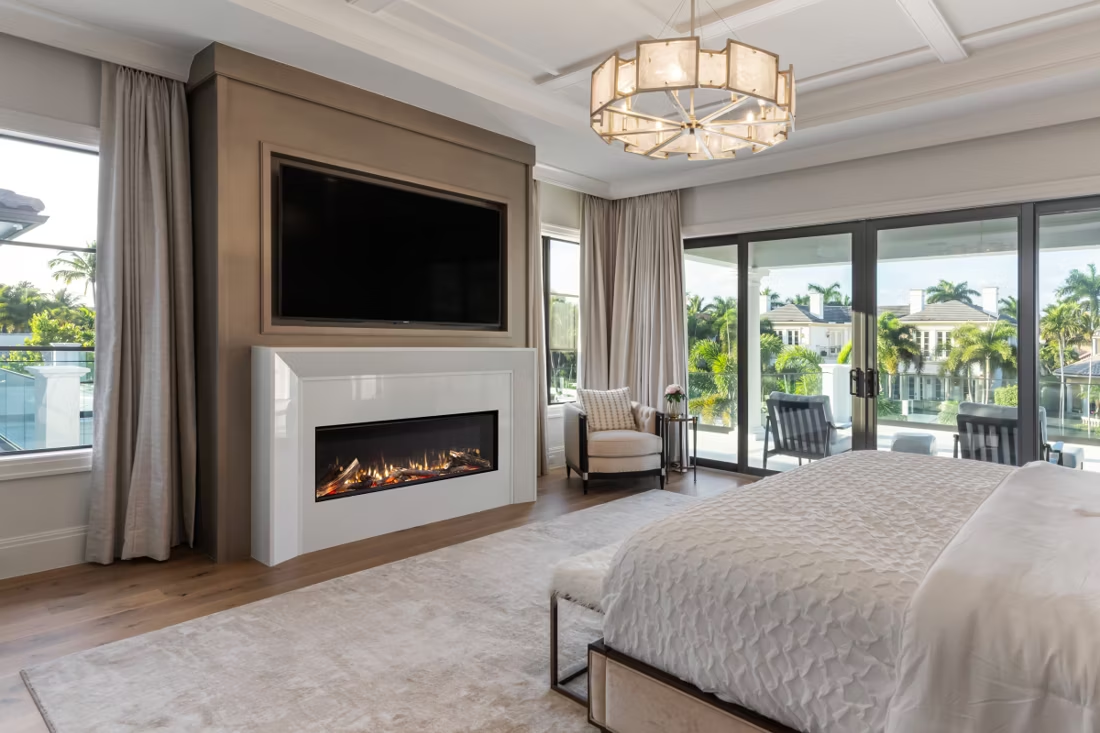
Yes—with an asterisk. Fireplaces are hot and TVs don't like heat. Either put a mantel between them to deflect rising warmth, or choose a fireplace with heat-management technology that creates a cool zone on the wall above—the wall stays around 125 degrees, barely warm, while the room still gets full heat. If you like clean lines and don't want a mantel, heat management is the answer.
Does an electric fireplace need a vent or chimney?
No—that's its superpower. An electric fireplace needs a wall and an outlet, period. No vent pipe, no gas line, no clearances to design around, which is why it works in bedrooms, offices, apartments, and walls where venting a gas or wood unit would be impractical or impossible. Installation is typically the simplest and least expensive of any fireplace type.
Can I install a fireplace myself?
If you're putting a fire in your house on purpose, it's best to work with an expert. Unless you're genuinely experienced in framing, gas line, vent pipe, and the national code on clearances to combustibles, have a professional do it—and ideally the same company that sells you the fireplace, so warranty, service, and liability all live under one roof.
Can a fireplace actually lower my heating bill?
Yes—by creating a comfort zone. A furnace heats every square foot of the house just to warm the one room you're in; a gas fireplace on low burns roughly a sixth of the gas a typical furnace does. Set the furnace around 55–60 degrees as a baseline, then heat the rooms your family actually uses. Families who heat this way commonly save $20–$60 a month.
Find your electric fireplace in Hardin County.
Tell us a bit about your home and we'll put together a free Project Guide & Parts List—the right electric unit for your space and a trusted local dealer in Hardin County to install it.
Find Your Fireplace →