
The Fireplace That Installs in an Afternoon, Findlay to Fostoria.
No chimney, no gas line, no venting—just a plug or a dedicated circuit, and you've got real supplemental heat and flame-effect ambiance in any room from downtown Findlay to Van Buren, Arlington, and McComb. We'll match you with a trusted local dealer who sizes and installs it right.
Every Project Starts From One of These Five Situations
The easiest hearth upgrade in Hancock County.
Hancock County sits in the flat farmland of northwest Ohio, with Findlay as the county seat and smaller communities—Fostoria, Arlington, Van Buren, McComb, Mount Blanchard, Vanlue, Rawson—spread across the surrounding townships. Climate zone 5A puts winters here in roughly the same range as Buffalo, NY, with average lows around 19°F and a heating season that stretches from October into April. Unlike wood or pellet fuel, there's no permit-and-venting decision to make with electric—which is exactly why it's become the default choice for the ranch and split-level homes common around Findlay, the newer subdivisions near the University of Findlay and the I-75 corridor, and rental units and condos where landlords won't allow a chimney or gas line.
AEP Ohio serves most of Findlay and the incorporated towns, with North Central Electric Cooperative covering a good share of the rural townships—either way, an electric fireplace draws from the same grid you already pay into, with no separate fuel account, no delivery truck, and no cutting permit. Because Hancock County has no wood-smoke or air-quality restrictions, the choice here isn't driven by burn bans the way it is in some other parts of the country—it's purely about convenience, room-by-room heat, and finish. A lot of homeowners pair a built-in electric insert with a mantel surround in local oak, cherry, or hickory to keep the look tied to the hardwoods that grow throughout the county.
Three steps. No salesperson until you're ready.
Tell us about your project
Your zip code, your situation, and the fuel you're leaning toward—or let the answers point you to one.
See what's actually available
The brands dealers within 100 miles genuinely carry—real options, never a catalog mirage.
Get your dealer & Project Guide
A trusted local dealer, plus the free Project Guide & Parts List that names every component of the job.
Frequently Asked Questions
How much does an electric fireplace installation cost in Hancock County?
A freestanding or wall-mount electric fireplace that plugs into a standard 120V outlet typically runs $150 to $600 for the unit itself, with no electrician needed if you're using an existing outlet. Built-in electric fireplaces and inserts that call for a dedicated circuit—common when you want the unit hardwired behind drywall or into an existing masonry opening—usually add $300 to $800 for a licensed electrician's time, putting a full built-in project with surround and trim in the $1,000 to $2,500 range. That's well below what a wood or gas install runs in Hancock County, which is a big part of why electric has become common in Findlay-area rentals and secondary rooms.
Will an electric fireplace actually heat my Hancock County home?
It will heat a room, not a house. Most electric fireplaces are rated around 1,500 watts (roughly 5,000 BTU), which comfortably takes the edge off a 300- to 400-square-foot space—a bedroom, a basement family room, a home office. With Hancock County's average winter low sitting around 19°F and a full heating season behind it, an electric unit works best as zone heat layered on top of your furnace, not as the primary source for a whole house. If you're trying to cut furnace runtime or heat a larger open floor plan, talk to a local dealer about placement and wattage before you buy—undersizing for the room is the most common mistake.
What's the difference between an electric fireplace, insert, and built-in?
A freestanding electric fireplace is a self-contained unit you plug in and place against a wall—no modification to the room required, and it's the easiest option for renters around Findlay or the University of Findlay housing market. An electric insert is sized to slide into an existing masonry fireplace opening, which is a popular retrofit for older homes with a fireplace that was never wired for gas. A built-in electric fireplace is framed into a wall like a TV niche, usually wired to a dedicated circuit, and gives the cleanest, most furniture-grade look—it's the option most local dealers install in new construction and remodels around the county's newer subdivisions.
Do I need a permit for an electric fireplace in Hancock County?
A plug-in freestanding unit needs no permit at all—it's no different than adding a lamp. If you're having a built-in or insert wired to a dedicated 120V or 240V circuit, the electrical work itself typically requires a permit through the City of Findlay Building Division if you're inside city limits, or the Hancock County Building Department for the townships. Most licensed electricians pull this permit as part of the job, so it's rarely something you have to manage yourself—but it's worth confirming with your installer before work starts.
Will my electric fireplace still work during a power outage?
No—and this is the honest tradeoff of electric heat. If the grid goes down during an ice storm or heavy snow event, which northwest Ohio sees most winters, an electric fireplace goes dark along with everything else in the house. This is different from wood, which burns independent of the grid. If backup heat during outages matters to your household, plan on either a whole-home generator, a battery backup system sized for the unit, or keeping a wood or gas appliance elsewhere in the house as your outage fallback. Electric is best understood as a convenience and ambiance upgrade, not an emergency heat source.
What's the best electric fireplace for a Hancock County home?
For most rooms in the county's ranch and split-level housing stock, a mid-size built-in or insert from a brand like Dimplex, Napoleon, or Amantii covers the 1,000-to-1,500-square-foot supplemental heat range well and includes a realistic flame effect that runs independent of the heater—useful if you want the look without the warmth in shoulder-season months. For smaller rooms or apartments, a compact wall-mount unit is usually enough. A local dealer can walk through wattage, room size, and whether you want heat-only, flame-only, or both modes before you commit to a specific model.
Electric vs. gas fireplace—which is right for my home?
Columbia Gas of Ohio serves natural gas through much of Findlay and the surrounding incorporated areas, which makes gas fireplaces a realistic option if your home is already plumbed for it. Gas puts out more real heat, can be sized to warm a larger room, and—with the right ignition system—can run during a power outage. Electric wins on install simplicity and upfront cost: no gas line, no venting, no combustion byproducts, and a fraction of the installation price. For homes without existing gas service, especially in the rural townships served by North Central Electric Cooperative, electric is often the more practical near-term choice, with gas remaining an option if a line is ever run to the property.
Does an electric fireplace need special wiring?
Small freestanding and wall-mount units run fine on a standard 120V household outlet—no special wiring needed. Larger built-in fireplaces and some inserts, particularly ones with higher wattage heaters, may call for a dedicated 120V circuit to avoid tripping breakers shared with other appliances, and a handful of high-output models require 240V service. A licensed electrician can confirm what your specific unit needs and, if you're in an older Hancock County home with a dated panel, whether the circuit work involves anything beyond a simple new breaker.
Electric vs. wood or pellet—which fits my situation?
Wood, using local hardwoods like oak, hickory, maple, and cherry, gives you the most heat per fuel dollar and keeps working when the power is out—a real advantage during northwest Ohio ice storms. Pellet stoves, running fuel from regional suppliers like Indeck Energy Services, Lignetics, or Somerset Pellet Fuel, burn cleaner and are easier to load than wood, but the auger and blower both need electricity, so a pellet stove goes quiet in an outage just like an electric fireplace does. If outage-proof heat matters most, wood is the only one of the three that delivers it. If convenience, low maintenance, and clean installation matter more—especially for a secondary room or a rental—electric is hard to beat, and plenty of Hancock County homes run both: a furnace and electric unit for daily convenience, wood held in reserve for when the grid fails.
Can I put a TV above my fireplace?
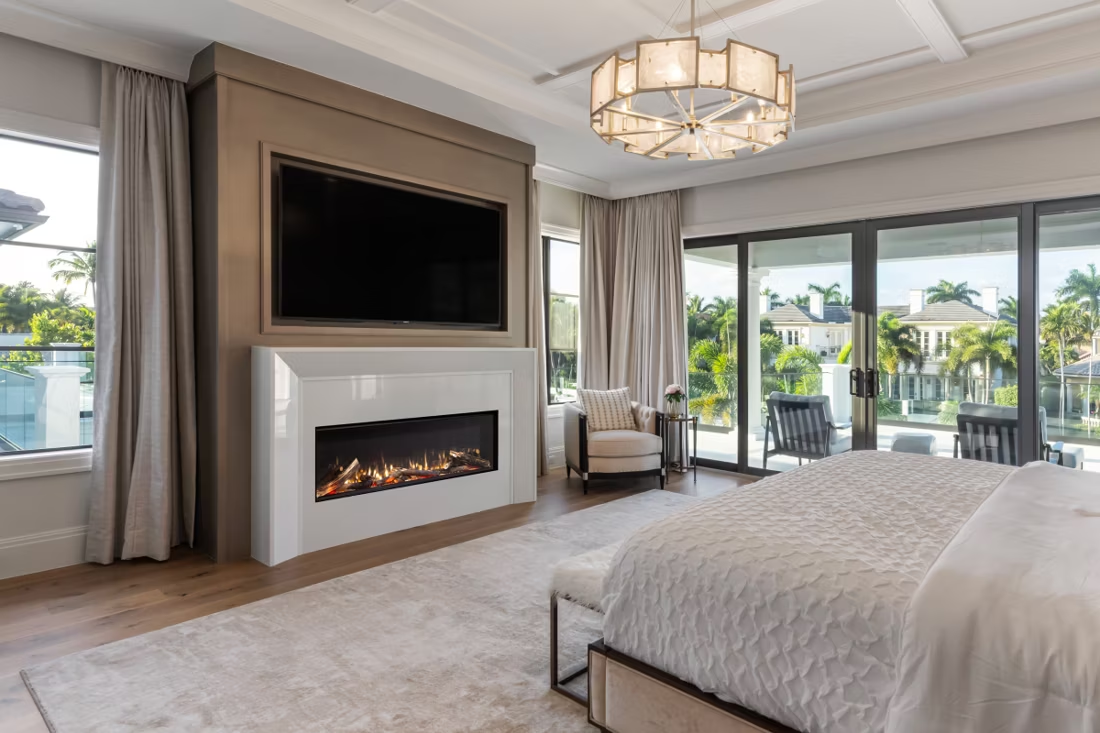
Yes—with an asterisk. Fireplaces are hot and TVs don't like heat. Either put a mantel between them to deflect rising warmth, or choose a fireplace with heat-management technology that creates a cool zone on the wall above—the wall stays around 125 degrees, barely warm, while the room still gets full heat. If you like clean lines and don't want a mantel, heat management is the answer.
Does an electric fireplace need a vent or chimney?
No—that's its superpower. An electric fireplace needs a wall and an outlet, period. No vent pipe, no gas line, no clearances to design around, which is why it works in bedrooms, offices, apartments, and walls where venting a gas or wood unit would be impractical or impossible. Installation is typically the simplest and least expensive of any fireplace type.
What is an in-home preview and do I need one?
It's a visit where a hearth professional measures your space, confirms the model you picked actually works in your home, and walks the specs—framing, gas line, venting, finish work—before anything is ordered. Some details you just can't know until you see the house. Never make a down payment without one; it's the single most-skipped step that burns buyers.
Can a fireplace actually lower my heating bill?
Yes—by creating a comfort zone. A furnace heats every square foot of the house just to warm the one room you're in; a gas fireplace on low burns roughly a sixth of the gas a typical furnace does. Set the furnace around 55–60 degrees as a baseline, then heat the rooms your family actually uses. Families who heat this way commonly save $20–$60 a month.
Stove and Fireplace Dealers in Hancock County
Find your electric fireplace in Hancock County.
Tell us a bit about your home and we'll put together a free Project Guide & Parts List—the right unit, the electrical requirements for your space, and a trusted local Hancock County dealer to install it.
Find Your Fireplace →