
Reliable gas heat for Fulton County's long, cold winters.
With a long, Madison-Wisconsin-level heating season and winter lows averaging 17°F, Fulton County homes need heat that comes on the moment you want it—natural gas in Wauseon, Archbold, Delta, and Swanton, propane out on the farmland between towns. Tell us about your home and we'll match you with a vetted local dealer.
Every Project Starts From One of These Five Situations
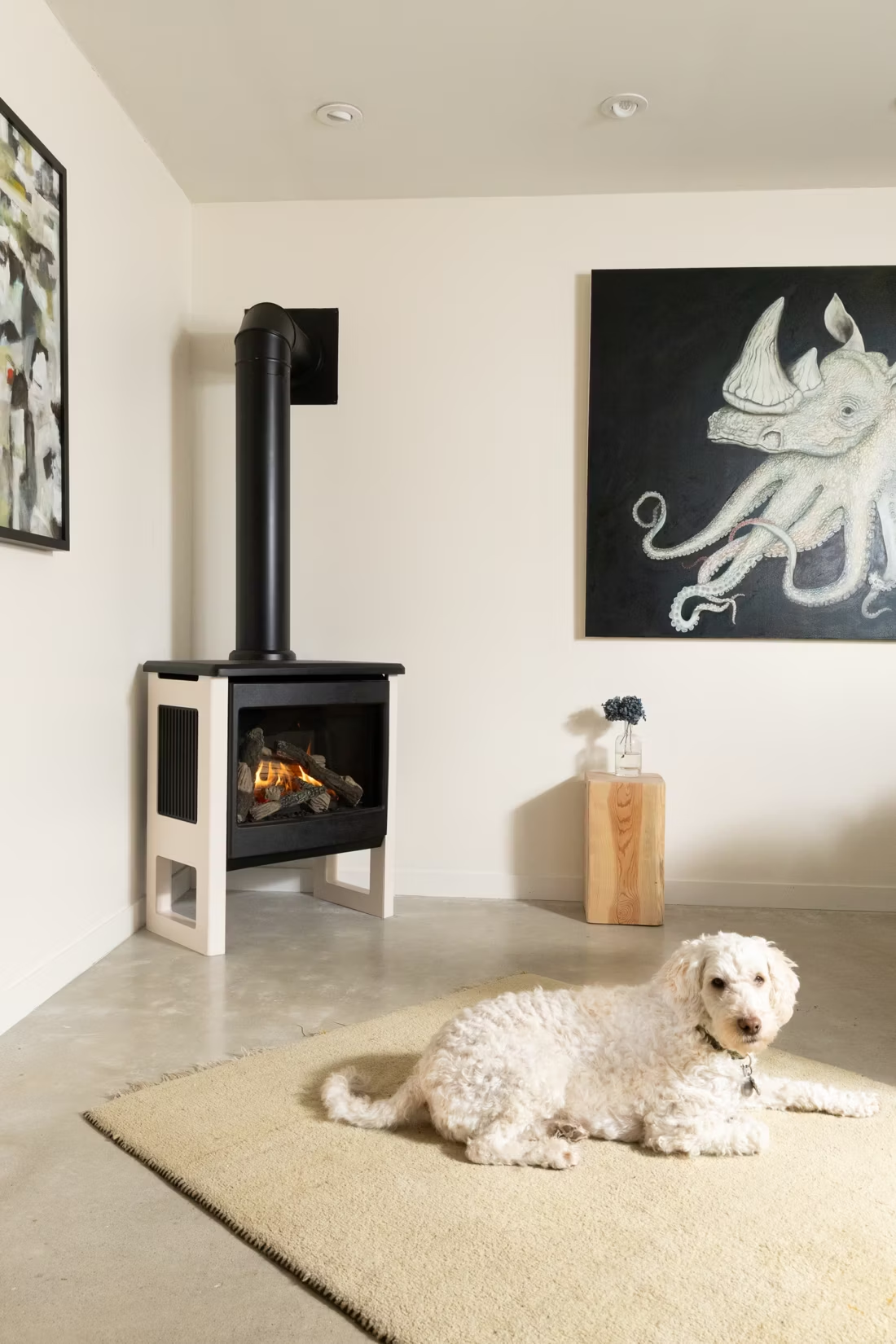
Clean gas heat for farmhouses and new builds alike.
Fulton County sits in Ohio's flat northwest corner, tucked between the Maumee River watershed and the Michigan state line, with Wauseon as the county seat and Archbold, Delta, Swanton, Metamora, Fayette, and Lyons rounding out the county's small towns. In climate zone 5A, winters here run long and consistently cold—a heating season on par with Madison, Wisconsin, with average lows near 17°F from December through February. Plenty of local homes still burn oak, hickory, maple, and cherry firewood cut from county woodlots, but gas fireplaces have become the go-to choice for anyone who wants heat without the daily work of feeding a fire.
Natural gas service reaches most of the county's incorporated towns through Columbia Gas of Ohio, so homes in Wauseon, Archbold, Delta, and Swanton typically have a gas line already run to the house. Out on the county's farmland—much of Fulton County is still agricultural—propane from local suppliers is the standard fallback where gas mains don't extend. Either way, a properly sized gas fireplace or insert gives you instant, thermostatically controlled heat that holds steady through a January cold snap without anyone stacking wood or checking a stove at midnight.
Three steps. No salesperson until you're ready.
Tell us about your project
Your zip code, your situation, and the fuel you're leaning toward—or let the answers point you to one.
See what's actually available
The brands dealers within 100 miles genuinely carry—real options, never a catalog mirage.
Get your dealer & Project Guide
A trusted local dealer, plus the free Project Guide & Parts List that names every component of the job.
Frequently Asked Questions
How much does a gas fireplace installation cost in Fulton County?
Most gas fireplace installations in Fulton County run between $3,500 and $9,000, depending on the unit, the venting path, and whether new gas line work is needed. A direct-vent insert going into an existing masonry fireplace with a gas line already nearby sits toward the lower end. A new built-in gas fireplace for a remodel or new construction—with framing, venting, and a fresh gas run—lands in the middle to upper range. Rural properties that need a new propane tank set and a longer buried line, common outside Wauseon and Archbold, tend to land at the higher end. A local dealer will give you a firm number after seeing the space in person.
Can I convert my existing wood fireplace to gas?
Yes, and it's a common project for Fulton County's older farmhouses and homes near Delta and Swanton with a masonry fireplace already in place. A gas insert typically drops into the existing firebox and vents through a stainless liner run up your current chimney, so you keep the look of the fireplace while gaining real heat output. Expect to pay roughly $3,500 to $7,500 depending on the insert and whether the home is on natural gas or propane. Homes already plumbed for gas—more common in town than out on county roads—usually come in lower.
Do I need natural gas, or can I use propane?
Both work fine. Natural gas service through Columbia Gas of Ohio covers most of Wauseon, Archbold, Delta, and Swanton, so if your home already has gas for a furnace or water heater, adding a fireplace is straightforward. Outside those towns—which describes a large share of Fulton County's farmland—propane from a local supplier is the standard option, either with an existing tank or a new above-ground or buried tank installed alongside the fireplace. Nearly every gas fireplace model sold locally can be set up for either fuel; your installer just configures the correct orifice and regulator.
Will my gas fireplace work during a power outage?
Most modern gas fireplaces will, which matters in a rural county where winter storms and downed lines are a real possibility. Units with intermittent pilot ignition (IPI) include a battery backup that kicks in the moment power drops, so the fireplace still lights on demand—just remember to keep fresh batteries on hand. Valor fireplaces handle this differently: their pilot generates its own electricity through a thermocouple, so there's no battery to maintain at all. For a Fulton County farmhouse where the nearest neighbor might be a quarter mile away, that kind of self-sufficient ignition is worth asking your local dealer about.
What's the difference between a gas fireplace, gas insert, and gas stove?
A gas fireplace is a fully built-in unit framed into a wall, typically chosen for new construction or a larger remodel. A gas insert slides into an existing masonry fireplace opening and uses the existing chimney as its vent path—the natural fit for Fulton County's older homes around Wauseon and Metamora that already have a fireplace they'd like to modernize. A gas stove is a freestanding unit that sits out in the room like a traditional wood stove but runs on gas, a good option for a home without an existing fireplace and without the framing for a full built-in. Most local homeowners with an existing masonry fireplace end up choosing an insert.
Do I need a permit to install a gas fireplace in Fulton County?
Yes—Fulton County's building department requires a permit for new gas fireplace installations, and any new or modified gas line needs to be run by a licensed gas-fitter. Most established local dealers handle the permit application and inspection scheduling as part of the installation, so you're not coordinating separate trades yourself. This is one of the practical advantages of working with a dealer who installs gas fireplaces regularly rather than a general handyman—they already know what the inspector is going to check.
What's the difference between vented and vent-free gas fireplaces?
Vented gas fireplaces—direct-vent or B-vent—pull combustion air from outside and exhaust the byproducts back outside through a sealed pipe. Vent-free units burn without any outside venting at all, releasing water vapor and small amounts of combustion byproducts into the room, and they come with strict room-size and ventilation requirements. Ohio allows vent-free units, but for Fulton County's tightly built, energy-efficient farmhouses and newer homes, a direct-vent unit is usually the better call—it delivers real heat without any tradeoff on indoor air quality, which matters over a six-month heating season with the windows shut.
How often should my gas fireplace be serviced?
Plan on an annual inspection, ideally before the heating season starts in the fall. A technician checks the burner, pilot assembly, venting, and any gas connections, and cleans the glass and interior. It's a quicker visit than a wood chimney sweep, but just as important for safety and for keeping the unit running efficiently through Fulton County's long winter. Most local service providers charge in the $125 to $200 range for a standard annual visit.
Gas vs. wood—which is right for my Fulton County home?
Wood has deep roots here—oak, hickory, maple, and cherry are all common in county woodlots, and a wood stove keeps working even when the power's out, which counts for something on a rural property outside Swanton or Fayette. Gas trades that off for convenience: no cutting, hauling, or ash cleanup, instant on-off heat, and a consistent output that doesn't dip as the fire burns down. For primary living spaces in town where daily convenience matters most, gas tends to win. Plenty of Fulton County homes run both—gas for everyday use, a wood stove in a den or workshop as backup heat when it really gets cold.
What's the difference between an insert and a zero-clearance fireplace?
An insert is a fireplace that slides into a pre-existing wood-burning fireplace—if you don't have one, there's nothing to insert it into. A zero-clearance fireplace is built into a framed wall, which makes it the answer for remodels and new construction. Simple test: existing masonry fireplace means insert; blank or framed wall means zero-clearance.
Why is a fireplace insert so efficient?
An insert does two things: it seals the chimney completely, so you stop losing air you already paid to heat, and it radiates warmth into the room through the firebox and glass. Most add a heat-exchange fan that pulls cool room air underneath, wraps it around the hot firebox, and pushes it back out warm. Your home is more efficient before you've even lit the first fire.
How much should I budget for a fireplace?
For an average home—covering the fireplace, the vent pipe, and basic installation—a budget between $3,900 and $5,500 gives you a lot of options across wood, gas, and pellet. By the time you add finish work, gas line, and electrical, the average complete installation lands between $5,000 and $12,000 all-in. In a remodel or new build, a good rule is to put about 2.5% of the total project cost toward the fireplace.
What is an in-home preview and do I need one?
It's a visit where a hearth professional measures your space, confirms the model you picked actually works in your home, and walks the specs—framing, gas line, venting, finish work—before anything is ordered. Some details you just can't know until you see the house. Never make a down payment without one; it's the single most-skipped step that burns buyers.
Stove and Fireplace Dealers in Fulton County
Find your gas fireplace in Fulton County.
Tell us about your home and heating goals, and we'll match you with a trusted local Fulton County dealer and send over a free Project Guide & Parts List—the exact parts, vent kit, and dealer recommendation for your gas fireplace project.
Find Your Fireplace →