
Warm, reliable heat for Fairfield County's cold season, without the wood pile.
From the Columbia Gas lines of Lancaster and Pickerington to the propane tanks out past Sugar Grove and Amanda, gas fireplaces deliver instant heat with none of the hauling. Find the right unit and connect with a trusted local dealer.
Every Project Starts From One of These Five Situations
Clean, on-demand heat across a county split between gas lines and propane tanks.
Fairfield County sits in central Ohio's climate zone 5A, with a winter heating load about on par with places like Columbus and winter lows averaging 22°F—a solid five-month heating season that runs from October through April. It's not the brutal cold of Duluth or Fargo, but Lancaster, Pickerington, Canal Winchester, Baltimore, and Bremen all see enough sustained cold that a supplemental heat source pays for itself most winters. Wood heat has deep roots here—oak, hickory, maple, and cherry are all common local species—but as Violet Township and Pickerington have grown into the Columbus metro, gas fireplaces have become the default choice in newer construction and remodeled living rooms alike.
Columbia Gas of Ohio serves the more densely built parts of the county, including Lancaster, Pickerington, and Canal Winchester, which means a straightforward gas line tie-in for most in-town homes. Out toward Rushville, Sugar Grove, Amanda, and the more rural stretches of Bloom and Berne townships, propane from a regional supplier is the standard fuel source instead. Either way, a gas fireplace or insert gives you heat at the flip of a switch, no ash or creosote to manage, and—with the right ignition system—a unit that still lights during an AEP Ohio outage from an ice storm.
Three steps. No salesperson until you're ready.
Tell us about your project
Your zip code, your situation, and the fuel you're leaning toward—or let the answers point you to one.
See what's actually available
The brands dealers within 100 miles genuinely carry—real options, never a catalog mirage.
Get your dealer & Project Guide
A trusted local dealer, plus the free Project Guide & Parts List that names every component of the job.
Frequently Asked Questions
How much does a gas fireplace installation cost in Fairfield County?
Most gas fireplace installations in Fairfield County run somewhere between $4,000 and $10,000, with the spread coming down to the unit itself, the venting path, and whether new gas line work is required. A direct-vent insert dropped into an existing masonry fireplace with a gas line already run to the hearth sits at the lower end. A new built-in gas fireplace for a Pickerington remodel or new-construction great room—with framing, direct venting, and a fresh gas line—lands in the middle to upper range. Homes on propane that need a new tank set can run higher still. A local dealer will give you a firm number after seeing the space.
Can I convert my old wood-burning fireplace to gas?
Yes, and it's one of the most common jobs local hearth dealers handle in the older housing stock around Lancaster, where oak and hickory masonry fireplaces are common in homes built well before gas was the go-to choice. A gas insert typically drops into the existing firebox and vents through a stainless liner run up the existing chimney, which keeps the exterior look intact while swapping out the mess of ash and creosote for push-button heat. Cost depends on whether the home already has a gas line nearby or whether one needs to be run from the meter, and whether you're on Columbia Gas or propane.
Do I need natural gas, or can I use propane?
Either works, and which one you'll use mostly comes down to where in the county you live. Columbia Gas of Ohio serves Lancaster, Pickerington, and Canal Winchester, so homes already on natural gas for the furnace or water heater can usually add a fireplace with a simple line extension. Out in Rushville, Sugar Grove, Amanda, and the rural parts of Bloom and Berne townships, natural gas lines don't reach, so propane from a local supplier—either an existing tank or a new install—is the standard fuel. Most gas fireplace models can be set up for either fuel; your installer just configures the correct orifice and regulator.
Will my gas fireplace still work if the power goes out?
Most modern gas fireplaces will, which matters in a county that sees its share of ice storms and AEP Ohio outages each winter. Units with IPI (intermittent pilot ignition) run on a small battery backup that kicks in the moment power drops, so the fireplace lights on demand just like normal. Valor fireplaces take a different route—their pilot assembly generates its own electricity through the thermocouple, so there are no batteries to maintain or forget. If backup heat during outages is a priority for your Fairfield County home, ask your local dealer about the ignition system before you buy.
What's the difference between a gas fireplace, gas insert, and gas stove?
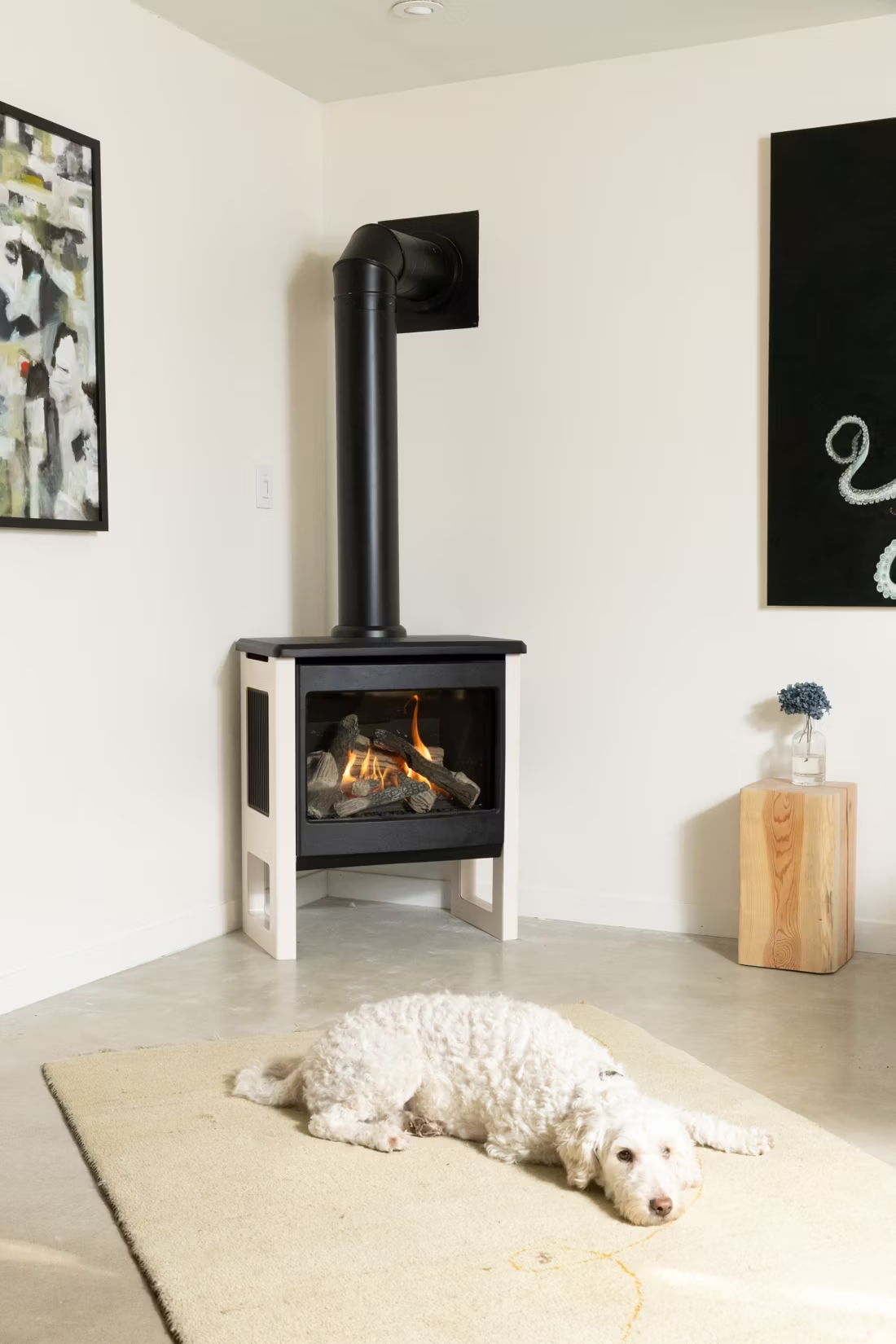
A gas fireplace is a fully built-in unit framed into a wall—the right call for new construction or a Pickerington remodel where there's no existing fireplace. A gas insert is built to slide into an existing masonry firebox, which is the common route for older Lancaster homes that already have a chimney and just want to retire the wood-burning setup. A gas stove is a freestanding cabinet-style unit that sits on the floor like a wood stove but runs on gas or propane—a good option for a room without a fireplace opening at all. Most Fairfield County homeowners with an existing hearth go with an insert.
Do I need a permit to install a gas fireplace in Fairfield County?
Yes—new gas fireplace installations require both a building permit and a gas line permit, whether you're inside Lancaster city limits or in unincorporated Fairfield County under the county building department. The gas line portion has to be run or connected by a licensed gas-fitter, which is a big part of why working with an established hearth dealer is worth it—they coordinate the gas work, the venting, and the inspection instead of leaving you to line up separate trades.
What's the difference between vented and vent-free gas fireplaces?
Vented (direct-vent) gas fireplaces pull combustion air from outside and exhaust it back outside through a sealed pipe—they're the standard choice and the most common install in Fairfield County's newer subdivisions around Pickerington and Canal Winchester. Vent-free units burn gas directly into the room without any outside venting; they're legal in Ohio but come with strict room-size and ventilation requirements, and they release some water vapor and combustion byproducts into the living space. For most homes here, a direct-vent unit is the simpler, safer, and more broadly recommended option—ask your local dealer to walk you through both if you're deciding.
How often does a gas fireplace need to be serviced?
Plan on an annual inspection, ideally before the heating season starts each fall. A technician checks the burner, pilot assembly, venting, and gas connections, and cleans the glass and interior—a much quicker visit than a wood chimney sweep but just as important for safe operation. Local gas appliance service providers typically charge $150 to $250 for this annual visit, and it's the kind of maintenance that keeps a warranty valid if anything does go wrong.
Gas or wood—which makes more sense for a Fairfield County home?
Wood still has a strong following here, especially in the more rural stretches of Bloom, Berne, and Violet townships where oak and hickory are easy to come by and a wood stove doubles as backup heat during an outage. Gas wins on convenience—instant on-off operation, no ash or creosote, and steadier heat output that pairs naturally with central HVAC in newer Pickerington and Canal Winchester homes. Plenty of Fairfield County households end up with both: gas in the main living room for everyday use, wood elsewhere for backup warmth and the smell of a real fire on a cold night.
Why is a fireplace insert so efficient?
An insert does two things: it seals the chimney completely, so you stop losing air you already paid to heat, and it radiates warmth into the room through the firebox and glass. Most add a heat-exchange fan that pulls cool room air underneath, wraps it around the hot firebox, and pushes it back out warm. Your home is more efficient before you've even lit the first fire.
Is my gas fireplace wasting gas?
If it was installed more than 15 years ago, probably. Older gas fireplaces keep a standing pilot light burning all the time, and that little flame can cost a couple hundred dollars a year. Newer models use pilot-on-demand ignition—the pilot lights only when you use the fireplace and goes out when you turn it off.
Does a fireplace add value to my home?
On average, a fireplace adds back to the home about the same amount you spent installing it. Add the monthly savings from heating the rooms you actually use instead of the whole house—often hundreds of dollars a year—and the value case is strong before you even count what a fire does for how your family uses the room.
Can a fireplace actually lower my heating bill?
Yes—by creating a comfort zone. A furnace heats every square foot of the house just to warm the one room you're in; a gas fireplace on low burns roughly a sixth of the gas a typical furnace does. Set the furnace around 55–60 degrees as a baseline, then heat the rooms your family actually uses. Families who heat this way commonly save $20–$60 a month.
Stove and Fireplace Dealers in Fairfield County
Find your gas fireplace in Fairfield County.
Tell us a bit about your home and we'll match you with the right gas fireplace, insert, or stove, plus a free Project Guide & Parts List and a trusted local dealer to install it.
Find Your Fireplace →