
Instant Heat, No Chimney Required.
Zone heat and real ambiance for East Canton homes, condos, and additions—no gas line or masonry chimney needed. Find the right unit and connect with a trusted local pro.
Every Project Starts From One of These Five Situations
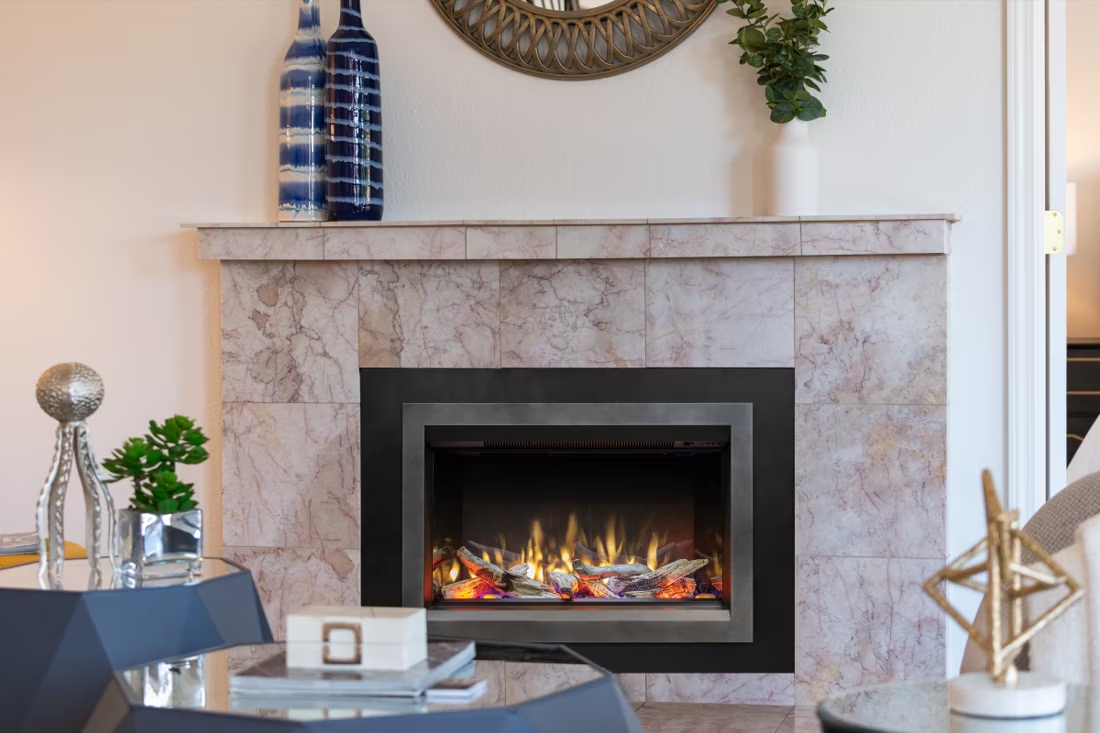
Electric heat that fits into any East Canton home.
East Canton sits in Stark County at just over 1,100 feet, where winters average a low near 20°F and the area experiences a long, cold heating season that stretches from early fall into late spring—cold enough that most homes here lean on a furnace or boiler for whole-house heat. Electric fireplaces aren't trying to replace that. They fill a different role: instant supplemental warmth and real flame-look ambiance in a bedroom, finished basement, sunroom addition, or rental unit where running a chimney or gas line isn't practical or worth the cost.
With Ohio Power Company (AEP Ohio) billing residential customers around 14.35 cents per kWh, running electric resistance heat as a primary source for a whole Stark County home through a long winter gets expensive fast. That's exactly why electric units are popular here as a second heat source rather than a first—no venting, no combustion byproducts, and a plug-in or simple 120V/240V circuit is often all it takes. For older East Canton homes with baseboard heat or a single-zone furnace, an electric fireplace in the room you actually live in can take real pressure off the main heating bill without any construction mess.
Three steps. No salesperson until you're ready.
Tell us about your project
Your zip code, your situation, and the fuel you're leaning toward—or let the answers point you to one.
See what's actually available
The brands dealers within 100 miles genuinely carry—real options, never a catalog mirage.
Get your dealer & Project Guide
A trusted local dealer, plus the free Project Guide & Parts List that names every component of the job.
Frequently Asked Questions
How much does an electric fireplace installation cost in East Canton?
Plug-in electric inserts and freestanding units that use an existing 120V outlet typically run $300 to $1,500 installed, since there's no venting or gas line to run. Built-in wall units, mantel packages, or linear electric fireplaces that need a dedicated circuit and light wall framing usually land between $1,500 and $4,000, with a licensed electrician handling the new circuit. Because electric units skip chimney, venting, and gas-fitting work entirely, they're consistently the least expensive fireplace category to install in Stark County.
What does it cost to run an electric fireplace in East Canton?
Most electric fireplaces draw around 1,500 watts on the heat setting. At Ohio Power Company's residential rate of about 14.35 cents per kWh, that works out to roughly $0.21 per hour, or a little over a dollar for a five-hour evening of use. Running the unit on flame-only mode with the heater off draws only a few watts, so ambiance-only use costs pennies a day. It's a useful number to keep in mind if you're weighing an electric unit as your main heat source for a room versus supplemental heat alongside your furnace.
Do I need a permit to install an electric fireplace in East Canton?
Usually not for the unit itself. Because electric fireplaces don't burn fuel or vent combustion gases, plug-in units and most built-ins don't trigger a building permit through the Stark County Building Department. Where a permit does come into play is electrical work—if your installer needs to add a new dedicated circuit or breaker for a larger built-in unit, that portion should be pulled and inspected as electrical work by a licensed electrician, which is standard practice for any East Canton home wired before modern code updates.
Is electric or gas the better choice for heating in East Canton?
For whole-room or whole-house heat, gas wins on cost here—natural gas delivers more heat per dollar than electric resistance heat, especially across a long, cold Stark County winter that stretches from fall deep into spring. That's why most East Canton homes use gas or fuel oil furnaces as primary heat. Electric fireplaces earn their place as supplemental, on-demand heat: instant warmth in a specific room, no standing pilot or gas line, and none of the safety considerations that come with combustion appliances. Many homeowners here run gas or a furnace as the backbone and add an electric unit in a bedroom or basement for zone comfort.
What's the difference between an electric insert, built-in, and freestanding unit?
An electric insert is sized to slot into an existing masonry or zero-clearance fireplace opening, giving an old fireplace new life without any venting changes. A built-in or wall-mount unit is designed to be framed into a wall during a remodel or addition, often as a linear, modern-looking unit. A freestanding electric stove or mantel unit needs no construction at all—it plugs in and sits wherever you want heat. For an East Canton home with an existing but unused wood fireplace, an insert is usually the simplest upgrade; for a new addition or finished basement, a built-in or freestanding unit gives more flexibility.
Can an electric fireplace actually heat a room in Ohio's winter?
A 1,500-watt electric fireplace can comfortably heat a single average-sized room—think 300 to 400 square feet—on a normal Stark County winter night, especially as supplemental heat alongside central heating. What it can't do is replace a furnace for whole-house heat in a climate this cold. In genuinely severe cold climates like Duluth, Minnesota, relying on electric resistance heat as a primary source would be cost-prohibitive, and the same logic applies here during stretches of single-digit January nights—East Canton homeowners almost always run these units as zone heat, not a whole-house solution.
Are electric fireplaces a good fit for older East Canton homes with baseboard heat?
Yes, this is one of the most common reasons homeowners in East Canton's older housing stock add one. If a bedroom or living space relies on electric baseboard heat that struggles to keep up on the coldest nights, a plug-in or built-in electric fireplace adds instant, controllable heat to that specific room without touching the home's existing wiring or heating system. It's a low-cost way to boost comfort in a single zone rather than upgrading or replacing whole-house baseboard heat.
Will my electric fireplace work during a power outage?
No—electric fireplaces require power to run both the heater and the flame-effect display, so they shut off completely during an outage, unlike a wood stove or a gas fireplace with battery-backup ignition. If backup heat during winter storm outages is a priority for your East Canton home, that's worth factoring into your decision between electric and a vented gas or wood option. Many homeowners here choose electric specifically for the rooms where backup heat isn't a concern, and keep a separate combustion appliance for storm resilience elsewhere in the house.
Where can I find an installer for an electric fireplace near East Canton?
Because most electric fireplace projects are straightforward electrical work rather than full hearth installations, a licensed electrician serving Stark County can handle circuit and mounting work for built-in units, while hearth retailers in nearby Canton typically stock and deliver both plug-in and built-in electric models. Ohio Power Company (AEP Ohio) is the utility serving East Canton's 44730 zip code, so any electrician you hire will already be familiar with local service requirements and panel capacity in the area.
Can I put a TV above my fireplace?
Yes—with an asterisk. Fireplaces are hot and TVs don't like heat. Either put a mantel between them to deflect rising warmth, or choose a fireplace with heat-management technology that creates a cool zone on the wall above—the wall stays around 125 degrees, barely warm, while the room still gets full heat. If you like clean lines and don't want a mantel, heat management is the answer.
Does an electric fireplace need a vent or chimney?
No—that's its superpower. An electric fireplace needs a wall and an outlet, period. No vent pipe, no gas line, no clearances to design around, which is why it works in bedrooms, offices, apartments, and walls where venting a gas or wood unit would be impractical or impossible. Installation is typically the simplest and least expensive of any fireplace type.
How much should I budget for a fireplace?
For an average home—covering the fireplace, the vent pipe, and basic installation—a budget between $3,900 and $5,500 gives you a lot of options across wood, gas, and pellet. By the time you add finish work, gas line, and electrical, the average complete installation lands between $5,000 and $12,000 all-in. In a remodel or new build, a good rule is to put about 2.5% of the total project cost toward the fireplace.
What is an in-home preview and do I need one?
It's a visit where a hearth professional measures your space, confirms the model you picked actually works in your home, and walks the specs—framing, gas line, venting, finish work—before anything is ordered. Some details you just can't know until you see the house. Never make a down payment without one; it's the single most-skipped step that burns buyers.
Nearby Dealers
Hearth shops serving East Canton and the surrounding area. Every listing shows whether it is a WhyFire partner, a dealer we have verified as authorized for the brands we recommend, or a local business carrying hearth products. No manufacturer pays for placement. How we verify dealers →
Custom Fireplace Shop
Country View Hardware
StarFire Distributors
Electric Service in East Canton
An electric fireplace's heater draws about 1,500 watts—pennies per hour at local rates.
Ohio Power Co
Find your electric fireplace in East Canton.
Tell us a bit about your home and we'll put together a Project Guide & Parts List for your electric fireplace—matched with a trusted local dealer or electrician near East Canton.
Find Your Fireplace →