
A Niche Heat Source in Columbus, Installed Right.
Pellet heat isn't the default in a city this well served by natural gas—but for the right home, it's a real option. Find out if it fits yours, and connect with a trusted local dealer.
Every Project Starts From One of These Five Situations
Not the default here—but not out of place either.
Columbus sits in climate zone 5A with just over 5,400 heating degree days a year and winter lows averaging around 21°F—cold enough that supplemental heat matters, but nowhere near the extremes of Duluth, MN or Fargo, ND, where pellet stoves are a fixture in nearly every hardware store. Columbus is also one of the largest natural-gas-served metros in the Midwest, and with reliable service from Ohio Power Co and the City of Columbus's municipal electric program, most homeowners here default to gas fireplaces or electric options for zone heat rather than pellet appliances.
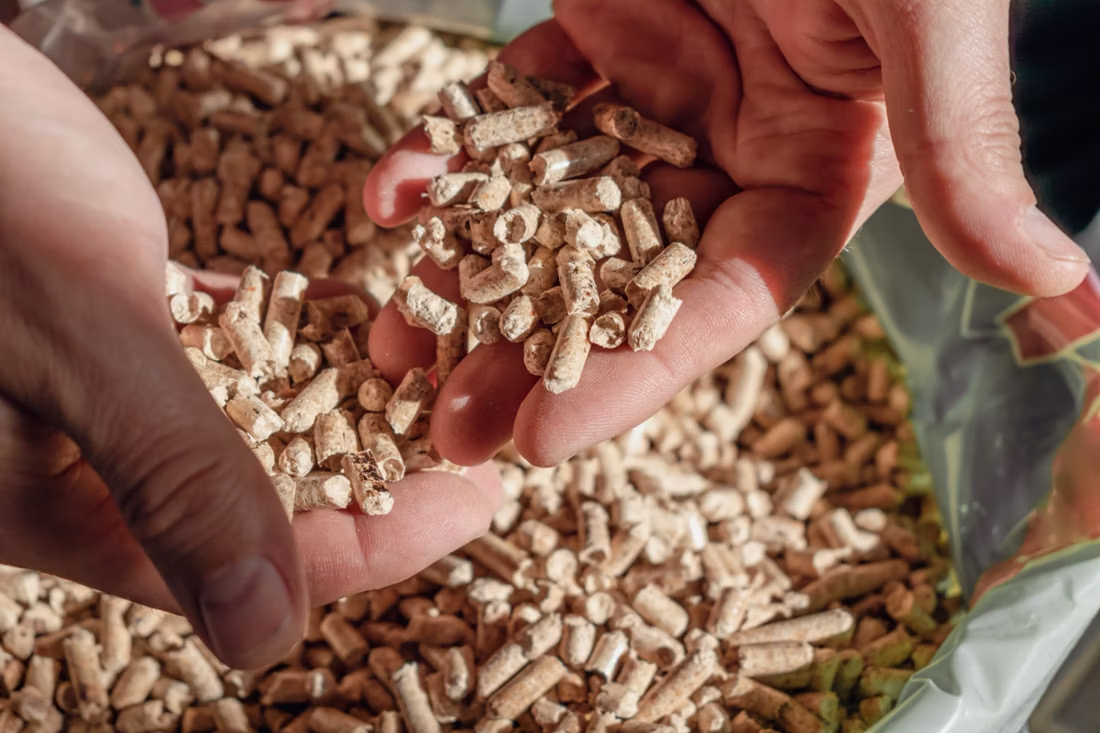
That said, pellet stoves aren't absent from central Ohio—they show up in homes without a natural gas line, in older housing stock in neighborhoods like German Village or Clintonville where owners want wood-like ambiance without chimney maintenance, and in exurban Franklin County properties where a self-contained, low-maintenance heat source has real appeal. Regional pellet suppliers including Indeck Energy Services, Lignetics, and Somerset Pellet Fuel source hardwood fiber from the same oak, hickory, and maple forests that supply Ohio's firewood market, so fuel availability isn't the limiting factor—it's simply that gas and electric infrastructure make pellet a smaller slice of the local market than in colder or more rural regions.
Three steps. No salesperson until you're ready.
Tell us about your project
Your zip code, your situation, and the fuel you're leaning toward—or let the answers point you to one.
See what's actually available
The brands dealers within 100 miles genuinely carry—real options, never a catalog mirage.
Get your dealer & Project Guide
A trusted local dealer, plus the free Project Guide & Parts List that names every component of the job.
Frequently Asked Questions
How much does a pellet stove installation cost in Columbus?
Most pellet stove installations in the Columbus area run $3,500 to $7,000 depending on the unit, whether you're venting through an exterior wall or an existing chimney chase, and any electrical work needed to power the auger and blower. Because pellet stoves are a smaller category here than gas or electric options, fewer dealers stock a deep pellet lineup—expect your local retailer to special-order the specific model you choose rather than pull it off a showroom floor. Franklin County Building Department or the City of Columbus Department of Building and Zoning Services will require a permit depending on your address, and most installers fold that into the quote.
Why aren't pellet stoves more common in Columbus?
Mostly infrastructure. Columbus has extensive natural gas coverage and two well-established electric providers—Ohio Power Co and the City of Columbus's municipal supply—which means most homeowners solve their supplemental-heat problem with a gas insert or an electric unit rather than a pellet appliance. Pellet stoves make the most sense in homes without a nearby gas line or in households that specifically want a real flame without the chimney and wood-storage commitment of a full wood stove. It's a smaller, more deliberate purchase here than in colder, gas-scarce parts of the Midwest.
Where can I buy wood pellets locally in Columbus?
Regional pellet producers including Indeck Energy Services, Lignetics, and Somerset Pellet Fuel distribute through hardware stores, farm supply retailers, and hearth dealers across the Columbus metro, with bagged pellets typically running $5 to $7 per 40-pound bag, or roughly $250 to $300 per ton if you buy by the pallet. Because pellet demand is lower here than in New England or the Upper Midwest, availability can tighten during a hard cold snap—buying a season's supply in early fall rather than waiting for the first freeze is the safer play.
Do pellet stoves need electricity to run, and what happens in a power outage?
Yes—unlike a wood stove, a pellet stove relies on an electric auger to feed fuel and a blower to distribute heat, so it will not operate during a power outage without a battery backup or generator. At Columbus's residential electric rates (roughly 11 to 14 cents per kWh between Ohio Power Co and the City of Columbus's program), running a pellet stove costs only a few cents an hour in electricity, but the dependency matters for anyone considering pellet as backup heat for an ice storm. If outage resilience is the priority, a wood stove or a battery-equipped gas unit is a more reliable choice for this climate.
Do I need a permit to install a pellet stove in Columbus?
Yes, in most cases. Depending on your address, permitting falls to either the City of Columbus Department of Building and Zoning Services or the Franklin County Building Department for unincorporated areas and some suburbs. The permit covers the venting path and clearances to combustibles; because pellet stoves vent through a smaller-diameter pipe than wood stoves and don't require a full masonry chimney, the inspection is generally simpler. Your installer should pull the permit as part of the job rather than leaving it to you.
What's a good pellet stove for Columbus's winters?
Columbus doesn't see the sustained sub-zero stretches that push homeowners toward the largest catalytic-class stoves, so a mid-size pellet unit rated for 1,500 to 2,200 square feet handles most single-family homes here as supplemental or zone heat. Look for a model with a thermostat control and a hopper that holds at least 40 pounds, which gets you through an overnight burn without a refill. Since pellet is a lower-volume category locally, ask your dealer which models they can actually service and get parts for—availability matters more than brand name in a market this size.
Should I get a pellet stove or a gas fireplace instead?
For most Columbus homes, gas wins on convenience: instant on-off operation, no fuel storage, and access to Columbia Gas infrastructure across most of the metro. Pellet holds its own where there's no gas line, where the homeowner wants a visible, moving flame with real combustion rather than a gas burner, or where a slightly lower fuel cost matters over a full heating season. If your home already has gas service, it's worth pricing both—a gas insert install often runs comparable to a pellet stove once venting is factored in, and gas dealers are far more plentiful here.
How much maintenance does a pellet stove need?
Pellet stoves need more routine attention than a gas unit but less than a wood stove: emptying the ash pan every few days during regular use, cleaning the burn pot weekly to keep the fire efficient, and a full professional cleaning of the exhaust venting and hopper mechanism once a year. Because pellet-certified technicians are less common in Columbus than gas service techs, expect to book your annual service a few weeks ahead of the heating season rather than same-week—most local hearth shops see a fall rush from the region's smaller pool of pellet owners.
Will my HOA or subdivision allow a pellet stove installation?
It depends on the neighborhood. Many newer subdivisions in suburbs like Dublin, New Albany, and Powell have HOA covenants that restrict exterior wall penetrations or visible venting, which can affect where a pellet stove's intake and exhaust pipe can run. Older city neighborhoods inside Columbus proper generally have more flexibility since they predate modern HOA structures. Check your covenants before ordering equipment—a good local dealer will also flag likely restrictions during the in-home consultation before you commit to a specific installation location.
What's the difference between an insert and a zero-clearance fireplace?
An insert is a fireplace that slides into a pre-existing wood-burning fireplace—if you don't have one, there's nothing to insert it into. A zero-clearance fireplace is built into a framed wall, which makes it the answer for remodels and new construction. Simple test: existing masonry fireplace means insert; blank or framed wall means zero-clearance.
Why is my open fireplace making my house colder?
Open fireplaces suck—literally. As the fire burns, it consumes air your furnace already paid to heat and pulls it out through the chimney, so the house is actually colder after the fire goes out than before you lit it. An insert fixes this: it seals the chimney, puts fixed glass across the front, and turns that hole in your house into a real heat source.
Can I install a fireplace myself?
If you're putting a fire in your house on purpose, it's best to work with an expert. Unless you're genuinely experienced in framing, gas line, vent pipe, and the national code on clearances to combustibles, have a professional do it—and ideally the same company that sells you the fireplace, so warranty, service, and liability all live under one roof.
How much should I budget for a fireplace?
For an average home—covering the fireplace, the vent pipe, and basic installation—a budget between $3,900 and $5,500 gives you a lot of options across wood, gas, and pellet. By the time you add finish work, gas line, and electrical, the average complete installation lands between $5,000 and $12,000 all-in. In a remodel or new build, a good rule is to put about 2.5% of the total project cost toward the fireplace.
Preferred Dealer in Columbus
Marked Preferred because they run on WhyFire's software—so they can show you real pricing and book your appointment right here. No manufacturer pays for placement. How we verify dealers →
Pellet Brands Stocked Around Columbus
Manufacturers will point you to the nearest stocking dealer.
Find your pellet stove in Columbus.
Tell us about your home and whether gas service reaches it, and we'll match you with a trusted local dealer plus a free Project Guide & Parts List for your pellet stove project in Columbus.
Find Your Fireplace →