
Steady heat for a Stark County winter with a heating season on par with the Great Lakes snowbelt.
Brewster is a village of just over 2,000 people at 982 feet, with winter lows averaging 20°F. I'll match you with a trusted local dealer who knows the gas line work, the venting, and what's actually installable in a Stark County home.
Every Project Starts From One of These Five Situations
Heat that starts before you've stacked a single log.
Brewster sits in climate zone 5A, and with a heating season on par with much of the Great Lakes snowbelt, the village runs winters closer to Buffalo, NY than to the milder parts of southern Ohio. Oak, hickory, maple, and cherry all grow well in this part of Stark County and plenty of longtime residents still split and burn them, but a lot of households now lean on gas for the main living space and keep wood or a pellet stove as backup. Brewster has no listed air quality nonattainment concerns, so unlike burn-restricted regions out west, there's no curtailment schedule to work around here—the choice between fuels comes down to convenience and cost, not air quality rules.
Natural gas service in Brewster and the surrounding Stark County area typically comes through Dominion Energy Ohio, with propane filling in for properties outside the village's gas mains, which is common on the outskirts of a village this size. Electric service runs through either Ohio Edison or the Village of Brewster's own municipal utility depending on your address, and at roughly 9.55 cents per kWh that's a fairly low residential rate—worth knowing if you're comparing an electric fireplace or weighing the battery-backup ignition on a gas unit against how often the power actually goes out here.
Three steps. No salesperson until you're ready.
Tell us about your project
Your zip code, your situation, and the fuel you're leaning toward—or let the answers point you to one.
See what's actually available
The brands dealers within 100 miles genuinely carry—real options, never a catalog mirage.
Get your dealer & Project Guide
A trusted local dealer, plus the free Project Guide & Parts List that names every component of the job.
Frequently Asked Questions
How much does a gas fireplace installation cost in Brewster?
Most gas fireplace and insert installs in the Brewster area run roughly $3,500 to $9,000. An insert dropping into an existing masonry firebox with a gas line already nearby—common in the older homes closer to the village center—lands toward the low end. A new built-in unit for an addition or remodel, especially one needing a fresh gas line run and through-wall or through-roof venting, pushes toward the top of that range. Properties outside the natural gas footprint that need a propane tank set should budget extra on top of the install itself.
Can I convert my existing wood fireplace to gas?
Yes, and it's a common upgrade here. A lot of Brewster's older homes were built with brick fireplaces originally meant for local oak or hickory, and many owners are ready to skip the splitting and stacking. A gas insert generally slides into that existing firebox with a stainless liner run up the current chimney, which typically lands in the $4,000-$8,000 range depending on whether you're tying into natural gas or setting a propane tank. It also sidesteps the seasoning and storage headaches that come with keeping a wood supply dry through an Ohio winter.
Do I need natural gas service, or should I plan on propane?
It depends on your address. Homes inside Brewster's village limits are generally within reach of natural gas lines served by Dominion Energy Ohio, while properties further out in Stark County's more rural stretches often run on propane instead. If your furnace or water heater is already on natural gas, adding a fireplace is usually a straightforward tie-in. If you're on propane already, most fireplace models a local dealer carries can be configured for it without much added cost.
Will a gas fireplace still work if the power goes out?
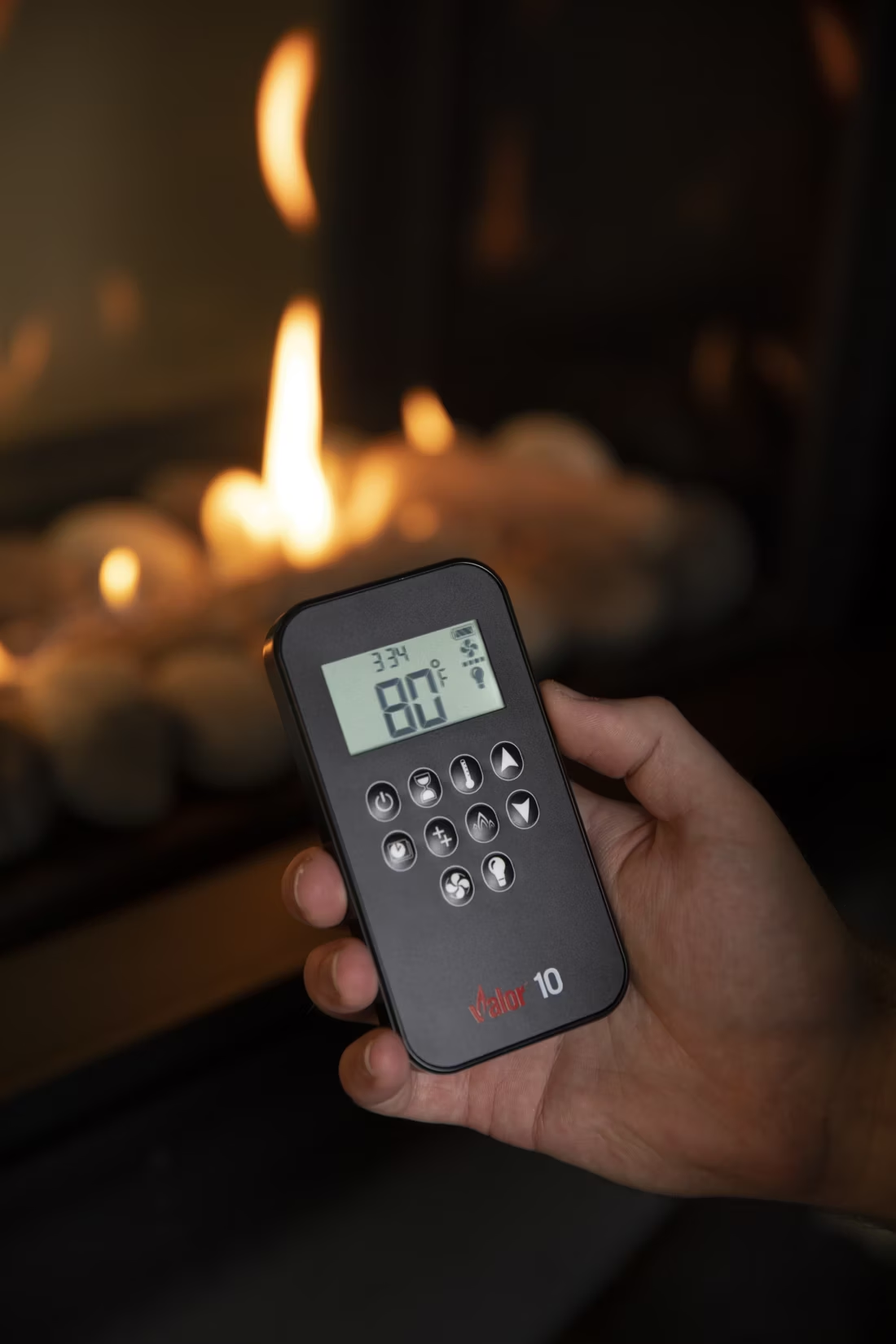
Most will, with the right ignition system. Units with intermittent pilot ignition (IPI) run on AA battery backup that kicks in automatically when the power drops. Valor units go a step further and skip batteries entirely, since their pilot's thermocouple generates its own current. Brewster's electric service comes through either Ohio Edison or the village's own municipal utility, and outages aren't a constant concern here at 9.55 cents per kWh for reliable local power—but for anyone who wants heat that doesn't depend on the grid at all, this is worth asking your dealer about before you buy.
What's the difference between a gas fireplace, insert, and stove?
A gas fireplace is a built-in unit framed into a wall, typical for new construction or a full remodel. A gas insert fits inside an existing masonry firebox, which is the more common route in Brewster's older housing stock where a wood-burning fireplace built for oak or maple is already in place. A gas stove is freestanding on a hearth pad, similar in footprint to a wood stove but running off a gas line or propane tank instead of cordwood. For most existing homes in the village, an insert is the least disruptive upgrade since it reuses the chimney chase you already have.
Do I need a permit to install a gas fireplace in Brewster?
Yes. Depending on your exact address, permitting runs through either the Village of Brewster's building office or the Stark County Building Department, plus a separate gas line permit tied to licensed gas-fitter work. Most hearth dealers who install in this area handle both the permit filing and the final inspection as part of the job, so you're not coordinating two separate approvals on your own.
Vented vs. vent-free gas fireplaces—what should I know here?
Direct-vent units pull combustion air from outside and exhaust it back outside through sealed venting, and they're the safer, more universally code-compliant choice for daily use. Vent-free units are legal under Ohio code but come with strict room-sizing requirements tied to BTU output. Brewster has no listed air quality nonattainment concerns, so there's no local burn-restriction angle pushing homeowners either direction—the decision here mostly comes down to how the unit will be used day to day, and most local dealers still default to direct-vent for a primary heat source.
How often does a gas fireplace need to be serviced?
Plan on an annual check, ideally in late summer or early fall before the first cold snap rather than mid-winter when technicians are booked solid across Stark County. A service visit covers the burner, pilot assembly, gas connections, and venting, and typically runs $125 to $200. Skipping it on a unit running daily through a long, cold heating season is how a minor pilot or ignition issue turns into a no-heat call on the coldest night of January.
Gas vs. wood—which makes more sense for a Brewster home?
Wood has deep roots here—oak, hickory, maple, and cherry are all locally available, and burning your own supply is the cheapest fuel option if you've got the space to season and store it. Gas wins on convenience: no stacking, no ash cleanup, and heat on demand at the flip of a switch or push of a remote. Since Brewster carries no air quality nonattainment restrictions, there's no regulatory pressure favoring one fuel over the other—plenty of households here run gas in the main living space and keep a wood stove as backup, or look at pellet options from regional suppliers like Lignetics or Somerset Pellet Fuel as a middle ground between the two.
Can I put a TV above my fireplace?
Yes—with an asterisk. Fireplaces are hot and TVs don't like heat. Either put a mantel between them to deflect rising warmth, or choose a fireplace with heat-management technology that creates a cool zone on the wall above—the wall stays around 125 degrees, barely warm, while the room still gets full heat. If you like clean lines and don't want a mantel, heat management is the answer.
Is my gas fireplace wasting gas?
If it was installed more than 15 years ago, probably. Older gas fireplaces keep a standing pilot light burning all the time, and that little flame can cost a couple hundred dollars a year. Newer models use pilot-on-demand ignition—the pilot lights only when you use the fireplace and goes out when you turn it off.
Can I install a fireplace myself?
If you're putting a fire in your house on purpose, it's best to work with an expert. Unless you're genuinely experienced in framing, gas line, vent pipe, and the national code on clearances to combustibles, have a professional do it—and ideally the same company that sells you the fireplace, so warranty, service, and liability all live under one roof.
How much should I budget for a fireplace?
For an average home—covering the fireplace, the vent pipe, and basic installation—a budget between $3,900 and $5,500 gives you a lot of options across wood, gas, and pellet. By the time you add finish work, gas line, and electrical, the average complete installation lands between $5,000 and $12,000 all-in. In a remodel or new build, a good rule is to put about 2.5% of the total project cost toward the fireplace.
Nearby Dealers
Hearth shops serving Brewster and the surrounding area. Every listing shows whether it is a WhyFire partner, a dealer we have verified as authorized for the brands we recommend, or a local business carrying hearth products. No manufacturer pays for placement. How we verify dealers →
Custom Fireplace Shop
Astro Fireplace Shop
Get your free Project Guide & Parts List for a Brewster gas fireplace.
Tell me about your home and whether you're on natural gas or propane, and I'll match you with a trusted local dealer and send a free Project Guide & Parts List with the exact vent kit and parts your project needs.
Find Your Fireplace →