
Heat the Room Your Furnace Never Reaches.
No chimney, no gas line, no venting—just real supplemental warmth for finished basements, additions, and living rooms across Belmont County, from St. Clairsville to Bellaire and Martins Ferry. Find the right unit and connect with a trusted local dealer.
Every Project Starts From One of These Five Situations
Zone heat for the rooms your Ohio Valley home was never built to warm.
Belmont County sits in the hills of eastern Ohio along the Ohio River, across from Wheeling, and its housing stock reflects that terrain—century homes in Bellaire and Martins Ferry with additions bolted onto the original structure, walkout basements dug into hillsides in and around St. Clairsville and Bridgeport, and rural properties toward Barnesville and Shadyside where ductwork never made it to every room. At climate zone 5A with roughly 5,260 heating degree days and winter lows averaging 22°F, this isn't Appalachia's harshest cold, but it's a real six-month heating season, and the rooms furnaces can't reach still get cold.
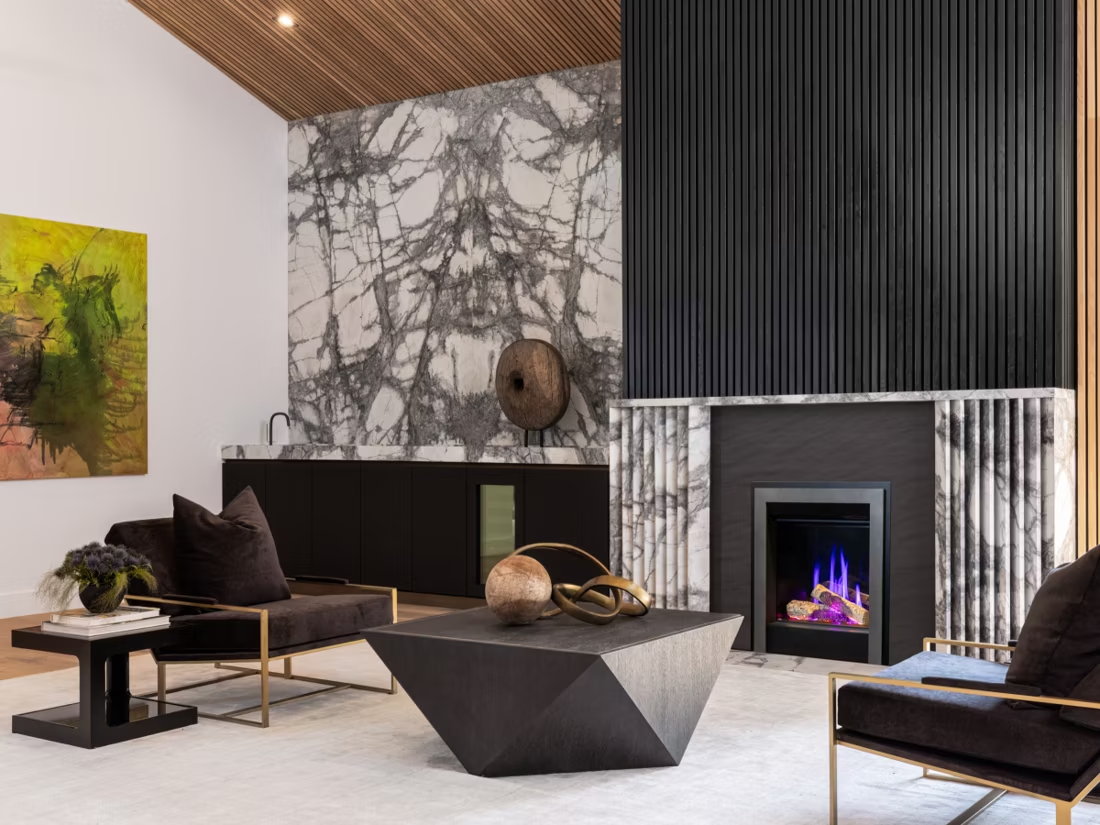
AEP Ohio serves the bulk of Belmont County's electric load, and that reliable grid access is exactly what makes electric fireplaces work here as a practical add-on to whatever primary heat a home already runs—a gas furnace, a wood stove burning the oak and hickory that's plentiful in this part of the state, or baseboard electric in an older river-town rowhouse. An electric fireplace plugs into an existing outlet or ties into a dedicated circuit, needs no chimney or exterior venting, and gives you supplemental heat and ambiance in a finished basement, a converted garage, or a bedroom addition without touching your home's existing heating system.
Three steps. No salesperson until you're ready.
Tell us about your project
Your zip code, your situation, and the fuel you're leaning toward—or let the answers point you to one.
See what's actually available
The brands dealers within 100 miles genuinely carry—real options, never a catalog mirage.
Get your dealer & Project Guide
A trusted local dealer, plus the free Project Guide & Parts List that names every component of the job.
Frequently Asked Questions
How much does an electric fireplace installation cost in Belmont County?
A plug-in electric insert or freestanding unit runs $150 to $600 and requires no installation beyond finding an outlet—many homeowners in Bellaire and Martins Ferry rowhouses go this route for a bedroom or den. A built-in wall unit with a recessed box, custom surround, and a dedicated 20-amp circuit typically runs $1,500 to $3,500 installed, including electrician labor. Costs run toward the higher end for hardwired installs in older Belmont County homes where the electrical panel needs a new breaker slot or a subpanel upgrade—common in century homes along the river towns.
What size electric fireplace do I need for my room?
Most electric fireplaces are rated around 4,600 to 5,000 BTU, which comfortably heats 150 to 400 square feet as supplemental warmth—enough for a single finished basement room, a home office addition, or a bedroom, but not a whole floor. Given Belmont County's roughly 5,260 heating degree days, electric units are best treated as zone heat layered on top of a home's primary furnace, wood stove, or baseboard system rather than a standalone solution for the whole house. A local dealer can walk through your specific room dimensions and ceiling height to confirm sizing.
Do I need a permit to install an electric fireplace in Belmont County?
A plug-in electric fireplace that uses an existing outlet needs no permit—it's treated like any other appliance. A built-in or wall-mounted unit wired to a new dedicated circuit does require an electrical permit through your local jurisdiction, whether that's the Belmont County Building Department for unincorporated areas or the relevant city office in St. Clairsville, Bellaire, or Martins Ferry. Most local dealers coordinate with a licensed electrician who pulls the permit as part of the install, so it's rarely something the homeowner has to manage directly.
Will my electric fireplace work if the power goes out?
No—electric fireplaces require power to run the heating element and, on most models, the flame effect too. That matters in Belmont County's hilly terrain, where winter ice storms and downed lines can knock out AEP Ohio service for hours or longer in outlying areas around Barnesville and Powhatan Point. If backup heat during outages is a real concern for your household, pair the electric unit with a wood stove or a battery-backed gas fireplace as the household's primary or emergency heat source, and treat the electric unit purely as everyday convenience heat.
What's the difference between an electric fireplace, an electric insert, and a mantel package?
An electric insert is a heating unit sized to slide into an existing masonry or wood fireplace opening, letting you keep the original mantel and surround while retiring the chimney. A freestanding electric fireplace stands on the floor like a stove and can go anywhere near an outlet—popular for finished basements in the walkout-style homes common around St. Clairsville. A mantel package pairs a built-in electric unit with a matching wood or stone surround for a from-scratch installation in a new room or addition. For homes with an existing but unused masonry fireplace in a Bellaire or Bridgeport rowhouse, an insert is usually the simplest upgrade.
What's the best electric fireplace for a finished basement in Belmont County?
Belmont County's hilly terrain means a lot of finished basements are partial walkouts with some exposure to ground moisture, so look for a unit rated for damp-location use or at minimum one with a sealed heating element and moisture-resistant cabinet construction. Wall-mounted or built-in units set a few inches off the floor also fare better than floor-standing models if the basement has ever had minor seepage. A local dealer can point you toward models proven in similar below-grade Ohio Valley installs.
How much does it cost to run an electric fireplace on my electric bill?
Most electric fireplaces draw around 1,500 watts on the heat setting. At AEP Ohio's typical residential rate, running one for a full evening—say four hours—adds roughly 75 cents to a dollar to your bill. Used as occasional supplemental heat in a den or basement rather than as a full-time furnace replacement, that's considerably cheaper than running a portable propane or kerosene heater, and it avoids the fuel storage and combustion byproducts that come with those alternatives.
Electric vs. wood or gas—which is right for my Belmont County home?
Wood and gas both deliver real, whole-room heat output and can serve as a home's primary heat source through Belmont County's roughly six-month heating season—wood especially makes sense here given how much oak, hickory, and cherry firewood is available locally. Electric fireplaces don't compete on raw heat output or cost-per-BTU for primary heating, but they win on installation simplicity: no chimney, no gas line, no combustion byproducts, and a plug-and-play setup that works in rental units in Bellaire or Martins Ferry where a landlord won't allow venting work. Most Belmont County households that choose electric are adding it as a second heat source or an ambiance feature in a room the primary system doesn't reach well.
Are there rebates available for electric fireplaces in Belmont County?
Not typically. AEP Ohio's energy-efficiency programs are generally aimed at high-efficiency heat pumps, insulation, and smart thermostats rather than electric fireplaces, since fireplaces are considered supplemental rather than primary heating equipment. If you're weighing a larger heating upgrade alongside a fireplace purchase—say, replacing an aging furnace—ask a local dealer whether any current AEP Ohio efficiency rebate applies to that separate equipment; it's worth checking, but don't expect a rebate tied to the fireplace itself.
Can I put a TV above my fireplace?
Yes—with an asterisk. Fireplaces are hot and TVs don't like heat. Either put a mantel between them to deflect rising warmth, or choose a fireplace with heat-management technology that creates a cool zone on the wall above—the wall stays around 125 degrees, barely warm, while the room still gets full heat. If you like clean lines and don't want a mantel, heat management is the answer.
Do electric fireplaces actually produce heat?
Yes—most put out around 4,800–5,000 BTUs from a standard outlet, which comfortably warms a bedroom, office, or den as a comfort-zone heater. What they won't do is carry a whole house the way wood, gas, or pellet can. Think of electric as ambiance-first with honest supplemental heat: flames on with no heat in July, flames plus warmth in January.
What is an in-home preview and do I need one?
It's a visit where a hearth professional measures your space, confirms the model you picked actually works in your home, and walks the specs—framing, gas line, venting, finish work—before anything is ordered. Some details you just can't know until you see the house. Never make a down payment without one; it's the single most-skipped step that burns buyers.
Can I install a fireplace myself?
If you're putting a fire in your house on purpose, it's best to work with an expert. Unless you're genuinely experienced in framing, gas line, vent pipe, and the national code on clearances to combustibles, have a professional do it—and ideally the same company that sells you the fireplace, so warranty, service, and liability all live under one roof.
Stove and Fireplace Dealers in Belmont County
Find your electric fireplace in Belmont County.
Tell us a bit about your home and we'll put together a free Project Guide & Parts List—the right electric fireplace or insert for your space, matched with a trusted local dealer who can install it correctly.
Find Your Fireplace →