
Reliable gas heat for Alliance's long, gray winters.
With a heating season as demanding as Buffalo, NY's and winter lows averaging 20°F, Alliance homes need a heat source that doesn't quit. Find the right gas fireplace or insert and connect with a trusted local dealer.
Every Project Starts From One of These Five Situations
Built for a five-month heating season.
Alliance sits in Stark County at about 1,184 feet, close enough to the Lake Erie snowbelt to pick up its share of lake-effect snow on top of a long northeastern Ohio winter. With a winter heating season about as demanding as Buffalo, NY's, the furnace and any secondary heat source in an Alliance home is working from October through April, not just on the occasional cold snap.
Most homes in and around Alliance, from the older two-story houses near downtown to postwar ranches built during the city's steel and manufacturing years, already run on natural gas for the furnace and water heater. That makes adding a gas fireplace or insert a straightforward tie-in rather than a new utility project. The appeal is simple: instant heat at the flip of a switch, no ash or wood handling, and a supplemental zone-heat option that takes pressure off the central furnace during the coldest stretches of a Stark County winter.
Three steps. No salesperson until you're ready.
Tell us about your project
Your zip code, your situation, and the fuel you're leaning toward—or let the answers point you to one.
See what's actually available
The brands dealers within 100 miles genuinely carry—real options, never a catalog mirage.
Get your dealer & Project Guide
A trusted local dealer, plus the free Project Guide & Parts List that names every component of the job.
Frequently Asked Questions
How much does a gas fireplace installation cost in Alliance?
A typical gas fireplace installation in Alliance runs roughly $3,500 to $9,000, depending on the unit, the venting path, and whether new gas line work is needed. A direct-vent insert going into an existing masonry fireplace, with a gas line already run to that room, tends to land on the lower end. A new built-in unit for a remodel or an addition—with framing, direct-vent piping through an exterior wall, and a fresh gas line—sits toward the higher end. A local hearth retailer will give you a firm number after walking your home.
Can I convert my existing wood fireplace to gas?
Yes, and it's a common project in a city like Alliance where a lot of the housing stock predates central air conditioning and still has an original masonry firebox. A gas insert typically drops into that opening and vents through a stainless liner run up the existing chimney, so you keep the look of the fireplace and gain real, controllable heat. Expect to pay roughly $3,800 to $7,500 for the conversion, with the final number depending on the insert model and whether a gas line already reaches that room.
Do I need natural gas, or can I use propane?
Either works, but most homes inside Alliance city limits are already on natural gas service for the furnace and water heater, which makes adding a gas fireplace simple—your installer taps into the existing line. Out toward the edges of Stark County where gas service is less consistent, propane is the standard fallback, using either an existing tank or a new one set by a local propane supplier. Nearly every gas fireplace on the market can be configured for either fuel; your installer sets the correct orifice and regulator for whichever you have.
Will my gas fireplace work if the power goes out?
Most will, which matters in a Stark County winter when an ice storm can take out Ohio Edison service for a day or more. Standard gas fireplaces with intermittent pilot ignition (IPI) run on battery backup—a few AA batteries inside the unit—so the fireplace lights and runs normally even with the power out. Valor fireplaces go a step further: their pilot assembly generates its own electricity through the thermocouple, so there's no battery to remember to replace. Either way, ask your local retailer about the ignition system before you buy if outage backup is a priority for you.
What's the difference between a gas fireplace, gas insert, and gas stove?
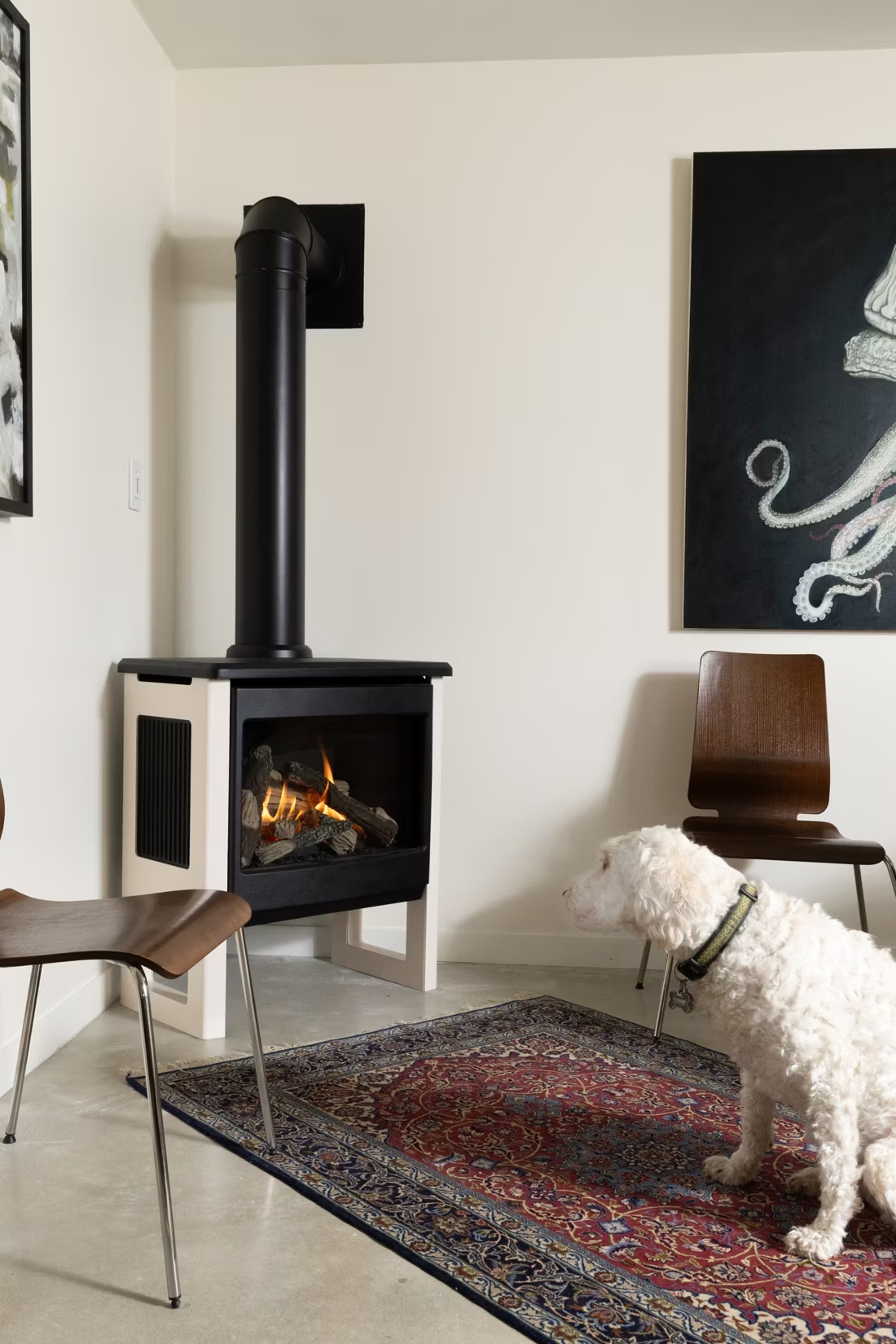
A gas fireplace is a fully built-in unit framed into a wall—the usual choice for new construction or a full remodel. A gas insert is sized to slide into an existing masonry firebox, which fits a lot of Alliance's older housing stock. A gas stove is a freestanding cast-iron or steel unit that sits on the floor like a wood stove but burns gas, useful in rooms with no existing chimney or fireplace opening. For most Alliance homeowners working with a fireplace that's already there, an insert is the natural fit.
Do I need a permit to install a gas fireplace in Alliance?
Yes. A building permit is required for a new gas fireplace or insert installation, coordinated through the City of Alliance's building department, and the gas line connection itself has to be run or tied in by a licensed gas-fitter. Most hearth retailers who sell and install these units handle the permitting and inspection scheduling as part of the job, so you're not stuck coordinating separate trades yourself.
What's the difference between vented and vent-free gas fireplaces?
Vented (direct-vent) gas fireplaces draw combustion air from outside and exhaust the byproducts back outside through a sealed pipe—they're the cleanest, safest, and most universally code-compliant option. Vent-free units burn directly into the room air, which is legal in Ohio under specific room-size and ventilation rules, but they release some moisture and combustion byproducts indoors. Given how many months a year Alliance homes are sealed up tight against the cold, direct-vent units are the more common and generally recommended choice locally—they don't ask you to trade indoor air quality for convenience.
How often should a gas fireplace be serviced?
Plan on an annual inspection, ideally in late summer or early fall before the heating season starts in earnest. A technician checks the burner, pilot assembly, venting, and gas connections, and cleans the glass and interior. It's a much smaller job than wood-stove chimney sweeping, but it matters just as much for safety and efficiency. Local gas appliance service providers typically charge around $125 to $225 for this visit.
Should I consider wood or pellet instead of gas?
Probably not as your main option. Wood-burning fireplaces are uncommon in Alliance—the city's housing stock was largely built or retrofitted around natural gas heat, and there's no real local infrastructure of firewood permitting or bulk supply the way there is in more rural, forested parts of the state, even though oak, hickory, maple, and cherry are all common regional woods. Some older homes near downtown keep an original wood-burning firebox for occasional ambiance rather than as a heat source. Pellet stoves are similarly rare locally, despite regional pellet brands like Lignetics and Somerset Pellet Fuel being available through distributors. For most Alliance homes, gas is simply the more practical fit: it uses infrastructure you already have, needs no fuel storage, and delivers heat instantly on a cold night.
Is my gas fireplace wasting gas?
If it was installed more than 15 years ago, probably. Older gas fireplaces keep a standing pilot light burning all the time, and that little flame can cost a couple hundred dollars a year. Newer models use pilot-on-demand ignition—the pilot lights only when you use the fireplace and goes out when you turn it off.
Why is a fireplace insert so efficient?
An insert does two things: it seals the chimney completely, so you stop losing air you already paid to heat, and it radiates warmth into the room through the firebox and glass. Most add a heat-exchange fan that pulls cool room air underneath, wraps it around the hot firebox, and pushes it back out warm. Your home is more efficient before you've even lit the first fire.
Can a fireplace actually lower my heating bill?
Yes—by creating a comfort zone. A furnace heats every square foot of the house just to warm the one room you're in; a gas fireplace on low burns roughly a sixth of the gas a typical furnace does. Set the furnace around 55–60 degrees as a baseline, then heat the rooms your family actually uses. Families who heat this way commonly save $20–$60 a month.
Can I install a fireplace myself?
If you're putting a fire in your house on purpose, it's best to work with an expert. Unless you're genuinely experienced in framing, gas line, vent pipe, and the national code on clearances to combustibles, have a professional do it—and ideally the same company that sells you the fireplace, so warranty, service, and liability all live under one roof.
Nearby Dealers
Hearth shops serving Alliance and the surrounding area. Every listing shows whether it is a WhyFire partner, a dealer we have verified as authorized for the brands we recommend, or a local business carrying hearth products. No manufacturer pays for placement. How we verify dealers →
Brunk's Fireplace
Custom Fireplace Shop
Weaver's Stove & Patio - Washingtonville
Country View Hardware
StarFire Distributors
Find your gas fireplace in Alliance.
Tell us about your home and heating goals, and we'll match you with a trusted local dealer and put together a free Project Guide & Parts List—the exact equipment, venting, and next steps for your Alliance gas fireplace project.
Find Your Fireplace →