
Warmth that plugs in, no sealift fuel order required.
Sanikiluaq sits above the treeline on the Belcher Islands, with winter lows averaging -27.8°C and a heating season that runs eight months or more. An electric fireplace draws on the same diesel-generated grid power as the rest of the house, with no firewood, no propane tank, and no new fuel shipment to plan around. We help you find a trusted dealer who serves the North and send a free Project Guide & Parts List for your home.
Every Project Starts From One of These Five Situations
The simplest hearth option on a diesel grid.
Sanikiluaq is above the treeline, so there is no local fuelwood to cut and no public fuelwood program—any firewood has to be shipped in, which makes wood stoves a rare and costly choice here rather than a standard one. There is no natural gas utility and no pipeline serving Nunavut, so gas fireplaces mean a propane conversion at best, and that's rare too. Most homes heat primarily with fuel oil delivered by sealift, while every watt of electricity, including whatever you'd run a fireplace on, comes from the community diesel plant operated by Qulliq Energy Corporation. Against that backdrop, electric is the one fireplace fuel that doesn't ask you to arrange another delivery of anything.
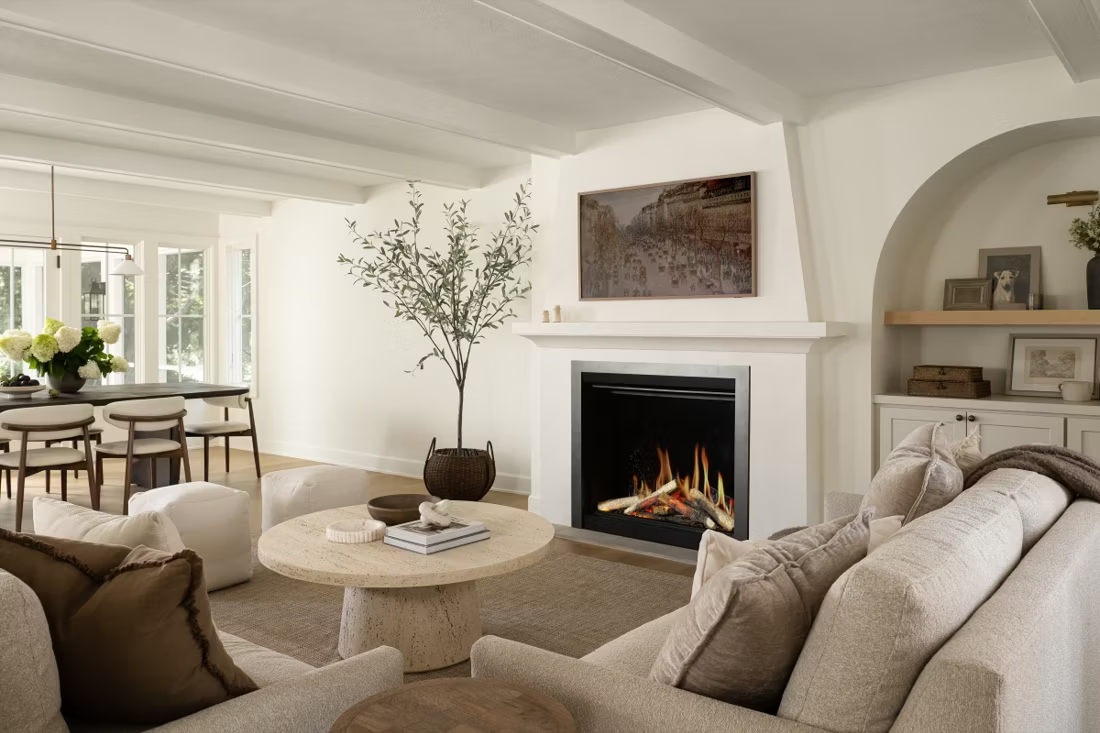
Electric fireplace inserts and wall-mount units typically draw 750 to 1,500 watts, which is a modest add to a household's draw compared to space heating the whole house. At Sanikiluaq's residential rate of about $0.7494 per kWh—among the highest in the country—that still adds up, which is why most households run these units as supplemental, ambiance-forward heat in one room rather than as a replacement for the fuel oil furnace that carries the house through winter. The Nunavut Electricity Subsidy Program offsets part of the first 700 to 1,000 kWh a month for non-government homes, which is worth factoring in when you're deciding how much you'll actually run the unit on cold, dark January evenings.
Three steps. No salesperson until you're ready.
Tell us about your project
Your postal code, your situation, and the fuel you're leaning toward—or let the answers point you to one.
See what's actually available
The brands dealers within 100 miles genuinely carry—real options, never a catalog mirage.
Get your dealer & Project Guide
A trusted local dealer, plus the free Project Guide & Parts List that names every component of the job.
Frequently Asked Questions
How much does an electric fireplace cost to install in Sanikiluaq?
Installed electric fireplaces typically run $500 to $1,600 CAD in southern Canada, and that's the baseline to start from. In Sanikiluaq, with no road access and everything arriving by air or summer sealift, freight adds to both the cost and the timeline—ask any dealer you talk to for a landed price that includes shipping to your community, not just the unit price, before you commit.
Will an electric fireplace actually heat my home here?
Not on its own. With winter lows averaging -27.8°C and a heating season stretching well past half the year, the fuel oil furnace most homes rely on is doing the real work. A 750 to 1,500-watt electric fireplace is better understood as a supplemental heater and a visual focal point for one room—a good fit for a living room on an ordinary evening, not a substitute for whole-home heat on a January night.
Why not install a wood or gas fireplace instead?
Both are genuinely rare choices here, and it's worth being upfront about why. Sanikiluaq sits above the treeline, so there's no local firewood to cut and none shipped in cheaply—any cordwood arrives by sealift at a real premium. There's also no natural gas utility anywhere in Nunavut, so a gas fireplace would mean a propane setup, which is uncommon and adds its own freight costs for tank delivery. Electric sidesteps both problems since it runs on power the house already has.
Do I need a permit for an electric fireplace in Sanikiluaq?
Building permits in Sanikiluaq go through the municipal or territorial building inspector, and a hardwired electric fireplace typically needs an electrical permit and inspection on top of that, since it's tied into house wiring rather than just plugged into an outlet. A plug-in unit is simpler, but confirm with the inspector's office either way—and make sure whatever unit you buy carries proper CSA certification, since that's what an inspector will be checking for.
How does the electricity subsidy affect running an electric fireplace?
The Nunavut Electricity Subsidy Program covers part of the first 700 to 1,000 kWh a month for non-government homes served by Qulliq Energy Corporation. An electric fireplace run for a few hours most evenings adds meaningfully to monthly usage, and depending on what else is drawing power in your home, it can push you past that subsidized block faster than you'd expect. It's worth asking your dealer about lower-wattage settings or a heat-off ambiance mode so you can control usage on the coldest, darkest stretches of the year.
Where do I actually buy an electric fireplace in Sanikiluaq?
There's no hearth shop in a community of just over 1,000 people, and the nearest dealers are in Iqaluit or further south—this isn't a same-week, drop-by-the-showroom purchase. We help you reach a trusted dealer who's set up to ship to Nunavut communities, and it's worth calling ahead yourself about delivery timing, since freight schedules depend on air cargo space or the summer sealift window.
What size or wattage electric fireplace makes sense here?
Most households do well with a 750 to 1,500-watt insert or wall-mount unit sized for a single living space rather than anything larger, given how quickly wattage translates into cost at Sanikiluaq's residential rate. Look for a model with separate heat and flame-only settings—running the visual effect without the heater draws only a fraction of the power, which matters on a diesel grid where every kWh carries a real price.
Can an electric fireplace replace my fuel oil furnace?
No—it's not built for that role, and no dealer serving the North would size one for it. Fuel oil delivered by sealift remains the practical whole-home heat source through Sanikiluaq's long, severe winter. An electric fireplace is best planned as a supplemental unit for the room you spend the most time in, adding comfort and ambiance without asking the fuel oil system to do less of the work it's designed for.
What should I know about ordering and delivery timing?
With no road into Sanikiluaq, an electric fireplace arrives either by air freight or on the summer sealift, and both have real lead times and limited windows—sealift cargo in particular needs to be booked well before the shipping season closes. Order early, ask your dealer to confirm a landed delivery date rather than just a ship date, and line up whoever in the community handles electrical hookups if you're going with a hardwired unit, since installation isn't something a southern dealer can promise to handle in person.
Nearest Dealers
Hearth shops are few and far apart up north, so these are the closest ones to Sanikiluaq, with how far each one is. Call ahead to ask about delivery and installation in your community. Every listing shows whether it is a WhyFire partner, a dealer we have verified as authorized for the brands we recommend, or a local business carrying hearth products. No manufacturer pays for placement. How we verify dealers →
Electric Service in Sanikiluaq
An electric fireplace's heater draws about 1,500 watts—pennies per hour at local rates.
Qulliq Energy Corporation
Get a free Project Guide & Parts List for your Sanikiluaq electric fireplace.
Tell us about your home and we'll help you find a trusted dealer who ships to Nunavut communities, plus send a free Project Guide & Parts List with the exact parts for your project and realistic notes on freight timing so nothing catches you off guard before freeze-up.
Find Your Fireplace →