
Propane heat is possible here—mains gas is not.
Kinngait sits above the treeline on the Qikiqtaaluk Region coast, where winter lows average -29.9°C and every home runs on fuel oil and diesel-generated power. A gas fireplace here means propane, shipped in by sealift or air freight, and we'll help you reach a trusted dealer who actually serves Nunavut.
Every Project Starts From One of These Five Situations
There's no pipeline route to Kinngait, so propane carries the gas option.
Kinngait, formerly Cape Dorset, sits on the southwest coast of Baffin Island in the Qikiqtaaluk Region, a climate zone 8 community where the average winter low is -29.9°C and the heating season stretches across most of the year. There is no mains natural gas anywhere in Nunavut—most homes heat primarily with fuel oil delivered once a year by sealift, and electricity comes from Qulliq Energy Corporation's local diesel plant at a residential rate of roughly $0.7494 per kWh, among the highest in the country, with the Nunavut Electricity Subsidy Program offsetting part of the first 700 to 1,000 kWh a month for non-government households.
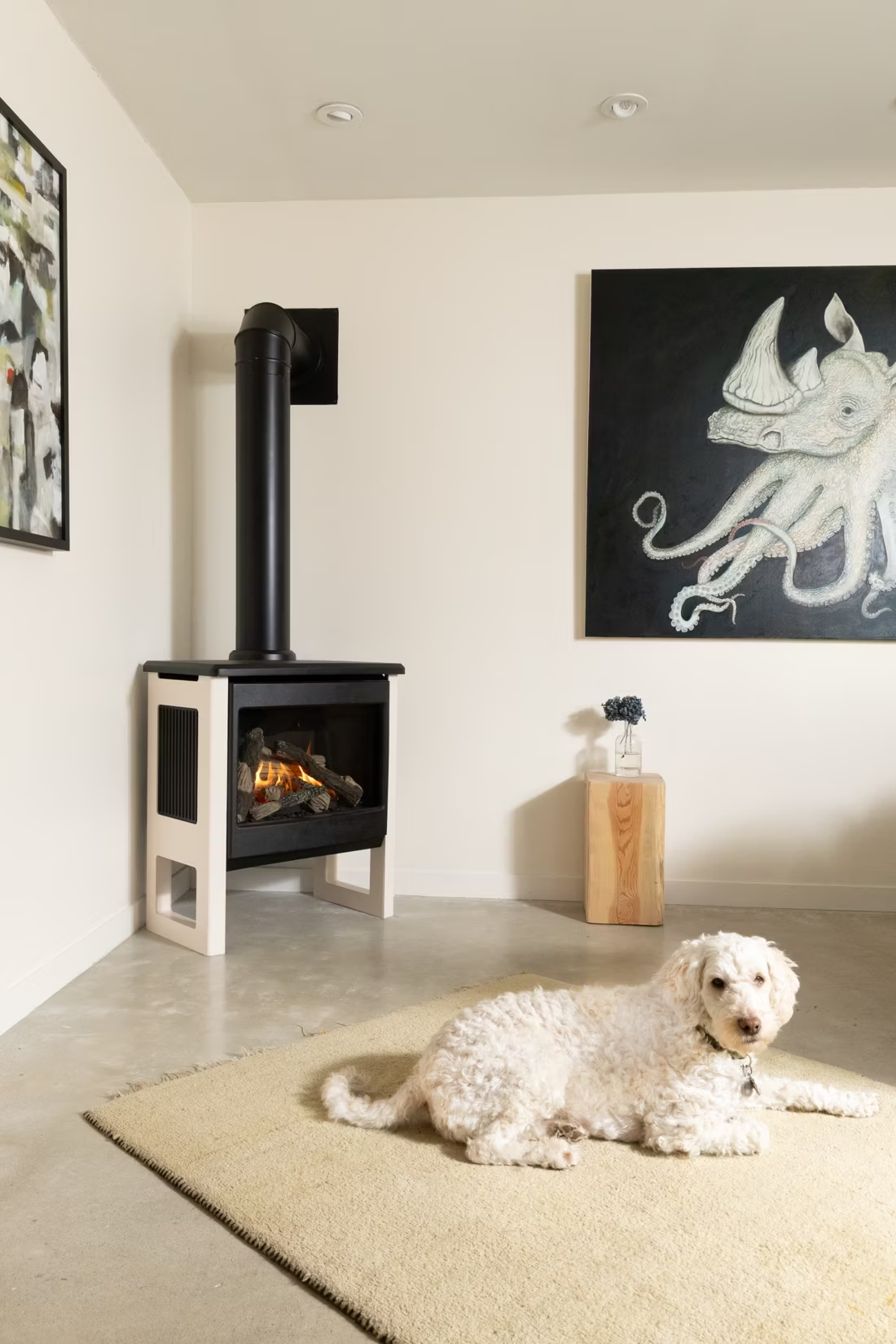
A gas fireplace in Kinngait is really a propane fireplace, and it's a rare addition rather than a mainstream one—most households here aren't shopping for one, and a propane unit typically serves as supplemental heat or backup rather than the home's main furnace. That makes it worth checking availability and freight timing before anything else: there's no hearth shop in town, so sourcing a unit means working with a dealer that ships north and coordinating a certified gas fitter for the hookup, with costs realistically running above the $6,000-$15,000 CAD range typical farther south once freight and travel are added.
Three steps. No salesperson until you're ready.
Tell us about your project
Your postal code, your situation, and the fuel you're leaning toward—or let the answers point you to one.
See what's actually available
The brands dealers within 100 miles genuinely carry—real options, never a catalog mirage.
Get your dealer & Project Guide
A trusted local dealer, plus the free Project Guide & Parts List that names every component of the job.
Frequently Asked Questions
Is there natural gas service in Kinngait?
No—Nunavut has no mains natural gas network at all, and Kinngait is no exception. What residents mean by a 'gas fireplace' up here is a propane-fueled unit, run off a tank rather than a utility line. Fuel oil remains the primary heating fuel for most homes, brought in by the annual sealift, with propane reserved for secondary appliances like a fireplace or a cooktop.
How much does a propane fireplace installation cost in Kinngait?
Southern Canada sees gas fireplace installs land around $6,000-$15,000 CAD, but that figure doesn't include the freight to get a unit, venting, and a propane tank set up to a community only reachable by air or a short summer sealift window. Expect to budget above that range once shipping and travel for a qualified installer are factored in—ask any dealer quoting the job for an all-in number before you commit.
Who actually installs a propane fireplace in Kinngait, since there's no hearth shop in town?
There isn't a hearth retailer in Kinngait, and there won't be one within easy reach—the nearest dealers who can supply a propane fireplace and coordinate the gas-fitting work are based in Iqaluit or farther south. We'll help you reach dealers who regularly ship to the Qikiqtaaluk Region and can line up a certified gas fitter, but you'll want to call ahead early about delivery windows since freight schedules here are tight and seasonal.
What inspections or permits apply to a propane fireplace in a Kinngait home?
The CSA B365 installation code governs any gas or propane appliance installed in Nunavut, and sign-off comes from a municipal or territorial building inspector rather than a city permit desk. Most insurers also want documentation that the work was done by a certified gas fitter. If you're weighing a wood appliance instead, insurers commonly ask for a WETT inspection too—worth knowing even though propane is the more realistic option given there's no local firewood.
Would a propane fireplace be our main heat source, or just a backup?
Just a backup or a supplement, realistically. Nearly every home in Kinngait heats primarily with fuel oil delivered by sealift, and that's unlikely to change with a single fireplace. Where a propane fireplace earns its keep is as a secondary heat source in one room, or as a reliable backup if the Qulliq Energy Corporation diesel plant has an outage, which does happen in small Arctic communities.
If the power goes out, will a propane fireplace still work?
It depends on the ignition system, which is exactly why it's worth asking about before you order. A unit with a millivolt pilot system can run without household power, which matters in a community that depends entirely on one diesel plant for electricity. Units built around electronic ignition with no battery backup will go dark in the same outage that takes out the lights, so ask your dealer to spec a millivolt or battery-backed model if outage resilience matters to you.
How do we get propane delivered to Kinngait for a fireplace?
Propane for a residential tank typically comes in on the same sealift that brings in fuel oil and other bulk goods each summer, or by air freight the rest of the year at a higher cost. Either way, tank sizing and refill scheduling need to be worked out well ahead of installation—this isn't a same-week delivery the way it might be in a southern city, so build the lead time into your planning.
Would wood or pellets make more sense than propane in Kinngait?
Not really. Kinngait sits above the treeline, so there's no local firewood to cut and no fuelwood permit program to speak of—every stick of wood would have to be shipped in, same as the propane. Pellets aren't sold locally either, and freight pushes their price well above what you'd pay farther south. Between the three, propane and electric fireplaces are the more practical choices, since Qulliq Energy Corporation's grid already reaches every home even if the rate runs around $0.7494 per kWh.
What should we ask a dealer before ordering a propane fireplace for Kinngait?
Get an all-in price that includes freight, not just the unit and venting—freight is often the biggest line item once you're shipping to Baffin Island. Ask about lead time tied to the sealift or air cargo schedule, confirm the model is CSA-certified for climate zone 8 conditions, and clarify who's actually doing the gas-fitting hookup on the ground, since the dealer supplying the fireplace won't be the one travelling to Kinngait to install it.
Nearest Dealers
Hearth shops are few and far apart up north, so these are the closest ones to Kinngait, with how far each one is. Call ahead to ask about delivery and installation in your community. Every listing shows whether it is a WhyFire partner, a dealer we have verified as authorized for the brands we recommend, or a local business carrying hearth products. No manufacturer pays for placement. How we verify dealers →
McMunn & Yates
Propane Nord Cotier
Natural Gas Service in Kinngait
Confirm service at your address before planning a gas fireplace—a quick call settles it.
None
Get a free Project Guide & Parts List for your Kinngait propane fireplace.
Tell us about your home and your sealift or freight timeline, and we'll help you reach a trusted dealer who serves the Qikiqtaaluk Region, along with a free Project Guide & Parts List covering the exact parts—including the vent kit and tank setup—for your project, plus notes on calling ahead about delivery and installation timing.
Find Your Fireplace →